CRJA Engine
- Engine
- 1395 cm3
- Aspiration
- Turbocharger, Intercooler
- Fuel
- Petrol (Gasoline)
- Fuel injection system
- Direct injection
- Power
- 150 hp
- Torque
- 250 Nm
- Cylinders
- 4
- Valves
- 16, 4 per cylinder
- Cylinders position
- Inline
- Valvetrain
- DOHC
- Oil capacity
- 4 l
- Systems
- Start & Stop System
# Vehicles powered by this engine
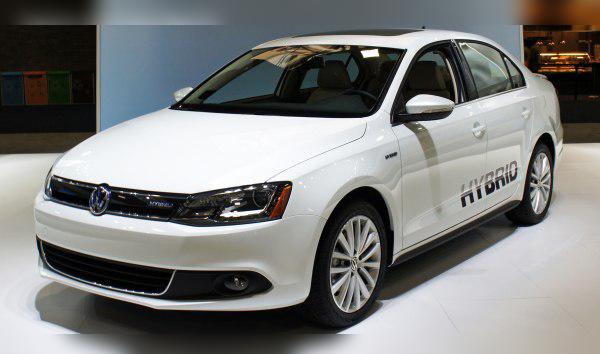
1.4 TSI Hybrid Engine (CRJA) – Experiences, Problems, Fuel Consumption and Maintenance
1. The most important in short (TL;DR)
- Timing belt drive: Unlike older 1.4 TSI engines that had problematic chains, the CRJA belongs to the newer EA211 generation with a timing belt, which is a big plus for reliability.
- Hybrid complexity: This is not a regular petrol engine. It is paired with an electric motor and a specific DSG gearbox. Maintenance requires mechanics who are familiar with high-voltage systems.
- Excellent performance: The combination of a 150 hp petrol engine and an electric motor provides a system output of 170 hp, making the Jetta very lively.
- Sensitive gearbox: It uses a variation of the DQ200 7-speed DSG gearbox with dry clutches, historically known for its sensitive mechatronics.
- Direct injection: Like every modern TSI, it is prone to carbon buildup on the intake valves.
- Recommendation: Excellent for those who want performance with lower city fuel consumption, but it requires a budget for potential hybrid system or gearbox repairs.
Contents
- Introduction and application
- Technical specifications
- Reliability and maintenance
- Specific parts and costs
- Fuel consumption and performance
- Additional options and modifications
- Gearbox
- Used car purchase and conclusion
Introduction and application
The engine with the code CRJA is a specific 1.4-liter unit developed by the Volkswagen Group primarily for use in hybrid vehicles, specifically in the Volkswagen Jetta VI Hybrid model. This engine belongs to the EA211 family, which brought a revolution in reliability compared to the previous EA111 series.
Its role is to provide the power of a conventional petrol engine, but with the possibility of being completely disconnected from the drivetrain so that the car can "coast" or move purely on electric power. The CRJA is important because it represents a bridge between conventional turbo petrol engines and full electrification, offering drivers the best of both worlds, provided the system is in good condition.
Technical specifications
| Parameter | Data |
|---|---|
| Engine displacement | 1395 cc (1.4 l) |
| Power (ICE engine) | 110 kW (150 hp) |
| System power (Hybrid) | 125 kW (170 hp) – combined |
| Torque (ICE engine) | 250 Nm |
| Engine code | CRJA |
| Injection type | Direct injection (TSI) |
| Charging method | Turbocharger + intercooler |
| Configuration | Inline, 4 cylinders, 16 valves |
Reliability and maintenance
Does this engine have a timing belt or a chain?
This is the most common question and it comes with good news: the CRJA engine uses a timing belt. With the transition to the EA211 generation, Volkswagen abandoned the problematic chains that used to stretch on the previous 1.4 TSI engines. The timing belt on this engine is reinforced and has proven to be a very reliable solution, making the engine run quieter and safer.
What are the most common failures on this engine?
Although more reliable than its predecessors, the CRJA has its weak points:
- Thermostat housing and water pump: This is the "Achilles' heel" of EA211 engines. The housing is plastic and over time it deforms due to thermal cycles, which leads to coolant leaks. The symptom is a dropping coolant level and the smell of vapors under the hood.
- Turbo actuator (wastegate): The lever that regulates turbo pressure can stick, which leads to the "Check Engine" light coming on and loss of power (safe mode).
- Carbon buildup on intake valves: Due to direct injection, the fuel does not wash the intake valves, so carbon deposits build up on them. This manifests as rough idling and a slight loss of power at higher mileage (over 100,000 km).
At what mileage should the major service be done?
Factory recommendations are often over-optimistic (so-called "lifetime" or inspection at 240,000 km). However, experienced mechanics recommend replacing the timing set (belt, tensioners, rollers, water pump) at intervals of 160,000 to 210,000 km, or every 8 to 10 years, whichever comes first. Do not risk a belt snap by waiting for the factory limit.
How many liters of oil does this engine take and which grade is recommended?
The sump holds approximately 4.0 liters of oil. The recommended grade is usually 5W-30 (VW 504.00/507.00 standard), although for newer model years and certain markets 0W-20 (VW 508.00) can also be used. Always check the label under the hood, but you will not go wrong with a quality 5W-30.
Does it consume oil between services?
Unlike older TSI engines, the CRJA is not known as a heavy oil consumer. Still, consumption of up to 0.5 liters per 10,000 km is considered completely normal and acceptable, especially with a more spirited driving style. If it consumes more than 1 liter over a service interval, this may indicate a problem with the piston rings or turbo, but this is not a typical occurrence.
At what mileage should the spark plugs be replaced?
Since this is a turbocharged petrol engine with direct injection, the ignition system is under higher load. The recommendation is to replace the spark plugs (iridium or platinum type) every 60,000 km or every 4 years. Worn spark plugs can cause damage to the ignition coils, of which there are four (one per cylinder).
Specific parts (Costs)
Does the engine have a dual-mass flywheel?
Yes, it has a dual-mass flywheel. In the Jetta Hybrid, the flywheel has a specific role because it must dampen vibrations during the frequent starting and stopping of the petrol engine while driving. Replacement is expensive (it depends on the market, but it falls into the "expensive" category) because it is a part specific to the hybrid drivetrain and differs from the one on a regular 1.4 TSI model.
What kind of injection system does it have and are the injectors problematic?
It uses high-pressure direct fuel injection. The injectors are generally durable but sensitive to poor fuel quality. Injector failure manifests as engine misfire, fuel leaking into a cylinder (which can dilute the oil), or increased fuel consumption. The price of a single injector is moderately high (depending on the market).
Does this engine have a turbocharger and what is its lifespan?
It has a single turbocharger. On many EA211 versions, the turbo is integrated with the exhaust manifold. Its lifespan is long, often over 200,000 km with regular oil changes. The most common problem is not the turbo itself, but the electronic actuator that controls its operation. The intercooler is integrated into the intake manifold and is water-cooled (charge air cooler), which is a more efficient solution than air cooling.
Does this model have a DPF filter, EGR or AdBlue?
Since it is a petrol engine:
- It does not have a DPF (Diesel Particulate Filter), but it may have a GPF (Gasoline Particulate Filter) depending on the model year and market (mainly models after 2018, which is often not the case for the Jetta VI).
- It does not use AdBlue fluid.
- It has a catalytic converter, which is expensive to replace.
- It has EGR functionality, but on EA211 engines this is often achieved by variable valve timing (internal recirculation), and the hybrid operating mode reduces soot buildup compared to diesels.
Fuel consumption and performance
What is the real fuel consumption in city driving?
This is where the hybrid system shines. Thanks to the electric motor that takes over stop-and-go situations, real-world city consumption ranges between 5.5 and 7.0 liters per 100 km. This is drastically lower than a regular 1.4 TSI with automatic transmission, which would use 9–10 liters under the same conditions.
Is this engine “lazy” for the weight of the body?
Not at all. Although the Jetta Hybrid carries the extra weight of the batteries (about 100–150 kg more than the standard version), the combined output of 170 hp and 250 Nm (plus the instant torque of the electric motor) makes this car very agile. The 0–100 km/h time is under 9 seconds, which is very respectable for a family sedan.
How does the engine perform on the highway?
On the highway, the hybrid system helps less. There you rely primarily on the 1.4 TSI engine. At 130 km/h the engine runs at about 2,500–2,800 rpm in 7th gear. Fuel consumption then rises to around 6.5–7.5 l/100 km. The engine is quiet and has enough power reserve for overtaking without strain.
Additional options and modifications
Is this engine suitable for LPG conversion?
It is not recommended. First, the engine has direct injection, which requires an expensive system (liquid phase or continuous petrol supply). Second, the hybrid system frequently starts and stops the engine, which complicates the operation of the LPG system and switching between fuels. The cost-effectiveness of installing LPG on an already economical hybrid is questionable and technically risky.
How far can this engine be safely tuned (Stage 1)?
The petrol engine itself (CRJA) has the potential to be raised to about 170–180 hp (ICE only). However, this is not recommended on the hybrid. The complex software that coordinates the operation of the electric motor, battery and petrol engine can be disrupted. Also, the DSG gearbox (DQ200) is already close to its torque limit, so increasing power would drastically shorten its lifespan.
Gearbox
Which gearboxes are installed?
With the CRJA engine in the Jetta Hybrid model, there is exclusively an automatic 7-speed DSG gearbox (code DQ200), but in a modified version adapted for hybrid drive (the electric motor is positioned between the engine and the gearbox).
What are the most common gearbox failures?
The DQ200 is a gearbox with dry clutches. The most common problems are:
- Mechatronics: The electro-hydraulic unit that controls shifting. Failures occur suddenly (loss of gears, oil leaks). Repair is very expensive.
- Clutch wear: Although the electric motor helps when setting off (protecting the clutch), city driving will eventually wear out the clutch set. Symptoms are juddering when moving off or slipping under hard acceleration.
At what mileage does the gearbox need servicing?
Although VW often states that the gearbox oil is "lifetime", in practice the oil in the gearbox (and in the mechatronics, which are two separate oil systems on the DQ200) should be changed every 60,000 km to extend the life of the solenoids and mechanical parts.
Used car purchase and conclusion
What should be checked before buying?
- Hybrid system: A diagnostic check at an authorized service center is mandatory to assess the condition ("health") of the high-voltage battery. Battery replacement is extremely expensive (very expensive).
- Noise on cold start: Even though it has a belt, listen for any strange noises. Also check whether the engine switches smoothly from electric to petrol while driving.
- Coolant leaks: Inspect the area around the thermostat (on the right side of the engine when viewed from the front). Traces of pink crust indicate a leak.
- DSG behavior: The car must pull away smoothly, without jolts or hesitation, including on an incline.
Conclusion:
The CRJA 1.4 TSI Hybrid engine is a technological gem that turns the Jetta into a fun and economical sedan. It is an excellent choice for drivers who spend a lot of time in city traffic jams but want a car with a classic look rather than a typical hybrid design (like the Prius). However, buying a used one carries the risk of expensive repairs (battery, DSG mechatronics). If you buy a well-documented example with a proper service history, you will enjoy driving it. If the history is unknown, the financial risk is significant.
Was this content useful to you?
Your opinion helps us to improve the quality of the content.