EA211 Engine
- Engine
- 1498 cm3
- Aspiration
- Turbocharger, Intercooler
- Fuel
- Petrol (Gasoline)
- Fuel injection system
- Direct injection
- Power
- 160 hp @ 5500 rpm
- Torque
- 250 Nm
- Cylinders
- 4
- Valves
- 16, 4 per cylinder
- Cylinders position
- Inline
- Systems
- Start & Stop System
# Vehicles powered by this engine
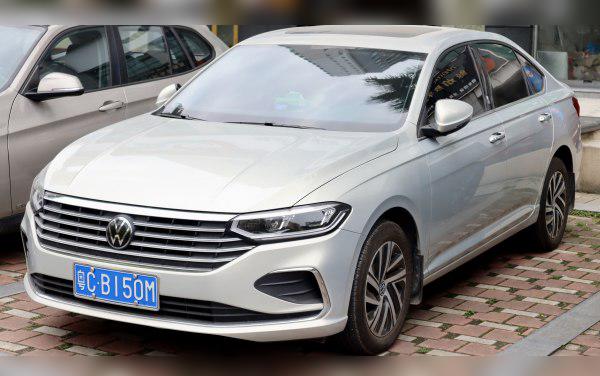
Volkswagen EA211 1.5 TSI (160 hp) – Experiences, Problems and Maintenance
The engine that powers the refreshed version of the Volkswagen Lavida III (300TSI), as well as many European models (Golf 8, Octavia, T-Roc) under similar designations, belongs to the advanced EA211 Evo family. This is a modern 1.5‑liter turbo petrol engine that replaced the famous 1.4 TSI. The 160 hp (118 kW) version is one of the most efficient units in its class, combining cylinder deactivation technology with a variable geometry turbocharger.
Key points in short (TL;DR)
- Timing drive: Uses a timing belt, not a chain, which solved the chain snapping issues from older generations.
- ACT system: The engine shuts down two cylinders under low load to save fuel – this can cause mild vibrations.
- “Kangaroo” driving issue: Early models had a problem with jerking when setting off while the engine is cold (mostly solved via software updates).
- Oil consumption: Significantly lower than on older TSI engines, but the thin 0W-20 oil requires regular checks.
- GPF filter: Equipped with a gasoline particulate filter, sensitive to frequent short trips.
- Gearbox: The DSG (DQ200) with dry clutch is a more sensitive part of the drivetrain than the engine itself.
- Recommendation: An excellent choice for those who want diesel-like performance with petrol refinement, but it requires quality fuel and regular maintenance.
Contents
- Technical Specifications
- Reliability and Maintenance
- Specific Components (Costs)
- Fuel Consumption and Performance
- Additional Options and Modifications
- Gearbox
- Buying Used and Conclusion
Technical Specifications
| Displacement | 1498 cc (1.5 liters) |
| Power | 118 kW (160 hp) |
| Torque | 250 Nm at 1500–3500 rpm |
| Engine code | EA211 Evo / Evo 2 (DADA, DPCA, or specific codes for the Asian market) |
| Injection type | Direct injection (TSI / GDI) – up to 350 bar |
| Charging | Turbocharger with variable turbine geometry (VTG) |
Reliability and Maintenance
This generation of the 1.5 TSI engine is considered one of the most reliable in recent VW history, but its advanced technology comes with certain requirements.
Does this engine have a timing belt or a chain?
This engine uses a timing belt. This is a major and positive change compared to the older EA111 engines (1.2 and 1.4 TSI) which had problematic chains. The belt is reinforced and designed to last a long time, but a visual inspection is recommended after 120,000 km.
What are the most common failures on this engine?
The best-known issue is the so‑called “Kangaroo effect” (Kangarooing) – the engine jerks or hops when moving off in first gear while cold. This is most often resolved by updating the engine ECU software. There can also be issues with the water pump and thermostat housing, which may start leaking. Due to direct injection, at higher mileage (over 100–150 thousand km) carbon buildup on intake valves occurs, which manifests as rough running and loss of power.
At what mileage should the major service be done?
The factory recommendation is often optimistic (sometimes stating “no interval” or 210,000 km for the belt), but real‑world mechanic experience says otherwise. The major service (replacement of timing belt, tensioner and water pump) should be done between 150,000 km and 180,000 km or after 6 to 7 years of age, whichever comes first, to avoid the risk of belt failure.
How many liters of oil does this engine take and which grade is recommended?
The sump holds approximately 4.3 liters of oil. For this engine (especially newer versions with a GPF filter) it is mandatory to use low‑viscosity oil, most commonly 0W-20 with specification VW 508.00 / 509.00. This thin oil is crucial for the turbocharger and the cylinder deactivation system.
Does it consume oil between services?
Oil consumption is drastically reduced compared to older generations. Still, consumption of 0.3 to 0.5 liters per 5,000–8,000 km is considered normal, especially if driven more aggressively on the motorway. If the engine consumes more than 0.5 liters per 1,000 km, this points to an issue with the piston rings or the turbocharger.
At what mileage should the spark plugs be replaced?
Spark plugs should be replaced every 60,000 km or 4 years. Using worn spark plugs can damage the ignition coils (one per cylinder) and cause poor combustion.
Specific Components (Costs)
Does the engine have a dual‑mass flywheel?
Yes, versions with the DSG gearbox (such as the Lavida 300TSI) are equipped with a dual‑mass flywheel. Its purpose is to smooth out engine vibrations before they reach the gearbox. Its typical lifespan is around 150,000–200,000 km, depending on driving style.
What kind of injection system does it have?
It uses a common‑rail direct injection system with pressures up to 350 bar. The injectors are precise and generally durable, but very sensitive to poor fuel quality. Injector failure manifests as engine hesitation or fuel leaking into the cylinder (which can wash away the oil film and damage the engine).
Does the engine have a turbocharger?
The engine has a single turbocharger with variable turbine geometry (VTG), which is rare for petrol engines in this class (usually reserved for diesels and Porsche models). This provides better throttle response. The turbo is reliable but needs to be cooled down after spirited driving. With regular oil changes, its lifespan is over 200,000 km.
Does this model have a DPF filter or an EGR valve?
It has a GPF (Gasoline Particulate Filter), which is the petrol equivalent of a DPF. It rarely clogs compared to diesels because petrol engines run at higher exhaust gas temperatures, which facilitates passive regeneration. An EGR valve is present and can get dirty from soot, but it is not as critical a weak point as on TDI engines.
AdBlue?
No, this is a petrol engine and does not use AdBlue fluid.
Fuel Consumption and Performance
What is the real‑world fuel consumption in city driving?
In the city, real‑world consumption ranges between 7.5 and 9.0 liters per 100 km. Thanks to the start‑stop system and cylinder deactivation, it can be economical in moderate traffic, but a heavy right foot will easily push the average up.
Is this engine “lazy” for the weight of the car?
Absolutely not. With 160 hp and 250 Nm available from as low as 1500 rpm, this engine moves the Lavida body (or Octavia/Golf) with ease. Acceleration is linear and strong, and overtaking is safe.
How does the engine behave on the motorway?
On the motorway the engine performs excellently. At 130 km/h in 7th gear (DSG), the engine spins at around 2,300 to 2,500 rpm, which ensures quietness and efficiency (around 5.5–6.5 l/100 km). The ACT system will shut down two cylinders even while cruising under light load.
Additional Options and Modifications
Is this engine suitable for LPG conversion?
In general it is not recommended for conversion, unless you cover very high mileage. Due to direct injection, an expensive system is required (liquid phase or a system that also uses petrol to cool the injectors). The installation cost is high (very expensive), and the payback is questionable for the average driver.
How far can this engine be safely tuned (Stage 1)?
The engine has potential. A Stage 1 remap usually raises power to about 175–185 hp and torque to 300–310 Nm. However, caution! The DSG gearbox (DQ200) is rated for 250 Nm. Any increase in torque drastically shortens the lifespan of the clutch and flywheel.
Gearbox
Which gearboxes are fitted?
With the 1.5 TSI 300TSI variant, the most common option is a 7‑speed DSG automatic gearbox (code DQ200) with a dry clutch.
Most common gearbox issues?
The DQ200 is notorious for the sensitivity of its mechatronics (control unit) and premature wear of the clutch pack. Symptoms include jerking when moving off, hesitation when changing gears or metallic noises. Stop‑and‑go city driving is what harms it the most.
Cost of clutch and dual‑mass flywheel replacement?
This is an expensive item. Replacing the clutch kit and dual‑mass flywheel on a DSG gearbox falls into the expensive to very expensive category (depending on the market and workshop, but expect a serious bill). Using the cheapest aftermarket parts is not recommended.
Gearbox maintenance?
Although VW often states that the oil in the DQ200 is “lifetime fill”, any experienced mechanic will recommend changing the oil in the gearbox and mechatronics every 60,000 km. This can significantly extend the life of the solenoids and hydraulics.
Buying Used and Conclusion
When buying a used car with this engine, pay attention to the following:
- Cold start: Insist on starting the car when the engine is completely cold. Listen for any irregular running or rattling (hydraulic lifters or camshaft actuators).
- Test drive: Accelerate gently in D mode. The gearbox should shift imperceptibly. If you feel jolts or vibrations, the gearbox is likely due for an overhaul.
- Service history: Check whether the correct 0W-20 oil was used and whether services were done on time (every 15,000 km at most).
Conclusion: The 1.5 TSI (160 hp) engine is a technological gem that offers an excellent balance of power and fuel consumption. It is ideal for drivers who spend most of their time on open roads or in mixed driving. However, if you plan to drive exclusively in heavy city traffic, the complexity of the DSG gearbox and the GPF filter can lead to higher long‑term maintenance costs.
Was this content useful to you?
Your opinion helps us to improve the quality of the content.