CFB Engine
- Engine
- 1395 cm3
- Aspiration
- Turbocharger, Intercooler
- Fuel
- Petrol (Gasoline)
- Fuel injection system
- Direct injection
- Power
- 150 hp @ 5000 rpm
- Torque
- 250 Nm
- Cylinders
- 4
- Valves
- 16, 4 per cylinder
- Cylinders position
- Inline
- Oil capacity
- 4 l
# Vehicles powered by this engine
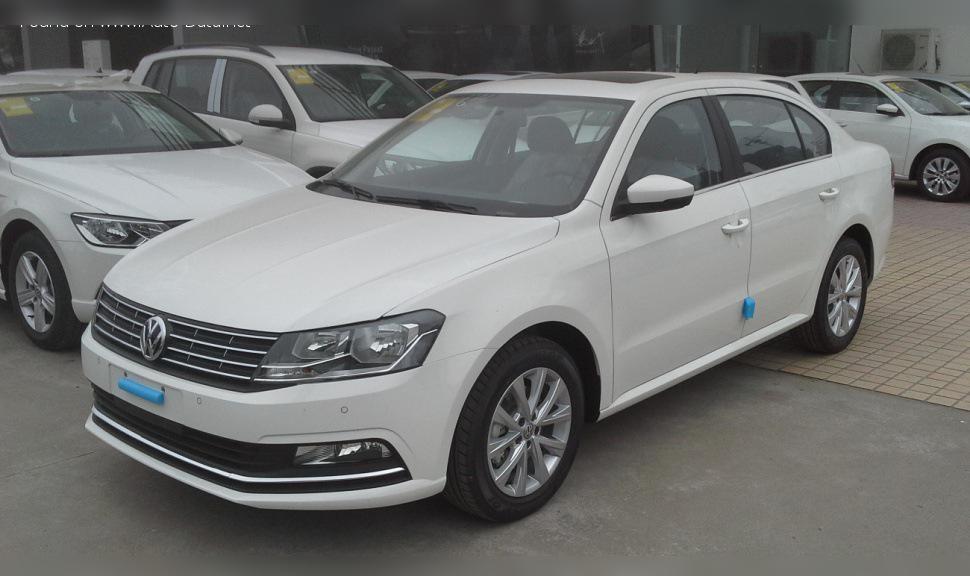
1.4 TSI EA211 (150 HP) – Owner Experiences, Common Issues, Fuel Consumption and Used Car Buying Guide
Key points (TL;DR)
- Timing belt instead of chain: This is the EA211 engine generation which solved the main issues of older TSI engines by switching to a timing belt.
- Performance: 150 HP and 250 Nm offer an excellent balance of power and fuel economy; the engine is not “lazy” in any C‑segment body (such as Lavida, Jetta, Golf).
- Weak point – Water pump: The thermostat and water pump housing is made of plastic and prone to coolant leaks.
- Gearbox (DSG): Paired with the DQ200 7‑speed dry‑clutch gearbox, which requires careful inspection when buying used (mechatronics, clutches).
- Direct injection: Requires good‑quality fuel and occasional intake valve cleaning due to carbon buildup.
- Oil consumption: Significantly lower than on older generations, but regularly checking the dipstick is still mandatory.
Contents
- Introduction and Engine Codes
- Technical Specifications
- Reliability, Maintenance and Common Failures
- Specific Components and Costs
- Fuel Consumption and Performance
- LPG and Tuning
- Gearbox: Manual and DSG
- Used Car Buying Tips and Conclusion
Introduction and Engine Codes
The engine in question belongs to the EA211 family of the Volkswagen Group. This is an aluminum unit that replaced the notorious EA111 engines (the chain‑driven ones that were prone to failure). It was installed in a huge number of models, from the VW Golf 7 and Passat B8 to Škoda Octavia, and even market‑specific models such as the VW Lavida II (a popular sedan based on the Jetta/Bora).
The 150 HP (110 kW) version is often called the “sweet spot”. It offers performance almost on par with the old 1.8 turbo engines, but with significantly lower fuel consumption and weight. It often comes with ACT (Active Cylinder Technology), which shuts down two cylinders under light load to save fuel, although this depends on the exact engine code and market.
Technical Specifications
| Parameter | Value |
|---|---|
| Engine displacement | 1395 cc (1.4 liters) |
| Power output | 110 kW / 150 HP |
| Torque | 250 Nm at 1500–3500 rpm |
| Engine codes (Family) | EA211 (CFB, CZEA, CHPB, CZDA) |
| Injection system | TSI (Direct petrol injection) |
| Forced induction | Turbocharger + Intercooler (water‑to‑air) |
| Camshaft drive | Timing belt |
Reliability and Maintenance
Does this engine use a timing belt or a chain?
This is the most important question. This engine (EA211 series) uses a timing belt. Engineers learned their lesson from the previous generation and went back to a belt, which has proven to be a far more reliable solution. The belt is reinforced and designed to last a long time.
What are the most common issues with this engine?
Although it is very reliable, there are some specific “weak spots”:
- Thermostat and water pump housing: This is the “Achilles’ heel”. The module is made of plastic and often cracks or deforms, which leads to coolant loss. Symptoms include a dropping coolant level in the expansion tank or a coolant smell under the hood.
- Intake valve carbon buildup: Due to direct injection, fuel does not “wash” the intake valves. Over time, soot deposits accumulate, which can reduce power and cause rough running.
- Turbo actuator (wastegate): The turbo actuator rod can seize, resulting in power loss and a “Check Engine” light (EPC fault).
At what mileage should the major timing service be done?
The manufacturer quotes optimistic intervals of up to 210,000 km for timing belt inspection/replacement. However, real‑world experience and mechanics strongly recommend doing the major service between 160,000 km and 180,000 km or after 8–10 years of age. The risk of belt failure is small, but the consequences are catastrophic (piston‑to‑valve contact).
How much oil does this engine take and which viscosity is recommended?
The sump holds approximately 4.0 to 4.5 liters of oil (depending on filter size and exact sump version). The most commonly recommended viscosity is 5W‑30 (VW 504.00 standard) for fixed intervals, or 0W‑20 (VW 508.00) for newer vehicles with long‑life service intervals. For older cars and warmer climates, 5W‑30 or 5W‑40 (high‑quality synthetic) is the best choice.
Does it consume oil between services?
Oil consumption is drastically reduced compared to the old 1.4 TSI engines. Still, TSI engines do “like” to use a bit of oil if driven aggressively. Consumption of around 0.5 liters per 10,000 km is considered perfectly normal. If it uses more than 0.5 liters per 1,000 km, this points to an issue with piston rings or the turbo, but that is rare at low mileage with this generation.
At what mileage should the spark plugs be replaced?
Spark plugs should be replaced every 60,000 km. Since this is a turbocharged direct‑injection engine, the plugs are under high thermal stress. Use only Iridium or Platinum plugs specified in the catalog (NGK or Bosch). Worn plugs can damage the ignition coils.
Specific Components (Costs)
Does this engine have a dual‑mass flywheel?
Yes. The 150 HP, 250 Nm version almost always comes with a dual‑mass flywheel, whether paired with a manual gearbox or DSG. Its purpose is to dampen engine vibrations and protect the gearbox. Its typical lifespan is around 150,000–200,000 km, depending on driving style. Replacement cost falls into the category: Moderately expensive to Expensive (market‑dependent).
What kind of injection system does it use and are the injectors problematic?
The system is direct injection (GDI/FSI) with high pressure (up to 200 bar). Injectors are generally reliable but very sensitive to poor‑quality fuel. A faulty injector may leak (diluting the oil with petrol) or spray poorly (causing rough running). They are not prone to widespread failures like diesel injectors, but replacement is not cheap.
Does the engine have a turbocharger and what is its lifespan?
The engine has a single turbocharger (small in size for quicker response). On some versions, the turbo is integrated with the exhaust manifold. With regular oil changes and allowing the engine to cool down before switching off after hard driving, the turbo will easily last over 200,000–250,000 km.
Does this model have a DPF, EGR valve or AdBlue?
Since this is a petrol engine:
- DPF: It does not have a classic DPF. Models produced after 2018 (Euro 6d‑TEMP) have a GPF (OPF) gasoline particulate filter. A 2015 model most likely does not have a GPF, which is good news for maintenance.
- EGR: It does not use a traditional EGR valve prone to clogging like on diesels; instead, it relies on variable valve timing to achieve internal EGR, which is a more reliable solution.
- AdBlue: None. AdBlue is used only on diesel engines.
Fuel Consumption and Performance
What is the real‑world fuel consumption in city driving?
In heavy city traffic, real‑world consumption ranges between 7.5 and 9.0 liters per 100 km. If you have a heavy right foot, it can go up to 10 liters. The start‑stop system (if you don’t switch it off) can reduce this figure slightly. On the open road it is extremely economical and can use less than 5.5 liters.
Is this engine “lazy” for the weight of the car?
Absolutely not. With 250 Nm of torque available from just 1500 rpm, this engine pulls very well. In a Lavida/Jetta body (weighing around 1300 kg), it feels agile. The 0–100 km/h sprint is usually under 9 seconds, which is more than enough for the average driver.
How does the engine perform on the motorway?
It is an excellent motorway cruiser. Thanks to the 7‑speed DSG (or 6‑speed manual), at 130 km/h the engine spins at around 2,400–2,600 rpm. This means the cabin is quiet and fuel consumption is moderate (around 6.0–6.5 l/100 km). There is enough power in reserve for overtaking without having to downshift all the way to the redline.
Additional Options and Modifications
Is this engine suitable for LPG conversion?
Conditionally yes, but it is expensive. Due to direct injection, you cannot install a standard sequential LPG system. You need a special direct‑injection LPG kit that either uses a petrol‑LPG blend (to cool the petrol injectors) or injects liquid gas through the petrol injectors. Installation cost is high (often over 800–1000 EUR), so it only pays off if you drive very high mileage (over 20–30k km per year).
How far can this engine be safely tuned (Stage 1)?
EA211 engines respond very well to tuning. A Stage 1 remap usually raises power to about 170–180 HP and torque to 300–320 Nm. However, be careful if you have a DSG gearbox (DQ200), as its factory torque limit is rated at 250 Nm. Aggressive tuning can drastically shorten the gearbox’s lifespan.
Gearbox
Which gearboxes are fitted?
The 1.4 TSI 150 HP is most commonly paired with a 6‑speed manual gearbox or a 7‑speed DSG (code DQ200) with dry clutches. In the case of the Lavida, it is precisely this DSG.
Most common gearbox issues
- Manual: Very reliable. Bearing or synchro wear is possible at high mileage, but rare. The main expense is the clutch kit and dual‑mass flywheel.
- DSG (DQ200): This is the more sensitive point. The gearbox has dry clutches that wear out faster in stop‑and‑go city driving. The most common failures are the mechatronics unit (the electro‑hydraulic “brain” of the gearbox) and the clutch pack. Symptoms include juddering when taking off, harsh shifts or delayed response.
At what mileage should the gearbox be serviced?
- Manual: Although VW claims the oil is “lifetime fill”, it is recommended to replace it at 100,000 km.
- DSG DQ200: From the factory it is “sealed for life” (no scheduled maintenance) because there is no external replaceable oil filter and it uses a small amount of oil. However, many specialists recommend changing the gearset oil and checking the mechatronics hydraulic oil every 60,000–80,000 km to extend its lifespan, although on this model the most important things are software updates and clutch calibration.
Buying Used and Conclusion
What to check before buying?
- Cold start: Listen to the engine at first start‑up. Although it doesn’t have a chain, rattling can indicate an issue with the cam phaser or hydraulic lifters.
- Coolant leaks: Check the coolant level and look for white traces of leakage around the thermostat housing (on the right‑hand side of the engine when viewed from the front).
- DSG test: Warm up the car and drive slowly in traffic. The gearbox must not judder, “hesitate” or produce metallic noises when shifting from 1st to 2nd gear.
Conclusion:
The 1.4 TSI EA211 (150 HP) is probably the best petrol engine the VW Group has made in this class over the last 15 years. It has solved the issues of older generations, offers great performance and low fuel consumption. It is ideal for drivers who want the power of a 2‑liter engine with the running costs of a small petrol.
If you choose a car with a DSG gearbox, keep in mind that potential gearbox repair costs (market‑dependent: very expensive) are a reality that must be factored into the price, especially if the car has been used exclusively in city traffic. For the manual version – a strong recommendation with no major reservations.
Was this content useful to you?
Your opinion helps us to improve the quality of the content.