CYAA Engine
- Engine
- 1197 cm3
- Aspiration
- Turbocharger, Intercooler
- Fuel
- Petrol (Gasoline)
- Fuel injection system
- Direct injection
- Power
- 110 hp @ 5000 rpm
- Torque
- 200 Nm
- Cylinders
- 4
- Valves
- 16, 4 per cylinder
- Cylinders position
- Inline
# Vehicles powered by this engine
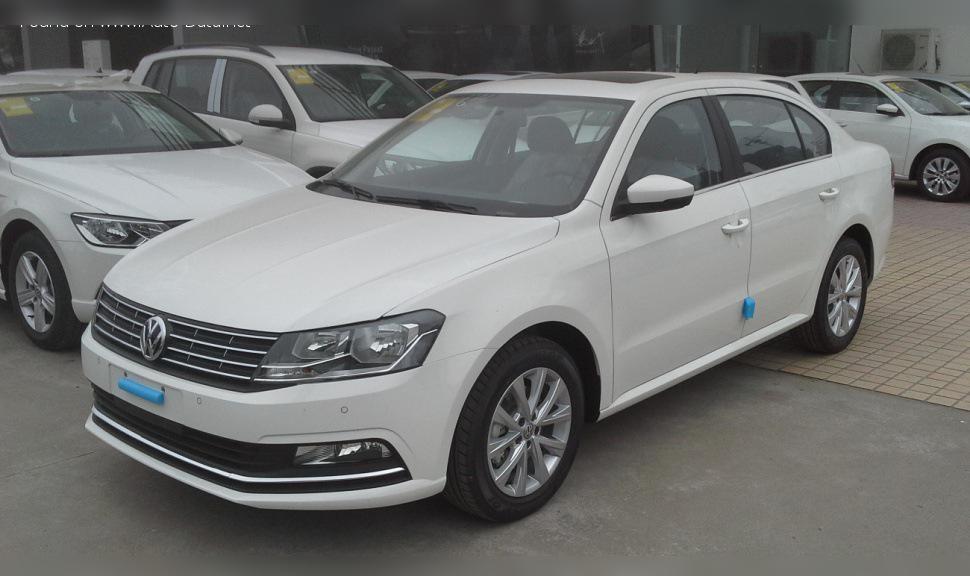
1.2 TSI (CYAA) – Experiences, issues, fuel consumption and used car buying guide
Key points (TL;DR)
- Timing belt instead of chain: This engine belongs to the EA211 family, which means the main issue of older TSI engines (timing chain failure) has been solved. Reliability is drastically better.
- Performance above expectations: With 110 hp and 200 Nm, the engine feels lively in Golf- or Lavida-sized bodies, especially in city driving.
- Direct injection: A sophisticated system that brings low fuel consumption, but is sensitive to poor fuel quality and prone to carbon buildup on intake valves.
- DSG gearbox (DQ200): The biggest “concern” with this powertrain is not the engine, but the 7-speed dry-clutch automatic gearbox if it hasn’t been regularly maintained.
- Oil consumption: Not as pronounced as in older generations, but regular checks are mandatory.
- Recommendation: An excellent choice for drivers who want a petrol engine with low fuel consumption and cover moderate annual mileage (up to 20,000 km per year).
Contents
- Introduction and applications
- Technical specifications
- Reliability and maintenance
- Specific parts and costs
- Fuel consumption and performance
- Additional options (LPG and tuning)
- Gearbox (DSG and manual)
- Buying used and conclusion
Introduction and applications
The engine code CYAA belongs to the modern EA211 generation of Volkswagen engines. Although the specific CYAA code is most often associated with models such as the Volkswagen Lavida II (a popular sedan on the Asian market, similar to the Jetta/Bora), this engine is a technological twin of European 1.2 TSI engines found in the Golf 7 or Škoda Octavia.
This engine is important because it represents Volkswagen’s “retake exam” after the problematic chain-driven series. A timing belt was introduced, the cylinder head was rotated 180 degrees, and the exhaust manifold was integrated into the head for faster warm-up. The result is an engine that is quieter, more economical and far more reliable than its predecessor.
Technical specifications
| Parameter | Data |
|---|---|
| Displacement | 1197 cc (1.2 litres) |
| Power | 81 kW / 110 hp (at 5000 rpm) |
| Torque | 200 Nm (at 2000–3500 rpm) |
| Engine code | CYAA (EA211 family) |
| Injection type | TSI – Direct petrol injection |
| Induction | Turbocharger with intercooler |
| Number of cylinders/valves | 4 cylinders / 16 valves |
Reliability and maintenance
Timing belt or chain?
The CYAA engine uses a timing belt. This is a key advantage. Unlike the old 1.2 TSI (EA111), which had a problematic chain prone to stretching and skipping, the timing belt on this engine is extremely durable and quiet. The manufacturer specifies long replacement intervals, but in practice caution is advised.
Major service
The factory interval for checking or replacing the belt is often listed at up to 210,000 km for the first fitment, which is overly optimistic for real-world conditions. Experienced mechanics recommend doing the major service every 150,000 km or 7 to 8 years (whichever comes first). A timing belt kit with water pump is not cheap, but it is cheaper than an engine failure. (Service cost: Medium-expensive, depending on the market).
Most common failures
Although reliable, the CYAA has a few weak points:
- Turbo actuator: A common issue on EA211 engines. The electronic actuator (wastegate) can seize, which leads to the EPC light coming on and loss of power. It often has to be replaced as a complete unit.
- Coolant leaks: The thermostat housing and water pump are combined in a single (plastic) module that can crack over time or start leaking at the gasket.
- Carbon buildup: As with any direct-injection engine, the intake valves are not “washed” by fuel, so carbon deposits gradually build up and can cause rough idle.
Oil and oil consumption
This engine holds approximately 4.0 litres of oil. The recommended grade is usually 5W-30 (VW 504.00/507.00 standard) or, more rarely, 0W-20 (VW 508.00) if the vehicle is set up for long-life servicing in specific climate conditions. Always check the owner’s manual.
Does it burn oil? Unlike the notorious older-generation 1.8 and 2.0 TSI engines, the 1.2 TSI (CYAA) does not have a pronounced oil consumption issue. Consumption of up to 0.5 litres per 10,000 km is perfectly acceptable and normal. If it uses more than 1 litre per service interval, this may indicate a problem with the turbocharger or piston rings, but that is rare at lower mileage.
Spark plugs
Since this is a turbocharged petrol engine with direct injection, the spark plugs are under higher stress. Iridium or platinum plugs are used. The recommended replacement interval is every 60,000 km or 4 years. Symptoms of worn plugs are hesitation under acceleration and rough idle.
Specific parts (Costs)
Flywheel
The situation here depends on the gearbox. Manual gearboxes paired with the 1.2 TSI usually have a solid flywheel, which makes maintenance cheaper. However, the Lavida II model with a DSG gearbox has a specific flywheel adapted to the automatic transmission. Although it is not a classic dual-mass flywheel like on diesels that often fail, it still has a finite lifespan, but it causes fewer issues than the clutches inside the DSG itself.
Fuel injection system
The system is direct injection (TSI). Injectors operate at high pressure. They are not as problematic as on diesels, but they are sensitive to poor fuel quality. Replacing a single injector can be expensive (depends on the market). As prevention, it is advisable to occasionally use a fuel system cleaning additive.
Turbocharger
The engine has a small (low-pressure) turbocharger that spools up quickly. With regular oil changes, its service life is over 200,000 km. Its main enemy is switching off a hot engine immediately after hard driving on the motorway (let it idle for a minute before shutting down).
EGR, DPF and AdBlue
This petrol engine does not have a DPF filter (if produced before the introduction of GPF filters around 2018, and the 2015 model definitely doesn’t have one). It also does not use AdBlue fluid. As for the EGR valve, TSI engines use variable valve timing (internal recirculation) to achieve the EGR effect, so a classic EGR valve that clogs with soot is usually not present as a physical component that needs replacing, which is a big plus.
Fuel consumption and performance
Real-world fuel consumption
- City driving: Expect between 6.5 and 8.5 l/100 km, depending on traffic and how heavy your right foot is. The DSG gearbox helps keep consumption lower in the city because it upshifts early.
- Open road: At 80–90 km/h, consumption drops to an impressive 4.5–5.0 l/100 km.
- Combined: A realistic average is around 6.5 l/100 km.
Performance – Is it sluggish?
With 200 Nm of torque available from as low as 2000 rpm, this engine is not sluggish. In city driving and when overtaking on country roads, it feels much stronger than the paper figure (1.2 litres) suggests. The Lavida (or similar sedans) are relatively light (around 1250–1300 kg), so the engine has no problem pulling the body.
Motorway
On the motorway the engine is perfectly adequate. At 130 km/h in 7th gear (DSG), it spins at about 2,800–3,000 rpm, which is acceptable in terms of noise and fuel consumption. However, at speeds above 140 km/h, consumption rises sharply and acceleration becomes sluggish.
Additional options and modifications
LPG conversion
Since this is a direct-injection engine (injectors are in the cylinder), a standard sequential LPG system cannot be installed. A special system for direct-injection engines is required. There are two options:
- A system that uses about 15–20% petrol to cool the petrol injectors (cheaper, but with less savings).
- A liquid LPG injection system using the petrol injectors (very expensive, often not cost-effective for older vehicles).
Conclusion: It is not an ideal candidate for LPG unless you cover very high annual mileage.
Chip tuning (Stage 1)
This engine responds very well to remapping. A “Stage 1” software tune can safely raise power from 110 hp to around 130–135 hp and torque to around 240 Nm. However, keep in mind that the DSG gearbox (DQ200) has a torque limit of 250 Nm, so aggressive tuning can drastically shorten the gearbox’s lifespan.
Gearbox
Types of gearboxes
This engine is most commonly paired with a 7-speed DSG (code DQ200) with a dry clutch. There are also versions with a 6-speed manual gearbox.
DSG gearbox issues (DQ200)
This is the most sensitive part of the whole car. The DQ200 is a “dry” DSG, which means the clutch plates do not run in oil.
- Clutch wear: In stop-and-go city traffic, the clutches wear out faster. Symptoms are shuddering when moving off or when shifting from 1st to 2nd gear. The cost of replacing the clutch kit is high (expensive).
- Mechatronics: The electro-hydraulic unit that controls the gearbox can fail (often due to overheating or cracking of the pressure accumulator housing). Repair is very expensive.
Gearbox maintenance
- Manual: The oil is changed preventively at around 100,000 km.
- DSG (DQ200): Although VW often states that the oil in this gearbox is “lifetime fill”, experts recommend changing the oil in the gearbox section and the hydraulic oil in the mechatronics every 60,000–80,000 km to extend its service life.
Buying used and conclusion
What to check before buying?
- Cold start: Listen to the engine at the first start. Although it has a belt, the variable camshaft pulley can rattle if it is faulty.
- Gearbox test drive: The DSG must shift smoothly and almost imperceptibly. If you feel jolts, hesitation or judder when starting uphill – walk away from that car or negotiate a discount to cover the repair (which is expensive).
- Coolant leaks: Check the coolant level and look for white traces around the thermostat housing on the left side of the engine.
Final conclusion
The 1.2 TSI (CYAA) is an excellent small petrol engine that offers a good balance between performance and economy. It is significantly better than older generations and is ideal for city and suburban driving. The biggest risk when buying is not the engine, but the DSG gearbox. If you are buying a used car with higher mileage (over 150,000 km), the manual gearbox is the safer (cheaper) option. If you choose a DSG, check the service history carefully and set aside a budget for a potential clutch replacement.
Was this content useful to you?
Your opinion helps us to improve the quality of the content.