SQRE4G15B Engine
- Engine
- 1499 cm3
- Aspiration
- Naturally aspirated engine
- Fuel
- Petrol (Gasoline)
- Fuel injection system
- Multi-port manifold injection
- Power
- 116 hp @ 6150 rpm
- Torque
- 141 Nm @ 3800 rpm
- Cylinders
- 4
- Valves
- 16, 4 per cylinder
- Cylinders position
- Inline
- Valvetrain
- DVVT
- Oil capacity
- 4 l
# Vehicles powered by this engine
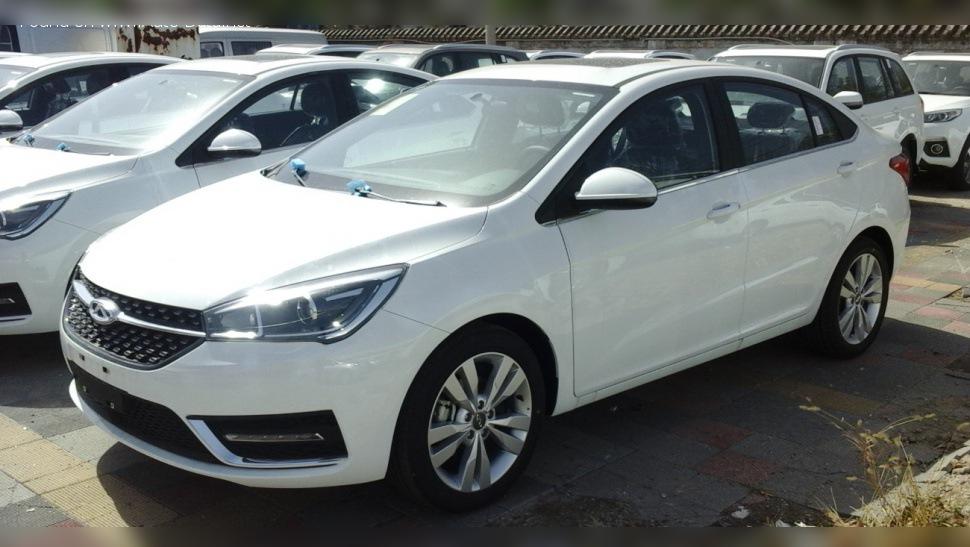
SQRE4G15B 1.5 DVVT: Experiences, issues, fuel consumption and maintenance
The Chinese automotive industry has come a long way, and the SQRE4G15B engine is one of the pillars of their mass-market strategy. Installed primarily in the Chery Arrizo 5, this 1.5-liter naturally aspirated petrol engine was designed with a single mission: simplicity and low running costs. Although it looks modest on paper, in practice it brings a specific set of pros and cons that every potential owner needs to know.
Key points in short (TL;DR)
- Simple construction: No turbocharger, no direct injection, no dual-mass flywheel (with the manual gearbox).
- Timing chain: Uses a timing chain instead of a belt, which theoretically reduces maintenance costs.
- LPG-friendly: Thanks to MPI injection, it is an ideal candidate for LPG conversion.
- Performance: The engine is quite sluggish at low revs due to the modest torque (141 Nm).
- Gearbox: The CVT gearbox requires strictly regular maintenance; the manual is robust.
- Fuel consumption: In the city it can use more fuel than you would expect from a 1.5 engine, especially in the heavy Arrizo body.
- Electronics: Sensors and ignition coils are a more common source of problems than the engine’s mechanical parts.
Contents
- Technical specifications
- Reliability and maintenance
- Specific parts (costs)
- Fuel consumption and performance
- Additional options and modifications
- Gearbox: Manual vs CVT
- Buying used and conclusion
Technical specifications
| Specification | Data |
|---|---|
| Engine code | SQRE4G15B |
| Displacement | 1499 cc (1.5 L) |
| Power | 85 kW (116 hp) |
| Torque | 141 Nm at 3800 rpm |
| Injection type | MPI (Multi-Point Injection) – indirect |
| Aspiration | Naturally aspirated |
| Cylinders/valves | 4 cylinders / 16 valves (DVVT) |
Reliability and maintenance
Belt or chain?
The SQRE4G15B engine uses a timing chain for valve timing. This is good news for most drivers because there is no fixed replacement interval like with a belt. The chain is designed to last as long as the engine, but in practice it is recommended to check the condition of the chain and tensioner after 150,000 km or if you hear metallic rattling on a cold start.
Most common failures
Although the mechanical side is “old school”, problems tend to appear around it:
- Sensors (lambda sensor, crankshaft sensor): A common cause of the “Check Engine” light. Symptoms include rough idle or stalling.
- Ignition coils: They can fail, causing the engine to run on three cylinders and lose power. This is not expensive to fix (depends on the market).
- Engine mounts: The rubber in the mounts can wear out earlier than on European competitors, transmitting vibrations into the cabin.
- Oil leaks: Pay attention to the valve cover gasket.
Service intervals and oil
There is no “major service” in the classic sense (timing belt replacement), but at around 100,000–120,000 km it is recommended to replace the auxiliary (serpentine) belt, idler, tensioner and water pump.
Minor service is done every 10,000 to 15,000 km (or once a year). This engine takes approximately 4.5 liters of oil. The recommended grade is 5W-30 or 5W-40 (synthetic), depending on climate conditions.
Oil consumption
This engine generally does not consume large amounts of oil if it is in good condition. Consumption of up to 0.5 liters per 10,000 km is considered acceptable. If it uses more than that, the problem is usually valve stem seals or (less often) piston rings due to poor maintenance.
Spark plugs
Since this is a petrol engine, spark plugs are a consumable item. Standard nickel plugs are replaced every 30,000 km. If you use iridium plugs, the interval can be extended to 60,000–80,000 km. Faulty spark plugs directly contribute to ignition coil failure.
Specific parts (costs)
Dual-mass flywheel and clutch
This is one of the biggest advantages of this engine. In the version with a manual gearbox, the engine does NOT have a dual-mass flywheel, but uses a classic solid flywheel instead. This drastically reduces the cost of clutch replacement. In CVT models, the power transfer system is different (torque converter) and there is also no conventional dual-mass flywheel that fails like on diesels.
Injection system and turbo
The SQRE4G15B is a naturally aspirated engine (no turbo). This means there are no expensive failures of turbochargers, intercoolers or pressurized hoses. The injection system is MPI (Multi-Point Injection), which means the injectors are not exposed to extreme pressures like in direct injection (GDI). Injectors are durable, cheap to clean and rarely cause problems before 200,000 km.
Emissions equipment (DPF, EGR, AdBlue)
Since this is a petrol engine:
- It does NOT have a DPF filter (which diesels do).
- It does NOT have an AdBlue system.
- It has a catalytic converter and an exhaust gas recirculation system (EGR valve or a variable valve timing strategy that simulates EGR). The catalytic converter can fail if the car is driven with bad spark plugs/coils or poor-quality LPG.
Fuel consumption and performance
Real-world fuel consumption
Don’t let the small displacement fool you. This is an “old school” engine in a relatively heavy body (Chery Arrizo 5).
- City driving: Expect between 8.5 and 10.5 l/100 km. If you drive a CVT in heavy traffic, consumption easily goes towards the upper end.
- Highway / open road: At 80–90 km/h, fuel consumption drops to around 6.0–6.5 l/100 km.
Is the engine “lazy”?
Honestly – yes. With 141 Nm of torque available only at 3800 rpm, this engine needs to be “revved” to pull properly. The Arrizo 5 is not a light car. It is perfectly adequate for relaxed city driving, but overtaking on country roads requires downshifting and high revs.
Behavior on the motorway
At 130 km/h the engine is quite noisy. Due to the lack of a sixth gear (on the manual) or the characteristics of the CVT, the engine spins at around 3500–4000 rpm at that speed. This increases noise and fuel consumption. It is not an ideal engine for long motorway trips, but it will get the job done.
Additional options and modifications
LPG conversion
This is an excellent engine for LPG. Thanks to indirect (MPI) injection, installation is simple, inexpensive (standard sequential system) and cost-effective. There is no need for expensive systems for direct injection. The valves are relatively durable, but it is recommended to check valve clearances every 40–50 thousand km if you run on LPG (if the engine does not have hydraulic lifters, which depends on the specific cylinder head version).
Remapping (tuning)
Forget about it. On naturally aspirated petrol engines, a Stage 1 remap brings a negligible 3 to 5 hp, which you will not feel in real driving. It is better to invest that money in quality maintenance or tyres.
Gearbox: Manual vs CVT
There are two gearbox options with this engine:
- 5-speed manual gearbox: Very reliable. Failures are rare. The clutch kit is cheap to replace. The only downside is the lack of a sixth gear for motorway driving. Gearbox oil should be changed every 60,000 km.
- CVT automatic gearbox (QR019CHA and similar): This is the more sensitive point. The CVT offers smooth, jerk-free driving, but suffers from the “rubber band effect” (the engine revs high, the car accelerates slowly).
- Failures: Overheating if driven aggressively for long periods, belt slip inside the gearbox if the oil is not changed.
- Maintenance: CVT oil changes are MANDATORY every 40,000–50,000 km. If you are buying a used car with a CVT and there is no proof of regular oil changes, it is a risk.
- Repairing a CVT gearbox is very expensive (depends on the market, but often exceeds the value of a used car).
Buying used and conclusion
Before buying a car with the SQRE4G15B engine, pay attention to:
- Timing chain noise: Listen to a cold start. If you hear rattling that does not disappear after 2–3 seconds, the chain or tensioner needs replacement.
- CVT behavior: If it’s an automatic, the gearbox must operate smoothly, without jerks when setting off and without strange noises (whining).
- Warning lights: Check that the “Check Engine” light is off (and that it actually lights up when you turn the ignition on).
- Idle quality: The engine should idle smoothly. Fluctuating revs indicate a dirty throttle body or sensor issues.
Conclusion: The SQRE4G15B is an engine for rational buyers. It is not fast, it is not particularly refined, but it is mechanically simple and cheap to maintain. It is ideal for drivers who cover a lot of city mileage and plan to install LPG. If you are looking for performance or often drive on the motorway, this engine will probably disappoint you. The recommendation goes to the manual gearbox due to lower maintenance costs and higher long-term reliability.
Was this content useful to you?
Your opinion helps us to improve the quality of the content.