CXFA, CXHA Engine
- Engine
- 1968 cm3
- Aspiration
- Turbocharger, Intercooler
- Fuel
- Diesel
- Fuel injection system
- Diesel Commonrail
- Power
- 150 hp
- Torque
- 340 Nm
- Cylinders
- 4
- Valves
- 16, 4 per cylinder
- Cylinders position
- Inline
- Valvetrain
- DOHC
- Oil capacity
- 7.4 l
- Systems
- Start & Stop System, Particulate filter
# Vehicles powered by this engine


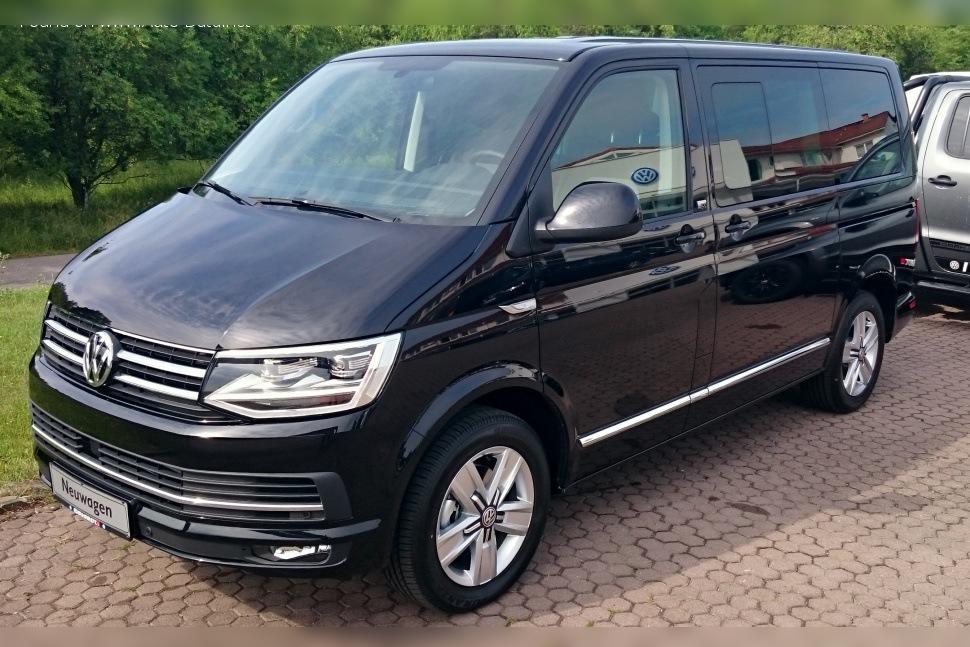
2.0 TDI (CXFA, CXHA) 150 HP: Experiences, Problems, Fuel Consumption and Maintenance in VW T6/T6.1
1. Key points (TL;DR)
- Most sensible choice: The 150 HP (110 kW) version is considered the “golden mean” for the Multivan/Transporter T6 and T6.1. It is much more reliable than the BiTDI versions (180/204 HP).
- AdBlue system: This is a weak point of all modern Euro 6 diesels, including this one. Problems with sensors and crystallization are common.
- Timing belt drive: There is no chain, which is good news for costs, but it requires regular timing belt kit replacement.
- Fuel consumption: Due to the “boxy” aerodynamics and vehicle weight, don’t expect miracles. It consumes a lot in the city, but is acceptable on the open road.
- DSG gearbox: This engine is often paired with the DQ500 (7-speed, wet clutch), which is extremely robust if the oil is changed on time.
- EGR valve: Prone to clogging and EGR cooler leaks, especially in city driving.
- Recommendation: Ideal for family trips and towing, but it requires quality maintenance and avoiding short trips.
Contents
- Introduction and application
- Technical specifications
- Reliability and maintenance
- Specific components (Injection system, Turbo, Emissions)
- Fuel consumption and performance
- Gearbox (Manual vs DSG)
- Additional options and tuning
- Buying used and conclusion
Introduction and application
The engines with codes CXFA and CXHA belong to the EA288 family (Nutz version – adapted for commercial vehicles) and represent the heart of Volkswagen’s offering for the T6 and facelifted T6.1 Multivan. Unlike the passenger car versions (in the Golf or Passat), this engine variant is reinforced to withstand the huge loads carried by a van weighing over 2 tons.
This power unit is crucial because it offers the balance most buyers are looking for: enough power to pull a fully loaded van uphill, while avoiding the complexity and expensive failures of the notorious BiTDI (biturbo) engines. It is installed in a wide range of models, from basic Transporters to luxury Multivan Highline versions, often in combination with 4MOTION all-wheel drive.
Technical specifications
| Parameter | Data |
|---|---|
| Engine displacement | 1968 cc (2.0 litres) |
| Power | 110 kW / 150 HP |
| Torque | 340 Nm at 1500–3000 rpm |
| Engine codes | CXFA, CXHA (Euro 6) |
| Injection type | Common Rail (Direct injection) |
| Forced induction | Single variable-geometry turbocharger (VGT) + intercooler |
| Number of cylinders / valves | 4 / 16 |
Reliability and maintenance
Timing: belt or chain?
The CXFA and CXHA engines use a timing belt to drive the camshafts. For this type of vehicle, this is, in my opinion, the better option, because modern belts are quiet and reliable, and you avoid the risk of chain stretch that plagued some older VW engines. The water pump is also driven by the timing belt.
Major service and intervals
The factory recommendation for timing belt replacement is often optimistic (210,000 km for some markets), but real-world practice and mechanics’ experience say otherwise. Due to the heavy load on the engine in vans, the major service should be done at a maximum of 150,000 to 160,000 km or every 5 to 7 years, whichever comes first. A snapped belt leads to total engine destruction.
Oil: quantity and consumption
Pay attention here. The oil sump on these commercial 2.0 TDI versions is larger than on passenger cars. The engine takes about 7.4 litres of oil. You must use 5W-30 oil with VW 507.00 specification (Low SAPS because of the DPF).
Does it consume oil? Yes, it is completely normal for this engine to consume 0.5 to 1 litre of oil per 10,000 km, especially if driven on the motorway at higher speeds. However, if consumption exceeds 0.5 litres per 1,000 km, this points to a problem with the piston rings or turbocharger. Check the oil level regularly, because the level sensor sometimes warns too late.
Most common failures
Although robust, the engine is not immune to problems:
- Oil leaks: Often occur at the crankshaft seal or the valve cover.
- Auxiliary (serpentine) belt failure: If not replaced regularly, it can snap and get caught under the timing belt, causing catastrophic damage. The auxiliary belt tensioner is a critical point.
- Coolant loss: The most common culprit is the EGR cooler, which cracks internally, so the engine “drinks” coolant. Symptoms are white smoke from the exhaust and a drop in the expansion tank level.
Specific components (Costs)
Injection system
Common Rail injectors are used (usually Bosch solenoid injectors on these versions, although it can vary). They have proven to be very durable and less sensitive than the older piezo injectors. Average service life is over 250,000 km. If a problem appears, symptoms include rough idle (“knocking”) and increased fuel consumption. Refurbishment is possible and the price is mid-range (depends on the market).
Turbocharger
This engine has a single turbocharger with variable geometry. This is a huge advantage over the BiTDI (which has two turbos and often fails). The turbo on CXFA/CXHA engines is long-lasting with regular oil changes and proper cool-down after driving. Failures usually occur only at high mileage (over 250k km).
Dual-mass flywheel
Yes, the engine has a dual-mass flywheel, regardless of whether it is paired with a manual or DSG gearbox. In the Multivan, the flywheel is under heavy stress due to the vehicle’s weight. Expect replacement between 150,000 and 200,000 km. Symptoms are metallic noises (clunking) when starting and switching off the engine, as well as vibrations at idle. This is a very expensive part to replace.
Emissions: DPF, EGR and AdBlue
This is the “Achilles’ heel” of this model:
- DPF filter: If the vehicle is used only in the city, regenerations will not complete successfully and the filter will clog. Replacement is extremely expensive.
- EGR valve: Prone to soot build-up, which leads to power loss and the “Check Engine” light coming on. It is often replaced together with the EGR cooler.
- AdBlue system: The vehicle has an SCR catalyst and uses AdBlue fluid. Problems are common: the heater in the AdBlue tank fails, the dosing injector crystallizes and clogs, or the NOx sensors go crazy. Proper maintenance includes using anti-crystallization additives with every AdBlue fill-up.
Fuel consumption and performance
City driving
The Multivan is heavy and has the aerodynamics of a kiosk. In real city driving with stop-and-go traffic, expect consumption of 9 to 11 litres per 100 km. In winter or with 4MOTION, this can easily go up to 12 litres.
Open road and motorway
On secondary roads (around 80 km/h), consumption can drop to about 7 litres. However, on the motorway at 130 km/h, due to the large frontal area, consumption is around 8.5 to 9.5 litres.
Is the engine “sluggish”?
With 340 Nm of torque, the engine is not sluggish, but it’s not a racer either. 150 HP is the lower limit for comfortable driving in such a heavy vehicle. The engine copes well with the body in the city and up to 120 km/h. Above that speed, acceleration becomes more sluggish. If you often tow a heavy trailer or the van is constantly overloaded, you will feel a lack of power on climbs, but for the average user it is perfectly adequate.
At 130 km/h (in 7th gear with the DSG), the engine runs at about 2200–2400 rpm, which is pleasant for cruising and not too noisy.
Gearbox: Manual vs DSG
Gearbox options
It is available with a 6-speed manual gearbox and the well-known 7-speed DSG (code DQ500).
Experience and maintenance
- Manual gearbox: Very reliable. Failures of the gearbox itself are rare. The main expense is the clutch kit and dual-mass flywheel. Replacing the kit is expensive (depends on the market).
- DSG (DQ500): This is one of the best automatic gearboxes in the VW Group. It has “wet” clutches (running in oil) and is designed for high torque. It is much more reliable than the smaller DSG units. However, it requires oil and filter changes in the gearbox strictly every 60,000 km. If this is ignored, the mechatronics (the gearbox “brain”) fails, and repair costs a small fortune.
Additional options and modifications
Chip tuning (Stage 1)
This engine is very suitable for remapping. With a “software unlock” (Stage 1), power can safely be raised to about 185–190 HP and torque to about 400–420 Nm.
Risk: Increasing power puts additional stress on the dual-mass flywheel and turbocharger. If you have a DSG gearbox, it is recommended to remap the gearbox as well so that clutch pressure is adapted to the new torque. Do this only if the engine is mechanically in perfect condition.
Buying used and conclusion
What to check before buying?
- Flywheel noise: Listen for knocking while the engine is idling and when switching it off.
- Cold start: The engine must start immediately. Long cranking can indicate a problem with the injectors or high-pressure pump.
- Diagnostics (VCDS): Be sure to check DPF status (how many grams of ash it contains) and injector corrections. Also check for any faults related to the AdBlue system.
- DSG service history: If there is no proof that the gearbox oil was changed at 60k km intervals, skip that car.
Conclusion: Who is it for?
The VW Multivan T6/T6.1 with the 2.0 TDI (150 HP) engine is the best buy in this class. Although the BiTDI versions seem more attractive because of their power, the 150 HP version lets you sleep peacefully. It is powerful enough for family trips, VIP transport or work, and while maintenance costs are high compared to small cars, they are acceptable for a van of this class.
If you are looking for a reliable workhorse or family cruiser, look specifically for the engine codes CXFA or CXHA, preferably paired with the DSG gearbox, which makes driving incomparably easier.
Was this content useful to you?
Your opinion helps us to improve the quality of the content.