CUKC Engine
- Engine
- 1395 cm3
- Aspiration
- Turbocharger, Intercooler
- Fuel
- Petrol / electricity
- Fuel injection system
- Direct injection
- Power
- 156 hp
- Torque
- 250 Nm
- Cylinders
- 4
- Valves
- 16, 4 per cylinder
- Cylinders position
- Inline
- Valvetrain
- DOHC
- Oil capacity
- 4 l
- Systems
- Start & Stop System
# Vehicles powered by this engine
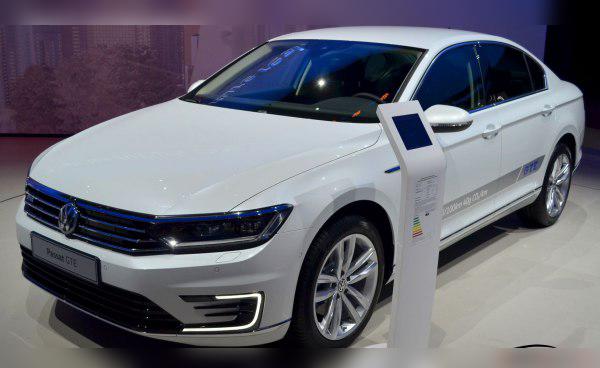
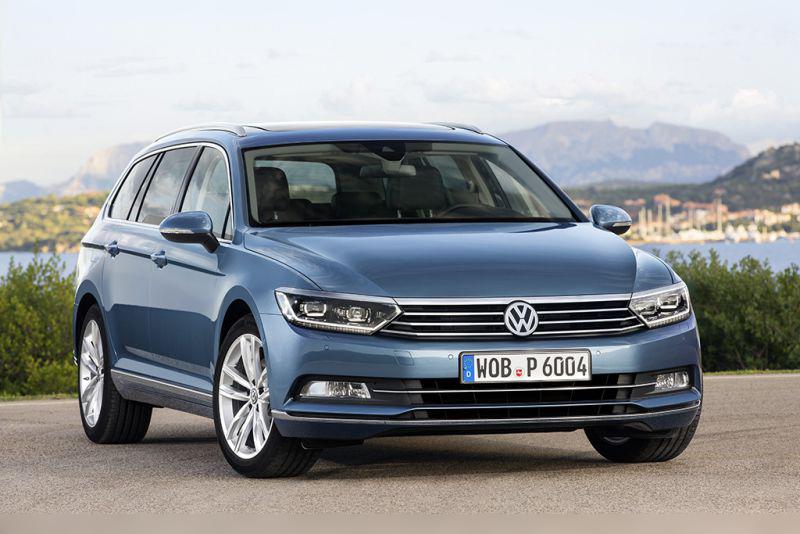
1.4 TSI GTE (CUKC) – Experiences, issues, fuel consumption and buying used
The engine designated as CUKC is the heart of the Volkswagen Group’s hybrid drivetrain, specifically designed for GTE models. This is not an ordinary 1.4 TSI you’ll find in a “poverty spec” Golf; it is a technologically adapted unit from the EA211 family that works in tandem with a powerful electric motor. If you’re considering a Passat B8 GTE, you’re buying a complex system where the internal combustion engine (ICE) plays only half the role.
In the text below we analyze in detail what awaits you with this “hybrid heart”, whether maintenance is a nightmare and whether fuel savings evaporate through repairs.
1. Key points in short (TL;DR)
- Timing drive: Timing belt (much more reliable solution than the old chains).
- Power: The petrol engine alone has 156 hp, but system output is an impressive 218 hp.
- Gearbox: Exclusively a special DSG (DQ400e) – requires strictly regular maintenance.
- Fuel consumption: Phenomenal if you regularly charge the battery (below 3L), average if you drive on petrol only (around 7L).
- Main downside: Complex cooling system and potentially expensive failures of the gearbox mechatronics or the high-voltage battery.
- Recommendation: Excellent for those who have a garage/charger and drive a lot in the city, and travel on weekends.
Contents
- Technical specifications
- Reliability and maintenance
- Specific parts and costs
- Fuel consumption and performance
- Gearbox (DSG DQ400e)
- Additional options and modifications
- Buying used and conclusion
Technical specifications
| Parameter | Data |
|---|---|
| Engine code | CUKC (EA211 family) |
| Displacement | 1395 cc (1.4 litres) |
| Power (petrol engine) | 115 kW (156 hp) at 5000–6000 rpm |
| System power (hybrid) | 160 kW (218 hp) – in GTE mode |
| Torque (petrol) | 250 Nm at 1500–3500 rpm |
| System torque | 400 Nm (combined) |
| Injection type | Direct injection (TSI) |
| Charging | Turbocharger + intercooler |
| High-voltage battery | 9.9 kWh (pre-facelift) / 13 kWh (facelift) Li-ion |
Reliability and maintenance
Does this engine have a timing belt or chain?
The CUKC engine belongs to the more modern EA211 series and uses a timing belt. This is excellent news because previous generations of 1.4 TSI engines (EA111) had notorious issues with chain stretching and breaking. The belt on this engine is reinforced and designed to last long, but given the frequent starts and stops in hybrid operation, visual inspection is mandatory.
What are the most common failures on this engine?
Although mechanically reliable, the CUKC has several weak points:
- Coolant leaks: The thermostat housing and water pump (which is part of the thermal management system) are made of plastic that cracks over time due to heat cycles. If you notice the coolant level dropping, this is the first suspect.
- Intake valve carbon build-up: As with any direct-injection engine, the valves are not “washed” by fuel, so carbon deposits build up. This can lead to rough idle or loss of power at higher mileage.
- Hybrid system (charging): Problems are common with the charge flap mechanism (won’t open/close) or with the on-board charger itself, which can fail and is an expensive repair.
At what mileage is the major service due?
Volkswagen often states intervals of 210,000 km for belt replacement, which in practice is far too optimistic. For peace of mind, it is recommended to replace the timing kit (belt, tensioners, water pump) between 150,000 km and 180,000 km or every 7–8 years. (Depends on the market and the recommendation of the local service centre.)
How many litres of oil does this engine take and which grade is recommended?
The engine takes approximately 4.0 litres of oil. Fully synthetic 5W-30 oil that meets strict VW standards (most commonly VW 504.00 / 507.00) is recommended. On hybrids, oil quality is crucial because the engine often starts cold under load when the battery is depleted.
Does it consume oil between services?
Unlike older TSI engines, the CUKC is not known as a heavy oil consumer. Consumption of up to 0.5 litres per 10,000 km is considered completely normal and acceptable. If it uses more than a litre between services, this may indicate an issue with the turbocharger or piston rings, but this is not a systemic fault of this model.
At what mileage should the spark plugs be replaced?
Due to the specific operation of a hybrid (frequent starts), the spark plugs are under more stress than on a regular petrol engine. It is recommended to replace them every 60,000 km or 4 years. Use only iridium/platinum spark plugs specified in the catalogue (NGK or Bosch).
Specific parts (costs)
Does the engine have a dual-mass flywheel?
Yes, it does. Although it’s an automatic, the DSG gearbox combined with this engine uses a dual-mass flywheel (DMF) to dampen engine vibrations before they are transmitted to the gearbox. Due to the high torque (especially in GTE mode when both motors “pull”), the flywheel is under heavy load. Failure symptoms are metallic knocking when switching the engine off or vibrations at idle.
What kind of injection system does it have and are the injectors problematic?
It uses high-pressure direct injection. The injectors are generally reliable but sensitive to poor fuel quality. Injector failure manifests as engine “misfire”, a lit “Check Engine” light and a strong smell of raw petrol in the exhaust. A single injector is not cheap (depends on the market), so it is advisable to occasionally use fuel system cleaning additives.
Does this engine have a turbocharger?
Yes, it has a single turbocharger with water-cooled intercooler (integrated into the intake manifold on the EA211 series). Turbo lifespan is long, often exceeding 200,000 km with regular oil changes. The hybrid system helps the turbo because the electric motor takes over the load during sudden acceleration from low revs, reducing turbo lag and stress on the component.
Does this model have a DPF filter or EGR valve?
As a petrol engine, it does not have a DPF (Diesel Particulate Filter), but newer model years may have a GPF (Gasoline Particulate Filter). This engine does have an EGR valve, but on petrol engines it clogs much less frequently than on diesels because petrol produces less soot. EGR issues are rare on this engine.
Does this engine use AdBlue?
No. AdBlue is used exclusively on diesel engines to reduce NOx emissions. Here you don’t have that cost or any concern about a urea dosing system.
Fuel consumption and performance
What is the real fuel consumption in city driving?
This is a trick question with hybrids.
- If you charge the battery: Petrol consumption is 0 litres as long as you have charge (real electric range is 35–45 km in summer, 25–30 km in winter).
- If the battery is empty (Hybrid mode): City consumption ranges between 6.5 and 8.5 litres per 100 km. Regenerative braking helps a lot in stop-and-go traffic.
Is this engine “lazy” for the weight of the body?
Absolutely not. The Passat GTE is a heavy car (because of the batteries), but the combination of the 1.4 TSI and the electric motor delivers 400 Nm of torque instantly. In GTE mode, the car “pins you to the seat” and accelerates to 100 km/h in under 8 seconds. Even when the battery is “empty”, the system always keeps a buffer for sudden acceleration, so you will never be left with only the 156 hp petrol engine in critical situations.
What is the engine like on the motorway?
On the motorway, the petrol engine takes the primary role. At 130 km/h, the gearbox is in 6th gear and revs are around 2500–2800 rpm. Driving is quiet and comfortable. Fuel consumption on the open road (without battery assistance) is a realistic 6.0 to 7.5 l/100 km, which is quite acceptable for a large saloon/estate.
Additional options and modifications
Is this engine suitable for LPG conversion?
Not recommended. Although physically possible, the conversion is very expensive and complicated due to direct injection (it requires liquid-phase LPG or a system that also uses petrol for injector cooling). Also, there is nowhere to place the tank – the spare wheel well is occupied by the battery or the fuel tank (which is relocated). There is no economic logic in fitting LPG to a GTE model.
How far can this engine be safely tuned (Stage 1)?
The petrol engine (CUKC) can be software-tuned to about 175–180 hp. However, caution! The total system power and torque must not exceed the limits of the DSG gearbox. The DQ400e gearbox is rated at 400 Nm, which is exactly what the GTE delivers from the factory. Any aggressive tuning risks gearbox failure or overheating of hybrid components. The recommendation is to leave it stock.
Gearbox (DSG DQ400e)
Which gearboxes are fitted?
With the CUKC engine in GTE form you only get a 6-speed DSG designated DQ400e. There is no manual gearbox. This is a specific gearbox with “wet” clutches, with the electric motor integrated into the housing. It actually has three clutches – two for shifting gears (like a classic DSG) and a third that disconnects the petrol engine from the electric motor to allow pure electric driving.
Most common failures and maintenance?
The biggest enemy of this gearbox is the mechatronics (the gearbox brain). Failure symptoms are harsh gear changes, delay when engaging “D” or “R”, or complete loss of drive. Mechatronics repair is very expensive (often over 1000 EUR, depending on the market).
Gearbox service: It is mandatory to change the gearbox oil every 60,000 km. This is not a recommendation, it is an order if you want the gearbox to last. A special DSG oil is used.
Clutch replacement cost: As this is a wet-clutch system, the clutches last longer (over 200,000 km with normal driving), but when the time comes to replace them, the cost is high because the clutch pack and oil are replaced. Expect an amount that falls into the “very expensive” category.
Buying used and conclusion
Buying a used Passat GTE with the CUKC engine requires a specific inspection:
- Battery health (SOH): Check the high-voltage battery capacity via diagnostics. If the electric range with a full charge is less than 20–25 km, the battery is significantly degraded.
- Transition between modes: While driving, switch from E-Mode to GTE mode. The jolt must be minimal. If you hear a strong thump or clunk, the problem is in the engine/gearbox mounts or the third clutch in the gearbox.
- Suspension: Due to the weight of the batteries, the rear suspension and dampers are under greater load. Check the condition of the suspension.
Conclusion: The 1.4 TSI CUKC in GTE form is a brilliant piece of engineering that offers the best of both worlds – the silence of electricity and the range of petrol. However, it is aimed at a specific buyer: someone who can charge the car every night and who is prepared for potentially higher maintenance costs in exchange for top performance and low fuel consumption. If you plan to drive only on petrol without charging, buy a regular 2.0 TDI – it is cheaper and simpler to maintain.
Was this content useful to you?
Your opinion helps us to improve the quality of the content.