EA288 / CVCA Engine
- Engine
- 1968 cm3
- Aspiration
- Turbocharger, Intercooler
- Fuel
- Diesel
- Fuel injection system
- Diesel Commonrail
- Power
- 150 hp @ 3500 rpm
- Torque
- 320 Nm @ 1750 rpm
- Cylinders
- 4
- Valves
- 16, 4 per cylinder
- Cylinders position
- Inline
- Valvetrain
- DOHC
- Oil capacity
- 4.3 l
- Coolant
- 8 l
- Systems
- Particulate filter
# Vehicles powered by this engine
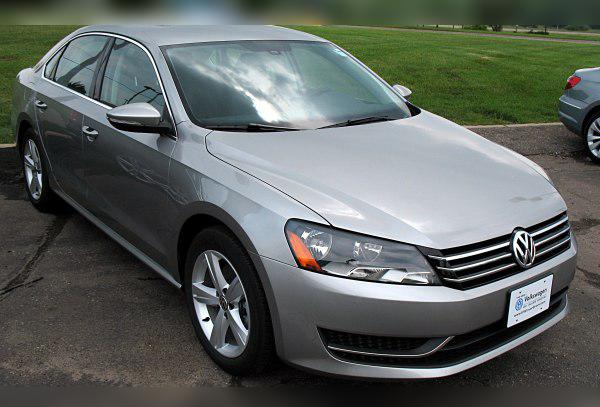
2.0 TDI (EA288 / CVCA) – Experiences, problems, fuel consumption and used car buying guide
When talking about modern diesels that have marked the past decade, Volkswagen’s EA288 series is an unavoidable topic. Specifically, the CVCA 150 hp variant is a specific version of this “Clean Diesel” engine, most commonly associated with the US version of the Passat (NMS – New Midsize Sedan), but it shares its DNA with European models. This is the engine that was supposed to fix the mistakes of its predecessor (EA189) and offer a perfect balance between power and ecology.
Did it succeed in that? Mostly yes, but with a few specific and expensive “weak spots” every owner needs to know about.
Key points (TL;DR)
- Performance: 150 hp and 320 Nm are the “golden middle ground” – more than enough power for overtaking, with extremely low fuel consumption on the highway.
- Biggest downside: The cooling system. The variable-flow water pump and the cabin heater (heater core) are frequent sources of problems.
- Emissions: This engine has a complex system with a DPF and AdBlue fluid. AdBlue tank heater failures are common.
- Gearbox: Usually comes paired with a DSG gearbox that requires strict maintenance (oil change every 60,000 km).
- Timing drive: It uses a belt, not a chain, which is good news for many, but it does require regular replacement.
- Recommendation: An excellent choice for drivers who cover a lot of highway mileage. Not recommended for purely city driving.
Contents
- Technical specifications
- Reliability and maintenance
- Specific parts and costs
- Fuel consumption and performance
- Additional options and modifications
- Gearbox
- Buying used and conclusion
Technical specifications
| Specification | Data |
|---|---|
| Engine displacement | 1968 cc (2.0 l) |
| Power | 110 kW (150 hp) |
| Torque | 320 Nm at 1750–3000 rpm |
| Engine code | CVCA (EA288 family) |
| Injection type | Common Rail (Bosch) |
| Charging | Variable-geometry turbocharger + intercooler |
| Camshaft drive | Timing belt |
Reliability and maintenance
The EA288 is a structurally very robust engine, but like any modern diesel, it does not tolerate neglect. The key to longevity is preventive maintenance of the cooling and fuel systems.
Does this engine have a timing belt or a chain?
This engine uses a timing belt. This is generally good news because the system is quieter and cheaper to replace than the complex chains that caused problems on older VW engines. The belt also drives the high-pressure fuel pump.
At what mileage should the major service be done?
The factory recommendation is often optimistic and lists intervals of up to 210,000 km for timing belt replacement. However, as an experienced mechanic, I recommend doing the major service at a maximum of 150,000 to 160,000 km or every 5 to 7 years. The risk of belt failure or, more often, failure of related components (rollers, tensioner, water pump) is not worth stretching the interval.
What are the most common failures on this engine?
The biggest headache on EA288 engines is the cooling system:
- Water pump: It uses a variable sleeve that moves over the impeller to speed up engine warm-up. That sleeve often sticks, which leads to engine overheating. The symptom is a sudden temperature rise under load.
- Heater core: It often gets clogged. The cause is a silicate bag in the expansion tank (G13 coolant) that bursts and spreads silicates throughout the system. The symptom is weak cabin heating or cold air blowing on the passenger side.
- Oil leaks: Less common than before, but the crankshaft seal can start leaking at higher mileage.
How many liters of oil does this engine take and which grade is recommended?
The sump holds approximately 5.5 liters of oil (including the filter). Only fully synthetic oil of grade 5W-30 or 0W-30 that meets the strict VW 507.00 specification is recommended. Because of the DPF, using oil that does not meet the required Low SAPS specification will quickly clog the filter.
Does it consume oil between services?
EA288 engines are quite “tight” and should not consume a significant amount of oil if everything is in order. Consumption of up to 0.5 liters per 10,000 km is considered acceptable and normal, especially with more spirited driving. If the engine consumes a liter or more, that points to a problem with the piston rings or the turbocharger.
How long do the injectors last and how reliable are they?
The injectors on the CVCA engine are Bosch Common Rail (solenoid type on most variants, which is more durable than piezo injectors). They have proven to be very reliable and often last over 250,000 km without issues. Symptoms of bad injectors include rough idle (“knocking”), increased fuel consumption and black smoke when accelerating.
Specific parts (Costs)
Does the engine have a dual-mass flywheel?
Yes, it does. Regardless of whether it is paired with a manual or DSG gearbox, 150 hp and 320 Nm require a dual-mass flywheel to dampen vibrations. This is a wear item that is usually replaced between 180,000 and 250,000 km. The price is high (depends on the market), and replacement is unavoidable once you start hearing a metallic knocking sound when switching the engine off or feel vibrations at idle.
Does the engine have a turbocharger and what is its lifespan?
The engine uses a single turbocharger with variable geometry. It is not prone to sudden failures if the oil is changed regularly. Its lifespan is usually equal to the engine’s lifespan with proper maintenance, although issues with the turbo actuator or clogged variable vanes (due to city driving) can appear after 200,000 km.
Does this model have a DPF filter and an EGR valve?
Absolutely. The CVCA is a Euro 6 (or equivalent US standard) engine. It has:
- EGR valve: It recirculates exhaust gases for re-combustion. It is prone to soot build-up.
- DPF filter: It traps soot particles. If you drive only in the city, regenerations will not complete successfully and the filter will clog, requiring expensive cleaning or replacement.
Does this engine use AdBlue and does it cause problems?
Yes, the CVCA engine uses AdBlue (SCR system) to reduce NOx emissions. This is one of the weaker parts of the system. Problems include:
- Failure of the heater in the AdBlue tank.
- Urea crystallization on the injector.
- Failure of the dosing pump.
Repairs of the AdBlue system can be very expensive (depending on the market), and ignoring warnings will eventually lead to the car refusing to start the engine.
Fuel consumption and performance
What is the real-world fuel consumption in city driving?
In a heavy car like the Passat, real-world city consumption ranges between 6.5 and 8.0 l/100 km, depending on traffic and how heavy your right foot is. In winter and on short trips this figure can be even higher.
Is this engine “lazy” for the weight of the car?
No, quite the opposite. With 150 hp and, more importantly, 320 Nm of torque available from low revs, this engine moves the Passat with ease. It’s not a sports car, but overtaking is safe and effortless.
How does the engine perform on the motorway?
This is the natural habitat of this engine. At 130 km/h, depending on the gearbox (the DSG has the advantage here thanks to longer gearing), the engine spins at around 2,000 – 2,200 rpm. This results in low noise and fuel consumption that easily drops below 5.0 l/100 km on the open road. It is ideal for long-distance cruising.
Additional options and modifications
How far can this engine be safely tuned (Stage 1)?
The 150 hp EA288 is very tuning-friendly. A Stage 1 remap usually raises power to 185 – 195 hp and torque to around 400 – 420 Nm. This is generally safe for the engine, but you need to pay attention to the condition of the DPF and gearbox. The DSG gearbox (DQ250) can handle this torque, but the manual gearbox and clutch will be under more stress and will wear out faster.
Gearbox
Which gearboxes are fitted to this engine?
With the CVCA engine in the Passat, you will most often find a 6-speed DSG (DQ250) with a wet clutch. In some variants and markets there is also a 6-speed manual gearbox.
What are the most common failures?
- DSG (automatic): A very reliable gearbox IF maintained properly. The most common failure is the mechatronic unit (control unit), which fails due to overheating or old oil. Symptoms are jerking when setting off or delayed gear changes.
- Manual: Robust, the gearbox itself rarely fails. Problems are related to the clutch kit and dual-mass flywheel.
At what mileage does the gearbox need servicing?
For the DSG with a wet clutch, oil and filter changes are MANDATORY every 60,000 km. Skipping this service drastically shortens the life of the mechatronic unit and the clutch. On the manual gearbox, the oil is not specified for replacement (“fill for life”), but it is recommended to change it at around 150,000 km for smoother shifting.
Buying used and conclusion
Before buying a used car with the CVCA / EA288 engine, make sure to check:
- Coolant color: It must be clear (purple/pink). If it is brown or cloudy, that indicates a problem with silicates or mixing of oil and coolant.
- Cabin heating: Turn the heater to maximum. If the passenger side blows cold while the driver’s side is warm, the heater core is clogged.
- Flywheel noise: Listen for metallic noises when switching the engine off.
- Diagnostics: Check DPF saturation and any fault codes related to the AdBlue system.
Conclusion: Volkswagen’s 2.0 TDI (150 hp) is a workhorse. It is intended for people who spend time on the open road and cover high mileage. If you drive 90% of the time in the city on short trips (under 10 km), this engine will bring you expensive DPF and EGR problems. For everyone else – this is one of the most well-balanced diesels on the market.
Was this content useful to you?
Your opinion helps us to improve the quality of the content.