EA189 / CKRA Engine
- Engine
- 1968 cm3
- Aspiration
- Turbocharger, Intercooler
- Fuel
- Diesel
- Fuel injection system
- Diesel Commonrail
- Power
- 140 hp @ 4000 rpm
- Torque
- 320 Nm @ 1750 rpm
- Cylinders
- 4
- Valves
- 16, 4 per cylinder
- Cylinders position
- Inline
- Valvetrain
- DOHC
- Oil capacity
- 4.3 l
- Coolant
- 10.6 l
- Systems
- Particulate filter
# Vehicles powered by this engine
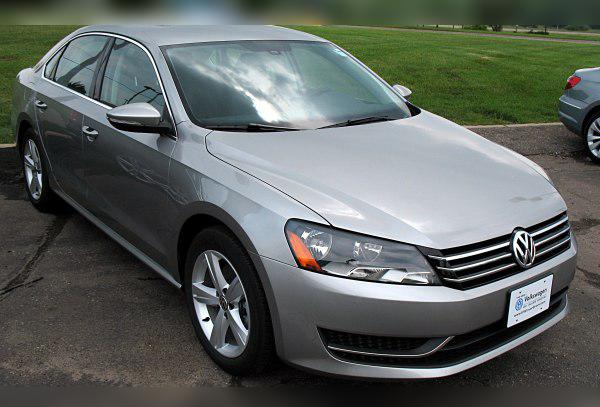
VW 2.0 TDI (EA189 / CKRA) – Experiences, problems, fuel consumption and buying used
The engine with the code CKRA belongs to the famous, but also controversial EA189 family of Volkswagen diesel engines. This is a specific variant of the 2.0 TDI unit that was primarily installed in the Volkswagen Passat for the North American market (Passat NMS / B7). Although it shares DNA with its European relatives, this engine has specifics related to stricter emission standards (the AdBlue system was standard here long before it was in Europe) and certain mechanical differences.
As a technical editor, I’ll say it right away: this is an engine capable of impressive mileage with laughably low fuel consumption, but it requires meticulous maintenance of the exhaust aftertreatment system. If you’re looking for a “workhorse” for highway driving, you’re in the right place, but you need to know what to check.
Key points in short (TL;DR)
- Fuel consumption: Exceptional efficiency on the open road (often below 5 l/100 km).
- Performance: 320 Nm of torque is more than enough for the heavy Passat body; it’s not a sports car, but it pulls nicely.
- Emissions: Equipped with an AdBlue (SCR) system, which is a known weak point (heaters and pumps).
- Timing service: Driven by a timing belt, not a chain.
- Turbo: The CKRA version is known for somewhat more sensitive turbochargers compared to the European CFFB versions.
- Cabin heating: A specific issue with clogging of the small heater core.
- Conclusion: An excellent choice for long-distance driving, risky for strictly city use.
Contents
- Technical specifications
- Reliability and maintenance
- Specific parts and costs
- Fuel consumption and performance
- Additional options and modifications
- Gearbox
- Used car buying tips and conclusion
Technical specifications
| Feature | Data |
|---|---|
| Engine displacement | 1968 ccm (2.0 l) |
| Power | 103 kW (140 hp) at 4000 rpm |
| Torque | 320 Nm at 1750–2500 rpm |
| Engine code | CKRA (EA189 family) |
| Injection type | Common Rail (Diesel) |
| Charging | Turbocharger (VGT) + intercooler |
| Emissions | Euro 5 / ULEV (with AdBlue system) |
Reliability and maintenance
When we talk about the EA189 CKRA engine, we’re talking about a machine that can cover 500,000 km, but only if the owner doesn’t ignore the warning lights on the dashboard.
Timing belt or chain?
This engine uses a timing belt to drive the camshafts. That’s good news because the system is quieter and more predictable than a chain. There’s no risk of sudden chain “stretching” that plagued some other VW engines, but the belt does require regular replacement.
Most common failures
Although the engine block is “indestructible”, it’s the peripherals that cause problems:
- Heating system (heater core): This is a specific issue on the Passat with the CKRA engine. The small heater core in the cabin clogs up with deposits from the coolant, which leads to weak or no heating on the passenger side. The cause is often degradation of silicates in G13 antifreeze or a reaction with aluminum.
- Turbocharger: CKRA turbochargers have proven to be more sensitive than on European models. Symptoms include whistling (a “siren” sound) or loss of power with the engine going into limp mode.
- AdBlue system: The AdBlue tank heater and the pump itself are frequent failure points. The symptom is a “Check Engine” light and a countdown of remaining mileage until the engine will no longer start.
Major service (timing belt service)
The factory recommendation for timing belt replacement is often an optimistic 210,000 km (130,000 miles) for the US market. However, as an experienced editor, I recommend doing the major service at no more than 160,000 to 180,000 km or 7 years of age. The risk of belt failure and catastrophic engine damage is not worth waiting.
Oil and oil consumption
The engine takes approximately 4.3 liters of oil. It is mandatory to use oil that meets the VW 507.00 specification (Low SAPS), most commonly in 5W-30 grade. This is critical because of the DPF filter.
As for oil consumption, a healthy CKRA engine should not consume significant amounts. Consumption up to 0.5 liters per 10,000 km is acceptable. If it consumes more, first suspect the turbocharger or leaks at the seals rather than piston rings.
Injector longevity
The engine uses Common Rail piezo injectors. They have generally proven to be very durable and can last over 250,000 km with good-quality fuel. Symptoms of failure include rough idle, increased smoke under acceleration, or hard starting. Refurbishment is possible, but a new injector is an expensive item (it depends on the market, but count on it being “expensive”).
Specific parts (costs)
Dual-mass flywheel
Yes, this engine has a dual-mass flywheel (DMF), regardless of whether it’s paired with a manual or a DSG gearbox. Its lifespan is usually around 200,000 km, depending on driving style. Symptoms include a metallic knocking sound when switching off the engine or vibrations in the clutch pedal at idle. Replacement is a costly investment.
Turbocharger and injection system
The engine has a single turbocharger with variable geometry (VGT). Its lifespan is closely tied to oil change intervals. If you change the oil every 10–12 thousand km, the turbo will last a long time. If you follow “Long Life” intervals of 30,000 km, expect problems earlier. The injection system is Bosch or Continental (depending on the production batch), reliable but sensitive to dirty fuel and the presence of water.
DPF, EGR and AdBlue
This is the Achilles’ heel of modern diesels. The CKRA engine has:
- DPF filter: It clogs if the car is driven exclusively in the city. Regeneration requires driving on open roads.
- EGR valve: It often gets clogged with soot, which leads to engine choking.
- AdBlue (SCR): Unlike many European 2.0 TDI engines of that era (which only had a DPF), the CKRA uses AdBlue to reduce NOx emissions. The system is complex, and repairs of the tank heater and urea dosing injector are very expensive. Regular maintenance only involves topping up the fluid, but component failures are common.
Fuel consumption and performance
Real-world fuel consumption
This is the strongest card of this engine. In the heavy Passat body:
- City driving: Expect between 6.5 and 8.0 l/100 km, depending on traffic and how heavy your right foot is.
- Open road / Highway: This is where the engine shines. Fuel consumption easily drops to 4.5 to 5.5 l/100 km with normal driving. With one tank, a range of 1000+ km is realistic.
Is the engine “lazy”?
No. With 140 hp and 320 Nm, the CKRA is not a racer, but torque is available low down (from 1750 rpm). This means in-gear acceleration and overtaking are perfectly adequate. The driving feel is that the engine has “power in reserve” for normal use. It’s not explosive, but it’s persistent and linear.
Highway driving
At 130 km/h the engine is in its comfort zone. In sixth gear (both manual and DSG), the engine spins at about 2200–2400 rpm. This ensures a quiet cabin and low fuel consumption.
Additional options and modifications
Chiptuning (Stage 1)
The EA189 block is very suitable for remapping. A safe Stage 1 can raise power to about 170–180 hp and torque to 380–400 Nm.
Warning: If you have a DSG gearbox, it can handle this easily. If you have a manual gearbox, a worn clutch will start slipping immediately after the remap. Also, an aggressive map can clog the DPF filter more quickly.
Gearbox
With the CKRA engine in the Passat, there are usually two options:
1. Manual gearbox (6-speed)
Very precise and reliable. There are no specific failures of the gearbox itself. The problem is the wear items: clutch kit and dual-mass flywheel. Replacement is inevitable at higher mileage.
2. DSG automatic gearbox (6-speed – DQ250)
This is a dual-clutch gearbox with wet clutches (in an oil bath). It is much more reliable than the notorious 7-speed dry DSG.
- Maintenance: Oil and filter in the DSG gearbox MUST be changed every 60,000 km. If you skip this, the mechatronics will fail.
- Failures: The most common (and most expensive) failure is the mechatronic unit (the brain of the gearbox). Symptoms include harsh gear changes, delay when moving off, or jolts during shifting.
- Flywheel: The DSG also has a dual-mass flywheel, which can be heard as a metallic rattling at idle (“like a bucket full of bolts”).
Buying used and conclusion
If you’re planning to buy a car with the CKRA 2.0 TDI engine, here’s what to check:
- Coolant color: Open the coolant reservoir. If the fluid is brown or sludgy, the heater core is probably clogged or will be soon. This is a “red flag”.
- Cold start: Listen to the engine when it’s cold. Any uneven rattling from the gearbox area indicates a bad flywheel.
- Diagnostics: Check DPF saturation and the condition of the AdBlue system (heater). These are the most expensive repairs.
- DSG service history: If there is no proof that the gearbox oil was changed on time, be prepared for risk.
Conclusion: The VW 2.0 TDI (CKRA) is a brilliant engine for people who cover a lot of kilometers on the open road. It offers comfort, power and low fuel consumption. However, due to the complex exhaust aftertreatment system (AdBlue/DPF) and specific heating issues, it is not recommended for those who drive short distances in the city (“from home to the store”). Maintenance is not cheap, but if you take care of it, it will pay you back with reliability.
Was this content useful to you?
Your opinion helps us to improve the quality of the content.