EA111 /CTHD Engine
- Engine
- 1390 cm3
- Aspiration
- Turbocharging and Supercharger, Intercooler
- Fuel
- Petrol (Gasoline)
- Fuel injection system
- Direct injection
- Power
- 160 hp @ 5500 rpm
- Torque
- 240 Nm
- Cylinders
- 4
- Valves
- 16, 4 per cylinder
- Cylinders position
- Inline
- Valvetrain
- DOHC
- Oil capacity
- 3.6 l
- Systems
- Start & Stop System
# Vehicles powered by this engine
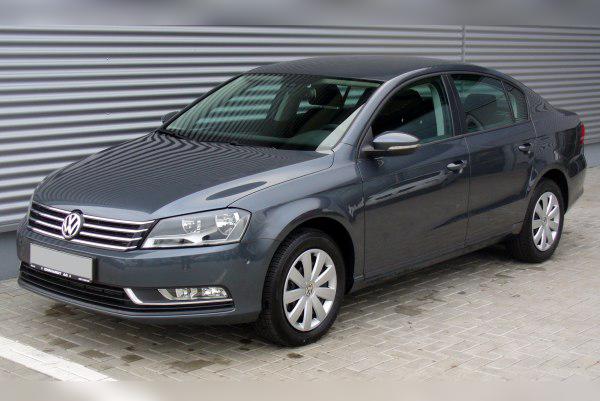
1.4 TSI Twincharger (EA111 / CTHD) – Experiences, problems, fuel consumption and buying tips
Key points (TL;DR)
- Performance above expectations: Thanks to the combination of a supercharger and a turbocharger, this engine in the Passat B7 pulls surprisingly well and has virtually no turbo lag.
- CTHD vs CAVD: The CTHD code is crucial – this is the revised version that solved the piston cracking issue that plagued the previous (CAVD) version, but caution is still advised.
- Timing chain as a weak point: Although improved, the timing chain is still a component that requires attention and preventive replacement if any rattling is heard.
- System complexity: You have a turbo, a supercharger, an intercooler and direct injection. More parts also means more potential failure points.
- DSG gearbox: This engine is often paired with the DQ200 (7-speed dry-clutch DSG), known for mechatronics failures and faster clutch wear in city driving.
- Oil consumption: The engine tends to “drink” some oil, so regular checks are mandatory.
Contents
Introduction: Technological marvel or mechanic’s nightmare?
The 1.4 TSI Twincharger (EA111) engine represented the peak of Volkswagen’s downsizing engineering of that era. The idea was simple: take a small engine block and add a supercharger for low revs and a turbocharger for higher revs. The result is 160 horsepower from just 1.4 liters of displacement, with torque available almost instantly.
In the VW Passat B7, this engine was an alternative to large naturally aspirated units. The version with the CTHD code (installed towards the end of B7 production, from late 2012) is particularly important because it is a factory-strengthened engine compared to the notorious CAVD, which had serious issues with piston and ring land cracking. Still, this remains a very complex machine.
Technical specifications
| Parameter | Data |
|---|---|
| Displacement | 1390 cc (1.4 L) |
| Power | 118 kW (160 hp) at 5800 rpm |
| Torque | 240 Nm at 1500–4500 rpm |
| Engine code | CTHD (EA111 family) |
| Injection system | Direct injection (TSI / FSI) |
| Forced induction | Twincharger (Supercharger + Turbocharger) |
| Camshaft drive | Chain |
Reliability and maintenance
Timing belt or chain?
This engine uses a timing chain. This is one of the most critical points of the EA111 family. Although the tensioner system and the chain itself were improved on the CTHD version compared to earlier models, it is still not “lifetime”.
Symptoms of problems: Metallic rattling or “rustling” at cold start that lasts longer than 2–3 seconds. If ignored, the chain can jump a tooth, leading to piston-to-valve contact (catastrophic failure).
Recommendation: Do not wait for it to break. Many owners replace the chain kit preventively at around 100,000–120,000 km or as soon as the first suspicious noise appears.
Most common failures
On the CTHD version, the risk of piston cracking (ring land failure) is drastically reduced, but not zero if poor quality fuel is used or if the engine is aggressively remapped. Other common issues include:
- Water pump with magnetic clutch: This is a specific part. The water pump has an integrated magnetic clutch that engages and disengages the supercharger. The clutch or the pump itself often fails or starts leaking. Symptoms include squealing from the engine bay or loss of low-end power because the supercharger is not working. The part is expensive (depends on market).
- Carbon buildup: As with any direct injection engine, the intake valves get dirty because fuel does not wash them. This leads to rough idle and power loss at higher mileage.
- Ignition coils: They often fail, causing the engine to run on 3 cylinders (misfire).
Service intervals and oil
The major service (replacement of chain, guides, tensioner) is not strictly mileage-based but condition-based, although in practice it should be checked every 100,000 km. Perform an oil service every 10,000–12,000 km at most (or once a year).
Oil quantity and type: The sump holds 3.6 liters of oil. This is a small amount for an engine exposed to high thermal loads (turbo + supercharger). Because of this, the oil degrades quickly.
Viscosity: It is recommended to use 5W-30 or 5W-40 with VW 504.00 / 507.00 specification. Do not skimp on oil quality.
Oil consumption
Yes, this engine consumes oil. Unlike some other TSI engines where the problem was in the piston rings (EA888 Gen2), here the consumption is often more moderate, but still present. Consider it normal to top up 0.5 to 1 liter per 5,000–7,000 km. If it uses a liter per 1,000 km, the engine is due for an overhaul.
Spark plugs
Due to the complex combustion process and high temperatures, spark plugs are under heavy stress. It is recommended to replace them every 30,000–40,000 km (more often than the factory interval). Use only high-quality Iridium or Platinum plugs specified for this engine.
Specific components (Costs)
Dual-mass flywheel
Yes, the Passat B7 1.4 TSI has a dual-mass flywheel. Its lifespan depends on driving style, but it usually lasts between 150,000 and 200,000 km. On DSG models, the flywheel is specific and replacement is expensive (cost varies by market).
Turbo and supercharger (Twincharger system)
This engine has both a turbocharger and a supercharger (Roots blower).
Supercharger: Operates from idle up to about 3,500 rpm, providing instant response. It is generally reliable, but depends on the proper operation of the magnetic clutch on the water pump.
Turbo: Takes over at higher revs. With regular maintenance, the turbo’s lifespan is around 200,000 km. Failures manifest as whistling, blue smoke from the exhaust or the engine going into safe mode (loss of power).
Injectors and fuel injection
The system is high-pressure direct injection. Injectors are sensitive to poor fuel quality. Symptoms of bad injectors include leaking (fuel diluting the oil), hard starting or black smoke. They are not cheap to replace.
EGR, DPF and AdBlue
This is a petrol engine, so it does not have a DPF filter and does not use AdBlue. However, it does have a catalytic converter that can fail if the engine burns too much oil or suffers from misfires. There is an EGR valve, and it can get clogged with soot, which will trigger the Check Engine light.
Fuel consumption and performance
City driving
Do not be fooled by the 1.4-liter displacement. The Passat B7 is a heavy car (around 1.5 tons). In stop-and-go city driving, real-world consumption is between 9 and 11 l/100 km. If you have a heavy right foot, it easily goes over 12 l/100 km.
Is the engine “lazy”?
Absolutely not. This is the biggest advantage of Twincharger technology. Thanks to the supercharger, you have 240 Nm available from just 1500 rpm. The car pulls linearly and strongly, similar to a 2.0 naturally aspirated engine, but with more low-end torque. It is more than adequate for overtaking on country roads.
Highway driving
On the highway, this engine is in its element. Thanks to the 7-speed DSG or 6-speed manual, revs stay low. At 130 km/h the engine spins at about 2,800–3,000 rpm. Fuel consumption is then around 6.5–7.5 l/100 km.
Additional options and modifications
LPG conversion
This is not an ideal engine for LPG conversion. Due to direct injection, expensive systems are required (such as Direct Liquid Injection that uses petrol injectors for gas, or systems that still inject 15–20% petrol to cool the injectors).
Verdict: It is possible, but installation is very expensive (cost varies by market) and the payback is questionable unless you cover very high annual mileage.
Remapping (Stage 1)
The engine can be tuned via software to around 190–200 hp and 280–300 Nm.
Warning: Although the CTHD is reinforced, this engine is already factory-tuned for high performance from small displacement. Further increasing boost pressure raises thermal stress on the pistons and accelerates wear of the DSG gearbox. If you decide to do this, use only 98/100-octane fuel and shorten service intervals.
Gearbox
Gearbox options
In the Passat B7, this engine comes with:
- Manual gearbox (6-speed): Very precise, reliable and cheap to maintain.
- Automatic gearbox (DSG 7 - DQ200): Robotised dual-clutch gearbox with dry clutches.
Problems with DSG 7 (DQ200)
This is one of the weakest points of this combination. The DQ200 is designed for torque up to 250 Nm, and this engine is right at the limit (240 Nm).
Most common failures:
1. Mechatronics: The electro-hydraulic “brain” of the gearbox can fail (housing cracks, loss of pressure). Symptoms: jerking when setting off, dropping out of gear, flashing gear indicator on the dashboard.
2. Clutch pack: As the clutches are “dry”, they wear faster than on “wet” DSG units, especially in heavy city traffic (stop-and-go). Replacement is expensive.
Gearbox maintenance: On the manual gearbox, oil is changed preventively at high mileage. On the DSG DQ200, the factory claims it is “maintenance-free” (sealed for life), but specialists recommend changing the oil in the mechatronics and gearbox every 60,000 km to extend its lifespan.
Buying used and conclusion
When buying a Passat B7 with this engine, it is crucial to check that the engine is cold before starting it.
- Listen to the chain: At the first start, listen for rattling. If it lasts longer than a couple of seconds – walk away or negotiate the price to cover a chain replacement.
- Test drive: Accelerate hard from low revs. There should be no hesitation or “stuttering” (possible supercharger or spark plug issues). The gearbox (DSG) must shift smoothly, without jolts.
- Service history: Check whether the water pump has been replaced and whether the gearbox software has been updated.
Who is it for? This engine is for drivers who want the performance of a 2.0-liter engine with lower registration costs, and who spend most of their time on open roads. If you drive 90% in the city, the complexity of this engine and the sensitivity of the DSG gearbox to urban stop-and-go traffic make it a risky choice. The manual gearbox is the safer option.
Was this content useful to you?
Your opinion helps us to improve the quality of the content.