EA111 / CTHD Engine
- Engine
- 1390 cm3
- Aspiration
- Turbocharging and Supercharger, Intercooler
- Fuel
- Petrol (Gasoline)
- Fuel injection system
- Direct injection
- Power
- 160 hp @ 5500 rpm
- Torque
- 240 Nm
- Cylinders
- 4
- Valves
- 16, 4 per cylinder
- Cylinders position
- Inline
- Valvetrain
- DOHC
- Oil capacity
- 3.6 l
- Systems
- Start & Stop System
# Vehicles powered by this engine
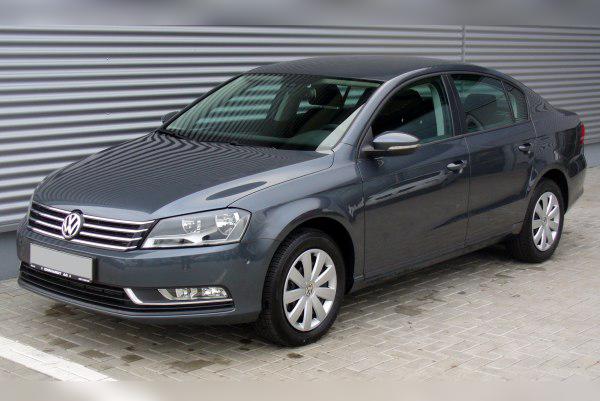
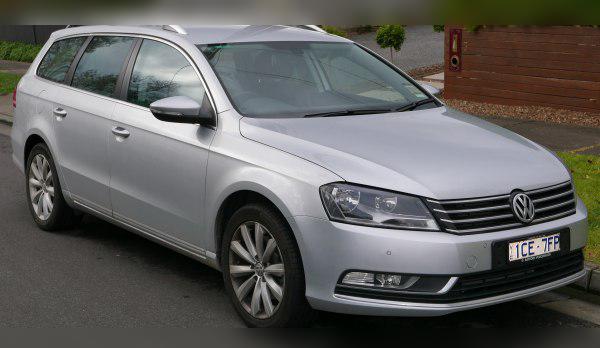
VW 1.4 TSI 160 HP (EA111 / CTHD) – Experiences, problems, fuel consumption and buying tips
In short (TL;DR)
- Complexity: This is a “Twincharger” engine – it has both a supercharger and a turbocharger. Great performance, but more expensive maintenance.
- Timing: Uses a timing chain. Although the CTHD version is improved compared to the older CAVD, the chain and tensioner are still critical points.
- Oil consumption: It can consume oil, but less than the first generations of TSI engines. Regular checks are mandatory.
- Gearbox: Often comes with the DSG 7 (DQ200) dry-clutch gearbox, which requires caution when buying.
- Performance: Excellent power-to-displacement ratio. It doesn’t feel “lazy” even in the heavy Passat.
- Recommendation: Requires strictly regular maintenance and quality fuel. Not for drivers who want a “fill up and drive” approach without thinking about servicing.
Contents
Introduction: EA111 CTHD – The last gasp of the Twincharger
The engine with the code CTHD belongs to the EA111 family and is one of the most technically interesting, but also most complex engines that the Volkswagen Group produced in that period. It is a 1.4‑liter petrol engine which, in order to deliver 160 HP and linear power delivery, uses twin charging: a mechanical supercharger for low revs and a turbocharger for high revs.
In the Passat B7 this engine was installed as the “golden middle ground” between the weaker 1.4 TSI (122 HP, turbo only) and the larger 1.8 or 2.0 TSI engines. It is important to note that CTHD is a revised version of the notorious CAVD engine, with reinforced pistons and solved piston ring issues, which makes it significantly more reliable, but still demanding in terms of maintenance.
Technical specifications
| Specification | Value |
|---|---|
| Displacement | 1390 cc (1.4 L) |
| Power | 118 kW (160 HP) |
| Torque | 240 Nm at 1500–4500 rpm |
| Engine code | CTHD (EA111 family) |
| Injection type | Direct injection (TSI / GDI) |
| Charging system | Turbo + mechanical supercharger (Roots type) |
Reliability and maintenance
Timing system: Chain or belt?
The 1.4 TSI CTHD (EA111) uses a timing chain. This is a key difference compared to newer engines (EA211 in the Passat B8) which use a belt. Although the chain was improved on the CTHD version, it is not lifetime. Chain stretch is still possible, especially if the oil is changed at long “Long Life” intervals. The symptom is a characteristic metallic rattle for the first 3–5 seconds on a cold start. If you hear that, replacement of the chain, guides and tensioner is urgent to avoid catastrophic failure (chain skipping and piston-to-valve contact).
Most common failures and symptoms
Besides the chain, owners encounter several specific issues:
- Water pump with magnetic clutch: This is a complex part. The water pump not only cools the engine, but via a magnetic clutch also engages and disengages the supercharger. Failure shows up as coolant leaks or squealing noises, and even loss of low‑rpm power because the supercharger cannot engage.
- Coil packs (ignition coils): They often fail, causing rough running (misfires) and the “Check Engine” light.
- Piston cracking (rarer on CTHD): While its predecessor (CAVD) was infamous for cracked pistons, the CTHD has reinforced components. Still, poor‑quality fuel and aggressive driving with a cold engine can cause LSPI (low‑speed pre‑ignition) which may damage the pistons.
Service intervals and oil
Minor service: Recommended oil change every 10,000 km up to a maximum of 15,000 km. Forget about 30,000 km “Long Life” intervals if you want to preserve the chain and turbo.
Major service: The chain has no fixed replacement interval, but in practice it often needs replacement between 100,000 and 150,000 km. Listen to it carefully at every start.
Oil: The engine takes approximately 3.6 liters of oil. Always use 5W‑30 that meets the strict VW 504.00 / 507.00 specifications.
Oil consumption
Does it burn oil? Yes, like most turbocharged direct‑injection petrol engines. However, the CTHD is not a dramatic oil burner like some older EA888 engines. Consumption of 0.3 to 0.5 liters per 1,000 km is considered “within normal limits” by factory standards, but in practice a healthy engine should not need more than 1 liter top‑up between services (over 10,000 km).
Spark plugs
On this Twincharger engine, the spark plugs are under heavy thermal load. Replacement is recommended every 40,000 to 60,000 km. Use only the iridium plugs specified for this model (e.g. NGK or Bosch), as incorrect plugs can lead to serious damage in the combustion chamber.
Specific parts and costs
Dual‑mass flywheel
Yes, this engine uses a dual‑mass flywheel, regardless of whether it is paired with a manual or DSG gearbox. Its role is to dampen engine vibrations. On petrol engines it lasts longer than on diesels (often well over 150,000 km), but when it fails you will hear knocking at idle or feel judder when moving off. The price is high (depends on the market), but somewhat lower than for 2.0 TDI models.
Injection system and injectors
It uses high‑pressure direct injection. Injectors are generally reliable but sensitive to poor fuel quality. A much bigger issue with this system is carbon buildup on the intake valves. Since the fuel does not “wash” the valves (as on older port‑injection engines), over time you lose power and the engine runs roughly, which requires mechanical cleaning (walnut shell blasting) at higher mileages.
Turbo and supercharger
The engine has two chargers:
- Mechanical supercharger (Roots): Works from idle up to about 3,500 rpm. There is no turbo lag; it gives instant response. It is reliable by itself, but it is engaged by the problematic water pump.
- Turbocharger: Takes over at higher revs. Its lifespan depends on regular oil changes and driving style (cool‑down after fast driving).
The system is complex, with many valves and sensors that control the transition from supercharger to turbo (the so‑called “handover”).
Emissions equipment (DPF, EGR, AdBlue)
Fortunately, this is a petrol engine. No DPF filter. No AdBlue system. It has a catalytic converter which can fail if the engine burns a lot of oil or has combustion issues. It has an EGR valve, but on petrol engines it clogs far less often than on diesels.
Fuel consumption and performance
City driving
The Passat B7 is not a light car. In heavy city traffic, real‑world consumption is between 8.5 and 10.5 l/100 km. If you have a heavy right foot, the figure easily goes over 11 liters, because the supercharger “pushes” air (and fuel) as soon as you touch the throttle at the lights.
Is the engine “lazy”?
Absolutely not. With 160 HP and 240 Nm available from just 1,500 rpm, this engine moves the Passat B7 surprisingly easily. Thanks to the supercharger, there is no “dead” zone at low revs. The driving feel is more agile than with naturally aspirated 2.0‑liter engines. 0–100 km/h takes about 8.5 seconds, which is very respectable.
On the open road
This is the Passat’s natural habitat. At 130 km/h in top gear (6th on the manual or 7th on the DSG), the engine spins at around 2,800–3,000 rpm. Fuel consumption is then very reasonable, around 6.5 to 7.5 l/100 km. Overtaking is safe without necessarily downshifting, thanks to the turbo.
Additional options and modifications
LPG conversion
Because of direct injection (TSI), an LPG conversion is complex and expensive. It requires a special system (“Direct Liquid Mechanical” or a system that mixes petrol and LPG to cool the injectors). Installation cost is high (depends on the market, often over 800–1000 EUR), and the savings are not 50% as with older engines, but lower because petrol is still used. It only makes sense if you cover very high annual mileage (over 30–40,000 km per year).
Chiptuning (Stage 1)
The engine can be remapped to about 190–200 HP. However, WARNING: This engine is already highly stressed from the factory (high specific output). Further boost increase puts huge stress on the pistons, chain and DSG gearbox. If you have a DSG (DQ200), remapping is not recommended because this gearbox struggles with torque above about 250 Nm.
Gearbox: Manual vs DSG
Types of gearboxes
- 6‑speed manual: Precise, robust and reliable.
- 7‑speed DSG (DQ200): Automatic dual‑clutch gearbox with dry clutches.
Failures and maintenance
Manual: The most common expense is the clutch kit and dual‑mass flywheel. The gearbox oil is “lifetime” from the factory, but replace it every 150,000 km or 10 years for smoother shifting.
DSG (DQ200): This is a critical point. Unlike the “wet” DSG gearboxes (on 2.0 TDI), this one uses dry clutches which wear faster in city stop‑and‑go driving. Most common failures: Mechatronic unit failure and premature clutch wear. Symptoms are judder when moving off, harsh shifts or loss of odd/even gears.
DSG servicing: Although VW claims the DQ200 is maintenance‑free, it is recommended to change the oil in the mechanical part and the hydraulic oil in the mechatronics every 60,000 km at specialist workshops to extend its life. Repairing the mechatronics or replacing the clutches is very expensive (depends on the market, often 600–1500 EUR).
Used car buying guide and conclusion
When buying a Passat B7 with this engine, make sure you do the following:
- Cold start: The engine must be completely cold. Listen to the chain noise. If it rattles for more than 2–3 seconds, it is ready for replacement.
- Test drive: Accelerate gently from 1,500 rpm. The transition from supercharger to turbo (around 3,000 rpm) must be seamless. Any “hiccup” indicates a problem with the N75 valve, spark plugs or ignition system.
- DSG test: Release the brake on level ground – the car should start creeping forward gently without throttle. If it hesitates or jerks, the clutches are near the end of their life.
- Diagnostics: Check for misfire codes on the cylinders.
Final conclusion
The VW 1.4 TSI (CTHD) is a technological gem that demands attention. It is intended for drivers who want performance and the refinement of a petrol engine, and who do not cover mileages that would justify a diesel. On the road it is far more refined than the 1.6 TDI and more fun than the 2.0 TDI (140 HP).
However, if you are looking for the lowest possible running costs and resistance to neglect, this engine is not for you. Buy it only if you have a verified service history (especially regarding the chain and DSG) and you are prepared to maintain it properly.
Was this content useful to you?
Your opinion helps us to improve the quality of the content.