DSGB, DSGD Engine
- Engine
- 999 cm3
- Aspiration
- Naturally aspirated engine
- Fuel
- Petrol (Gasoline)
- Fuel injection system
- Single-point injection
- Power
- 80 hp @ 5100 rpm
- Torque
- 93 Nm
- Cylinders
- 3
- Valves
- 12, 4 per cylinder
- Cylinders position
- Inline
- Valvetrain
- DOHC
- Oil capacity
- 3.6 l
- Systems
- Particulate filter
# Vehicles powered by this engine
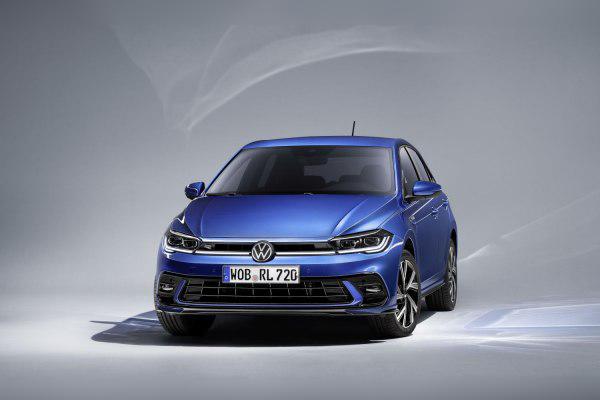
VW 1.0 EVO (80 HP) DSGB/DSGD – Experiences, problems, fuel consumption and used car buying guide
Key points (TL;DR)
- Simplicity: This is a classic naturally aspirated petrol engine – no turbo, no direct injection, no dual-mass flywheel. The risk of expensive failures is minimal.
- Performance: With 80 HP and only 93 Nm, this engine is extremely sluggish. Overtaking on open roads requires serious planning.
- City driving: The ideal environment for this engine. It reaches operating temperature quickly and feels lively only in the first two gears.
- LPG: Thanks to the MPI injection system, this is one of the few modern engines that are ideal for LPG conversion.
- Reliability: With regular maintenance, it can cover high mileage without “opening” the engine.
- Recommendation: Buy only if you need the car 90% for city driving or as a first car for a beginner.
Contents
- Introduction and applications
- Technical specifications
- Reliability and maintenance
- Specific parts (costs)
- Fuel consumption and performance
- Additional options and modifications
- Gearbox and drivetrain
- Buying used and conclusion
Introduction and applications
The engines with codes DSGB and DSGD represent the entry-level option in the world of Volkswagen’s newer-generation petrol engines (EA211 EVO). They are primarily installed in the Volkswagen Polo VI (2021 facelift) and related models within the group. This is a three-cylinder naturally aspirated unit that replaced the older 1.0 MPI versions with 60 and 75 HP. Although it carries the “EVO” badge, which on more powerful TSI models implies complex technologies (such as the Miller cycle and VTG turbo), here the focus has remained on simplicity. Its main role is to be cheap to maintain and sufficient to get you from point A to point B in urban conditions.
Technical specifications
| Displacement | 999 cc (1.0 L) |
| Power | 59 kW (80 HP) at 6300 rpm |
| Torque | 93 Nm at 3700–3900 rpm |
| Engine codes | DSGB, DSGD |
| Injection type | MPI (Multi-Point Injection) – Indirect |
| Aspiration | Naturally aspirated – NO turbo |
| Number of cylinders | 3 (inline) |
Reliability and maintenance
Does this engine have a timing belt or chain?
The engine uses a timing belt. For the EA211 EVO generation, VW specifies extremely long replacement intervals (you’ll often see inspection at 210,000 km or even “lifetime” in some regions), but real-world experience and common sense suggest otherwise. The recommendation is to do the major service at 150,000 km or 10 years, whichever comes first, or earlier if a visual inspection shows cracks. The water pump is driven by a belt on the exhaust side (a separate small belt), which is a specific solution but generally reliable.
What are the most common issues with this engine?
This is a pretty “bulletproof” engine because there’s not much that can go wrong, but there are a few weak points:
- Thermostat housing and water pump: They are often made of plastic that becomes brittle over time and starts leaking coolant. The symptom is a dropping coolant level without visible puddles under the car (it evaporates on the hot block).
- Sensors (lambda probe/O2 sensor): Due to strict Euro emission standards, it is sensitive to fuel quality, which can trigger the “Check Engine” light.
- Vibrations: Not a fault, but a characteristic. As a three-cylinder, the engine naturally vibrates, which over time can wear out the engine mounts faster.
Minor service, oil and spark plugs
The minor service is done every 15,000 km or one year (fixed interval). Although there are “LongLife” intervals of 30,000 km, it is strongly recommended to avoid them, especially because this engine has a small oil capacity and works under higher load to move the Polo’s body.
- Oil quantity and type: The engine takes about 3.4 to 4.0 liters (always check the dipstick). The recommended grade is 0W-20 (VW 508.00 / 509.00 standard) for low friction and fuel consumption. 5W-30 can also be used if allowed by the specification for your market, but 0W-20 is the factory fill for EVO engines.
- Oil consumption: These engines can consume a small amount of oil (up to 0.3–0.5 liters per 10,000 km), which is considered normal. If it consumes more than a liter between services, this may indicate a problem with piston rings or valve stem seals, often caused by hard driving on a cold engine.
- Spark plugs: They are replaced every 60,000 km or 4 years. Use quality ones (NGK/Bosch), as a bad spark plug can damage the ignition coil.
Specific parts (costs)
Does the engine have a dual-mass flywheel?
No. This engine uses a classic solid flywheel. This is great news for your wallet. The clutch kit is simple and replacement is relatively cheap (not expensive – depends on the market).
Injection system, turbo, DPF/GPF
Injection system: It uses an MPI (Multi-Point Injection) system, where fuel is injected into the intake manifold, not directly into the cylinder. Advantage: Injectors are cheap, durable and not as sensitive as on TSI engines. There are also no issues with carbon buildup on intake valves.
Turbocharger: There isn’t one. This means no expensive turbo overhauls, intercooler issues or problems with oil overheating in the turbo. The engine’s potential lifespan is therefore longer.
DPF/EGR/AdBlue: There is no DPF (diesel particulate filter) or AdBlue because this is a petrol engine. However, modern petrol engines (including this DSGB/DSGD) have an OPF/GPF (gasoline particulate filter) to meet Euro 6 standards. Fortunately, on MPI engines these almost never clog because the engine naturally produces less soot than direct-injection engines. GPF maintenance comes down to occasional driving on open roads.
Fuel consumption and performance
What is the real-world fuel consumption?
Even though the engine is small, don’t expect miracles, because you have to “rev it” to make it go.
- City driving: Expect between 6.5 and 7.5 l/100 km. In heavy stop-and-go traffic it can reach 8 l/100 km.
- Open road: At 80–90 km/h, consumption drops to about 4.5–5.0 l/100 km.
Is this engine “lazy”?
Yes, very. With 93 Nm of torque available only at a high 3700 rpm, the driving feel is anaemic. The Polo VI is a fairly heavy car for this engine. In the city this is acceptable (it feels “nippy” at traffic lights thanks to short gear ratios), but as soon as you hit a main road or an uphill section with the A/C on and two passengers, you will feel the lack of power. Be very careful when overtaking!
Behaviour on the motorway
This is not an engine for frequent motorway trips. At 130 km/h, the engine spins at a fairly high 3800–4100 rpm (depending on the gearbox). This creates noise in the cabin and increases fuel consumption to around 7 l/100 km. It really lacks a 6th gear for relaxed cruising.
Additional options and modifications
Is it suitable for LPG conversion?
Yes, absolutely. This is one of the best engines on the market for LPG conversion. Due to the indirect (MPI) injection, standard, cheaper sequential systems can be used. The valves are sufficiently durable and the savings are significant.
Remapping (Stage 1)?
On naturally aspirated engines, “remapping” is basically throwing money away. The gain would be maybe 3–5 HP, which you won’t feel in real driving. The only way to make this car genuinely faster is to sell it and buy a 1.0 TSI.
Gearbox
Which gearboxes are fitted?
With the 80 HP engine in the Polo VI (facelift), you almost exclusively get a 5-speed manual gearbox. The DSG automatic is usually not paired with this naturally aspirated engine (it is reserved for TSI models).
Gearbox issues and maintenance
Manual gearboxes in the VW group are precise and reliable. The most common issues are related to the gear selector mechanism (cables), which can become stiff, but the gears themselves are long-lasting. The clutch is light and lasts a long time if used properly.
- Gearbox oil change: VW says it is “lifetime”, but mechanics recommend changing it at 100,000 km or 150,000 km. 75W or 75W-80 oil is used (check the exact specification by VIN).
- Clutch cost: Not expensive (depends on the market), because there is not always a concentric hydraulic release bearing inside the bellhousing (depends on version), and the flywheel is a simple solid metal disc.
Buying used and conclusion
If you are looking at a used Polo with the 1.0 EVO (80 HP) engine, pay attention to the following:
- Noise on cold start: If you hear loud metal-on-metal knocking that doesn’t go away after a few seconds, this may indicate an issue with the pistons (“piston slap” – rare, but possible) or poor lubrication of the cylinder head.
- Coolant: Check the coolant reservoir. It should be clean and pink (G12evo or G13). Traces of oil in the coolant are a bad sign.
- Service history: Insist on proof that the oil has been changed regularly. These small engines have narrow oil passages and are sensitive to old, degraded oil (sludge).
Conclusion:
The 1.0 EVO 80 HP engine is a rational choice, but not an emotional one. It is intended for beginner drivers, delivery services or people who spend 90% of their time in the city and want the lowest possible running costs. If you don’t mind the lack of power and you want VW interior quality with cheap maintenance (almost at the level of old naturally aspirated engines), this is an excellent choice. If you plan frequent motorway trips or enjoy dynamic driving, you should definitely look for the 1.0 TSI (95 HP or 110 HP).
Was this content useful to you?
Your opinion helps us to improve the quality of the content.