CHZL, DKLA Engine
- Engine
- 999 cm3
- Aspiration
- Turbocharger, Intercooler
- Fuel
- Petrol (Gasoline)
- Fuel injection system
- Direct injection
- Power
- 95 hp
- Torque
- 175 Nm
- Cylinders
- 3
- Valves
- 12, 4 per cylinder
- Cylinders position
- Inline
- Oil capacity
- 4 l
- Systems
- Particulate filter
# Vehicles powered by this engine
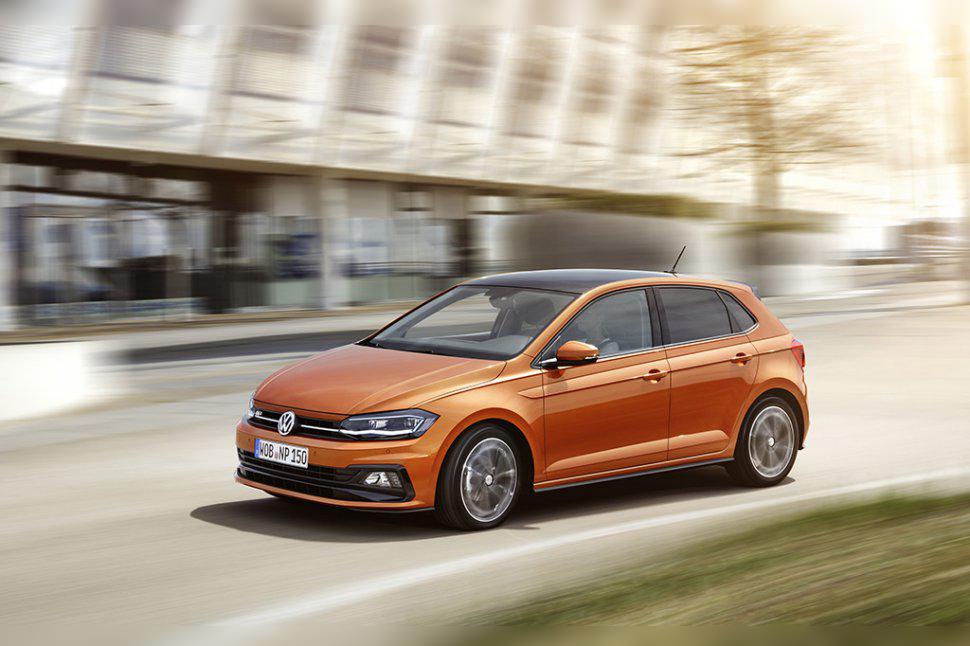
VW 1.0 TSI (95 HP) – CHZL / DKLA: Experiences, Problems and Maintenance
Volkswagen’s 1.0 TSI with 95 horsepower has become the “golden middle ground” for most modern B‑segment models, especially for the sixth‑generation Polo. This engine replaced the old 1.2 TSI units and brought a new philosophy: three cylinders, turbocharger and direct injection. Although drivers were initially skeptical about a “one‑liter mill” in cars of this size, real‑world use has shown that this is one of the better small petrol engines on the market, provided it is properly maintained.
In this article we take a detailed look at versions with engine codes CHZL and DKLA. You’ll find out whether the fear of three cylinders is justified, what tends to fail on the DSG gearbox, and how much it will cost you to run this “little guy”.
Key points (TL;DR)
- Timing drive: Uses a timing belt, not a chain, which has solved many of the issues of previous TSI generations.
- Performance: Surprisingly lively in the city thanks to 175 Nm of torque available at low revs.
- Gearbox: The 5‑speed manual is reliable, but the DSG (DQ200) with dry clutch requires caution and is expensive to repair.
- Fuel consumption: Very economical: realistically around 6.5 l/100 km in town, and under 5 l/100 km on the open road.
- Sound and vibrations: The characteristic three‑cylinder sound (“snorting”) is present, but vibrations in the cabin are very well isolated.
- Emissions: Newer DKLA engines have a GPF (gasoline particulate filter), while older CHZL units mostly don’t.
- Recommendation: An excellent choice for city driving and occasional trips, but avoid cars with a dubious DSG service history.
Contents
- Technical Specifications
- Reliability and Maintenance
- Specific Parts and Costs
- Fuel Consumption and Performance
- Additional Options and Modifications
- Gearbox (Manual vs DSG)
- Buying Used and Conclusion
Technical Specifications
This engine belongs to the EA211 family, which brought significant improvements compared to the older EA111 engines.
| Specification | Data |
|---|---|
| Engine displacement | 999 cc (1.0 L) |
| Configuration | Inline, 3 cylinders |
| Power | 70 kW (95 HP) at 5000–5500 rpm |
| Torque | 175 Nm at 2000–3500 rpm |
| Engine codes | CHZL (older), DKLA (newer, usually with GPF) |
| Fuel injection system | TSI – Direct fuel injection |
| Charging | Turbocharger + intercooler (water‑air integrated into the intake) |
| Emissions standard | Euro 6 (various sub‑versions depending on model year) |
Reliability and Maintenance
Belt or chain?
Unlike the old 1.2 and 1.4 TSI engines, which were notorious for timing chain stretch issues, the 1.0 TSI (EA211) uses a timing belt. This is great news for owners. The system is robust and quieter.
Major service (timing belt replacement)
The factory recommendation for timing belt inspection is often very optimistic (up to 210,000 km or 10 years, with no strict replacement interval in some manuals). However, real‑world experience and mechanics’ advice call for caution. It is recommended to perform the major service between 160,000 km and 180,000 km, or after 7 to 8 years of age, whichever comes first. A snapped belt leads to catastrophic engine damage, so preventive replacement (belt kit + water pump) is cheaper than repairing the cylinder head.
Oil and oil consumption
The engine takes approximately 4.0 liters of engine oil. The recommended grade depends on the exact model year and whether the engine has a GPF (DKLA code), but the most common standards are VW 508 00 (0W‑20) for newer or VW 504 00 (5W‑30) for older variants. Always check the sticker under the bonnet or the owner’s manual.
Does it burn oil? These engines are not known as heavy oil consumers, unlike some older VW petrol units. Consumption up to 0.5 liters per 10,000 km is completely acceptable and normal. If it uses more than that (e.g. 1 liter per 2–3 thousand km), this points to an issue with piston rings or the turbo, which is not standard on low mileage engines.
Spark plugs and injectors (ignition system)
Since this is a petrol engine with direct injection, the spark plugs are under high load. The recommended replacement interval is at 60,000 km or 4 years. Do not postpone replacement, as worn plugs can damage the ignition coils (which sit directly on the plugs) and even the catalytic converter. Injectors are generally durable, but sensitive to poor fuel quality.
Most common issues
- Water pump and thermostat housing: This is a weak point of EA211 engines. The housing is plastic and over time coolant leaks can occur. Symptoms include a dropping coolant level in the expansion tank or traces of leakage on the engine block.
- Carbon buildup: As with any direct‑injection engine, the valves are not “washed” by fuel. At higher mileage (over 100–150k km), carbon deposits can build up on the intake valves, causing rough idle and loss of power.
- Turbo actuator: On early series (CHZL), the electric actuator of the wastegate valve could stick. Symptoms are a lit “Check Engine” light and loss of power (safe mode).
Specific Parts (Costs)
Dual‑mass flywheel
This is the question that worries drivers the most. The situation with the 1.0 TSI (95 HP) is as follows:
- Manual gearbox (5‑speed): In most cases, the 95 HP version comes with a solid (single‑mass) flywheel. This makes clutch kit replacement significantly cheaper.
- DSG gearbox (7‑speed): These models mostly use a dual‑mass flywheel or a specific flywheel assembly adapted to the DSG, which is more expensive to replace.
Note: Always check by VIN, as VW sometimes changes specifications depending on the market.
Turbocharger
The engine has a single small turbocharger that spools up very quickly (low inertia). Its service life is generally long and it often outlasts the engine itself if the oil is changed regularly. Repair or replacement is not cheap, but also not extremely expensive compared to larger diesels (depends on the market).
Emissions: GPF, EGR and AdBlue
- GPF (OPF) filter: Engines with the DKLA code (mostly from 2018/2019 onwards) have a gasoline particulate filter (GPF). It rarely clogs because exhaust gas temperatures on petrol engines are higher than on diesels, so regeneration is passive and easy. Older CHZL units usually don’t have a GPF.
- EGR valve: This engine uses internal exhaust gas recirculation (via variable valve timing) and does not have a classic external EGR valve that clogs up with soot like on diesels.
- AdBlue: This engine does not have an AdBlue system. That is reserved exclusively for modern diesel engines.
Fuel Consumption and Performance
City driving
In real‑world city traffic, you can expect consumption between 6.0 and 7.5 l/100 km. The start‑stop system helps reduce consumption while stationary, but many drivers switch it off. The engine warms up very quickly, which is a big plus for winter city driving and fuel economy.
Is the engine “lazy”?
Absolutely not, at least not in the Polo. With 175 Nm available from just 2000 rpm, the car feels punchy off the line. Up to 60–70 km/h it feels much stronger than the spec sheet (95 HP) suggests. A feeling of “sluggishness” appears only if the car is fully loaded with passengers and luggage and you try to accelerate uphill in a high gear.
Motorway driving
On the motorway the engine behaves decently, but the limits of the small displacement can be felt. At 130 km/h in 5th gear (manual), the engine spins at around 3000–3200 rpm. It’s not excessively loud, but you can hear it. Versions with the 7‑speed DSG are quieter and more economical on the motorway because 7th gear lowers the revs. Consumption at 130 km/h is around 6.0 to 6.5 l/100 km. Top speed is about 187 km/h, but anything over 140 km/h requires patience.
Additional Options and Modifications
LPG conversion
Since this is an engine with direct injection (TSI), LPG conversion is complex and expensive. It requires a special system (“Direct Liquid Injection” or a system that mixes petrol and LPG to cool the petrol injectors). Installation costs significantly more than on conventional engines (often over 800–1000 EUR, depending on the market) and the cost‑effectiveness is questionable unless you cover very high mileage.
Chiptuning (Stage 1)
This engine responds very well to a mild power increase. The 95 HP version is hardware‑wise very similar (or identical in some variants) to the stronger 110/115 HP version. A safe Stage 1 remap can raise power to around 115–120 HP and torque to over 200 Nm. This significantly improves in‑gear acceleration. However, keep in mind that the higher torque puts additional stress on the clutch (especially with DSG).
Gearbox: Manual vs DSG
Options
- 5‑speed manual (MQ200): Standard with the 95 HP version.
- 7‑speed DSG automatic (DQ200): Optional.
Most common issues
The manual gearbox is quite reliable. There are no characteristic systemic faults. The clutch is light and lasts long if used properly. The cost of replacing the clutch kit is acceptable (not expensive).
The DSG (DQ200) is a story of its own. This is a gearbox with dry clutches. Although it offers fantastic shift speed and comfort, it is the “Achilles’ heel” of this car in the long run.
- Symptoms of problems: Jerking when moving off, grinding noises when shifting from 1st to 2nd, delayed response.
- Mechatronics: The electro‑hydraulic unit that controls the gearbox can fail, and repairs are very expensive (often 1000+ EUR, depending on the market).
- Clutches: Dry clutches wear faster in stop‑and‑go city traffic than wet clutches. Replacing the clutch set on a DSG is significantly more expensive than on a manual.
Gearbox servicing
- Manual: VW says the oil is “lifetime fill”, but it is recommended to change it every 100,000 km to preserve the bearings.
- DSG (DQ200): Officially the oil is not changed (dry system), but there is oil in the gear section itself (gears) and hydraulic oil in the mechatronics. Good specialists recommend inspection and possible replacement every 60,000–80,000 km to extend the life of the mechanical parts, even though this is not in the factory schedule.
Buying Used and Conclusion
Before buying a used VW Polo with the 1.0 TSI engine, pay attention to:
- Cold start: Listen to the engine while it is cold. For the first 10–20 seconds it may run a bit louder (catalyst warm‑up mode), but after that it should run smoothly. Metallic rattling noises are not a good sign.
- Coolant leaks: Check the coolant level and look for white traces of dried antifreeze around the thermostat housing (on the right‑hand side of the engine when viewed from the front).
- DSG test: If you are buying an automatic, warm up the car and try moving uphill without pressing the accelerator (to see whether it “creeps” smoothly or jerks). Any jerking or hesitation from the gearbox is a sign to walk away from that car or negotiate a significantly lower price.
Final verdict
The 1.0 TSI (95 HP) in the VW Polo VI is an excellent engine for the average European driver. It offers a great balance of low fuel consumption, cheap registration and perfectly adequate performance. If you want peace of mind and low running costs, choose the manual gearbox. If comfort is your priority and you opt for the DSG, have a “rainy day fund” ready for potential gearbox repairs. This is not a race car, but it is a modern, civilized and (with the manual gearbox) very reliable powertrain.
Was this content useful to you?
Your opinion helps us to improve the quality of the content.