EA211 evo2 Engine
- Engine
- 1498 cm3
- Aspiration
- Turbocharger, Intercooler
- Fuel
- Petrol (Gasoline)
- Fuel injection system
- Direct injection
- Power
- 174 hp
- Torque
- 250 Nm
- Cylinders
- 4
- Valves
- 16, 4 per cylinder
- Cylinders position
- Inline
- Valvetrain
- DOHC
- Systems
- Start & Stop System
# Vehicles powered by this engine
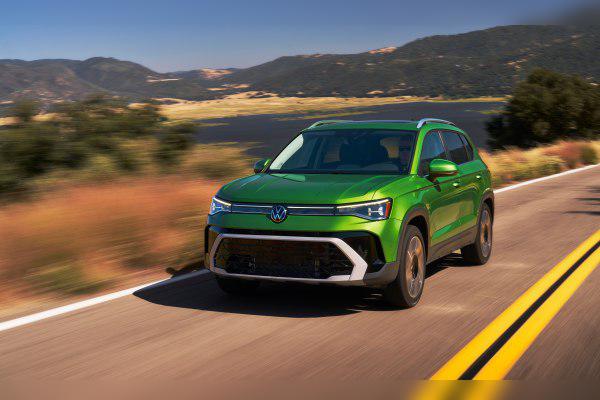
VW 1.5 TSI evo2 (174 hp) – Experiences, issues, fuel consumption and maintenance
Key points (TL;DR)
- New generation: This is the EA211 evo2 engine, an improved version of the popular 1.5 TSI, with a focus on stricter emission standards and better throttle response.
- Timing belt: The engine uses a timing belt, not a chain, which is generally a quieter and cheaper solution for this type of engine.
- 174 hp output: This specific power output (an increase from the earlier 150/158 hp versions) is characteristic of newer SUV models (such as the Taos) and delivers excellent performance with the help of the VTG turbo.
- Gearbox: It is often paired with an 8-speed automatic transmission (not always DSG), which provides greater comfort but also different maintenance requirements.
- Sensitivity: It requires strict adherence to the oil specification (0W-20) and high-quality fuel due to direct injection and the OPF filter.
- Recommendation: An excellent choice for those who want a petrol engine with diesel-like torque, but it is not suitable for cheap LPG conversions.
Contents
Introduction and engine applications
The EA211 evo2 engine with 174 horsepower represents the latest evolution of Volkswagen’s downsizing strategy while maintaining performance. While the European market is used to 150 hp versions, the 174 hp variant (often designated for markets such as North America, but technologically identical to European standards) brings significant improvements.
This engine is key because it replaces the older 1.4 TSI units and brings variable geometry turbo (VTG) technology into the world of mass-market petrol engines, something previously reserved mainly for diesel engines or Porsche models. In a model such as the VW Taos (2024 facelift), this engine’s task is to move a crossover body with minimal fuel consumption, but without feeling sluggish.
Technical specifications
| Parameter | Data |
|---|---|
| Engine code/name | EA211 evo2 (1.5 TSI) |
| Displacement | 1498 cc |
| Power | 128–130 kW (174 hp) |
| Torque | 250 Nm at 1750–4000 rpm |
| Injection type | Direct injection (TSI/GDI) with high pressure (350 bar) |
| Turbocharger | Single turbo with variable geometry (VTG) |
| Valve timing drive | Timing belt |
| Emissions | Euro 6d / LEV III (depending on market), equipped with OPF/GPF |
Reliability and maintenance
Timing drive: belt or chain?
Unlike the notorious old EA111 engines, the EA211 evo2 uses a timing belt. This is very good news for owners. The belt is reinforced with glass fibers and designed to last a long time. Although VW often states that the belt is “lifetime” or that it only needs inspection after 240,000 km, real-world practice and common sense say otherwise.
A major service (replacement of the timing kit and water pump) is preventively recommended between 160,000 km and 180,000 km or at the latest after 10 years of vehicle age. Timing belt failure on these engines is rare, but the risk increases with age.
Most common faults and issues
Although this is a modern and reliable engine, it is not without flaws:
- Oil consumption: Due to the use of very thin oils (0W-20), oil consumption can occur at high revs or with aggressive driving. Consumption of up to 0.5 liters over a few thousand kilometers is often considered “technically acceptable” by the manufacturer, but drivers should regularly check the dipstick.
- Carbon buildup: As a direct-injection engine, the intake valves are not “washed” by fuel. Over time, carbon deposits build up on the valves, which can lead to rough idle and power loss around 100,000+ km.
- ACT system (cylinder deactivation): The Evo2 engine has the ACTplus system, which shuts down two cylinders under low load to save fuel. Although the system has been improved, older versions were known to cause vibrations. If you feel strange vibrations while cruising, it may be a sign of problems with the actuators of this system.
- Electronics and sensors: Due to its complexity (many pressure and temperature sensors), occasional “Check Engine” lights can be caused by software glitches that are resolved by software updates at an authorized service center.
Oil and spark plugs
The engine takes approximately 4.3 liters of oil (always check the exact amount by VIN, as sumps differ). The recommended grade is strictly 0W-20 (VW standard 508.00 / 509.00). This oil is “like water” and is crucial for the operation of the VTG turbo and low fuel consumption. Do not use thicker oil (e.g. 5W-40) unless the manufacturer explicitly allows it for your region, as this can damage the fine channels in the turbocharger.
The spark plugs are iridium and long-lasting. They are replaced at 60,000 km or every 4 years. Do not postpone their replacement, as a bad spark plug can damage the ignition coil (which is expensive) or the catalytic converter.
Specific parts (costs)
Dual-mass flywheel and injection system
Yes, this engine, when combined with an automatic gearbox (Tiptronic or DSG), has a dual-mass flywheel. Its role is to absorb engine vibrations, especially when running in two-cylinder mode.
The injection system operates at pressures up to 350 bar. The injectors are piezoelectric and generally reliable, but extremely sensitive to poor fuel quality. Replacing a full set of injectors is a very expensive investment. Symptoms of bad injectors include hard starting and black smoke (overly rich mixture).
Turbo and emissions (GPF/EGR)
The engine has a single turbocharger, but it uses VTG technology (variable geometry). Its service life is designed to match the engine’s life (250,000+ km), provided that the oil is changed regularly and the engine is not switched off immediately after hard driving.
Petrol engines do not have a DPF (like diesels), but they do have a GPF (Gasoline Particulate Filter) or OPF. It rarely clogs because petrol burns at higher temperatures than diesel, so the filter passively regenerates while driving. There is no AdBlue fluid – that is reserved only for diesels. An EGR valve is present and can get dirty from soot, but this is a rarer issue than on diesels.
Fuel consumption and performance
City driving: In a model such as the VW Taos, real-world city consumption ranges between 8 and 9.5 l/100 km. If traffic is heavy or you drive short distances with a cold engine, it can exceed 10 liters. The start-stop system helps, but it is no miracle worker.
Performance and “sluggishness”: With 174 hp and 250 Nm, this engine is not sluggish. Turbo lag is minimal thanks to the variable geometry that allows the turbo to spool even at low revs. The car accelerates linearly and has enough power for overtaking, even when fully loaded.
Highway: This is the natural habitat for the 1.5 TSI. At 130 km/h, the engine spins at around 2,200 to 2,400 rpm (in top gear), which is very quiet and economical. Fuel consumption on the open road is around 6.0 to 7.5 l/100 km, depending on road profile and load.
Additional options and modifications
Should you install LPG?
Short answer: It’s not worth it. The engine uses direct fuel injection into the cylinders. Installing a “regular” sequential LPG system is not possible. Expensive systems are required that either inject liquid gas directly through the petrol injectors (very expensive, 1000+ EUR) or use a mixture of petrol and gas (e.g. 20% petrol, 80% gas) to cool the petrol injectors. Considering the moderate petrol consumption, the LPG system’s payback period is too long.
Chiptuning (Stage 1)
The engine can be remapped, but caution is advised. The new Evo2 engines have locked ECUs (SFD protection), which makes tuner access more difficult. If the protection is bypassed, a Stage 1 tune can raise power to about 190–200 hp and 300+ Nm. However, this voids the warranty and can shorten the life of the turbo, which is already complex (VTG). It is recommended only with reputable tuners.
Gearbox: manual and automatic
In VW Taos (2024 facelift) models with this engine, the gearbox situation is specific.
- Automatic gearbox (8-speed Tiptronic/Aisin): Often installed in FWD (front-wheel-drive) versions, and since the facelift also frequently in 4MOTION versions (replacing DSG in some markets). This is a conventional automatic with a torque converter.
- Advantages: Extremely smooth in city driving, no “jerking” when setting off, more reliable than DSG in stop-and-go traffic.
- Failures: Rare. Possible issues with solenoids at high mileage.
- Maintenance: Oil changes every 60,000 to 80,000 km are mandatory for long life, even if VW sometimes claims it is “sealed for life”.
- DSG (7-speed DQ381): If the model is equipped with a DSG gearbox (usually earlier 4Motion versions), this is a dual-clutch transmission.
- Failures: Clutch pack wear, mechatronics failures. It is more sensitive to city driving.
- Maintenance: Oil and filter must be changed strictly at 60,000 km or 120,000 km (depending on the exact sub-variant, but more frequent changes are recommended).
Clutch replacement cost: With a conventional automatic there is no clutch replacement as a wear item. With DSG, a clutch kit with flywheel is a costly job (often over 1000 EUR, depending on the market).
Buying used and conclusion
When buying a used car with the 1.5 TSI evo2 engine with 174 hp, pay attention to the following:
- Cold start: The engine should start immediately and idle smoothly. You should not hear chain rattling (because it has a belt), but any metallic noise may indicate a problem with the cam phasers or hydraulic lifters.
- Coolant leaks: Check the coolant level. The thermostat housing (module) is a known weak point of the EA211 family and tends to “weep”.
- Test drive: Pay attention to the transition from 2 to 4 cylinders (ACT mode). It should be imperceptible. If the car shudders, the engine mounts or the system itself are not in order.
Conclusion:
The EA211 evo2 (174 hp) engine is currently one of the best small-displacement turbo petrol engines on the market. It offers an ideal balance between power sufficient for overtaking and fuel economy that comes close to diesels. It is intended for drivers who spend most of their time in the city and on main roads, and who want a modern, quiet and refined car. If you change the oil regularly and avoid suspicious fuel stations with poor-quality fuel, this engine will serve you well for many years.
Was this content useful to you?
Your opinion helps us to improve the quality of the content.