EA888 / DKX Engine
- Engine
- 1984 cm3
- Aspiration
- Turbocharger, Intercooler
- Fuel
- Petrol (Gasoline)
- Fuel injection system
- Direct injection
- Power
- 220 hp
- Torque
- 350 Nm
- Cylinders
- 4
- Valves
- 16, 4 per cylinder
- Cylinders position
- Inline
- Oil capacity
- 5.7 l
- Systems
- Start & Stop System, Particulate filter
# Vehicles powered by this engine
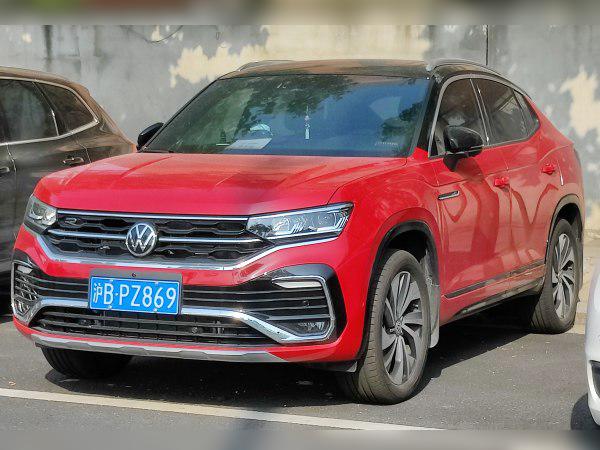
Volkswagen EA888 / DKX 2.0 TSI (380 TSI) – Experiences, Problems and Maintenance
Key points in short (TL;DR)
- Performance: The 220 hp (162 kW) engine is extremely potent and offers an excellent power-to-fuel-consumption ratio for heavier vehicles such as the Tayron X. It is not “lazy”.
- Timing drive: Uses a chain. On this generation, the timing chain stretch issue is significantly reduced, but not completely eliminated at high mileage.
- Achilles’ heel: Thermostat module and water pump. The plastic housing often cracks and leads to coolant leaks.
- Gearbox: Comes exclusively with a DSG transmission (wet clutch). Requires regular oil changes every 60,000 km, otherwise repair costs are astronomical.
- Oil consumption: Although better than older generations, with more aggressive driving some oil consumption is to be expected.
- Recommendation: An excellent choice for those who want petrol performance in an SUV body, but it requires strict and high-quality maintenance.
Contents
- Introduction and Applications
- Technical Specifications
- Reliability and Maintenance
- Specific Parts and Costs
- Fuel Consumption and Performance
- Additional Options and Modifications
- Gearbox and Drivetrain
- Buying Used and Conclusion
Introduction and Applications
The engine with the code DKX belongs to the famous yet controversial Volkswagen EA888 family (Generation 3B or a transition to Gen 4, depending on the market). Specifically, this unit is installed in the Volkswagen Tayron X (380 TSI), which is essentially a coupe-SUV version of the Tiguan, primarily developed for the Asian market, but available in other parts of the world through parallel import.
The “380 TSI” designation in Volkswagen’s nomenclature indicates a high-performance version of the 2.0 engine. This is not the base model; this is an engine meant to provide a sporty feel in a heavy body with all-wheel drive (4MOTION). Unlike older generations that were notorious for oil consumption, this iteration brings many technical improvements, but also new challenges related to emissions and the complexity of the cooling system.
Technical Specifications
| Parameter | Data |
|---|---|
| Engine displacement | 1984 cc (2.0 L) |
| Power | 162 kW / 220 hp |
| Torque | 350 Nm |
| Engine code | DKX (EA888 family) |
| Injection type | Direct injection (TSI/FSI) |
| Forced induction | Turbocharger + intercooler |
| Number of cylinders / valves | 4 / 16 |
Reliability and Maintenance
Does this engine have a timing belt or a chain?
This engine uses a timing chain for valve timing. Unlike older EA888 engines (Gen 1 and 2), where chain stretch and skipping teeth were an owner’s nightmare, the DKX version has a significantly improved tensioner and chain design. Still, the chain is not eternal. It is recommended to check its condition (elongation) via diagnostics or visually (through the cover inspection opening) after 150,000 km. If you hear rattling at cold start that lasts longer than 2–3 seconds, that is a sign you should visit a workshop immediately.
What are the most common failures on this engine?
The biggest enemy of this engine is the cooling system. The thermostat module with water pump is made of plastic that deforms over time due to heat cycles, which leads to coolant leaks. This often happens already between 60,000 and 100,000 km.
Another common issue is the PCV valve (oil vapor separator). When its membrane tears, the engine starts consuming oil, idles roughly and you may hear a characteristic whistling sound. Also, due to direct injection, carbon buildup on intake valves is inevitable at higher mileage, which can reduce power.
At what mileage is the “major service” done?
Since the engine has a chain, the classic “major service” (timing belt replacement) does not exist in that form. However, the serpentine (auxiliary) belt that drives the alternator and A/C compressor should be replaced at around 100,000–120,000 km, together with the tensioners. The chain itself is replaced only when needed, but in practice it is often done preventively at around 200,000 km if you plan to keep the car.
How many liters of oil does this engine take and which grade is recommended?
The oil pan holds approximately 5.7 liters of engine oil. As for viscosity, this engine is designed for low-viscosity oils for efficiency. The most commonly used is 0W-20 (VW 508.00 standard) for newer model years, although in warmer climates and on higher-mileage engines 5W-30 (VW 504.00) can also be used, but only if allowed by the service manual. Check the sticker under the hood.
Does it consume oil between services?
Yes, EA888 engines are known for that, although this generation is far better than the previous ones. Consumption of about 0.5 liters per 3,000 to 5,000 km can be considered acceptable, especially if driven aggressively or often on the highway. If it uses a liter per 1,000 km, you have a problem (piston rings or turbo). It is recommended to keep the oil level close to the maximum mark at all times.
At what mileage should the spark plugs be replaced?
On these turbo petrol engines, spark plugs are under heavy thermal load. Replacement is recommended every 60,000 km. Always use iridium or platinum plugs recommended by the manufacturer (NGK or Bosch), as cheap copies can cause misfires and damage the ignition coils.
Specific Parts (Costs)
Does the engine have a dual-mass flywheel?
Yes, in combination with the DSG gearbox this engine uses a dual-mass flywheel. Its role is to dampen engine vibrations before they reach the gearbox. When it starts to fail, you will hear metallic knocking at idle that disappears when you rev the engine. This is an expensive part (depends on the market, but count on it being “expensive”).
What kind of injection system does it have and are the injectors problematic?
The system is high-pressure direct injection. Injectors are generally reliable but sensitive to poor fuel quality. Symptoms of issues include hard starting and rough running. A much bigger problem than the injectors themselves is the already mentioned carbon buildup on the valves, because the fuel does not wash the intake valves.
Does this engine have a turbocharger and what is its lifespan?
It has a single turbocharger (usually an IS20 or a similar IHI model for this power level). The turbo is water-cooled and quite robust. With regular oil changes and proper cooldown after fast driving (letting the engine idle for a minute before switching off), the turbo can easily last over 200,000 km. The first sign of failure is a siren-like whine or bluish smoke from the exhaust.
Does it have a DPF filter or an EGR valve?
Since it is a petrol engine, it does not have a DPF (Diesel Particulate Filter), but newer models (especially for the EU and stricter Chinese markets) have a GPF/OPF (Gasoline Particulate Filter). It rarely clogs because exhaust gas temperatures on petrol engines are higher. An EGR valve is present, but it causes far fewer issues than on diesels.
Does this engine use AdBlue?
No. AdBlue is used exclusively on diesel engines to reduce NOx emissions. This engine is a pure petrol unit.
Fuel Consumption and Performance
What is the real fuel consumption in city driving?
The Tayron X is a heavy vehicle and the 4MOTION system adds extra drag. In pure city traffic, do not expect miracles. Real-world consumption ranges from 10 to 13 liters per 100 km, depending on how heavy your right foot is. In winter conditions and on short trips, it can go up to 14 liters.
Is this engine “lazy” for the weight of the body?
Absolutely not. With 220 hp and 350 Nm of torque available from low revs (around 1,500 rpm), this engine moves the body with ease. In-gear acceleration is excellent, overtaking is safe, and the DSG gearbox responds quickly to power demands.
How does the engine perform on the highway?
This is the natural habitat of this car. At 130 km/h, thanks to the 7th gear of the DSG, the engine spins at a comfortable 2,200–2,400 rpm. This results in a quiet cabin and reasonable fuel consumption on the open road, around 7.5 to 9 liters, depending on terrain and load.
Additional Options and Modifications
Is this engine suitable for LPG conversion?
Technically it is possible, but it is expensive and complicated. Due to direct injection, a special system is required (Direct Liquid Injection) or a system that injects a mixture of petrol and LPG (to cool the petrol injectors). Installing such a system costs significantly more than a classic sequential LPG kit (very expensive), so it only pays off if you drive huge mileages (over 30–40 thousand km per year).
How far can this engine be safely tuned (Stage 1)?
EA888 engines are the “kings of tuning”. This engine block is very robust. A safe Stage 1 remap raises power to about 260–300 hp and torque to 420–450 Nm. However, keep in mind that this puts additional stress on the turbo, spark plugs and gearbox, so shortening service intervals (oil every 8–10k km) is mandatory after remapping.
Gearbox
Which gearboxes are installed?
With the 380 TSI 4MOTION engine in the Tayron X, a 7-speed DSG dual-clutch gearbox comes as standard. It is most likely the DQ381 or DQ500 model (the so-called “wet” DSG), designed to handle higher torque.
What are the most common automatic gearbox failures?
Although the DQ381/DQ500 are very reliable, the most expensive failure is the mechatronics unit (the gearbox brain). Symptoms include harsh gear changes, delayed response or the gearbox going into “safe mode”. Another potential issue is oil leakage at the seals.
Cost of clutch and dual-mass flywheel replacement?
These gearboxes have “wet” clutches that run in oil and last a long time (often over 200,000 km). However, a clutch kit is very expensive to replace. The dual-mass flywheel is replaced when it starts knocking, and the replacement cost is also in the “expensive” category (depends on the market).
At what mileage should the gearbox be serviced?
This is critical: The oil and filter in the DSG gearbox must be changed every 60,000 km! (Some manufacturers state 120,000 km for certain newer models, but any experienced mechanic will tell you to do it at 60,000 km). If you skip this service, you drastically increase the risk of mechatronics and clutch failure.
Buying Used and Conclusion
What to check before buying?
- Cold start: Listen for any chain rattling.
- Coolant leaks: Look under the intake manifold for traces of pink/purple fluid (coolant) on the engine block – a sign that the water pump is near the end of its life.
- DSG history: Ask for proof of gearbox oil changes. If the car has 130,000 km and the oil has never been changed – walk away.
- Smoke: Blue smoke when you press the throttle is a bad sign (oil), black smoke indicates poor combustion (injectors/spark plugs).
Final conclusion
The EA888 / DKX 220 hp engine is a fantastic piece of engineering that offers sporty performance in a family package. It is not as cheap to maintain as a regular 1.4 or 1.5 TSI, nor as economical as a 2.0 TDI, but it offers much more fun and refinement. It is intended for drivers who want power and 4x4 drive and are willing to accept higher fuel consumption and strict maintenance. If you service it regularly, it will serve you for years; if you neglect it, it will punish you with expensive failures.
Was this content useful to you?
Your opinion helps us to improve the quality of the content.