EA888 / DPL Engine
- Engine
- 1984 cm3
- Aspiration
- Turbocharger, Intercooler
- Fuel
- Petrol (Gasoline)
- Fuel injection system
- Direct injection
- Power
- 186 hp
- Torque
- 320 Nm
- Cylinders
- 4
- Valves
- 16, 4 per cylinder
- Cylinders position
- Inline
- Oil capacity
- 5.7 l
- Systems
- Start & Stop System, Particulate filter
# Vehicles powered by this engine
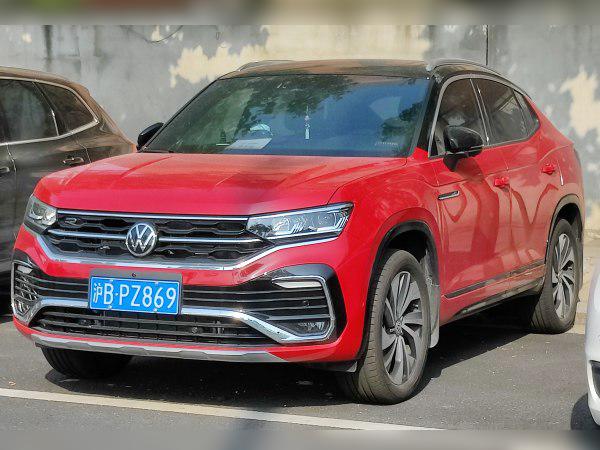
VW 2.0 TSI (EA888 Gen 3B/4) DPL 186 HP – Experiences, Problems, Fuel Consumption and Used Car Buying Tips
Key points in short (TL;DR)
- Modern engine design: The DPL code indicates the so‑called “B‑cycle” (Miller cycle) operation, optimized for lower fuel consumption and higher torque at low revs.
- Timing drive: Uses a chain. Much more reliable than older generations, but still requires high‑quality oil.
- Achilles’ heel: Thermostat and water pump module. Coolant leaks are the most common failure.
- Gearbox: Comes exclusively with a DSG (wet clutch). Requires regular oil changes at 60,000 km or 120,000 km (depending on version, earlier is recommended).
- Oil consumption: Not as alarming as it once was, but direct‑injection engines always consume a small amount of oil.
- GPF filter: Newer models have a gasoline particulate filter (GPF), similar to a diesel DPF, but less problematic.
- Recommendation: Excellent balance of power and efficiency for a heavier body such as the Tayron X.
Contents
- Introduction and engine applications
- Technical specifications
- Reliability and maintenance
- Specific components and injection system
- Fuel consumption, performance and driving feel
- Tuning and LPG
- Gearbox (DSG) and drivetrain
- Used car buying tips and conclusion
Introduction and engine applications
The engine with the code DPL belongs to the broad EA888 family of units, but is specific in that it is “detuned” to 186 HP (badged 330TSI on Asian and some other markets). Its main characteristic is operation in the Miller cycle (VW calls it the B‑cycle). This means the intake valves close earlier, which results in higher efficiency and lower fuel consumption under partial load.
In a model such as the Volkswagen Tayron X (SUV coupé variant), this engine represents the “golden middle ground”. It’s not the basic underpowered 1.4/1.5 TSI, nor the powerful 2.0 TSI with 220+ HP that consumes significantly more. This is an engine designed for the modern driver who wants diesel‑like torque, but the quietness and emissions profile of a petrol.
Technical specifications
| Characteristic | Value |
|---|---|
| Engine code | EA888 Gen 3B / DPL |
| Displacement | 1984 cc (2.0 L) |
| Power | 137 kW (186 HP) |
| Torque | 320 Nm at 1500–4000 rpm |
| Injection type | Direct (TSI/FSI) |
| Forced induction | Turbocharger + intercooler |
| Emissions standard | Euro 6 (variations depending on market) |
Reliability and maintenance
Timing system: chain or belt?
This engine uses a chain to drive the camshafts. Unlike the notorious earlier generations (Gen 2 up to 2012), where chain failure was common, the system here is significantly improved. The chain is robust and designed to last the “lifetime” of the vehicle, but in practice that means around 200,000 to 250,000 km with regular oil changes. The first symptom of trouble is rattling on cold start (metal‑on‑metal sound) that lasts longer than 2–3 seconds.
Most common failures
Although the EA888 Gen 3B/4 is reliable, there are typical weak points:
- Thermostat module and water pump: This is the most common issue. The housing is plastic and deforms over time from heat, which leads to coolant leaks. Symptoms are a dropping coolant level and the smell of antifreeze under the hood. The repair is not cheap (depends on the market).
- PCV valve (oil vapor separator): If the membrane tears, the engine starts consuming oil, idles roughly, or you may hear a whistling noise.
- Carbon buildup: Due to direct injection, the intake valves are not “washed” by fuel. At higher mileages (over 100,000 km), performance can drop due to carbon deposits on the valves.
Service intervals and oil
There is no major service in the classic sense (belt replacement), because it has a chain. However, the serpentine belt and tensioners should be inspected and replaced at around 100,000–120,000 km.
Oil: This engine takes approximately 5.7 liters of engine oil. Due to the “B‑cycle” and modern tolerances, VW often recommends very thin 0W‑20 oils (VW 508 00 spec) for fuel economy. Still, many mechanics and enthusiasts switch to 5W‑30 (VW 504 00) for better protection at high temperatures, especially in warmer climates.
Oil consumption: These engines do consume oil; that’s factory‑expected. Consumption of 0.3 to 0.5 liters per 10,000 km is completely normal and acceptable. If it uses a liter every 2–3 thousand km, that points to an issue with piston rings or the turbo.
Spark plugs and injectors
Since this is a petrol engine, spark plugs are crucial. Replacement is recommended every 60,000 km or 4 years. Do not skimp on spark plugs; use only NGK or Bosch by catalog number, as a bad plug can lead to coil failure (which is also a wear item).
Specific components (costs)
Dual‑mass flywheel: Yes, this model in combination with the DSG gearbox has a dual‑mass flywheel. Its lifespan is usually around 150,000–200,000 km, depending on driving style. Symptoms of failure are metallic knocking at idle (which changes when you shift into D or R) and vibrations. Replacement is expensive (depends on the market).
Turbocharger: The engine has a single turbocharger (usually an IS20 variant adapted for this engine). Service life is long with regular maintenance and proper cooldown after hard driving. Failures are rare before 200,000 km.
Injection system: Uses high‑pressure injectors for direct injection. The injectors are generally reliable but sensitive to poor fuel quality. Replacing a single injector can be costly.
Emissions equipment (GPF/EGR/AdBlue):
This engine DOES NOT have AdBlue (that’s for diesels).
However, newer versions (especially for the EU and stricter Asian markets) have a GPF (Gasoline Particulate Filter). This is a particulate filter for petrol engines. Unlike diesel DPFs, a GPF regenerates much more easily and quickly, passively during driving, because petrol exhaust gases are hotter. Clogging is extremely rare unless the car is driven exclusively 2 km a day in winter.
Fuel consumption and performance
City driving: The Tayron X is not a light car (SUV/crossover). In heavy city traffic, real‑world consumption is between 9 and 11 liters/100 km. Don’t trust factory figures of 6–7 liters; in the city that’s almost impossible to achieve with this weight.
Open road and motorway: This is where the “Miller cycle” shines. On the open road, consumption can drop to around 6.5 liters. On the motorway at 130 km/h, the engine runs at low revs (thanks to the 7th gear of the DSG) and uses about 7.5–8.5 liters.
Is the engine “lazy”? With 320 Nm of torque available from just 1500 rpm, this engine is not lazy. The driving feel is similar to a diesel – it pulls strongly from low revs, which is ideal for overtaking and uphill driving. Although 186 HP on paper doesn’t sound like a sports car, the gearbox does a great job of masking the vehicle’s weight.
Additional options and modifications
LPG conversion: Because of direct fuel injection into the cylinders, LPG installation is complex and expensive (depends on the market). You need a system that either uses the “liquid phase” (uses petrol injectors for LPG) or a system that runs a mix of petrol and LPG (e.g. 20% petrol, 80% LPG) to cool the petrol injectors. The economic benefit is questionable unless you cover very high mileages.
Chip tuning (Stage 1): EA888 engines are known for their tuning potential. However, this version (DPL 186 HP) is hardware‑different from the 220/245 HP versions (different compression, camshafts). A safe “Stage 1” can raise power to about 220–230 HP and torque to around 400 Nm. Pushing it further can shorten the life of the turbo and the gearbox clutches.
Gearbox: DSG experience
With this engine in the Tayron X, you almost exclusively get a 7‑speed DSG gearbox with a wet clutch (most commonly the DQ381, successor to the well‑known DQ380/DQ500 series).
- Reliability: This is a very reliable gearbox, far better than the old 7‑speed dry‑clutch units (DQ200) used on lower‑powered engines. It can handle high torque.
- Most common failures: Issues with the mechatronics (electronic control unit) can occur, but are rarer. The biggest enemy of this gearbox is old oil.
- Maintenance: Oil and filter changes in the gearbox are MANDATORY. Although VW sometimes specifies 120,000 km for the DQ381, the strong recommendation from experts is to change it every 60,000 km. The service cost is not small (depends on the market), but it’s ten times cheaper than a gearbox overhaul.
Buying used and conclusion
If you’re considering a VW Tayron X with the 2.0 TSI (330TSI) engine, here’s what you should check:
- Cold start: Insist that the engine is completely cold. Listen to the chain for the first few seconds. There should be no rattling.
- Signs of coolant leaks: Look around the intake manifold area and under the water pump. Pink/purple residue is a sign of antifreeze leakage.
- DSG test: The gearbox should shift imperceptibly. Start gently uphill without throttle (auto‑hold off) – the car must not jerk or hesitate.
- Gearbox service history: If the car has over 60,000 km and the gearbox oil has never been changed, that’s a major risk.
Conclusion
The EA888 (DPL 186 HP) engine is an excellent choice for those who want performance but are afraid of diesels because of DPFs and city bans, or simply don’t like diesel noise. It is powerful enough for the Tayron X and surprisingly economical on the open road. With regular maintenance (engine oil every 10–15k km and gearbox oil every 60k km), this powertrain can cover high mileages without major failures. Maintenance costs are in line with the average for a modern VW – not cheap, but parts are widely available.
Was this content useful to you?
Your opinion helps us to improve the quality of the content.