EA390 DPK Engine
- Engine
- 2492 cm3
- Aspiration
- Turbocharger, Intercooler
- Fuel
- Petrol (Gasoline)
- Fuel injection system
- Direct injection
- Power
- 299 hp @ 6000 rpm
- Torque
- 500 Nm
- Cylinders
- 6
- Valves
- 24, 4 per cylinder
- Cylinders position
- V-engine
- Systems
- Start & Stop System
# Vehicles powered by this engine

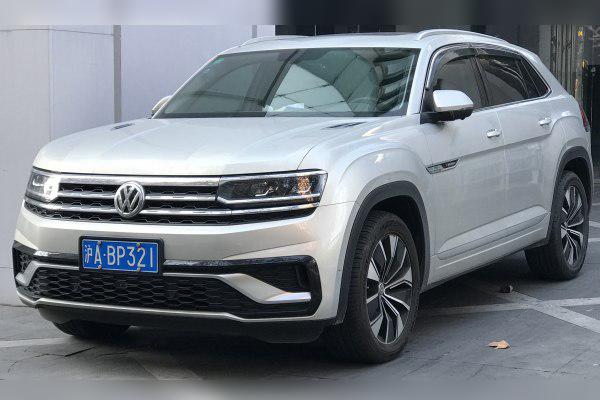
Key points in short (TL;DR)
- Unique construction: This is not an ordinary engine, but a 2.5 VR6 Turbo – a true exotic that offers the sound and power of a straight-six with the help of a turbo.
- Performance: With 500 Nm of torque, this is a "diesel killer." It carries the heavy Teramont X body with ease.
- Timing: Uses a timing chain. Although the system has been improved, VR6 engines are historically sensitive to chain stretch if the oil is not changed regularly.
- Fuel consumption: Be prepared for double-digit figures. In the city this engine drinks like there is no tomorrow.
- Gearbox: Comes exclusively with the DQ500 DSG transmission, which is one of the most durable in the VW group, but requires strict maintenance.
- Maintenance: Expensive (depends on the market). Parts are specific, and access to the engine in the bay can be tight, which increases labor cost.
- Recommendation: An excellent choice for those who want power and refinement and do not care about fuel consumption.
Contents
EA390 DPK 2.5T VR6: The return of a legend in a modern form
When Volkswagen decides to make something special, they usually go back to their VR6 architecture. The engine designated EA390 DPK is a real rarity and an engineering gem. It is a 2.5-liter V6 turbo petrol engine primarily developed for the Chinese market (due to tax benefits for engines under 2.5 liters) and the Middle East, and it is installed in the massive Volkswagen Teramont X.
This is not a classic V6 engine with a 60 or 90 degree angle, but a narrow-angle VR6, which means it has a single cylinder head for all six cylinders. By adding a turbocharger, VW got an engine that offers the explosiveness of a smaller unit and the refinement of a big six-cylinder. It is important to note that although it shares the EA390 designation with the naturally aspirated 3.6 VR6 engines (known from the Atlas or Passat R36), this is a much more modern and more complex machine.
Technical Specifications
| Feature | Data |
|---|---|
| Engine displacement | 2492 cc (2.5 L) |
| Configuration | VR6 (narrow V angle), 24 valves |
| Power | 220 kW / 299 hp |
| Torque | 500 Nm |
| Engine code | EA390 (DPK / DDK variants) |
| Fuel injection system | TSI (Turbo Stratified Injection) – Direct injection |
| Induction | Single turbocharger + intercooler |
Reliability and Maintenance
Timing system: Chain or belt?
The EA390 2.5T engine uses a timing chain. As with all VR6 engines, the chain is located at the "rear" of the engine (towards the gearbox), which makes any potential repair extremely expensive because it often requires removal of the engine or transmission. Although modern versions of chains and tensioners are more durable than on the old R32 models, regular oil changes are crucial. If you hear rattling on a cold start that lasts longer than 2–3 seconds, that is a warning sign.
Most common failures
Considering this is a high-performance engine powering a heavy vehicle, there are specific failure points:
- Carbon buildup: Due to direct injection, the valves are not "washed" by fuel. Over time, carbon deposits build up on the intake valves, leading to rough running and power loss. Cleaning (walnut shell blasting) is needed at around 80,000–100,000 km.
- Thermostat and water pump: Housings are often plastic and, due to the high temperatures the VR6 generates in a tight engine bay, they tend to crack and cause coolant leaks.
- PCV valve (crankcase ventilation): If the membrane tears, the engine may start consuming oil or creating vacuum/pressure in the crankcase, which manifests as whistling or leaking seals.
- Ignition coils: A consumable item on VW turbo petrol engines. When one fails, the engine runs "on three cylinders" (in this case on five) and triggers the check engine light.
Service intervals and oil
Major service: The chain is designed to last the lifetime of the engine, but in practice, checking the condition of the chain and tensioners is recommended at around 150,000–180,000 km. Replacement of the auxiliary (serpentine) belt, rollers and water pump is part of regular maintenance and is usually done at around 100,000 km or every 5 years.
Engine oil: This engine takes about 5.5 to 6.0 liters of oil (always check the exact figure in the manual as sumps vary). The recommended grade is usually 0W-20 (VW 508.00 standard) for newer model years for fuel economy, or 5W-30 (VW 504.00) for better protection in warmer climates and under higher loads. It is recommended to change the oil every 10,000–12,000 km at most, and not at 30,000 km as the factory often states (LongLife).
Oil consumption and spark plugs
Modern TSI engines are more tolerant, but consumption of about 0.5 liters per 10,000 km is completely normal and acceptable. If it uses a liter per 2,000 km, you have a problem with the piston rings or the turbo.
Spark plugs: On this turbo engine, spark plugs are exposed to high thermal stress. Replace them every 40,000 to 60,000 km. Do not wait for them to "fail" because that can damage the coils.
Specific Parts (Costs)
Fuel injection system and turbo
The system is a high-pressure direct injection (TSI). Injectors are generally reliable but sensitive to poor fuel quality. Symptoms of bad injectors are hard starting and black smoke. The high-pressure fuel pump (HPFP) can fail, but this is not a widespread issue.
The engine has a single large turbocharger. Its lifespan depends on the owner. If the engine is switched off immediately after hard driving (highway), the oil in the turbo cokes up and destroys the bearings. With proper cool-down before shutting off and regular oil changes, the turbo will last over 200,000 km. Rebuild is possible but expensive (depends on the market).
Emissions: GPF and EGR
Since this is a 2023 model (facelift), this engine is equipped with a GPF filter (Gasoline Particulate Filter) to meet strict emission standards. GPFs rarely clog compared to diesel DPFs, because petrol engines run at higher exhaust temperatures. There is no AdBlue because this is a petrol engine. An EGR valve is present, but on petrol engines it causes far fewer problems than on diesels due to the "drier" soot.
Fuel Consumption and Performance
Is this engine "lazy"?
Absolutely not. With 299 hp and 500 Nm available from low revs, this engine moves the heavy Teramont X (over 2 tons) with incredible ease. Acceleration is linear and powerful. The feeling is similar to driving a strong 3.0 diesel, but with a nicer sound and a wider rev range.
Real-world fuel consumption (the painful part)
This is not an engine for people who want to save fuel.
City driving: Expect between 13 and 16 l/100 km. In heavy traffic and stop-and-go conditions, this easily goes up to 18 liters.
Highway: This is where the engine feels at home. At 130 km/h, the gearbox keeps revs low (around 2,200–2,400 rpm), and consumption is around 9–11 l/100 km.
Additional Options and Modifications
Can LPG be installed?
Technically it is possible, but economically questionable. Due to direct injection, a sophisticated system is required that either injects liquid LPG directly (very expensive, over 1000–1500 EUR) or a system that uses a mixture of petrol and gas (e.g. 20% petrol, 80% gas) to cool the petrol injectors. Considering the complexity of the engine and the lack of space, most owners avoid LPG.
Chip tuning (Stage 1)
This engine is an ideal candidate for remapping. The factory has somewhat "detuned" it.
Stage 1 potential: It can safely be raised to 350–360 hp and about 580–600 Nm. Mechanically the engine can handle even more, but care must be taken with the gearbox and turbocharger.
Transmission (DSG)
The 2.5T VR6 engine always comes with the DQ500 seven-speed DSG gearbox with dual clutch (wet clutch).
- Reliability: The DQ500 is probably the strongest and most reliable transverse gearbox that VW produces. It is designed to withstand huge torque (it is also used in Transporter vans).
- Dual-mass flywheel: Yes, this model has a dual-mass flywheel. Replacement is expensive (depends on the market) and usually comes due between 150,000 and 200,000 km. Symptoms are rattling at idle and jerks when switching off the engine.
- Gearbox maintenance: Oil and filter in the DSG must be changed every 60,000 km. This is critical! If you skip services, the mechatronics (the brain of the gearbox) will be damaged by dirty oil, and repair costs a "fortune."
Buying Used and Conclusion
If you are looking at a used Teramont X with this engine, focus on the following:
1. Chain noise: Listen to the engine at the first cold start in the morning.
2. Coolant leaks: Look for white or pink traces around the thermostat and water pump.
3. Gearbox service history: If the DSG oil has not been changed, walk away from that car.
Final verdict
The EA390 2.5T VR6 is an engine for enthusiasts and hedonists. It is intended for drivers who want power, sound and prestige, and are ready to pay a high price for registration, fuel and maintenance. It is not for the average driver looking for economy (the 2.0 TDI is a better choice there). But if you want a smile on your face every time you press the throttle, this VR6 is hard to beat.
Was this content useful to you?
Your opinion helps us to improve the quality of the content.