CUVC Engine
- Engine
- 1968 cm3
- Aspiration
- Turbocharger, Intercooler
- Fuel
- Diesel
- Fuel injection system
- Diesel Commonrail
- Power
- 150 hp
- Torque
- 340 Nm
- Cylinders
- 4
- Valves
- 16, 4 per cylinder
- Cylinders position
- Inline
- Valvetrain
- DOHC
- Oil capacity
- 4.7 l
- Systems
- Start & Stop System, Particulate filter
# Vehicles powered by this engine
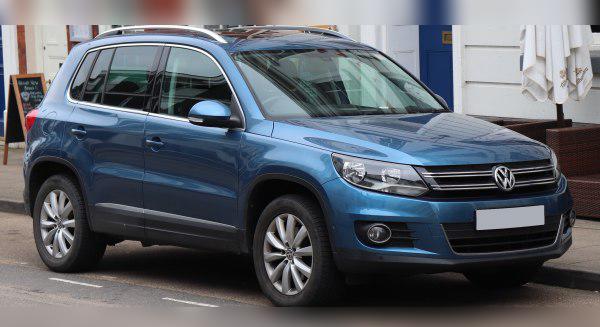
2.0 TDI CUVC (150 HP) – Experiences, problems, fuel consumption and used car buying guide
The engine with the code CUVC belongs to the modern EA288 family of Volkswagen diesels. This is a key piece of information because, although it was installed in the first-generation Tiguan body (right at the end of its production), it technologically belongs to the newer generation of engines that we see in the Golf 7 or Passat B8. Unlike its predecessors (such as the CFFB engine), the CUVC was designed to meet stricter Euro 6 standards, which brings a more complex exhaust system, but also smoother operation and better efficiency.
In short (TL;DR)
- Modern design: Belongs to the EA288 series, which means better refinement than older TDI engines.
- Water pump: The biggest “weak spot” of this engine. It often leaks or seizes before the timing belt service interval.
- AdBlue system: This engine uses AdBlue (SCR). Heaters and pumps in the urea tank can be an expensive failure.
- Performance: 150 HP and 340 Nm are an ideal match for the Tiguan – it’s not a racer, but it’s far from sluggish.
- Transmissions: Comes with a robust manual or excellent DSG gearboxes (often the DQ500 in 4Motion versions).
- Recommendation: An excellent choice if properly maintained, but it requires strict adherence to gearbox service intervals and careful checking of the cooling system.
Contents
- Technical Specifications
- Reliability and Maintenance
- Specific Components (Costs)
- Fuel Consumption and Performance
- Additional Options and Modifications
- Gearbox (Manual and DSG)
- Buying Used and Conclusion
Technical Specifications
| Parameter | Value |
| Engine displacement | 1968 cc (2.0 litres) |
| Power | 110 kW (150 HP) |
| Torque | 340 Nm at 1750–3000 rpm |
| Engine code | CUVC (EA288 family) |
| Injection type | Common Rail (Bosch) |
| Charging | Variable-geometry turbocharger + intercooler |
| Camshaft drive | Timing belt |
Reliability and Maintenance
Timing belt or chain?
The CUVC engine uses a timing belt to drive the camshafts. This is good news because belts on TDI engines are generally quieter and more predictable than chains. The factory replacement interval is optimistically set at 210,000 km. However, experienced mechanics and real-world practice suggest doing the “major service” earlier.
Major service and the critical water pump
It is recommended to replace the complete timing belt kit, tensioners and water pump between 160,000 km and 180,000 km, or after 5 to 7 years of age. Why earlier? The water pump on EA288 engines is the Achilles’ heel. It has a variable “sleeve” that regulates coolant flow for faster engine warm-up. This mechanism often gets stuck, which leads to engine overheating or coolant leaks long before the belt itself wears out.
Oil: Quantity and consumption
The engine takes approximately 4.6 to 4.7 litres of oil. You must use fully synthetic oil of 5W-30 or 0W-30 grade that meets the strict VW 507.00 specification (because of the DPF filter). As for oil consumption, CUVC engines are quite “tight”. Consumption up to 0.5 litres per 10,000 km is acceptable, but most owners do not need to top up oil between regular services (which should be every 15,000 km, not 30,000 km as in LongLife mode).
Injectors
The injection system is a Bosch Common Rail with electromagnetic (solenoid) injectors. They have proven to be very durable and reliable, significantly better than the old piezo injectors from some previous generations. With good-quality fuel, they easily cover 250,000–300,000 km. Symptoms of bad injectors are rough idle (“hammering”) and increased fuel consumption, but this is rare on the CUVC engine below very high mileage.
Specific Components (Costs)
When you buy a modern diesel, you must be aware of potential costs. Here’s what to expect with the CUVC engine:
- Dual-mass flywheel: Yes, this engine has a dual-mass flywheel (DMF). Its lifespan depends on driving style. City driving and hard acceleration kill it quickly. Symptoms are rattling when starting/stopping the engine and vibrations in the clutch pedal. Replacement together with the clutch kit is expensive (depends on the market).
- Turbocharger: The engine uses a single variable-geometry turbocharger. It is not particularly failure-prone if the oil is changed regularly and the engine is not switched off immediately after hard driving. Expected lifespan is over 200,000 km.
- DPF and EGR: As a Euro 6 engine, it has both a DPF filter and an EGR valve. The EGR valve is integrated into the cooler module and tends to clog with soot, especially if the car is driven only in the city. Symptoms are loss of power and a “Check Engine” light. The DPF filter is robust, but it requires regular runs on open roads for regeneration.
- AdBlue system: This is what sets the CUVC engine apart from older diesels in the Tiguan. It has an SCR catalyst and an AdBlue tank. Problems: The heater in the AdBlue tank, as well as the pump itself, are known to fail. Repair often means replacing the entire tank module, which can be expensive (depends on the market).
Fuel Consumption and Performance
The first-generation Tiguan is not a light car, and its “boxy” aerodynamics affect fuel consumption.
City driving: Real-world city consumption is between 7.5 and 9.0 l/100 km, depending on traffic, how heavy your right foot is, and whether you have 4MOTION (which adds weight and drag). In winter, on short trips, this figure can go up to 10 litres.
Motorway: On open roads the engine shows its true character. Cruising at 130 km/h, the engine (depending on the gearbox) spins at around 2,200 rpm (in 6th or 7th gear). Consumption is then around 6.0 to 7.0 l/100 km.
Driving impression: With 150 HP and 340 Nm, the engine is far from lazy. This is the “sweet spot” for the Tiguan. There is enough torque for overtaking and climbing hills, even when the car is fully loaded. It’s not a sports car, but at no point will you feel short of power for normal or even more dynamic driving.
Additional Options and Modifications
Chip tuning (Stage 1): EA288 engines respond very well to remapping. A “safe map” (conservative power increase) on this engine usually results in around 185–190 HP and torque raised to about 400–420 Nm. This drastically changes the character of the vehicle, making it more agile. However, keep in mind that higher torque wears out the dual-mass flywheel and clutch faster.
Gearbox: Manual and DSG
With the CUVC engine in the Tiguan you get two types of transmission, and both are generally reliable, but they do require maintenance.
Manual gearbox (6-speed): Precise and robust. Failures of the gearbox itself are rare. The main cost here is the clutch kit with the dual-mass flywheel, which usually lasts between 150,000 and 200,000 km.
DSG gearbox (automatic): This is where you need to pay attention. The facelifted Tiguan 1 with the 2.0 TDI engine and 4MOTION all-wheel drive most often uses the DQ500 7-speed gearbox with wet clutches. This is one of the most durable DSG gearboxes VW has ever made (designed for Transporters and heavy vehicles). It can handle a huge amount of torque.
- DSG maintenance: The oil and filter in the DSG gearbox MUST be changed every 60,000 km. If you are buying a used car without proof of this service, it is a risk.
- Problems: Although the DQ500 is robust, the mechatronics unit can fail (an expensive repair). Also, DSG versions have a dual-mass flywheel as well, which needs to be replaced once it starts knocking.
Buying Used and Conclusion
Buying a Tiguan with the CUVC engine is generally a smart decision because you get more mature technology in a proven body. Still, before buying, pay attention to the following:
- Cold start: Listen to the engine while it is cold. A metallic “clack-clack” sound that disappears when you press the clutch pedal points to a worn flywheel.
- Coolant: Check the coolant reservoir. If the level is low or you see traces of leakage around the timing belt area, the water pump is probably problematic. Also check that the coolant is clean (no traces of oil).
- AdBlue check: Use diagnostics to check the condition of the AdBlue system. Fault codes related to the “reductant heater” or “pump” are expensive to sort out.
- DPF condition: Check DPF saturation with diagnostics and whether the exhaust tips are excessively sooty (with a healthy DPF, the exhaust should be almost clean).
Conclusion: The 2.0 TDI CUVC 150 HP engine is an excellent powerplant for the Tiguan. It offers the best balance between fuel consumption, reliability and power. If you find a car with a well-documented service history (especially gearbox and timing belt service), it is a purchase that will serve you well for a long time with minimal headaches. It is aimed at drivers who cover higher mileage and want a dependable family SUV.
Was this content useful to you?
Your opinion helps us to improve the quality of the content.