EA189 / CBAB, CFFB, CLJA Engine
- Engine
- 1968 cm3
- Aspiration
- Turbocharger, Intercooler
- Fuel
- Diesel
- Fuel injection system
- Diesel Commonrail
- Power
- 140 hp @ 4200 rpm
- Torque
- 320 Nm
- Cylinders
- 4
- Valves
- 16, 4 per cylinder
- Cylinders position
- Inline
- Valvetrain
- DOHC
- Oil capacity
- 4 l
- Coolant
- 8 l
- Systems
- Start & Stop System, Particulate filter
# Vehicles powered by this engine
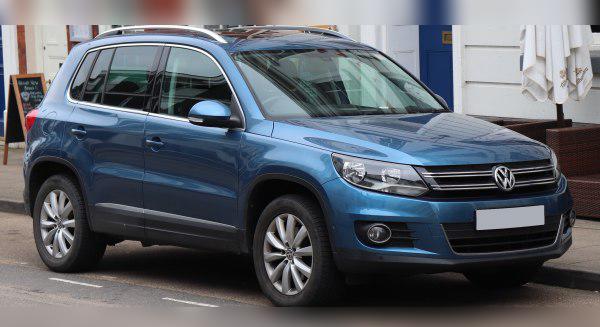
VW Tiguan 2.0 TDI (EA189) – Experiences, problems, fuel consumption and used car buying guide
When talking about modern classics in the diesel world, the EA189 series engines (codes CBAB, CFFB, CLJA) represent a turning point for the Volkswagen Group. This is the engine that replaced the noisy "Pumpe-Düse" units and brought Common Rail technology, quieter operation and a more linear power delivery. In the Volkswagen Tiguan I (facelift), this 140 hp engine is probably the most common and most rational choice.
However, although this is one of VW’s more reliable engines, years of use and the specific weight of the Tiguan with 4MOTION drive come with certain challenges. Below is a detailed analysis.
Key points (TL;DR)
- Reliability: Significantly better than the previous PD engines. No issues with cracking cylinder heads, but the peripheral components are sensitive.
- Main weaknesses: EGR valve, DPF filter (especially after the “Dieselgate” software update) and turbo actuator.
- Drivetrain: 4MOTION (Haldex) requires regular maintenance, which is often neglected.
- Fuel consumption: Expect around 7.5–9 liters in mixed driving – the Tiguan is heavy and boxy.
- Gearbox: DSG is excellent, but requires expensive services every 60,000 km.
- Recommendation: An ideal engine for those who drive mostly on open roads; for strict city driving the DPF will cause problems.
Contents
- Technical Specifications
- Reliability and Maintenance
- Specific Parts and Costs
- Fuel Consumption and Performance
- Gearbox and Drivetrain
- Additional Options and Modifications
- Buying Used and Conclusion
Technical Specifications
| Feature | Data |
|---|---|
| Displacement | 1968 ccm |
| Power | 103 kW (140 hp) |
| Torque | 320 Nm at 1750–2500 rpm |
| Engine codes | CBAB, CFFB, CLJA (EA189 family) |
| Injection type | Common Rail (Piezo or Solenoid, depending on version) |
| Charging | Turbocharger with variable geometry (VGT) |
| Emission standard | Euro 5 |
Reliability and Maintenance
Timing system: belt or chain?
This engine (EA189) uses a timing belt to drive the camshafts. This is good news because the system is quieter and generally more predictable than chains on some other VW engines. The factory replacement interval is often an optimistic 210,000 km for these model years, but real-world experience shows otherwise.
Recommendation: Do the major service (replacement of belt, tensioners, water pump) at a maximum of 160,000 to 180,000 km or every 5 to 7 years, whichever comes first. A snapped belt leads to catastrophic engine failure.
Most common failures
Although robust, the EA189 has its “aches and pains”:
- EGR valve and EGR cooler: Soot builds up and blocks the valve, or the cooler starts leaking. Symptoms are loss of power, “Check Engine” light and going into “safe mode”. This is especially common on vehicles that have had the software recall (“Dieselgate update”) because the system operates under higher load.
- P2015 error (intake manifold): The actuator of the intake manifold flaps (swirl flaps) often throws an error. The problem is usually a worn plastic stop.
- Water pump: Often starts leaking before the interval for the major service. Keep an eye on coolant level.
- Differential pressure sensor (DPF): A cheap part that often fails and gives the ECU false information about the DPF state, which prevents regeneration.
Oil: quantity and consumption
The engine takes approximately 4.0 to 4.3 liters of oil. It is mandatory to use oil that meets the VW 507.00 specification (Low SAPS), most commonly in 5W-30 grade. This is crucial for preserving the DPF filter.
Oil consumption: TDI engines are known to “drink” a bit of oil. Consumption of 0.5L to 1L per 10,000 km is completely normal and acceptable, especially if driven more aggressively on the motorway. If it consumes more than that, suspect piston rings or the turbocharger.
Injector lifespan
The Common Rail system uses Bosch or Continental injectors. Unlike the old PD elements, these injectors are more durable and more refined. Expected lifespan is over 250,000 km with good-quality fuel. Problems manifest as hard starting, rough idle or increased smoke. Refurbishment is possible, but the price depends on the type (piezo injectors are more expensive to refurbish or replace).
Specific Parts (Costs)
Dual mass flywheel
Yes, this model has a dual mass flywheel (DMF). Its lifespan is usually between 150,000 and 200,000 km, depending on driving style. With DSG gearboxes the flywheel usually lasts longer than with manuals because the computer “smooths out” gear changes and protects the assembly.
Failure symptoms: Metallic knocking noise when starting and stopping the engine, vibrations at idle that are transmitted to the steering wheel and seats. Replacement is expensive (depends on the market, but count on it as a significant cost).
Turbocharger
The engine has a single turbocharger with variable geometry. The turbo is generally reliable and rarely fails before 200,000 km if the oil is changed regularly. However, the variable geometry mechanism can get clogged with soot (especially with city driving), which leads to overboost and the engine going into limp mode under hard acceleration.
DPF and EGR
2011 models (Euro 5) have a DPF filter and an EGR valve. These are the most sensitive points for city driving. If you drive short distances, the DPF will not have time to regenerate. A clogged DPF can destroy the turbocharger due to back pressure.
AdBlue: Most first-generation Tiguan (facelift) models with the 2.0 TDI engine (Euro 5) DO NOT have an AdBlue system. They rely solely on EGR and DPF. Still, check the engine code and the fuel filler area (whether there is a blue cap next to the diesel cap), because some later models or models for specific markets (e.g. with BlueTDI badge) could have an SCR system with AdBlue fluid.
Fuel Consumption and Performance
City driving and “sluggishness”
The Tiguan is not a Golf. It is heavy (over 1600 kg), has worse aerodynamics and a 4MOTION drivetrain that always spins the prop shaft (even though the rear wheels are not always driven, the mass is there).
Real-world city consumption: Expect between 8.5 and 10 liters/100 km, depending on traffic and how heavy your right foot is.
Is the engine sluggish? With 140 hp and 320 Nm, the engine is adequate but not sporty. In the city it is perfectly sufficient. However, during overtakes on country roads with a fully loaded car, you will feel the vehicle’s weight. It’s not “dead”, but it requires planning your overtakes.
On the motorway
This is the natural habitat of this engine. At 130 km/h in top gear (6th on the manual or 7th on the DSG), the engine spins at a comfortable 2,200–2,400 rpm (depending on the gearbox). The cabin is quiet. Fuel consumption on open roads is around 6.5 to 7.5 l/100 km.
Additional Options and Modifications
Remapping (Stage 1)
The 140 hp EA189 engine is mechanically almost identical to the 170 hp version (with differences in the turbo on some series, but the block and internals are the same). Because of this, this engine is extremely suitable for remapping.
A safe “Stage 1” raises power to about 170–180 hp and torque to 380–400 Nm. This drastically changes the Tiguan’s character – the car becomes much livelier, and fuel consumption in normal driving can even slightly decrease.
Note: If the gearbox is manual, the clutch will be under higher load. If it’s DSG, it is recommended to remap the gearbox as well (TCU tune).
Gearbox
Gearbox options
With this engine there are two options:
- 6-speed manual: Precise, robust. Failures are rare and mostly come down to the clutch kit and flywheel. The factory does not prescribe an oil change in the gearbox (“lifetime”), but experienced mechanics recommend changing it every 150,000 km.
- DSG automatic (S-tronic): This is where you need to be careful. With the 2.0 TDI 4MOTION in the Tiguan I (facelift) you most often get the DQ500 (7-speed, wet clutch), which is extremely durable (also used in Transporters), or the older DQ250 (6-speed, wet clutch). Both are excellent if properly maintained.
DSG maintenance and failures
The most important rule for wet-clutch DSG gearboxes: Oil and filter MUST be changed every 60,000 km!
If you are buying a used car without proof of this service, you risk failure of the mechatronics (the gearbox brain) or the clutch pack. DSG repairs are very expensive.
Haldex all-wheel drive (4MOTION)
Don’t forget the all-wheel drive. The Tiguan uses a Haldex coupling (most commonly 4th generation). It also has its own oil and filter. The recommendation is to change the oil in the Haldex every 40,000–60,000 km. If this is neglected, the rear drive stops working and the Haldex pump fails.
Buying Used and Conclusion
When buying a Tiguan with this engine, pay attention to the following:
- Cold start: Listen for metallic rattling (flywheel) and whether the engine runs smoothly immediately after starting (injectors).
- Smoke: White smoke when warm (losing coolant/EGR cooler) or black smoke under throttle (DPF/injectors/turbo hoses). The exhaust should be relatively clean if the DPF is healthy.
- Service history of DSG and Haldex: If there is no proof of oil changes, negotiate the price down because that cost is coming your way.
- Water in the boot: Check the spare wheel well; panoramic roofs (if fitted) often leak.
Conclusion: The VW Tiguan 2.0 TDI (140 hp) is a versatile family SUV. The engine is a “golden middle ground” – powerful enough and reasonably economical for its class. If you find a car where engine, gearbox and Haldex oil have been changed regularly, this is a vehicle that can cover 400,000+ km without opening the engine. It is intended for drivers who want the safety of 4x4 drive and comfort, and who are ready to accept slightly higher regular maintenance costs in exchange for quality.
Was this content useful to you?
Your opinion helps us to improve the quality of the content.