CAWA, CCZC Engine
- Engine
- 1984 cm3
- Aspiration
- Turbocharger, Intercooler
- Fuel
- Petrol (Gasoline)
- Fuel injection system
- Direct injection
- Power
- 170 hp @ 4300 rpm
- Torque
- 280 Nm @ 1700 rpm
- Cylinders
- 4
- Valves
- 16, 4 per cylinder
- Cylinders position
- Inline
- Valvetrain
- DOHC
- Oil capacity
- 4.7 l
# Vehicles powered by this engine
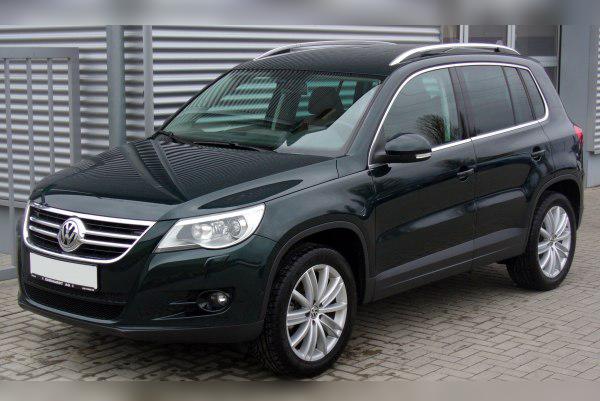
VW 2.0 TSI (CAWA, CCZC) – Experiences, problems, fuel consumption and buying tips
Volkswagen’s 2.0 TSI engine in the first-generation Tiguan is an interesting blend of performance and practicality, but it also comes with some mechanical “baggage” every future owner needs to understand. The 170 hp versions (engine codes CAWA and CCZC) are technically very similar, belong to the EA888 engine family and offer excellent torque for this class of vehicle. However, these are not “fill up and drive” engines – they require meticulous maintenance and preventive replacement of certain parts in order to avoid catastrophic failures.
Key points in short (TL;DR)
- Performance: Excellent power-to-weight ratio, the engine is not lazy and offers sporty performance in an SUV body.
- Biggest risk: Timing chain snapping or jumping teeth due to a poor tensioner. Mandatory check!
- Oil consumption: A common issue with these series (EA888 Gen 2) due to piston ring design. High oil consumption is possible.
- Intake manifold: The “flap” valves in the intake manifold often fail (error code P2015).
- Water pump: The housing is plastic and prone to cracking and coolant leaks.
- Fuel consumption: High in city driving (over 12 l/100 km), especially with 4Motion and automatic transmission.
- Recommendation: Buy only with full service history and proof of timing chain replacement and regular servicing.
Contents
- Technical Specifications
- Reliability and Maintenance
- Specific Components (Costs)
- Fuel Consumption and Performance
- Additional Options and Modifications
- Gearbox
- Buying Used and Conclusion
Technical Specifications
| Parameter | Value |
|---|---|
| Engine displacement | 1984 cc (2.0 L) |
| Power | 125 kW (170 hp) |
| Torque | 280 Nm at 1700–4200 rpm |
| Engine codes | CAWA, CCZC |
| Injection type | Direct injection (TSI/FSI) |
| Charging method | Turbocharger (K03) + intercooler |
| Camshaft drive | Timing chain |
Reliability and Maintenance
Timing system: Chain or belt?
The 2.0 TSI (CAWA/CCZC) uses a timing chain to drive the camshafts. Unfortunately, in earlier model years this is also the weakest point of the engine. The problem is not so much the chain itself as the hydraulic chain tensioner, which can fail. Symptoms include rattling on cold start (metal-on-metal sound) that lasts a few seconds. If ignored, the chain can jump a tooth, which leads to piston-to-valve contact – a complete engine failure. It is recommended to install the revised type of tensioner, which is more reliable.
Most common failures
Apart from the chain, owners often encounter the following issues:
- PCV valve (oil separator): When the membrane tears, the engine loses vacuum, idles roughly and a whistling sound can be heard. It increases oil consumption.
- Intake manifold: The flap system for air swirl gets stuck due to carbon buildup or breakage of the small plastic linkage, triggering the “Check Engine” light (error P2015).
- Coolant leaks: Most often from the water pump housing, which is plastic and deforms from heat.
- Ignition coils: They can fail suddenly, causing the engine to run on three cylinders and lose power.
Service intervals and oil
This engine takes approximately 4.6 to 4.7 liters of engine oil. The recommended viscosity is 5W-30 or 5W-40 (VW 502.00 or 504.00 standard). Although the manufacturer allows “LongLife” intervals of up to 30,000 km, this is deadly for this engine due to the sensitivity of the chain and turbocharger. Recommendation: Do a minor service every maximum 10,000 to 12,000 km or once a year.
The major service (timing chain replacement) does not have a fixed interval prescribed by the factory (“lifetime” part), but in practice a preventive replacement of the chain and tensioner at 100,000–120,000 km is necessary for peace of mind.
Oil consumption
This is a critical topic. EA888 Gen 2 engines are known for a factory defect with the piston rings, which are too thin and have small drainage holes that clog up. This causes the engine to burn oil. Consumption of 0.5 liters per 1,000 km is often considered “within normal limits” by VW, but in reality anything over 1 liter per 2,000–3,000 km is a warning sign. If the engine uses 1 liter per 500–1,000 km, a “semi-rebuild” (replacement of pistons and rings) is necessary, which is a very expensive job (depends on the market, but expect a very high cost).
Spark plugs
On the 2.0 TSI, spark plugs are replaced every 60,000 km. If the car is tuned (Stage 1), this interval should be halved to 30,000 km, because higher temperatures wear the electrodes faster.
Specific Components (Costs)
Dual-mass flywheel
Yes, the 2.0 TSI in the Tiguan has a dual-mass flywheel, regardless of whether it is paired with a manual or DSG gearbox. In petrol engines it is exposed to fewer vibrations than in diesels, so it usually lasts longer (often over 150,000–200,000 km), but when it fails, symptoms include knocking at idle and vibrations when setting off. Replacement is expensive (depends on the market).
Fuel injection system
It uses high-pressure direct fuel injection. The injectors are generally reliable, but sensitive to poor fuel quality. A bigger problem than the injectors themselves is carbon buildup on the intake valves. Since fuel does not wash the valves (as in older port-injected engines), carbon deposits accumulate and gradually choke the engine. Cleaning the intake valves (with walnut shell blasting or chemicals) is recommended every 80,000–100,000 km.
Turbocharger
The engine has a single turbocharger (usually a BorgWarner K03). Its service life is long and it often outlasts the engine if oil is changed regularly and the engine is properly cooled down after hard driving. The most common issue is the diverter valve (solenoid valve), which can tear, causing the turbo to lose boost and the car to lose power.
Emissions systems (EGR, DPF, AdBlue)
Good news: this is a petrol engine.
DPF filter: None. (Models from these years do not have a GPF particulate filter for petrol engines).
AdBlue: None.
EGR valve: A classic EGR valve like on diesels is often not present in the same form; instead, exhaust gas recirculation is achieved via variable valve timing (VVT). However, the oil vapour system (PCV) is the one that most often causes problems similar to clogging.
Fuel Consumption and Performance
Real-world fuel consumption
The Tiguan is a heavy car (over 1.5 tons), has poor aerodynamics (boxy shape) and 4Motion all-wheel drive. Because of that, don’t expect miracles:
- City driving: 11 to 14 liters/100 km (even more in winter).
- Country roads: 7.5 to 9 liters/100 km.
- Motorway (130 km/h): Around 9 to 10 liters/100 km.
Is the engine “lazy”?
Absolutely not. With 170 hp and 280 Nm available from as low as 1,700 rpm, the Tiguan 2.0 TSI is quite agile. 0–100 km/h takes under 10 seconds (around 8.5 s for some versions), which is an excellent result for an SUV of that era. Overtaking is safe and easy.
Behaviour on the motorway
This is the ideal environment for the 2.0 TSI. The engine is quiet and refined. At 130 km/h in top gear, it spins at around 3,000 rpm (depending on the gearbox), which provides enough power reserve for acceleration without frequent downshifts.
Additional Options and Modifications
LPG conversion
Due to direct injection (TSI), LPG conversion is complex and expensive (depends on the market). There are two options: 1. A system that injects about 80% LPG and 20% petrol (to cool the petrol injectors). 2. A liquid LPG injection system through the petrol injectors (the best but also the most expensive solution). Considering the installation cost, payback is questionable unless you drive high annual mileage (over 20,000 km per year).
Chiptuning (Stage 1)
This engine is “software-limited”. The 170 hp version is almost identical in hardware to the more powerful versions (e.g. the Golf GTI of that generation with 200/211 hp). A safe Stage 1 remap can raise power to 200–210 hp and torque to over 320 Nm. The engine feels completely different afterwards, but this requires a timing chain and turbo in perfect condition and more frequent servicing.
Gearbox
Types of gearboxes
With CAWA/CCZC engines in the Tiguan, three options were available depending on model year and market:
- 6-speed manual: Precise, robust, inexpensive to maintain.
- Conventional automatic (Tiptronic, Aisin 09M): 6 speeds. This is a traditional torque-converter automatic. Very comfortable, but somewhat slower than DSG and increases fuel consumption.
- DSG (DQ500 or DQ250): 7-speed (DQ500) or 6-speed (DQ250) dual-clutch. Fast shifts, better performance. The DQ500 is a very durable gearbox designed for higher torque and 4x4 applications.
Failures and maintenance
- Manual: Failures are rare. Replacement of the clutch kit and flywheel is the main cost. Gearbox oil should be changed preventively at 100,000 km.
- Automatic (Aisin): Reliable if maintained. A common issue is overheating if pushed hard off-road or when towing. Oil changes every 60,000–80,000 km are mandatory for long life (even if VW sometimes claims otherwise).
- DSG: The mechatronic unit is the most expensive part that can fail. Symptoms include harsh take-off, jerking during shifts or delay when engaging reverse. Oil and filter changes in the DSG are MANDATORY every 60,000 km. If this is skipped, failures are guaranteed and very expensive.
Buying Used and Conclusion
What to check before buying?
- Cold start: Insist that the engine is completely cold. Listen to the chain noise during the first 3 seconds. Any metallic rattling is a sign that replacement is urgent.
- Exhaust smoke: After the engine has idled for a few minutes, blip the throttle sharply. Bluish smoke or sooty exhaust tips indicate oil consumption (problem with rings or turbo).
- Diagnostics: Check the “phase position” (chain stretch) via diagnostics. Values above -4 or -5 degrees suggest the chain is due for replacement.
- 4Motion system: Check whether the rear wheels are actually getting drive (Haldex coupling). The Haldex pump can fail if its oil is not changed.
Conclusion
The Volkswagen Tiguan 2.0 TSI (170 hp) is a fantastic driver’s car. It offers much more fun and quietness than the diesel versions, heats the cabin almost instantly in winter and excels on the motorway. However, it is not for those with a tight maintenance budget.
If you are buying this car, set aside around 1,000–1,500 EUR (depending on the market) for an “initial package” (major timing chain service, gearbox service, spark plugs, intake cleaning), unless the previous owner has paper proof that this was done recently. This engine is bought with the heart, and maintained with the head.
Was this content useful to you?
Your opinion helps us to improve the quality of the content.