EA188 / BXJ Engine
- Engine
- 1896 cm3
- Aspiration
- Turbocharger, Intercooler
- Fuel
- Diesel
- Fuel injection system
- Direct injection
- Power
- 90 hp @ 4000 rpm
- Torque
- 210 Nm @ 1900 rpm
- Cylinders
- 4
- Valves
- 8, 2 per cylinder
- Cylinders position
- Inline
- Valvetrain
- OHC
- Oil capacity
- 4.3 l
- Coolant
- 8 l
- Systems
- Particulate filter
# Vehicles powered by this engine
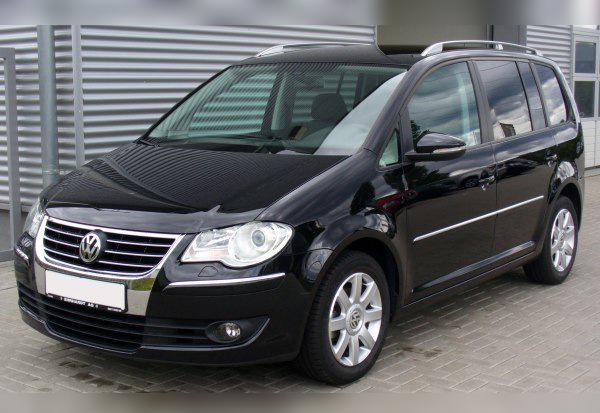
1.9 TDI (EA188 / BXJ) in the VW Touran: Last of the Mohicans or Too Weak for a Family?
1. Key points in short (TL;DR)
- Durability: Legendary 1.9 TDI base, but the BXJ series belongs to the later production years where you need to pay attention to crankshaft bearings (conrod bearings).
- Power: With 90 hp, this engine is seriously underpowered for the heavy Touran body, especially when the car is fully loaded.
- Fuel consumption: Extremely economical, one of the fuel-saving champions in the MPV class.
- DPF filter: Most BXJ engines (2006+) come with a DPF filter that can cause problems in city driving.
- Maintenance: Parts are available everywhere, prices are reasonable, and every mechanic knows how to repair this engine.
- Recommendation: Ideal for taxi drivers or calm drivers who don’t care about performance, but only about low fuel consumption and cheap maintenance.
Contents
- Introduction and Context
- Technical Specifications
- Reliability and Maintenance
- Specific Parts and Costs
- Fuel Consumption and Performance
- Additional Options and Modifications
- Gearbox
- Buying Used and Conclusion
Introduction: Why is the BXJ Important?
The engine with the code BXJ represents the very end of the era of the legendary 1.9 TDI engines before the Volkswagen Group fully switched to 1.6 TDI (Common Rail) units. It was installed in the first-generation (facelift) VW Touran, but also in the Golf V, Caddy and Seat Leon/Altea models.
This is an "old-school" engine with a unit injector system (Pumpe-Düse), but adapted to stricter Euro 4 standards. In the used car world, this engine is often sought after because it lacks the complexity of newer 2.0 TDI engines, but drivers must be aware that 90 horsepower in an MPV requires a lot of patience.
Technical Specifications
| Parameter | Value |
|---|---|
| Engine code | BXJ (EA188 series) |
| Displacement | 1896 cc |
| Power | 66 kW / 90 hp |
| Torque | 210 Nm at 1800–2500 rpm |
| Injection type | Direct, unit injector (PD) |
| Induction | Turbocharger (VGT) + intercooler |
| Emissions standard | Euro 4 |
Reliability and Maintenance
Timing belt or chain?
This engine uses a timing belt for the valvetrain. This is good news because the system is more reliable than the early chains on TSI engines or the oil pump issues on 2.0 TDI engines. Replacing the timing belt kit is a routine job.
Major service and intervals
The manufacturer often quoted optimistic intervals, but in practice the major service (replacement of timing belt, tensioner, water pump) should be done every 100,000 to 120,000 km or every 5 years, whichever comes first. Do not risk a belt snap, as it leads to total engine failure.
Oil: The lifeblood of PD engines
This engine takes approximately 3.8 to 4.3 liters of oil (always buy 5 liters). The most important thing with this engine is the oil specification.
Due to the specific pressure the camshaft exerts on the unit injector elements, it is MANDATORY to use oil with specification VW 505.01 (for fixed intervals of 10–15,000 km) or VW 507.00 (if it has a DPF filter, which BXJ mostly does).
The recommended viscosity is 5W-30 or 5W-40.
Oil consumption
It is completely normal for a 1.9 TDI engine to consume between 0.5 and 1 liter of oil per 10,000 km, especially if driven on the highway. If you are topping up more than a liter between minor services, this may indicate a problem with the turbo or valve stem seals, but low oil consumption is a factory characteristic.
Most common failures
- Camshaft: Due to poor oil or long change intervals, the cam lobes can wear out. The symptom is a "dull" engine sound (a kind of thudding) coming from the air filter housing.
- Conrod bearings: Although this is more pronounced on the more powerful BXE model (105 hp), the BXJ series shares the same architecture. There are cases where a conrod punches through the engine block without warning. Preventive replacement of the bearings (and conrod bolts) is recommended at higher mileages (over 200k km) for peace of mind. It’s not expensive (depends on the market) and it saves the engine.
- Injector wiring loom: The wiring that runs through the cylinder head and powers the injectors is "bathed" in oil. Over time the insulation fails, which leads to engine misfires. A cheap and easy fix.
- Injectors: PD elements are durable and often last over 300,000 km. If they fail, they can be overhauled, but it’s not cheap. Symptoms are hard starting, smoke and rough running.
Specific Parts (Costs)
Dual-mass flywheel
This is a frequent question. Although the 90 hp BXJ engine in the Golf sometimes came with a solid flywheel, the VW Touran BXJ almost always has a dual-mass flywheel. The reason is the vehicle’s weight and the need for comfort. Check by VIN, but be prepared for this expense. Symptoms of failure are knocking when starting/stopping the engine and vibrations in the clutch pedal.
Turbocharger
The engine uses a variable-geometry turbocharger (VGT). Its lifespan is long (over 200,000 km) with regular maintenance. However, slow city driving (which this engine is often condemned to) leads to sooting of the variable-geometry vanes. The symptom is so-called "safe mode" – the car suddenly loses power under acceleration, and after switching the engine off and on again everything works normally.
DPF filter and EGR valve
BXJ is a Euro 4 engine and the vast majority of Tourans with this engine HAVE a DPF filter. Given the age, the DPF is probably at the end of its service life or has already been removed (physically and in software). The EGR valve often clogs with soot, which is solved by cleaning or replacement.
AdBlue: This engine DOES NOT HAVE an AdBlue system. That’s one less worry for the owner.
Fuel Consumption and Performance
Is the engine "lazy"?
Let’s be honest: Yes, it is. The Touran is a heavy car (over 1500 kg with passengers), and 90 hp and 210 Nm are the lower limit of usability.
In the city it feels nippy thanks to short gearbox ratios, but overtaking on country roads requires serious planning and shifting down. Uphill drives with the A/C on and a full trunk are a struggle.
Real-world fuel consumption
- City driving: Expect between 6.5 and 8 l/100 km, depending on traffic.
- Open road (secondary roads): This is where it shines. It’s possible to get consumption down to 4.5–5 l/100 km.
- Motorway: At 130 km/h the engine revs higher (because of the 5-speed gearbox it usually comes with), so consumption rises to around 6–6.5 l/100 km.
Additional Options and Modifications
Remapping (Stage 1)
This is the BXJ engine’s "secret weapon". Since it is very similar in hardware to the more powerful BLS engine (105 hp), it is "detuned" in software.
With a simple Stage 1 remap, this engine can be safely taken to 115 to 130 hp, and torque jumps to over 280–300 Nm. This completely changes the character of the vehicle and makes the Touran much more pleasant to drive, and fuel consumption can even slightly drop with normal driving. Recommendation: Do this only if the turbo, clutch and engine are in good condition.
Gearbox
Types of gearboxes
The BXJ engine in the Touran usually comes with a 6-speed manual gearbox (less often 5-speed, depending on the market). The 6-speed gearbox is great for reducing engine load, but 90 hp often means frequent shifting.
Gearbox maintenance and failures
- Gearbox oil: Although VW says it’s "lifetime", it’s recommended to change the gearbox oil every 80,000–100,000 km. This extends the life of the bearings and synchros.
- Failures: Manual gearboxes are generally robust. If you hear whining in certain gears, it points to gearbox bearings.
- Clutch kit: Replacing the clutch kit with the dual-mass flywheel is an expensive job (expensive / depends on the market), but it’s done once every 150,000–200,000 km. Do not postpone replacement if you hear the flywheel knocking, because vibrations can crack the crankshaft.
Buying Used and Conclusion
What to check before buying?
- Cold start: The engine should start "on half a turn". If it cranks for a long time, it may be injector seals, tandem pump or the injectors themselves.
- Engine sound: Listen for a dull thudding noise from the intake (worn camshaft).
- Smoke: Blue smoke is oil (turbo/piston rings), black smoke is poor combustion (injectors/EGR/leaking hoses), white smoke (when warm) is coolant.
- Diagnostics: Check injector correction values (they should not deviate much from 0) and DPF status (ash load).
Verdict
VW Touran 1.9 TDI (BXJ) is a workhorse. It’s not meant for racing, it’s not the quietest, but it is incredibly practical and economical. If you find a car with a proper maintenance history and you are ready to invest in a power increase via software (Stage 1), you will get one of the most dependable family cars that will serve you for years with minimal fuel costs.
Was this content useful to you?
Your opinion helps us to improve the quality of the content.