EA211 Engine
- Engine
- 999 cm3
- Aspiration
- Turbocharger, Intercooler
- Fuel
- Petrol / Ethanol - E85
- Fuel injection system
- Direct injection
- Power
- 109 hp @ 5000 rpm
- Torque
- 165 Nm
- Power ethanol E85
- 116 hp @ 5000 rpm
- Torque ethanol E85
- 165 Nm
- Cylinders
- 3
- Valves
- 12, 4 per cylinder
- Cylinders position
- Inline
- Systems
- Start & Stop System
# Vehicles powered by this engine
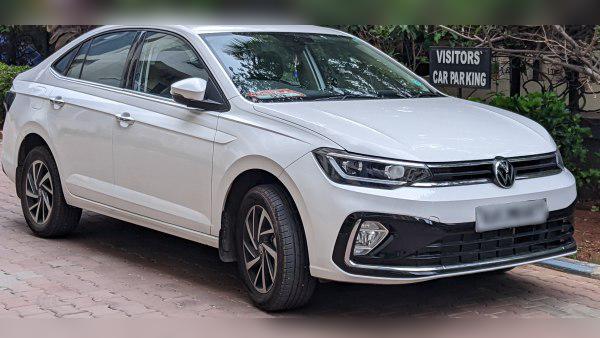
1.0 TSI (EA211) 109/116 HP – Experiences, problems, fuel consumption and used car buying guide
Key points (TL;DR)
- Modern and efficient: The EA211 series has corrected most of the issues of the old chain-driven 1.2 and 1.4 TSI engines. This one uses a timing belt.
- Three cylinders: Expect a characteristic sound and slight vibrations at idle, but the engine is surprisingly lively.
- Sensitive cooling system: The thermostat housing and water pump are plastic and prone to premature leaks.
- Direct injection: Requires good quality fuel and regular spark plug replacement; carbon buildup on valves is possible at higher mileage.
- Virtus specifics: This model often comes with a conventional automatic gearbox (not DSG) which is very reliable, but does require oil changes.
- E85 / Petrol: The 109/116 HP version is “Flex Fuel” (popular in South America), but hardware-wise it’s the same engine as the European 1.0 TSI (95/110 HP).
- Recommendation: An excellent choice for city and B-roads, decent on the motorway, with cheaper registration/road tax.
Contents
Introduction: A small giant in a compact package
The EA211 engine marks a turning point for the Volkswagen Group. After a series of issues with the older EA111 engines (the infamous timing chain problems), engineers went back to the drawing board and designed a completely new platform. This particular model, the three-cylinder 1.0 TSI, has become the “heart” of the modern range of city and compact cars.
The version we’re talking about (109 HP on petrol / 116 HP on ethanol) is specific to the Volkswagen Virtus, a sedan based on the Polo, primarily intended for emerging markets (South America, India), but it is often imported or uses technology identical to that in European models (Polo, T-Cross, Skoda Scala). Although it has only 999 cc, thanks to its turbocharger and sophisticated cooling, this engine offers performance that used to be reserved for naturally aspirated 1.6 engines, with significantly better torque.
Technical specifications
| Parameter | Value |
|---|---|
| Displacement | 999 cc (1.0 L) |
| Configuration | Inline, 3 cylinders, 12 valves |
| Power | 80 kW (109 HP) Petrol / 85 kW (116 HP) Ethanol |
| Torque | 165 Nm at 1750–4500 rpm (depending on fuel) |
| Engine code (family) | EA211 (TSI / Flex) |
| Injection system | Direct injection (TSI/FSI) |
| Turbocharger | Yes, with intercooler (water-cooled, integrated into intake) |
Reliability and maintenance: Are three cylinders enough?
Belt or chain?
Unlike its problematic predecessors, EA211 engines use a timing belt. This is very good news. The belt is reinforced with glass fibers and designed to last a very long time. VW often claims the belt is “lifetime” or only needs inspection after 240,000 km, but real-world experience says otherwise.
Major service
Although the factory intervals are optimistic, real-world maintenance of a used car calls for caution. It is recommended to perform the major service (replacement of timing belt, tensioner and water pump) between 160,000 km and 210,000 km, or every 7 to 10 years, whichever comes first. If you’re buying a used car with unknown history, replacing the belt is a must, as a snapped belt will destroy the engine.
Most common failures
This engine is generally reliable, but it does have a few weak spots:
- Water pump and thermostat housing: This is the most common issue. The assembly is plastic and over time, due to repeated heating and cooling cycles, the plastic cracks or the seals fail. The symptom is coolant loss or traces of antifreeze on the engine block.
- Carbon buildup: Because of direct injection, fuel does not “wash” the intake valves. Over time, soot builds up and can restrict airflow, causing rough running or loss of power.
- Turbo actuator (wastegate): The actuator rod can stick or the metal parts can rattle. This is heard as a metallic noise when lifting off the throttle. In more serious cases, the “Check Engine” light comes on and the engine loses power.
Oil: capacity and consumption
The sump holds approximately 4.0 litres of engine oil (always buy 5L so you have some for topping up). The recommended grade is usually 0W-20 (VW 508.00 specification) for newer model years for better efficiency, or 5W-30 (VW 504.00) for slightly older variants or hotter climates.
Oil consumption: EA211 engines are not known for extreme oil consumption like the older generations. Still, consumption of up to 0.5 litres per 10,000 km is considered completely normal, especially if driven hard on the motorway. If it uses more than 1 litre per service interval, the piston rings or valve stem seals should be checked.
Spark plugs
Since this is a turbocharged petrol engine with direct injection, the spark plugs are under heavy load. It’s recommended to replace them every 60,000 km or 4 years. Don’t skimp on spark plugs; use only iridium or those specified by VIN, as a bad plug can lead to coil failure.
Specific parts: What costs how much?
Dual mass flywheel
Here the situation depends on the gearbox. Lower-powered versions (up to 95 HP) usually have a solid flywheel. However, the 109/116 HP Virtus version, due to its higher torque and the need to tame three-cylinder vibrations, often comes with a dual mass flywheel, especially with automatic gearboxes. Its job is to make driving smoother. When it fails, you’ll hear rattling when switching the engine off or feel vibrations in the pedal. Replacement is expensive (varies by market).
Turbocharger and injection
The engine uses a small, low-inertia turbocharger. They are very durable if the oil is changed regularly. Their lifespan often matches the life of the engine itself (over 250,000 km with proper maintenance).
Injectors: The direct injection system operates at high pressure (up to 250 bar). Injectors are sensitive to poor fuel quality. Symptoms of failure are jerking while driving and increased fuel consumption. They are not cheap to replace.
GPF/OPF and EGR
Modern EA211 engines in Europe (from 2018/2019) have a GPF (gasoline particulate filter). It rarely clogs compared to a diesel DPF because petrol burns hotter. Occasional longer drives on open roads are usually enough. The engine does not use an AdBlue system (that’s reserved for diesels).
Fuel consumption and performance: The real picture
City driving
Don’t trust the factory figures of 5 litres. Real-world consumption in heavy city traffic for the VW Virtus 1.0 TSI is between 7.0 and 8.5 l/100km. If you drive short trips in winter, it can go up to 9 litres. Still, the start-stop system (if you don’t switch it off) helps in traffic jams.
Is the engine “sluggish”?
Absolutely not. With 165 Nm available from as low as 1750 rpm, the car feels very strong in city conditions. Thanks to the low engine weight, the front end is light, so the Virtus is very agile. The feeling of acceleration up to 60 km/h is better than in many naturally aspirated 1.6s.
Motorway
On the motorway the engine behaves respectably. At 130 km/h in top gear it spins at around 2,800 – 3,000 rpm (depending on gearbox). Fuel consumption is then about 6.0 – 6.5 l/100km. Overtaking is possible, but if you’re fully loaded you’ll need to drop a gear. Above 140 km/h, consumption rises sharply due to aerodynamics.
Additional options and modifications
LPG conversion
Since this is a direct injection engine (injectors spray directly into the cylinder), an LPG conversion is complex and expensive. It requires a special “direct injection kit” that still uses some petrol while running on gas to cool the petrol injectors, or a very expensive liquid phase LPG injection system. It only really pays off if you cover very high mileage (over 30,000 km per year).
Chip tuning (Stage 1)
The 1.0 TSI responds very well to remapping. A safe Stage 1 can raise power to around 130 HP and torque to nearly 200 Nm. This drastically changes the character of the car. However, be mindful of the gearbox – automatic transmissions have a torque limit they can handle, so overdoing it can lead to slipping.
Gearbox: Manual or automatic?
This is where the VW Virtus gets specific. Unlike European models (Polo/Golf) that use DSG (dual-clutch), the Virtus is supplied in many markets with a conventional 6-speed “Tiptronic” automatic (made by Aisin, code AQ250). There is also a manual option.
Automatic gearbox (Aisin 6-speed)
This is very good news for reliability. A classic torque converter automatic is far more robust in stop-and-go city driving than a DSG.
- Failures: Very rare. Sometimes you may get harsher shifts if the oil is old.
- Maintenance: Although VW often claims the oil is “lifetime”, experts recommend changing the automatic transmission fluid every 60,000 to 80,000 km. It’s a small cost for long-term durability.
Manual gearbox
Usually 5 or 6 speeds. Precise and light. Failures are rare and mostly limited to wear items (clutch kit).
- Clutch cost: If it has a dual mass flywheel, the kit is expensive. If it’s a solid flywheel version, the price is reasonable. The only way to be sure is to check by VIN.
Buying used and conclusion
What to check before buying?
- Cold start: Listen to the engine when it’s cold. There should be no chain rattle (it has a belt), but loud metallic rattling can indicate issues with hydraulic lifters or the turbo actuator.
- Coolant leaks: Look around the thermostat housing (on the right-hand side of the engine when viewed from the front). Pink deposits are a sign of coolant leakage.
- Vibrations: A three-cylinder will always vibrate a little, but if the whole car shakes, the engine mounts are probably worn.
- Service history: Check when the timing belt was replaced if the car is close to 150–200 thousand kilometres.
Final verdict
The 1.0 TSI EA211 engine in the VW Virtus is a rational and smart choice. It offers an excellent balance between registration/road tax, fuel consumption and performance. Combined with the conventional Aisin automatic, it makes one of the most reliable “small” powertrains on the market. If you accept that it’s not a sports car and regularly check the coolant level, this engine will serve you for hundreds of thousands of kilometres.
Ideal for: Drivers who spend 80% of their time in the city, go to the seaside or mountains on weekends, and want low running costs with modern technology.
Was this content useful to you?
Your opinion helps us to improve the quality of the content.