EA211evo / DPCA Engine
- Engine
- 1498 cm3
- Aspiration
- Turbocharger, Intercooler
- Fuel
- Petrol (Gasoline)
- Fuel injection system
- Direct injection
- Power
- 150 hp @ 5500 rpm
- Torque
- 250 Nm
- Cylinders
- 4
- Valves
- 16, 4 per cylinder
- Cylinders position
- Inline
- Valvetrain
- DOHC
- Oil capacity
- 4.3 l
- Coolant
- 9 l
- Systems
- Start & Stop System, Particulate filter
# Vehicles powered by this engine



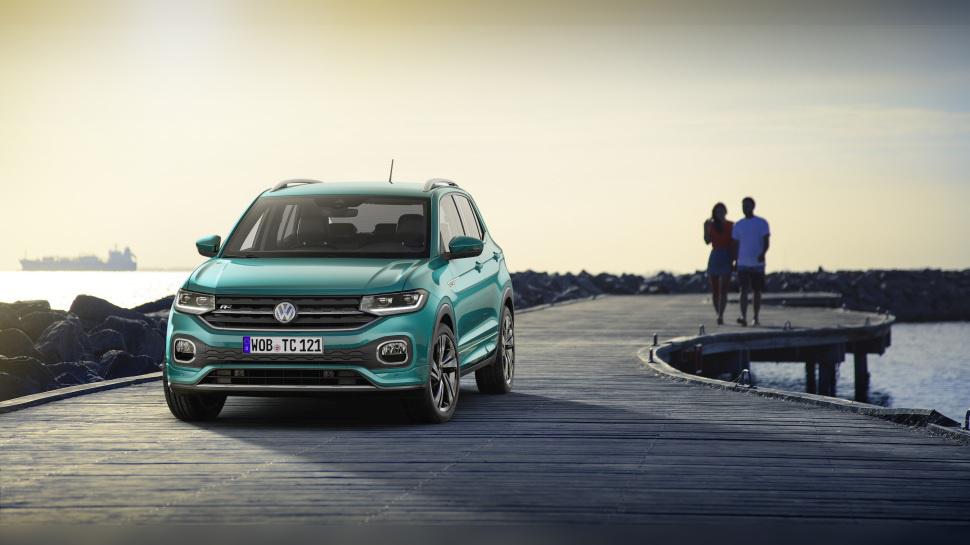
1.5 TSI (EA211 evo / DPCA) – Experiences, issues, fuel consumption and used-buying tips
Key points (TL;DR)
- Camshaft drive: Uses a timing belt, not a chain, which is a major improvement over the old EA111 engines.
- "Kangaroo" effect: Early models suffered from jerking when setting off (with a cold engine). This is solved with an ECU software update.
- ACT technology: The engine shuts down two cylinders under light load to save fuel. The system is generally reliable, but adds complexity.
- GPF filter: Equipped with a gasoline particulate filter (OPF/GPF). There is no AdBlue system.
- Oil consumption: Modern 1.5 TSI engines consume significantly less oil than older generations, but checking every 2–3,000 km is still a must.
- Recommendation: Excellent power-to-economy ratio for models such as the Audi A1 and VW T-Cross.
Contents
Introduction and applications
The engine with the code DPCA belongs to the EA211 evo family of the Volkswagen Group. It is the direct successor to the popular 1.4 TSI engine and forms the backbone of the petrol range in modern VAG vehicles. In this specific case, with 150 hp, this unit turns light cars such as the Audi A1 (including the allstreet and citycarver versions) and the VW T-Cross into very agile city runabouts that are not ashamed of the left lane on the motorway.
Its key characteristic is the balance between performance and emissions, achieved through technologies such as ACT (Active Cylinder Technology) and variable turbine geometry (VTG), which is rare in petrol engines of this class.
Technical specifications
| Characteristic | Data |
|---|---|
| Engine displacement | 1498 cc (1.5 litres) |
| Power | 110 kW (150 hp) |
| Torque | 250 Nm at 1,500–3,500 rpm |
| Engine code | DPCA (EA211 evo) |
| Injection type | Direct injection (TSI) – up to 350 bar |
| Charging | Turbocharger (VTG – variable geometry) |
| Emissions standard | Euro 6d-TEMP / Euro 6d |
Reliability and maintenance
Timing belt or chain?
Unlike the old 1.4 TSI (EA111) engines, which were notorious for timing chain failures, the 1.5 TSI (DPCA) uses a timing belt. This is excellent news for owners. The belt is reinforced with glass fibres and designed for a long service life.
Major service: The factory often specifies an “inspection” after 240,000 km, but that is overly optimistic for real-world use. Experienced mechanics recommend replacing the timing set (belt, tensioners, water pump) between 150,000 km and 180,000 km or after 8 to 10 years of age (whichever comes first). The price of the kit is moderate (depends on the market).
Most common issues
Although more reliable than its predecessor, the EA211 evo has its own quirks:
- Jerking when setting off (“kangaroo effect”): The best-known issue with this engine, especially on models with a manual gearbox. When the engine is cold, the car hops (jerks) in first and second gear. Solution: Mandatory ECU software update at an authorised service centre. Most DPCA engines should already have this update by now.
- Carbon buildup: Like any engine with direct injection, the intake valves are prone to carbon deposits because they are not washed by fuel. Symptoms are rough idle and a slight loss of power at higher mileage. Preventive cleaning is recommended at around 100,000 km.
- Coolant leaks: The thermostat housing and water pump are plastic modules that can start leaking over time. Keep an eye on the coolant level.
Oil and spark plugs
Oil quantity and type: The engine takes approximately 4.3 litres of oil. The factory recommendation for DPCA engines is ultra-thin 0W-20 oil (VW 508.00 standard) for fuel economy. However, in warmer climates or for drivers who enjoy spirited driving, many workshops use 5W-30 (VW 504.00/507.00). Consult your mechanic, but never mix these two grades.
Oil consumption: These engines are not notorious oil burners like older generations, but consumption of around 0.5 litre per 5,000–8,000 km is considered acceptable, especially if the car is driven on motorways at higher revs.
Spark plugs: They should be replaced every 60,000 km or 4 years. Do not postpone replacement, as worn plugs can damage the ignition coils (there is one coil per cylinder).
Specific components and injection system
Dual-mass flywheel: Yes, the 150 hp / 250 Nm version almost always comes with a dual-mass flywheel, regardless of whether it is paired with a manual gearbox or DSG. Its typical lifespan is around 150,000–200,000 km, depending on driving style (city driving wears it out faster). Replacement is expensive (depends on the market).
Turbocharger: The 1.5 TSI (150 hp) uses an advanced turbocharger with variable turbine geometry (VTG), a technology borrowed from the diesel world (and Porsche). This provides excellent throttle response at low revs. The turbo is reliable, but sensitive to poor-quality oil and to switching off a hot engine immediately after fast driving. Repair or replacement of a VTG turbo is very expensive.
Injection system and injectors: The system operates at high pressure (up to 350 bar). The injectors are precise and generally durable, but sensitive to poor fuel quality. Injector failure manifests itself as jerking, a “check engine” light and increased fuel consumption.
GPF and EGR: This engine does not have AdBlue (that is for diesels). However, it is equipped with a GPF (Gasoline Particulate Filter), as well as an EGR valve. The GPF rarely clogs because exhaust gas temperatures in petrol engines are higher than in diesels, so passive regeneration is easier. Problems with the GPF are rare and generally occur only if the car is driven exclusively on very short trips in winter.
Fuel consumption and performance
City driving: In models such as the VW T-Cross or Audi A1, real-world city consumption is between 7.0 and 8.5 l/100 km. If traffic is very heavy and the start-stop system is switched off, it can go up to 9–10 litres, but the ACT system helps save fuel by shutting down two cylinders when cruising along boulevards.
Out of town: This is where the engine shines. On country roads it is possible to bring consumption down to 5.0–5.5 l/100 km.
Motorway (130 km/h): At 130 km/h, the engine (in 7th gear on the DSG) runs at pleasantly low revs (around 2,500 rpm). Fuel consumption is then about 6.0–6.8 l/100 km. The engine is very quiet and refined.
Is the engine sluggish? Absolutely not. With 150 hp and 250 Nm in a T-Cross or Audi A1 body (weighing around 1,200–1,300 kg), this engine delivers excellent performance. The 0–100 km/h sprint is usually under 8.5 seconds, which is more than enough for overtaking and dynamic driving.
Additional options and modifications
LPG conversion: Since this is a direct-injection engine (TSI), an LPG conversion is complex and expensive (depends on the market). It requires a special direct-injection LPG system that still uses a certain percentage of petrol (around 10–20%) to cool the petrol injectors. For the average driver, the cost-effectiveness is questionable unless you cover very high mileages.
Chip tuning (Stage 1): This engine has potential. With a safe remap (Stage 1), power can be raised to around 170–180 hp and torque to around 300 Nm. However, bear in mind that the increased torque can shorten the lifespan of the clutch (especially with the DQ200 DSG gearbox).
Gearbox: manual and DSG
With this engine in the mentioned models (A1, T-Cross) you will find two types of gearboxes:
1. Manual gearbox (6-speed)
Precise and easy to use. Failures are rare. The main expense is the clutch kit and dual-mass flywheel. The factory does not prescribe an oil change in the gearbox (“fill for life”), but an oil change at around 150,000 km is recommended to preserve the bearings.
2. Automatic DSG gearbox (DQ200 – 7-speed)
This is the well-known gearbox with dry clutches. Although newer versions (after 2018) are significantly more reliable than earlier series, it is still the most sensitive part of the drivetrain.
- Most common failures: Wear of the clutch pack (manifesting as slipping or vibrations when setting off) and mechatronics failure (the control unit).
- Maintenance: The factory states that the oil in the DQ200 does not need to be changed (because it is a dry system; the oil is only in the gearset and mechatronics, separately). However, independent experts recommend changing the oil in the gearset every 80,000–100,000 km.
- Costs: Replacing the DSG clutch pack is an expensive job (depends on the market), while mechatronics failure is very expensive.
Buying used and conclusion
Before buying an Audi A1 or VW T-Cross with this engine, pay attention to the following:
- Cold start: Insist on starting the car when the engine is completely cold. Listen for any chain-like rattling (even though it has a belt, the cam phasers can be heard for a couple of seconds, but not longer) and check whether the engine runs smoothly without jerking during the first minute of operation.
- Test drive: If it has a DSG gearbox, it should change gears imperceptibly. Any jerking when reversing or when moving off gently forwards is a sign of worn clutches.
- ACT system: The instrument cluster should display “2-cylinder mode” or “Eco” when you lift off the throttle or drive steadily. At that moment you should not feel strong vibrations in the cabin.
Verdict:
The 1.5 TSI (150 hp) is probably the best all-round petrol engine in its class at the moment. It offers performance that used to be reserved for GTI models of the 1990s, with diesel-like fuel consumption. If you avoid problematic examples with troublesome DSG gearboxes and maintain it regularly, this is an engine that will serve you very well both in the city and on longer trips. It is ideal for drivers who cover up to 20–25,000 km per year.
Was this content useful to you?
Your opinion helps us to improve the quality of the content.