K20C4 Engine
- Engine
- 1996 cm3
- Aspiration
- Turbocharger, Intercooler
- Fuel
- Petrol (Gasoline)
- Fuel injection system
- Direct injection
- Power
- 252 hp @ 6500 rpm
- Torque
- 370 Nm
- Cylinders
- 4
- Valves
- 16, 4 per cylinder
- Cylinders position
- Inline
- Max engine speed
- 6800 rpm
- Valvetrain
- DOHC, VTEC
- Oil capacity
- 4.8 l
- Coolant
- 5.06 l
- Systems
- Start & Stop System
# Vehicles powered by this engine
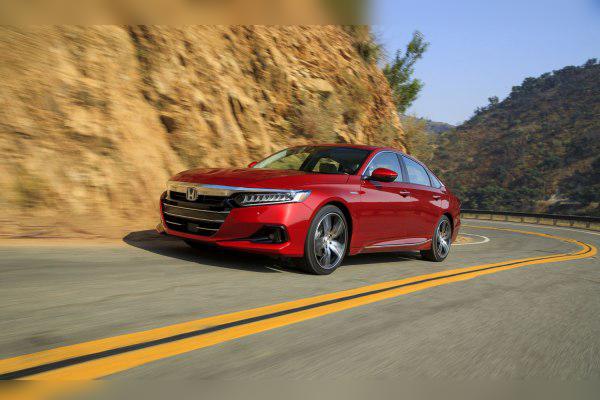
Honda K20C4 (2.0 Turbo) – Experiences, Issues, Fuel Consumption and Buying Guide
Key points (TL;DR)
- The heart of the Type R: This is the “civilized” version of the engine from the Civic Type R – outstanding performance and robust construction.
- Timing drive: Uses a chain which is very reliable and rarely needs replacement before very high mileage.
- Transmission: Primarily comes with an excellent 10-speed automatic (10AT) that makes full use of the torque.
- Direct injection: As with all modern petrol engines, carbon buildup on intake valves is possible.
- Oil dilution: Although less pronounced than on the 1.5 Turbo, in cold conditions and with short trips fuel can mix with the engine oil.
- Fuel consumption: Not as economical in the city as a hybrid or diesel, but offers sports-car performance.
- Recommendation: One of the best 2.0 Turbo engines on the market in terms of power–durability balance.
Contents
- Introduction and applications
- Technical specifications
- Reliability and maintenance
- Specific parts (costs)
- Fuel consumption and performance
- Additional options and modifications
- Transmission (10AT)
- Used car buying and conclusion
Introduction and applications
The engine with the code K20C4 represents the peak of Honda’s engineering transition from high-revving naturally aspirated engines to modern turbo units. It is primarily installed in the tenth-generation Honda Accord (including the 2020 facelift). What makes this engine special is its origin – it shares the block and most internal components with the legendary K20C1 engine that powers the Civic Type R.
Unlike its track-focused sibling, the K20C4 is tuned for more linear power delivery, quieter operation and better efficiency, but it has kept the “muscle”. This is not an engine for those who just want basic transportation from A to B with minimal fuel use; this is an engine for drivers who want sports-sedan performance in a discreet package.
Technical specifications
| Parameter | Value |
|---|---|
| Displacement | 1996 cc (2.0 L) |
| Configuration | I4 (inline, 4 cylinders) |
| Power | 185 kW (252 hp) at 6500 rpm |
| Torque | 370 Nm at 1500–4000 rpm |
| Engine code | K20C4 |
| Injection system | Direct injection (GDI) |
| Induction | Turbocharger (mono-scroll) + intercooler |
| Valve timing | DOHC, VTEC (on exhaust side), chain-driven |
Reliability and maintenance
K20C4 has proven to be an extremely robust unit, but like any modern high-performance engine, it requires specific care.
Timing system (chain or belt?)
This engine uses a chain to drive the camshafts. Honda chains in K-series engines are historically known for their reliability. Unlike some European competitors where chain replacement is common at around 100,000 km, here the chain often lasts as long as the engine itself, provided the oil is changed regularly. There is no fixed replacement interval; it is replaced only if you hear “rattling” on cold start or if a camshaft/crankshaft position sensor error appears.
Most common failures and symptoms
Although reliable, there are two main areas that require attention:
- Oil dilution with fuel: This issue is better known on the smaller 1.5T engine, but it can also occur on the 2.0T if the car is driven exclusively on short trips in cold weather. Due to direct injection, fuel can wash down the cylinder walls into the sump before the engine warms up. The symptom is a raised oil level on the dipstick and a strong smell of fuel in the oil. The solution is more frequent oil changes and regular highway driving so the oil can heat up and the fuel can evaporate.
- Carbon buildup: Since this is a direct-injection engine, fuel does not “wash” the intake valves. Over time, carbon deposits build up on them. Symptoms are rough idle, loss of power or increased fuel consumption after 100,000+ km. It is resolved by mechanical cleaning (so-called walnut-shell blasting).
Service intervals and oil
Major service: Since the engine uses a chain, the classic “major service” (timing belt, tensioner and water pump replacement) is not done preventively at a fixed mileage. The serpentine belt and related pulleys should be inspected at every minor service and replaced as needed (typically around 100,000–120,000 km).
Oil: The engine takes about 4.6 to 5.0 liters of oil (with filter). The recommended viscosity is strictly 0W-20 (API SN/SP standard). Although Honda’s Maintenance Minder system can indicate intervals of up to 20,000 km, for long turbo and chain life it is recommended to change the oil every 10,000 km or once a year.
Oil consumption: These engines generally do not consume oil to any significant extent. Consumption of 0.5 L per 10,000 km is acceptable. If the level is rising, that is a sign of oil dilution with fuel.
Spark plugs: Iridium spark plugs (NGK or Denso) are used. Replacement interval is usually around 100,000 km. Do not experiment with cheap plugs because turbo engines require precise ignition.
Specific parts (costs)
Injection system and injectors
The engine uses an advanced high-pressure direct injection (GDI) system. Injectors are generally durable but sensitive to poor fuel quality. Injector failure manifests as a misfire on a specific cylinder. Injectors are expensive (very costly, depending on the market), so it is recommended to use quality, additized petrol.
Turbocharger
The K20C4 uses an MHI (Mitsubishi Heavy Industries) TD04 turbocharger. This is a smaller turbo than the one on the Type R, optimized for quicker response at low revs. It is very reliable and, with regular oil changes and proper cooldown after spirited driving, will last as long as the engine. It has an electronically controlled wastegate for precise boost control.
GPF and emissions
Depending on the market (especially for EU models), this engine may be equipped with a GPF (Gasoline Particulate Filter). Unlike diesel DPFs, petrol engines generate higher exhaust gas temperatures, so the GPF regenerates passively much more easily and rarely clogs, except in extreme urban stop‑and‑go use. There is no AdBlue system.
Fuel consumption and performance
Is the engine “lazy”?
Absolutely not. With 252 hp and 370 Nm available from as low as 1500 rpm, an Accord with this engine accelerates from 0–100 km/h in about 5.5 to 6.0 seconds (depending on conditions). The pull is instant thanks to the 10-speed gearbox, which always keeps the engine in the optimal range. Overtaking on open roads is a routine operation.
Real-world fuel consumption
- City driving: Expect between 10 and 13 l/100 km. In heavy stop‑and‑go traffic it can go up to 14 liters. Turbo petrol engines are very sensitive to driving style in the city.
- Country roads: On secondary roads, consumption drops to 6.5–7.5 l/100 km.
- Motorway (130 km/h): Thanks to the 10th gear, the engine spins at a very low ~1800–2000 rpm at 130 km/h. Consumption is around 7.5–8.5 l/100 km.
Additional options and modifications
LPG conversion
Due to direct injection, LPG conversion is complex and expensive. You need a system that either injects liquid gas directly through the petrol injectors (a very costly solution) or a system that still “doses” petrol together with LPG (e.g. 20% petrol, 80% LPG) to cool the petrol injectors.
Verdict: Worth it only if you cover very high mileage (over 30–40,000 km per year). Otherwise, the risk and installation cost are not justified.
Remapping (tuning)
This engine is a tuner’s dream. Since it is hardware-wise very similar to the Type R engine, it can handle large power increases.
Stage 1: With a simple software remap (no mechanical changes), this engine safely goes to 280–290 hp and over 420 Nm of torque. The K20 block is extremely strong and can handle these loads without issues, provided it is regularly maintained.
Transmission
In the Accord X Facelift (2020) 2.0 Turbo, Honda’s 10-speed automatic transmission (10AT) is standard. This is not a CVT (used in lower-powered models), but a conventional planetary automatic with a torque converter, the first of its kind developed for front‑wheel drive.
10AT failures and maintenance
- Reliability: The gearbox is very reliable and quick. It shifts seamlessly and responds quickly to kick‑down. There is no problematic dual‑mass flywheel as a wear item like on manual or DSG gearboxes (it uses a torque converter).
- Maintenance: The transmission fluid (ATF Type 2.0 or specific Honda fluid) should be changed every 60,000 to 80,000 km. Although manufacturers often say “sealed for life”, that does not apply if you want the gearbox to last beyond 200,000 km.
- Failure symptoms: If you notice harsh engagement when shifting from P to D, or hesitation when changing gears, first check the fluid level and condition. More serious failures are rare and usually related to solenoids if the fluid has not been changed.
Note: The 6-speed manual gearbox existed on pre‑facelift models (rare), but with the 2020 facelift it was mostly dropped for the 2.0T engine. If you find a car with a manual, it has a dual‑mass flywheel and clutch kit which are wear items (expensive, depending on the market).
Used car buying and conclusion
What to check before buying?
- Cold start: Listen for any chain or VTC actuator rattling in the first 2–3 seconds after startup.
- Oil: Pull out the dipstick and smell it. A strong raw fuel smell indicates an oil dilution problem (common with short trips).
- Transmission: The gearbox should shift “like a hot knife through butter”. Any jerking, especially when decelerating and downshifting, is a warning sign.
- Service history: Check whether the oil was changed every 10–15,000 km, not every 20–30,000 km.
Final verdict
Who is this engine for? For drivers who want a car that looks serious and business‑like, but goes like a true sports car. This is an ideal sleeper. The K20C4 engine is a technological gem that offers a great compromise between Honda reliability and performance that used to be reserved for much more expensive brands.
If you can live with slightly higher city fuel consumption and potentially higher registration costs (because of the 2.0‑liter displacement in some countries), you will get one of the best powertrains in its class.
Was this content useful to you?
Your opinion helps us to improve the quality of the content.