R20A3 Engine
- Engine
- 1997 cm3
- Aspiration
- Naturally aspirated engine
- Fuel
- Petrol (Gasoline)
- Fuel injection system
- Multi-port manifold injection
- Power
- 156 hp @ 6200 rpm
- Torque
- 190 Nm @ 4200 rpm
- Cylinders
- 4
- Valves
- 16, 4 per cylinder
- Cylinders position
- Inline
- Valvetrain
- DOHC
- Oil capacity
- 3.7 l
- Coolant
- 5.4 l
# Vehicles powered by this engine
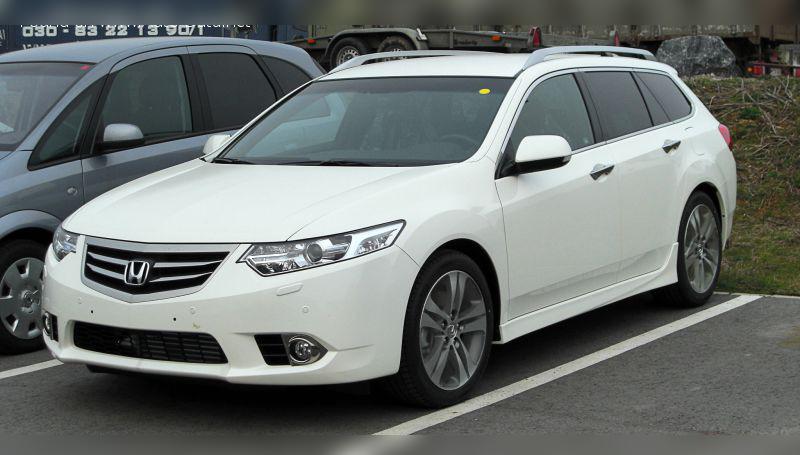
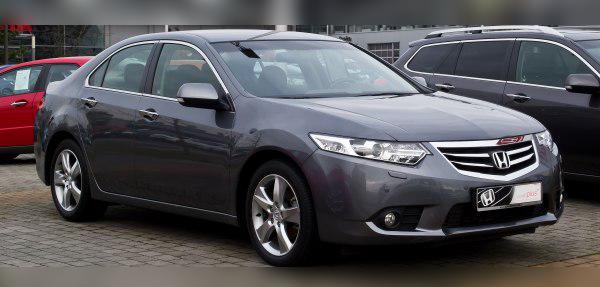

Honda 2.0 i-VTEC (R20A3): Experiences, problems, fuel consumption and used-car buying tips
If you’re considering buying a used eighth-generation Honda Accord, you’re probably torn between the popular 2.2 i-DTEC diesel and this 2.0 petrol. As someone who has spent years under the hoods of Japanese cars, I’ll tell you right away: if you want peace of mind, R20A3 is the engine you’re looking for. Although it doesn’t have the “kick” in the back like a turbo diesel or the power of the larger 2.4 unit, this is one of the most well-balanced engines of its era from an engineering standpoint.
Key points in short (TL;DR)
- Timing drive: Uses a chain that is very reliable and rarely needs replacement before high mileage.
- Ideal for LPG: The engine is an excellent candidate for LPG conversion, which drastically reduces running costs.
- Oil consumption: Honda engines tend to “drink” a bit of oil if driven at high revs – regular checks are mandatory.
- Performance: The engine is naturally aspirated, which means it’s lazy at low revs and requires frequent gear changes for overtaking.
- Maintenance: Requires mechanical valve adjustment (not expensive, but must be done regularly).
- Gearbox: The automatic is reliable but slow and increases fuel consumption; the manual gearbox is one of the best in its class.
Article contents
- Technical specifications
- Reliability, Maintenance and Failures
- Specific Parts and Costs
- Fuel Consumption and Performance
- LPG and Tuning
- Gearbox: Manual and Automatic
- Used-car buying tips and Conclusion
Technical specifications
This unit belongs to Honda’s R-series engines, designed with a focus on efficiency and low friction rather than high performance like the older K-series (e.g. in the Accord Type R or the 2.4 model). Still, it retains i-VTEC technology for valve timing optimization.
| Specification | Value |
|---|---|
| Engine code | R20A3 |
| Displacement | 1997 cc |
| Power | 115 kW (156 hp) at 6300 rpm |
| Torque | 190 Nm at 4300 rpm |
| Induction type | Naturally aspirated |
| Fuel injection | PGM-FI (multipoint indirect) |
| Number of cylinders/valves | 4 cylinders / 16 valves (SOHC) |
Reliability and Maintenance
When we talk about the R20A3 engine, we’re talking about “old-school” reliability. With basic maintenance, this unit can easily cover 300,000 to 400,000 kilometers without opening the engine.
Chain or belt?
This engine uses a timing chain. Unlike some European competitors from that period (e.g. TSI or N47 engines), Honda’s chain in the R20 is extremely durable. It is not prone to stretching before 200,000–250,000 km, and often lasts even longer with regular oil changes. There is no prescribed replacement interval – it is replaced only when you can hear rattling (a metallic noise on cold start).
Oil consumption and servicing
This engine takes about 3.7 to 4.0 liters of oil (with filter). Honda recommends thin oils to reduce friction and save fuel, most commonly 0W-20 or 5W-30. For our climate and older engines, a quality fully synthetic 5W-30 or 5W-40 is recommended.
Does it burn oil? Yes, that’s a characteristic of VTEC engines. Consumption of 0.5 to 0.8 liters per 10,000 km is considered completely normal and acceptable. However, if you often drive at high revs (over 4000 rpm), consumption can increase. If the engine uses more than 1 liter per 2000–3000 km, that points to a problem with piston rings or valve stem seals.
Most common issues and maintenance
- Valve adjustment: This is not a failure, but an obligation. The engine does not have hydraulic lifters. Valve clearances must be checked and adjusted mechanically every 40,000 km (or more often if running on LPG). Symptoms of incorrect clearances are rough idle or ticking noises.
- Auxiliary belt tensioner: The bearing often starts to whine or the tensioner mechanism itself can weaken, causing unpleasant squealing or rattling from the side of the engine.
- VTC actuator: Sometimes you may hear a short “grrrr” (rattle) at the first cold start in the morning (lasting 1–2 seconds). This is a sign that the VTC actuator (variable cam timing) is losing oil pressure. It’s not urgent, but it’s annoying and you should plan for replacement.
- Spark plugs: This petrol engine uses iridium spark plugs. The replacement interval is long, usually at 100,000 to 120,000 km. Don’t skimp here – use original NGK or Denso.
A classic “major service” (replacement of timing belt and tensioners) does not exist here as a fixed cost at e.g. 100k km because of the chain. You only replace the auxiliary (serpentine) belt, water pump and coolant as needed.
Specific Parts (Costs)
The good news for your wallet is the simplicity of this engine. The R20A3 is free of many expensive components that give diesel owners headaches.
- Turbocharger: There isn’t one. The engine is naturally aspirated. Its “service life” is infinite because the part doesn’t exist, which means zero turbo repair costs.
- Dual-mass flywheel: This is important. The Honda Accord 2.0 petrol (manual gearbox) most often uses a conventional solid flywheel. This drastically reduces clutch replacement costs compared to the diesel version (which has an expensive dual-mass flywheel). Note: Check by VIN to be sure, but in about 95% of cases you’re safe.
- Injectors: The injection system is classic indirect multipoint. These injectors are extremely robust, tolerant of somewhat poorer fuel quality and rarely fail. They are not expensive to clean or replace (depends on the market).
- DPF and AdBlue: No DPF filter, no AdBlue fluid. No clogging, no regenerations, no software deletes. You only have a standard catalytic converter.
- EGR valve: It is present. It can get dirty from city driving, which shows up as hesitation under load or a Check Engine light. Cleaning is simple and inexpensive.
Fuel Consumption and Performance
This is where we get to the “pain point” for those used to modern turbo engines. The eighth-gen Honda Accord is a heavy car (around 1500 kg), and 190 Nm of torque is, frankly, just about adequate.
Is the engine sluggish? In city driving and when setting off – yes, it feels sluggish. You have to rev the engine above 3500–4000 rpm for the Accord to pull properly. There is no diesel-like surge at 1800 rpm. Overtaking requires dropping to a lower gear (often two gears down).
Real-world fuel consumption:
- City driving: Expect between 10 and 12 l/100 km. In heavy traffic and winter, with the automatic, this can go up to 13 liters.
- Country roads: Here the engine is efficient. On main roads you can get it down to 6.5–7.5 l/100 km.
- Motorway: At 130 km/h in 6th gear (manual), the engine spins at about 3000–3200 rpm. Consumption is then around 7.5–8.5 l/100 km. Sound insulation in the eighth-gen Accord is excellent, so the engine is not too loud.
Additional Options and Modifications
Is it suitable for LPG?
Absolutely yes. This is one of the best modern engines for LPG conversion. Since it doesn’t have direct injection, the installation is standard and relatively affordable. However, there is one crucial rule: due to somewhat softer valve seats, it is recommended to install a valve lubrication system (“drip” or electronic). Also, the valve adjustment interval must be halved to every 20,000–25,000 km. If you follow this, you can cover hundreds of thousands of kilometers on LPG.
Chip tuning (Stage 1)?
Don’t waste your money. Naturally aspirated petrol engines cannot be effectively “chipped”. The gain would be negligible (maybe 3–5 hp), which you won’t feel in real driving. The only thing you might improve is throttle response, but the power remains the same.
Gearbox
The eighth-generation Honda Accord with this engine came with two transmission options:
- Manual gearbox (6-speed): Honda’s manual gearboxes are legendary. Precise, with short throws, a real pleasure to use. Failures are extremely rare. Gearbox oil should be changed every 60,000–80,000 km (use Honda MTF oil only). Clutch replacement costs are reasonable because, as mentioned, there is usually no dual-mass flywheel.
- Automatic gearbox (5-speed): This is a classic hydraulic automatic with a torque converter. It’s not as fast as modern DSG gearboxes, it robs a bit of power and increases fuel consumption by about 1–1.5 liters. However, it is very reliable and smooth. Failures are rare if the oil is changed regularly (every 60,000 km or 4 years). If the gearbox “jerks” or hesitates, the problem is often just old oil or the need for a software update/reset.
Buying used and Conclusion
Before buying an Accord with the R20A3 engine, pay attention to the following:
- Cold start: Insist on starting the car with the engine completely cold. Listen for any brief rattling (chain or VTC actuator).
- Air conditioning: Check whether the AC compressor engages and whether the fan turns on. On the eighth-gen Accord, the AC condenser is exposed to stone chips and often fails.
- Steering rack: Check for play in the steering wheel or strange noises when turning the wheel at a standstill (a known weak point on this model; refurbishment can be expensive).
Conclusion:
The Honda Accord 2.0 i-VTEC is a car for the rational buyer. It’s not a racer, it uses a bit more fuel in the city, but it offers top comfort and peace of mind. While diesel owners worry about DPFs, injectors and flywheels, you’ll just be filling up with fuel (or LPG) and changing the oil. If you drive less than 15,000 km a year or spend most of your time in the city, this is by far a better choice than a diesel.
Was this content useful to you?
Your opinion helps us to improve the quality of the content.