J30A5 Engine
- Engine
- 2997 cm3
- Aspiration
- Naturally aspirated engine
- Fuel
- Petrol (Gasoline)
- Fuel injection system
- Multi-port manifold injection
- Power
- 244 hp @ 6250 rpm
- Torque
- 286 Nm @ 5000 rpm
- Cylinders
- 6
- Valves
- 24, 4 per cylinder
- Cylinders position
- V-engine
- Valvetrain
- SOHC, i-VTEC
- Oil capacity
- 4.3 l
- Coolant
- 8.2 l
# Vehicles powered by this engine
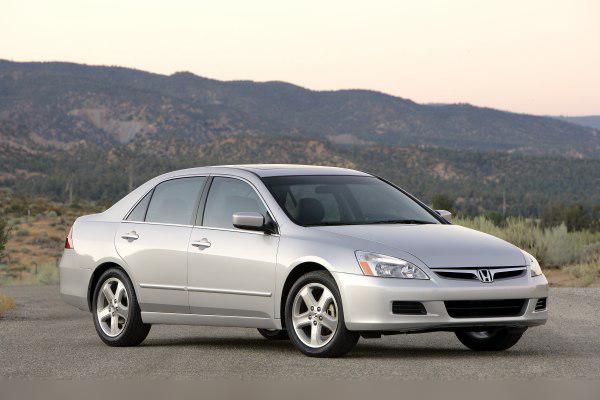
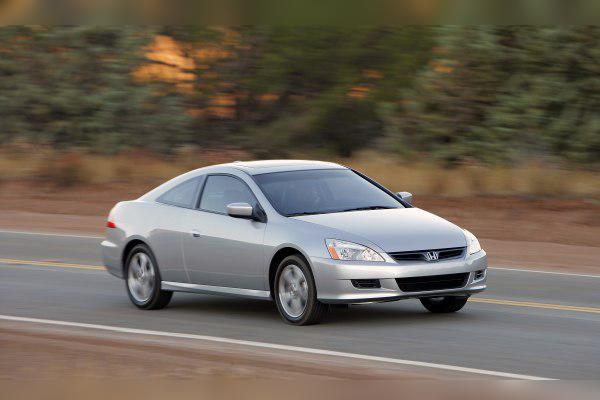
Honda J30A5 (3.0 V6 VTEC) – Experiences, problems, fuel consumption and buying used
If you’re looking for a “proper” Honda Accord from the US market, you’re probably looking at models with the J30A5 beating under the hood. This is an evolution of Honda’s famous J-series engines, a V6 unit that offers a level of smoothness four-cylinders can only dream of. Although this engine is most commonly found in US versions of the Accord (sedan and coupe) after the 2005 facelift, it’s well known to enthusiasts worldwide. Is this 3.0 V6 as “indestructible” as older Hondas, or does it come with expensive modern-era problems? Find out below.
Key points in short (TL;DR)
- Performance: With 244 hp, this is a very potent engine that turns the Accord into a serious cruiser.
- Timing belt: The engine uses a timing belt, not a chain. Replacement is expensive and mandatory.
- Automatic transmission: Although better than previous versions, the 5-speed automatic is still the “Achilles’ heel” if not regularly maintained.
- Fuel consumption: Thirsty in the city (expect double-digit numbers), but surprisingly economical on the highway.
- Reliability: Mechanically very durable if you keep an eye on oil level and do regular services.
- LPG: It can run on LPG, but it requires precise valve adjustment and a quality system.
- Recommendation: The 6-speed manual with this engine is the “holy grail” of reliability and driving fun, but it’s rare.
Contents
- Technical specifications
- Reliability and maintenance
- Specific parts (costs)
- Fuel consumption and performance
- Additional options and modifications
- Transmission (manual and automatic)
- Buying used and conclusion
Technical specifications
| Feature | Value |
|---|---|
| Engine code | J30A5 |
| Displacement | 2997 cc (3.0 L) |
| Configuration | V6, SOHC, VTEC |
| Power | 179 kW (244 hp) @ 6250 rpm |
| Torque | 286 Nm @ 5000 rpm |
| Injection type | Multipoint (PGM-FI) |
| Aspiration | Naturally aspirated |
| Valves per cylinder | 4 (24 total) |
Reliability and maintenance
Belt or chain?
This is one of the most important questions for any future owner. The Honda J30A5 engine uses a timing belt for the valvetrain, not a chain. This is crucial to know because the engine is an interference design – which means that if the belt snaps, the pistons will hit the valves and the engine will suffer catastrophic damage. The recommended replacement interval is usually around 100,000 to 120,000 km or every 5 to 7 years (whichever comes first). Along with the belt, you must replace the tensioner, idler pulleys and water pump.
Most common issues
Although mechanically robust, the J30A5 has its weak spots:
- Oil leaks: Most often from the VTEC solenoid or valve covers. Over the years, the gaskets harden.
- Engine mounts: These engines use active (hydraulic) engine mounts which are expensive. Due to the weight of the V6 and its torque, they often fail, which shows up as strong vibration in the cabin when idling at a traffic light (especially in “D” with the automatic).
- EGR valve: The EGR passages often clog, which leads to rough running and a “Check Engine” light.
- Crankshaft position sensor: Can cause starting problems.
Service intervals and oil
Minor service is done every 10,000 km or once a year. This engine takes approximately 4.3 to 4.5 liters of oil (with filter). For this model year and market (North America), Honda often recommends 5W-20 for fuel economy, but in warmer European conditions and on higher-mileage engines, 5W-30 or even 5W-40 (fully synthetic) has proven to be an excellent choice for protection.
Oil consumption
Honda V6 engines from this era can consume some oil, but not alarmingly like some newer models. Consumption up to 0.5 liters per 10,000 km is perfectly acceptable. If it uses more (e.g. a liter every 2–3 thousand km), the cause is usually valve stem seals or stuck piston rings due to infrequent oil changes. Regularly checking the oil level is mandatory because the VTEC system requires optimal oil pressure to function properly.
Spark plugs and injectors
Since this is a gasoline engine, it uses iridium spark plugs. Their replacement interval is long, usually around 100,000 km. Don’t cheap out on them, because bad plugs can damage the ignition coils, which are more expensive.
Specific parts (costs)
Dual mass flywheel and fuel injection
If you have a version with a manual transmission (6-speed), it is equipped with a dual mass flywheel to smooth out V6 vibrations and protect the gearbox. The flywheel is durable, but replacement is expensive (depends on the market). Automatic models do not have a dual mass flywheel, but a torque converter instead.
The fuel injection system is a classic PGM-FI (port injection). The injectors are very reliable and rarely cause problems, unless extremely poor fuel is used or the LPG system is neglected.
Turbo, DPF, EGR
This engine is naturally aspirated (no turbo), which is great news for maintenance costs – no turbocharger rebuilds, intercooler issues or high boost pressures. Also, as a gasoline engine, it does not have a DPF filter or AdBlue system. It does have a catalytic converter and an EGR valve. The EGR passages in the intake manifold are known to clog with soot, which requires physical cleaning (removing the intake manifold), but this is not an expensive failure, more a matter of engine “hygiene”.
Fuel consumption and performance
Real-world fuel consumption
Don’t fool yourself – a 3.0 V6 has to “drink”.
- City driving: Expect 13 to 16 l/100 km, depending on traffic and how heavy your right foot is. In winter it can be even higher.
- Highway: This is where the engine shines. Thanks to the large displacement and VTEC, as well as long gear ratios, it can go down to 8 to 9 l/100 km with normal driving.
Is the engine “lazy”?
Absolutely not. With 244 hp and 286 Nm, the J30A5 has no trouble moving the Accord’s body. It’s not a “hot hatch” type of sports car, but it pulls linearly and strongly. The VTEC “kick” at high revs is there and gives you that recognizable Honda sound and extra shove.
Highway driving
This is the natural habitat of this engine. At 130 km/h it runs relaxed, usually around 2,500 to 2,800 rpm (depending on the gearbox). Overtaking is easy and doesn’t always require a kickdown (downshift), because the engine has enough torque even at lower revs.
Additional options and modifications
LPG conversion
Yes, this engine is suitable for LPG and many owners install it because of the high city fuel consumption. However, there is a big BUT. Honda engines have somewhat “softer” valve seats. It is essential to install a quality sequential LPG system and, if possible, a valve lubrication system. Most important: the valves on this engine are adjusted mechanically. Running on LPG requires more frequent valve clearance checks (every 30,000–40,000 km) to prevent valve burning.
ECU remap (Stage 1)
On naturally aspirated gasoline engines, an ECU remap brings negligible gains in power (maybe 5–10 hp, which you won’t feel). Throttle response can be improved, but considering the risk of bad maps and the cost of the job, the investment usually isn’t worth it. It’s better to spend that money on quality tires and regular maintenance.
Transmission: manual vs automatic
Variants
With the J30A5 you get two options:
- 5-speed automatic transmission: Standard on sedan versions.
- 6-speed manual transmission: Often reserved for coupe versions and “sportier” trim levels.
Problems and failures
The automatic transmission is the critical point. Although this generation (after 2005) is much better than the notorious gearboxes from 2000–2004, it is still sensitive. The most common symptoms of failure are slipping between 2nd and 3rd gear, harsh shifts or slow engagement of reverse. The transmission oil cooler is also an important factor – overheating kills this gearbox.
The manual transmission is practically indestructible with normal use. The only potential issue is the 3rd gear synchro if the car has been driven aggressively (“sporty shifting”).
Transmission service
- Automatic: Oil changes are MANDATORY every 40,000 to 60,000 km. Use only genuine Honda fluid (ATF-Z1 or the newer ATF-DW1). Never do a high-pressure machine flush; use the simple drain & fill method.
- Manual: Oil is changed less frequently, around every 80,000–100,000 km (Honda MTF).
- Clutch (manual): The clutch kit is a wear item. Replacement cost is medium to high (depends on the market), especially if the dual mass flywheel is replaced at the same time.
Buying used and conclusion
When buying a Honda with the J30A5 engine, focus on the following:
- Proof of timing belt replacement: If there’s no paperwork, immediately factor in that cost (parts + labor are expensive).
- Automatic transmission test: It must shift smoothly, both cold and hot. Any jerking or “thinking” is a red flag.
- Engine running: It should run smoothly. If there are vibrations, the active engine mounts are probably worn.
- Oil condition: Pull the dipstick. The oil must not smell burnt (and on automatics, not like burnt clutch).
Conclusion: The J30A5 is a fantastic engine for fans of the old school. It offers linear power, a beautiful sound and comfort. It’s ideal for drivers who cover a lot of highway miles and want reliability, and are willing to pay slightly higher registration and fuel costs. If you find a coupe with a manual gearbox in good condition – buy it, it’s a future classic.
Was this content useful to you?
Your opinion helps us to improve the quality of the content.