K20 Engine
- Engine
- 1998 cm3
- Aspiration
- Naturally aspirated engine
- Fuel
- Petrol (Gasoline)
- Fuel injection system
- Multi-port manifold injection
- Power
- 155 hp @ 6000 rpm
- Torque
- 190 Nm @ 4500 rpm
- Cylinders
- 4
- Valves
- 16, 4 per cylinder
- Cylinders position
- Inline
- Valvetrain
- DOHC
- Oil capacity
- 4.2 l
- Coolant
- 4.5 l
# Vehicles powered by this engine

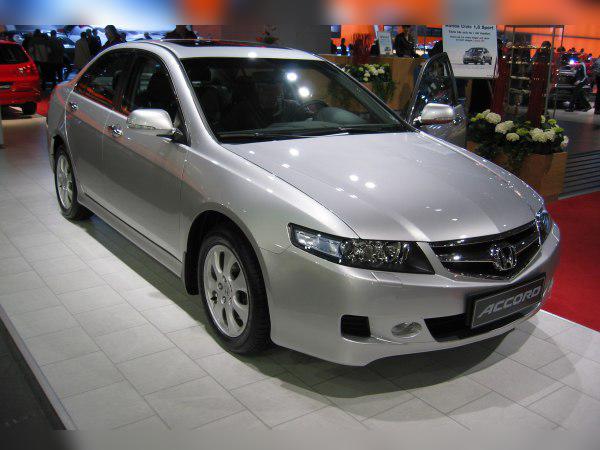
Honda 2.0 i-VTEC (K20): Experiences, problems, fuel consumption and used car buying tips
Key points (TL;DR)
- “Bombproof” reliability: This is one of the most reliable petrol engines of the modern era. With regular maintenance, it easily goes beyond 400,000 km.
- Old-school naturally aspirated: No turbo, no dual-mass flywheel, no DPF, no expensive high-pressure injectors. Maintenance costs are predictable.
- Loves high revs: To make it go properly, you have to rev it. Below 3000 rpm it can feel a bit lazy in the heavy Accord body.
- Oil consumption: Possible on older examples, but nowhere near as alarming as with some German competitors.
- Sensitive to LPG: Honda engines have “soft” valve seats. LPG installation is possible, but requires strict maintenance (valve clearance adjustment).
- VTC actuator: A common but non-fatal issue that causes an unpleasant noise at cold start.
Contents
- Introduction and applications
- Technical specifications
- Reliability, maintenance and oil
- Specific parts and fuel injection system
- Fuel consumption and driving performance
- LPG and remapping
- Gearbox and drivetrain
- Used car buying tips and conclusion
Introduction: A legend overshadowed by diesels
Honda’s K-series engines enjoy cult status in the automotive world. While the “Type R” versions are the ones that grab the headlines, this “civilian” 2.0-litre, 155 hp version (most commonly coded K20A6 or K20Z2) represents the perfect balance between performance and incredible longevity. It was primarily installed in the seventh-generation Honda Accord (CL7) and its estate version (Tourer).
This engine is the last bastion of classic engineering before the mass adoption of turbocharged petrol engines with direct injection. For used car buyers today, it represents a “safe haven” because it is free of most of the expensive emissions systems that give owners of modern diesels and petrols headaches.
Technical specifications
| Specification | Data |
|---|---|
| Displacement | 1998 cc (2.0 L) |
| Power | 114 kW (155 hp) at 6000 rpm |
| Torque | 190 Nm at 4500 rpm |
| Engine codes | K20A6, K20Z2 (most common in Europe) |
| Injection type | MPI (Multi-Point Injection) – Indirect |
| Aspiration | Naturally aspirated |
| Timing drive | Chain (Timing chain) |
Reliability and maintenance
Timing system: Chain or belt?
The K20 engine uses a timing chain instead of a timing belt. This is generally a “lifetime” component. In practice, the chain on this engine easily lasts over 200,000 to 300,000 km with regular oil changes. Still, the chain is not indestructible. Symptoms of chain stretch include rattling while the engine is running (especially on the right-hand side where the chain is located) and, eventually, the “Check Engine” light due to camshaft/crankshaft desynchronisation.
A conventional “major service” (belt replacement) does not exist. Instead, the auxiliary (serpentine/PK) belt that drives the alternator and A/C is replaced, along with tensioners and the water pump if needed – usually at around 100,000 – 120,000 km or when bearing noise appears.
Oil: The lifeblood of the i-VTEC system
This engine is extremely sensitive to oil quality and oil level because the i-VTEC system uses oil pressure to change camshaft profiles.
Capacity: The engine takes about 4.2 to 4.5 litres of oil (with filter).
Viscosity grades: Honda recommends 0W-20, 0W-30 or 5W-30. For higher-mileage engines in warmer climates, 5W-30 or 5W-40 are the most common choices.
Oil consumption: It is completely normal for this engine to consume 0.5 to 1 litre of oil per 10,000 km, especially if it is often driven at high revs (VTEC zone). If consumption exceeds 1L per 2000–3000 km, this points to stuck oil control rings or hardened valve stem seals.
Spark plugs and injectors
Since this is a petrol engine, there are no issues with high-pressure injectors. It uses conventional electromagnetic petrol injectors, which are very durable.
Spark plugs: The factory uses iridium spark plugs (NGK or Denso). Their replacement interval is long, usually 100,000 to 120,000 km. Do not skimp on spark plugs; cheap copies can damage the ignition coils.
Most common issues
Although reliable, the engine has a few specific weak points:
- VTC actuator (camshaft gear): The most well-known issue. It manifests as a short, sharp grinding or rattling noise (1–2 seconds) immediately after a cold start. The problem lies in the locking mechanism of the gear before oil pressure builds up. Although it sounds scary, it rarely leads to catastrophic failure, but replacement is not cheap (the genuine part is expensive, depending on the market).
- Accelerator pedal position sensor (APP sensor): Can cause the car to lose power or not respond properly to throttle input.
- Valve clearance adjustment required: This is not a fault but an obligation. Honda does not use hydraulic lifters. Valve clearance must be checked and adjusted mechanically every 40,000 km (strongly recommended), or every 100,000 km according to the factory recommendation if driven only on petrol.
Specific parts (costs)
This is where we come to the biggest advantage of this engine compared to diesels:
- Dual-mass flywheel: In most cases, the 2.0 petrol with manual gearbox (Accord CL7) DOES NOT have a dual-mass flywheel. It uses a conventional solid flywheel. This drastically reduces clutch replacement costs compared to the 2.2 i-CTDi diesel version.
- Turbocharger: The engine is naturally aspirated, so there is no turbo. One less thing to worry about.
- DPF and EGR: This engine does not have a DPF filter. It does have an EGR valve, but unlike on diesels, on a petrol engine it very rarely clogs with soot because petrol combustion is cleaner.
- AdBlue: There is no AdBlue system.
- Fuel injection system: Indirect injection means that the intake valves are “washed” by fuel, so there are no issues with carbon buildup on the valves, which is a common problem on newer direct-injection engines.
Fuel consumption and performance
City driving and “laziness”
Is the engine lazy? It depends on what you drove before. With 190 Nm of torque available only at a high 4500 rpm, in city driving it can feel sluggish if you keep it below 2500 rpm. The Honda Accord is a heavy saloon (around 1400 kg). For brisk acceleration, you have to shift down.
City fuel consumption: Expect a realistic 10 to 12 litres per 100 km. In winter and heavy traffic this easily goes up to 13 litres. If someone tells you it uses 8 litres in the city, they are not telling the truth.
Motorway and cruising
On open roads this engine shines with its smoothness.
Consumption on open roads: On secondary roads it can drop to 6.5 – 7.5 l/100 km.
Motorway (130 km/h): With the 5-speed manual gearbox, the engine spins at about 3200 to 3400 rpm. This is somewhat higher than on a diesel, so cabin noise is a bit more noticeable, but still pleasant. Fuel consumption at this speed is around 8 litres.
Additional options and modifications
Can it run on LPG?
Yes, but with caution. Honda engines have somewhat softer valve seats. If you plan to install LPG:
- Install a quality sequential system with OBD connection.
- Many recommend installing a valve lubrication system (“dripper” or electronic additive).
- CRUCIAL: You must shorten the valve clearance adjustment interval to every 20,000 to 30,000 km. If you neglect this, the valves will recess into the seats and you will be facing an expensive cylinder head repair.
Remapping (Stage 1)
Since the engine is naturally aspirated, a simple remap is basically a waste of money. The gain is in the range of 5 to 8 hp, which you will not feel in real driving. The only real way to increase power is “hardware” tuning (different camshafts, intake, exhaust and Hondata K-Pro ECU), but that is very expensive and usually exceeds the value of the car.
Gearbox
There are two gearbox options with this engine:
- 5-speed manual gearbox: One of the best manual gearboxes ever fitted to a passenger car. The throws are short and precise (a “click-clack” feel).
- Maintenance: Gearbox oil should be changed every 60,000 to 80,000 km. Use ONLY genuine Honda MTF-3 oil. Any other oil (such as 75W-90) can make shifting difficult, especially in winter.
- Failures: Rare. Sometimes the 2nd or 3rd gear synchro if the car has been driven aggressively.
- Clutch: Replacement is not particularly expensive because there is no dual-mass flywheel. The cost depends on the market, but it falls into the “affordable” category.
- 5-speed automatic gearbox: A conventional automatic with a torque converter. It is very reliable and smooth, but it kills performance. 0–100 km/h acceleration is noticeably slower, and fuel consumption is higher by about 1 to 1.5 litres.
- Maintenance: Oil changes every 60,000 km are mandatory for long life.
Buying used and conclusion
Before buying a Honda with the K20 engine, check the following:
- Cold start: Insist on starting the car when the engine is completely cold. Listen for a “krrr” sound in the first 2 seconds (VTC actuator).
- Steering rack: This is not related to the engine, but it is the main weak point of the Accord. Check for play, oil leaks or noises when turning the wheel. Reconditioning is expensive.
- Corrosion: Inspect the rear arches and underbody. Japanese cars from that era are not immune to rust.
- VTEC engagement: Warm up the engine, then accelerate hard while driving. At around 4500 rpm you should feel a slight change in sound and a stronger pull. This should be smooth, without jerks.
Conclusion: The Honda 2.0 i-VTEC is an engine for those who want peace of mind. It is not as economical as a diesel, nor as fast as modern turbo engines, but it offers unmatched mechanical reliability and that specific Honda character. If you drive up to about 15,000 km per year, this is a much better and cheaper option to maintain than a diesel.
Was this content useful to you?
Your opinion helps us to improve the quality of the content.