J30 Engine
- Engine
- 2997 cm3
- Aspiration
- Naturally aspirated engine
- Fuel
- Petrol (Gasoline)
- Fuel injection system
- Multi-port manifold injection
- Power
- 200 hp @ 5500 rpm
- Torque
- 265 Nm @ 4800 rpm
- Cylinders
- 6
- Valves
- 24, 4 per cylinder
- Cylinders position
- V-engine
- Valvetrain
- DOHC
- Oil capacity
- 4.4 l
- Coolant
- 5.5 l
# Vehicles powered by this engine
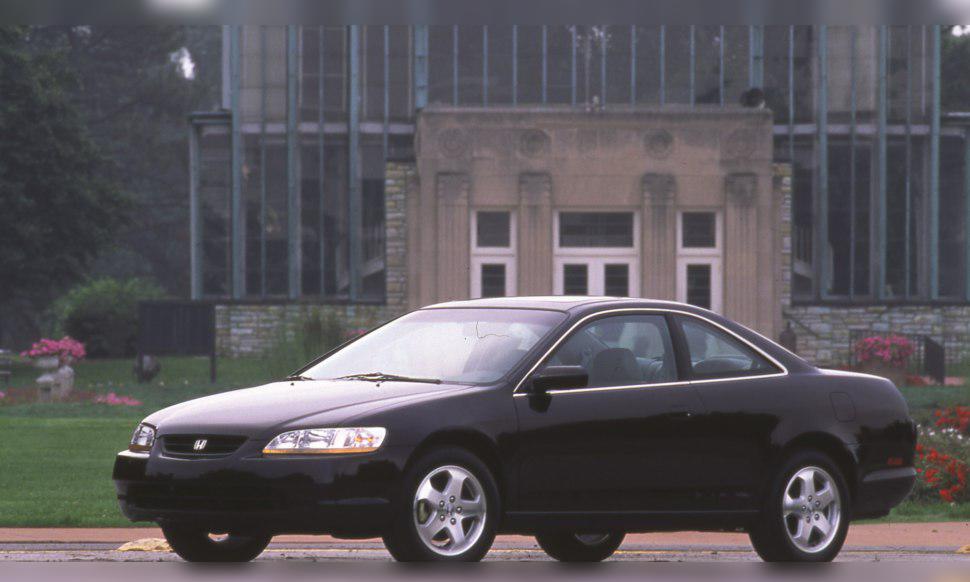
Honda J30 V6 – Experiences, Problems, Fuel Consumption and Buying Used
Key points (TL;DR)
- Excellent refinement: The J30 is an exceptionally smooth V6 engine that delivers a true cruiser feel.
- Achilles’ heel – Transmission: The automatic transmission paired with this engine in the 6th gen Accord is known for failures and sensitivity.
- Timing belt service is mandatory: The engine uses a timing belt, not a chain. If it snaps, it causes severe engine damage.
- Fuel consumption is not low: In city driving expect double‑digit numbers, often over 14 l/100 km.
- EGR passages: The intake manifold passages often get clogged, which triggers the "Check Engine" light.
- Suitable for LPG: It handles LPG well, but requires regular valve adjustment (it has no hydraulic lifters).
- Recommendation: Buy only if the transmission is perfect or has already been rebuilt.
Contents
Introduction and engine applications
The Honda J30 engine (specifically the J30A1 series in the Accord VI Coupe model) represents Honda’s entry into the world of serious V6 cruisers on the global market, even though it was primarily designed with the American buyer in mind. This is not a high‑revving "screamer" engine that we remember Honda for from the 90s (like the B16 series), but rather a sophisticated, quiet and flexible unit intended for comfortable driving.
It was primarily installed in the Honda Accord VI Coupe 3.0 V6 (produced from the late 90s to the early 2000s). This model is specific because it differs from the European Accord sedan – it is larger, more comfortable and shares its platform with models intended for the US market. The J30 is a SOHC (single overhead cam) VTEC engine that combines power with smooth torque delivery. For Honda enthusiasts, this is an engine that offers a "gentleman’s" driving experience, but it comes with a specific set of challenges you need to understand before buying.
Technical specifications
| Parameter | Value |
|---|---|
| Engine displacement | 2997 cc (3.0 L) |
| Configuration | V6, SOHC VTEC, 24 valves |
| Power | 147 kW (200 hp) @ 5500 rpm |
| Torque | 265 Nm @ 4700 rpm |
| Engine code | J30A1 (most common in Accord VI Coupe) |
| Injection type | PGM-FI (multi‑point indirect) |
| Induction | Naturally aspirated |
Reliability and maintenance
Timing belt or chain?
This engine uses a timing belt to drive the camshafts. This is critical information because the J30 is an interference engine – meaning that if the belt snaps, the pistons will hit the valves and the engine will suffer catastrophic damage.
Major service: It is recommended to perform the major timing service every 100,000 km or 5 to 7 years, whichever comes first. When replacing the belt, you must also replace the hydraulic tensioner, water pump and camshaft/crankshaft oil seals. Do not cheap out on parts here; use quality Japanese kits (e.g. AISIN, Koyo, Mitsuboshi).
Oil and consumption
The engine takes approximately 4.5 to 5 liters of oil (with filter). The manufacturer usually recommends 5W-30 or 10W-30. Considering the age of these engines and potential mileage, a quality 5W-40 oil is also a good choice for European climates.
Oil consumption: J30 engines are generally well sealed and should not consume large amounts of oil. Consumption up to 0.5 liters per 10,000 km is acceptable. If it uses more, the usual culprits are valve stem seals or leaks from the valve cover gaskets and the VTEC solenoid (a common issue – it "weeps" oil and you can smell burning oil on the exhaust manifold).
Most common failures
Aside from the transmission issues (which we’ll cover later), the engine itself is mechanically very robust ("bulletproof"). Still, there are some specifics:
- Clogged EGR passages: This is classic for the J‑series. The passages in the intake manifold get clogged with carbon, which leads to rough running, unstable idle and a lit "Check Engine" light. The solution is to remove the intake manifold and physically clean the passages.
- Main relay: If the car cranks but won’t start when the engine is hot (or randomly), the problem is often cold solder joints in the main fuel pump relay.
- Engine mounts: Due to the weight of the V6 and its torque, the mounts (especially the front and rear, which are often active/hydraulic) fail, which you feel as a strong jolt when shifting into "D" or "R".
Spark plugs and ignition
Honda recommends iridium or platinum spark plugs (NGK or Denso) for this engine. The replacement interval for such plugs is around 100,000 km. If you use regular copper plugs, the interval drops to 30,000–40,000 km. Replacing the plugs on the rear cylinder bank (towards the cabin) is a bit more difficult due to access, so mechanics often charge a bit more labor.
Specific parts and fuel injection system
Dual‑mass flywheel and clutch
Since this engine in the Accord VI Coupe model almost exclusively came with an automatic transmission, it does not have a dual‑mass flywheel. Instead, it uses a conventional torque converter and a flexplate. This eliminates an entire category of failures typical of modern diesels and manual transmissions.
Injection system, turbo, EGR
- Injection: It uses the classic PGM-FI system (indirect injection into the intake manifold). The injectors are extremely durable and rarely cause problems. They are not as sensitive to fuel quality as modern piezo injectors.
- Turbo: The engine is naturally aspirated (N/A), it does not have a turbocharger. This means fewer parts that can fail, linear power delivery, but also less low‑end torque compared to modern turbo engines.
- DPF / AdBlue: As a petrol engine of this generation, it has no DPF filter or AdBlue system. It does have a catalytic converter, which can fail if the car is driven with poor combustion (e.g. bad plugs or coils), but in general it is long‑lasting.
- EGR valve: It has an EGR valve. As mentioned, the valve itself rarely fails, but the passages leading to it get clogged.
Fuel consumption and performance
Is it sluggish and how does it go?
With 200 hp, the Accord Coupe V6 is not a slow car, but it is not a sports car in today’s sense of the word either. The 0–100 km/h sprint takes around 8–9 seconds (the automatic holds it back). The engine is not sluggish, it has enough power for overtaking at any moment, but the power comes in a linear fashion. The VTEC "kick" here is not as aggressive as on 4‑cylinder Type‑R models; it is more focused on filling out the torque curve.
Real‑world fuel consumption
Be prepared for the running costs.
- City driving: Expect 13 to 16 liters/100 km. In heavy traffic and in winter, this easily goes higher. The old 4‑speed automatic does not help efficiency.
- Highway: This is where the engine shines. At 130 km/h the engine spins at relatively low revs (for that era), and consumption can drop to 8.5 to 10 liters/100 km.
Additional options and modifications
LPG conversion
This engine is an excellent candidate for LPG, and most owners install it because of the high petrol consumption. The intake manifold is metal, and the system is MPFI, which makes it easy to install a sequential LPG system.
IMPORTANT NOTE FOR LPG: Honda J30 engines do not have hydraulic valve lifters. This means valve clearances must be adjusted mechanically. On petrol this is done every 40,000–50,000 km, but on LPG you must check them every 20,000–30,000 km. If this is neglected, the valves will recess into the seats, compression will be lost and you’ll be facing an expensive cylinder head overhaul. Installing a valve lubrication system ("Flashlube") is recommended, but it is not a substitute for regular adjustment.
Chiptuning (Stage 1)
Since this is a naturally aspirated petrol engine, "chipping" it (Stage 1) is basically a waste of money. You might gain 5–8 hp and a slightly better throttle response, but you will not feel that in practice. You’re better off investing that money in proper maintenance of the transmission and suspension.
Transmission: The weakest link
Type of transmission
With the J30A1 engine in this generation of Accord (1998–2002) you got a 4‑speed automatic transmission only (often with the code B7XA). A manual gearbox was not an option for the V6 in this body style (unless someone has done a later manual swap, which is rare and expensive).
Most common failures and symptoms
This is the most important part of the article. The automatic transmissions paired with this engine are notoriously unreliable. They have a design flaw that leads to overheating and poor lubrication of certain gears (especially second gear).
Failure symptoms:
- Slipping when shifting from 1st to 2nd gear.
- Long delay before the transmission "engages" a gear when cold.
- Harsh shifts (especially on downshifts).
- Flashing "D4" light on the dashboard.
Transmission maintenance
Changing the transmission fluid is mandatory every 30,000 to 40,000 km (shortened interval). Use only Honda ATF-DW1 (or the older Z1) fluid. Do not experiment with universal fluids.
Recommendation: Many owners install an additional transmission oil cooler (aftermarket transmission cooler). This significantly extends the life of the transmission because it prevents overheating, which is the main killer of these units. The cost of a transmission rebuild is very high (often exceeding the value of the car in some markets).
Buying used and conclusion
When buying a Honda with the J30 engine, devote 90% of your attention to the transmission and 10% to the engine. The engine is likely fine, but the transmission is a ticking time bomb if it hasn’t been maintained.
What to check:
- Test drive: The transmission must shift imperceptibly, without jolts or slipping, both when cold and when hot. Check the color of the transmission fluid – it must be red or pink, never brown or black with a burnt smell.
- Diagnostics: Check for engine fault codes (EGR, oxygen sensors) and transmission fault codes.
- Major service: Ask for proof of timing belt replacement. If there is none, immediately factor in that cost (it depends on the market, but it is not cheap).
- Engine noise: Listen for valve ticking. If it is too loud, an adjustment is needed.
Conclusion
The Honda Accord 3.0 V6 with the J30 engine is a beautiful old‑school cruiser that offers comfort and an exhaust note that modern 2.0 turbo engines simply cannot replicate. It is intended for brand loyalists and enthusiasts who are willing to accept higher fuel consumption and the risk (or cost of maintenance) of the automatic transmission in exchange for the pleasure of driving a V6.
If you are looking for a cheap car to go "from point A to point B" with low running costs – skip this model and get a 2.0 petrol (F20/K20) with a manual gearbox instead.
Was this content useful to you?
Your opinion helps us to improve the quality of the content.