L15A1 Engine
- Engine
- 1496 cm3
- Aspiration
- Naturally aspirated engine
- Fuel
- Petrol (Gasoline)
- Fuel injection system
- Multi-port manifold injection
- Power
- 110 hp @ 5800 rpm
- Torque
- 143 Nm @ 4800 rpm
- Cylinders
- 4
- Valves
- 16, 4 per cylinder
- Cylinders position
- Inline
- Oil capacity
- 3.6 l
- Coolant
- 3.9 l
# Vehicles powered by this engine
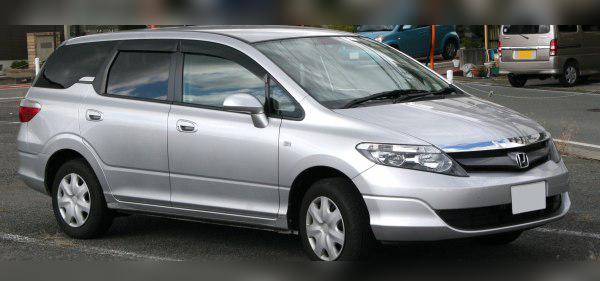
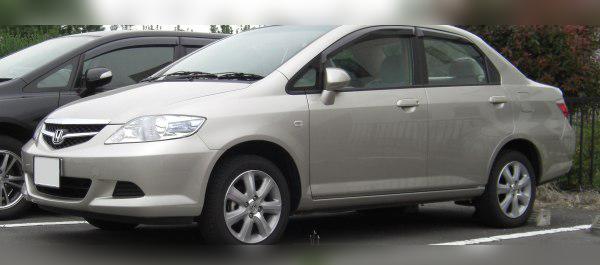
Honda L15A1 (1.5 VTEC) experiences, problems, fuel consumption and used car buying guide
Key points (TL;DR)
- Reliability: Extremely reliable Japanese engine, often covers very high mileage with minimal maintenance.
- Timing drive: Uses a chain instead of a timing belt, which reduces regular maintenance costs.
- VTEC system: Provides a good balance between economical driving and solid performance at higher revs.
- Specifics: Requires mechanical valve adjustment (no hydraulic lifters) at specified intervals.
- Main weakness: Ignition coils are wear items and the EGR valve can get clogged.
- Gearbox: Often paired with a CVT transmission that requires specific oil and inspection of the “start clutch”.
- Recommendation: An excellent choice for city driving and moderate trips, ideal for LPG conversion.
Contents
- Introduction and applications
- Technical specifications
- Reliability and maintenance
- Specific parts and systems
- Fuel consumption and performance
- Tuning and LPG
- Gearbox and drivetrain
- Used car buying tips and conclusion
Introduction: The heart of Japanese practicality
The engine with the code L15A1 belongs to Honda’s famous L-series of engines, designed to be compact, lightweight and extremely efficient. This 1.5‑liter four‑cylinder with 110 hp is most commonly found in models that maximize interior space, such as the Honda Airwave, Fit Aria (known as the City on some markets) and the Honda Jazz/Fit.
What sets this engine apart is the use of VTEC technology (Variable Valve Timing and Lift Electronic Control). Unlike the weaker i-DSI versions that are focused purely on fuel saving, the L15A1 offers a bit more “life” and power, making it capable not only in city traffic jams but also on open roads. It is considered one of those engines that “don’t break on their own”, but mostly only due to owner neglect.
Technical specifications
| Specification | Value |
|---|---|
| Engine displacement | 1496 cc (1.5 l) |
| Power | 81 kW / 110 hp |
| Torque | 143 Nm at 4800 rpm |
| Engine code | L15A1 |
| Fuel type | Petrol (naturally aspirated) |
| Injection system | Multipoint (MPI) |
| Number of cylinders / valves | 4 / 16 (SOHC VTEC) |
Reliability and maintenance
Timing system: Chain or belt?
The Honda L15A1 uses a timing chain to drive the camshaft. This is great news for owners because the chain on this engine is not prone to stretching or snapping like on some European competitors from that period. It is designed to last as long as the engine itself. There is no need for preventive replacement at a fixed mileage; it is replaced only if it starts making noise (rattling at cold start), which rarely happens before 200,000–250,000 km, provided the oil has been changed regularly.
Most common faults and issues
Although robust, the engine has a few specific points you should pay attention to:
- Ignition coils: This is the most common issue. Each spark plug has its own coil. Over time the insulation breaks down, which leads to jerking while driving (especially during acceleration at low revs) or the engine running on three cylinders.
- EGR valve: It often gets clogged with soot, which causes unstable idle and jerking when you press the accelerator. Fortunately, cleaning is simple and inexpensive.
- Valve adjustment: This engine does not have hydraulic valve lifters. Clearances must be checked and adjusted mechanically. If this is neglected, the valves can become too tight (risk of burnt valves) or too loose (loss of power and ticking noise).
Service intervals and oil
Minor service: Recommended every 10,000 km up to a maximum of 15,000 km (or once a year). Japanese engines like fresh oil.
Oil quantity and type: The sump holds about 3.6 to 3.8 liters of oil (with filter). Honda recommends viscosity 0W-20 or 5W-30. It is very important to use high‑quality synthetic oil because of the VTEC system and the chain.
Oil consumption: A healthy L15A1 engine should not consume noticeable amounts of oil. Consumption up to 0.5 liters per 10,000 km is acceptable for older engines. If it consumes more than that (e.g. 1 liter every few thousand km), this points to stuck oil rings or hardened valve stem seals, which is not normal behavior but a consequence of poor maintenance or extremely high mileage.
Spark plugs
The VTEC version of this engine (110 hp) usually uses 4 spark plugs (one per cylinder), unlike the i-DSI versions which have 8. Iridium spark plugs (NGK or Denso) are recommended. Their replacement interval is around 100,000 km. If you use regular nickel plugs, the interval is shorter, about 30,000–40,000 km.
Specific parts (costs)
Flywheel and clutch
This engine does not have a dual‑mass flywheel. It uses a classic, solid flywheel that is practically indestructible. This means that the clutch kit (pressure plate, disc, release bearing) is significantly cheaper to replace compared to modern diesels. Costs are low to medium (depending on the market).
Fuel injection and injectors
The system is a classic multipoint (MPI), not direct injection. Petrol injectors on this engine are extremely durable and rarely cause problems. They can withstand hundreds of thousands of kilometers without needing refurbishment, provided the fuel is not contaminated.
Turbocharger
The L15A1 is a naturally aspirated engine, which means it does not have a turbocharger. This eliminates a whole range of potentially expensive failures (turbo overhaul, intercooler, pressurized hoses) that are common with modern downsized engines.
DPF, EGR and AdBlue
As an older‑generation petrol engine:
- No DPF filter.
- No AdBlue system.
- Has an EGR valve and, as mentioned, it is prone to clogging. Symptoms are “stuttering” when driving on light throttle (around 1500–2000 rpm). Cleaning usually solves the problem and is not expensive.
Fuel consumption and performance
City driving and “sluggishness”
In models such as the Honda Airwave or Fit Aria, which are not too heavy (around 1100–1200 kg), this engine feels very lively. Thanks to the VTEC system and short gear ratios (or the CVT transmission), throttle response is instant. The engine is not sluggish for city conditions.
Real‑world city consumption: Expect between 7.5 and 8.5 l/100 km. In extreme traffic jams or in winter it can reach 9 liters, but rarely more than that.
Highway and cruising
On open roads the engine is economical as long as you drive up to 100–110 km/h (around 5.5–6 l/100 km). However, since this is a small‑displacement naturally aspirated petrol engine, at 130 km/h it revs quite high. With the manual gearbox this is often around 3800–4200 rpm, while the CVT can keep revs lower if there is no heavy load. Cabin noise is noticeable at these speeds, and highway fuel consumption rises to around 7 l/100 km. Overtaking requires downshifting and high revs (over 4500 rpm) where the engine delivers full power.
Additional options and modifications
LPG conversion
The L15A1 is an ideal candidate for LPG conversion. Due to indirect injection, the system is simple and relatively cheap (sequential LPG).
IMPORTANT: Since the engine does not have hydraulic lifters and LPG burns at a higher temperature, it is necessary to check valve clearances more frequently (every 20,000–30,000 km) to prevent cylinder head damage. Installing a valve lubrication system (“valve saver”) is recommended, but it is not a substitute for regular adjustment.
Chip tuning (Stage 1)
As a naturally aspirated engine without a turbo, the L15A1 is not suitable for chip tuning. With a Stage 1 remap you can gain at most 3 to 5 hp, which is imperceptible in real driving. It is better to invest that money in quality tires or regular maintenance.
Gearbox
Manual gearbox
It usually comes with a 5‑speed manual gearbox. These gearboxes are precise, with a short throw and extremely reliable. Failures are very rare, and the oil is changed every 60,000–80,000 km (Honda MTF oil).
Automatic gearbox (CVT)
With this engine in the Honda Airwave and Fit Aria you most often get a CVT (Multimatic) transmission.
Problems: The biggest weak point is the so‑called “start clutch”. Symptoms of failure are strong vibrations or a jolt when moving off from a standstill (when you release the brake before pressing the accelerator).
CVT maintenance: It requires only genuine Honda oil (CVT‑F or HMMF). The oil must be changed strictly every 40,000 km (or even earlier, at 30,000 km in severe conditions). If the oil is changed regularly, the transmission is durable. Repairing the start clutch can be expensive.
Used car buying guide and conclusion
When buying a used car with the L15A1 engine, pay attention to the following:
- Engine sound: Listen for valve “clicking”. If it is too loud, adjustment is needed. Chain rattling at startup is a bad sign.
- Test drive (CVT): If it is an automatic, the car should start moving smoothly as soon as you release the brake. Any shuddering (as if driving over a rumble strip) indicates a problem with the start clutch or old oil.
- Jerking: Accelerate hard in a high gear from low revs. If the car hesitates or “stumbles”, the ignition coils are probably due for replacement.
Conclusion:
The Honda L15A1 is one of the best small petrol engines of its time. It offers a fantastic balance of interior space (thanks to its compactness), fuel consumption and performance. It is ideal for drivers looking for a “fill up and drive” car, provided that basic services and valve adjustments are not skipped. Maintenance costs are low, and reliability is top‑tier.
Was this content useful to you?
Your opinion helps us to improve the quality of the content.