N15A1 Engine
- Engine
- 1498 cm3
- Aspiration
- Turbocharger, Intercooler
- Fuel
- Diesel
- Fuel injection system
- Diesel Commonrail
- Power
- 99 hp @ 3600 rpm
- Torque
- 200 Nm @ 1750 rpm
- Cylinders
- 4
- Valves
- 16, 4 per cylinder
- Cylinders position
- Inline
- Valvetrain
- DOHC, i-DTEC
- Oil capacity
- 4.2 l
- Coolant
- 4.36 l
- Systems
- Start & Stop System
# Vehicles powered by this engine

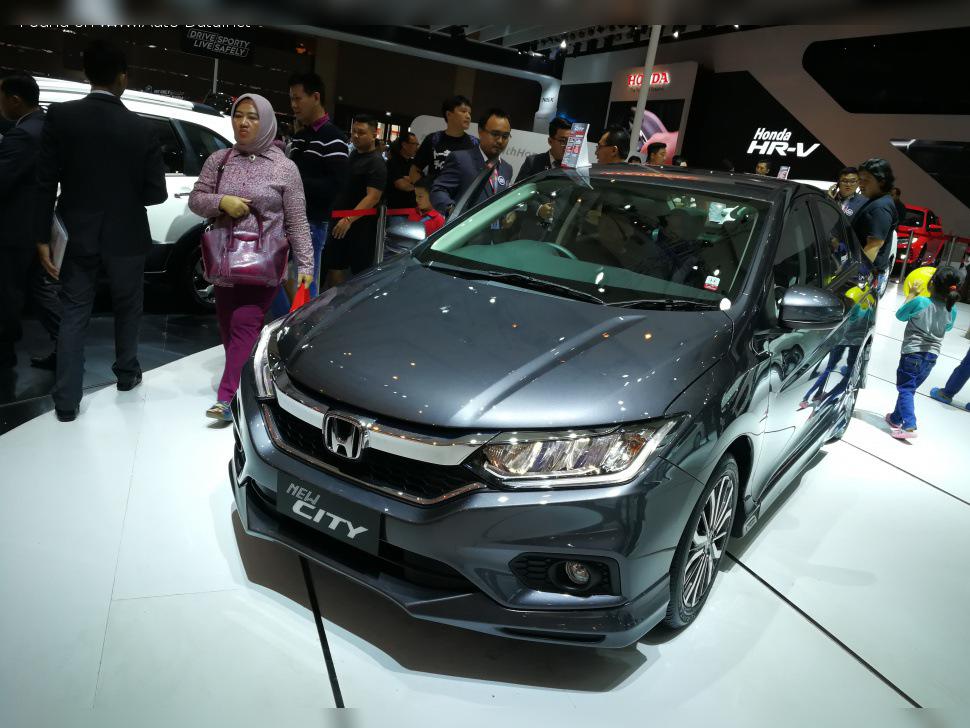

Honda 1.5 i-DTEC (N15A1) – Experiences, problems, fuel consumption and buying tips
Key points (TL;DR)
- Exceptional efficiency: This is one of the most economical diesel engines in its class, with real-world fuel consumption often below 5 liters.
- Timing chain: The engine uses a chain for timing, which reduces regular maintenance costs, but requires high-quality oil.
- Sensitivity to city driving: The DPF filter and EGR valve are prone to clogging if the car is driven exclusively on short trips.
- Aluminum block: The engine is light, which improves handling, but it can be noisier (typical diesel “rattle”) while cold.
- Power: With 99 hp (100 hp) it’s not a racer, but 200 Nm of torque makes it perfectly adequate for models such as the Amaze and City.
- Recommendation: Ideal for drivers who cover high mileage and want minimal fuel costs.
Contents
Introduction and applications
The engine with the code N15A1 is Honda’s answer to the demand for compact, super-efficient diesel units, primarily on Asian and developing markets, but the technology is based on the proven global “Earth Dreams” philosophy. It is a 1.5-liter i-DTEC engine, essentially a “downsized” version of the well-known European 1.6 i-DTEC engine.
The main characteristic of this engine is its aluminum (open-deck) construction, which makes it one of the lightest diesels in its class. It is primarily installed in lighter body styles such as the sedans Honda Amaze and Honda City, as well as the crossover Honda WR-V. Although it has “only” 99 horsepower, engineers focused on linear power delivery and drastically reduced internal friction to achieve record-low fuel consumption.
Technical specifications
| Specification | Data |
|---|---|
| Engine code | N15A1 (i-DTEC) |
| Displacement | 1498 cc |
| Power | 73 kW (99 hp) @ 3600 rpm |
| Torque | 200 Nm @ 1750 rpm |
| Fuel type | Diesel |
| Injection | Common Rail (solenoid injectors) |
| Charging | Turbocharger (VGT - variable geometry) + intercooler |
| Number of cylinders/valves | 4 / 16 (DOHC) |
Reliability and maintenance
Timing system: chain or belt?
The Honda N15A1 uses a timing chain (maintenance-free timing chain) for valve timing. This is great news for owners because there is no fixed replacement interval as with a timing belt. The chain is designed to last as long as the engine, but in practice its lifespan depends on regular oil changes.
Most common failures
Although the engine is mechanically very robust, there are issues to watch out for:
- Hydrolock (in extreme conditions): Due to the low position of the air intake on models such as the Amaze or City, this engine is sensitive to driving through deep water. Water entering the intake can cause instant engine destruction (bent connecting rods).
- Engine noise (NVH): Because the block is made of aluminum to save weight, its sound insulation is weaker than on old cast-iron blocks. The engine can be noisy until it reaches operating temperature.
- DPF filter: Like any modern diesel, if driven only in the city, the DPF clogs quickly, which puts the engine into “safe mode”.
Major service and service intervals
Since the engine has a chain, the classic “major service” (belt, tensioner and water pump replacement) is not done preventively at fixed mileage (e.g. at 100,000 km). Instead, the condition of the chain is checked by listening for noise. However, the auxiliary belt (serpentine belt) and its tensioners must be replaced, usually at around 100,000 km or 5–7 years of age. The water pump is replaced as needed, but it is recommended to check it at the same mileage.
Oil: capacity and consumption
This engine takes approximately 4.0 to 4.2 liters of oil (including the filter). Recommended grade: Exclusively 0W-20 or 5W-30. It is crucial that the oil meets the standards for engines with a DPF filter (Low SAPS, ACEA C2/C3). Using the wrong oil drastically shortens DPF life.
Oil consumption: N15A1 engines are known for not consuming oil in significant amounts between services. Consumption of up to 0.5 liters per 10,000 km can be considered acceptable, but anything above that points to a problem with the turbocharger or piston rings.
Injectors
The engine uses an advanced Bosch or Denso injection system. The injectors are generally very durable and often last over 200,000 km without overhaul. Symptoms of bad injectors include rough idle, increased smoke under acceleration and harder starting. They are sensitive to poor fuel quality, so it is recommended to use only high-quality Euro diesel.
Specific parts (costs)
Dual-mass flywheel
This depends on the market and specific gearbox model. Most manual-transmission models paired with the N15A1 engine have a dual-mass flywheel (DMF) to reduce vibrations, since the engine is light and diesel vibrations would otherwise be transmitted into the cabin. Some cheaper models for specific developing markets may have a solid flywheel, but this is rarer. Replacement is expensive (depends on the market).
Turbocharger
The engine uses a single variable-geometry turbocharger (VGT). Its service life is long, often over 250,000 km, provided that the turbo is allowed to cool after fast driving and oil is changed regularly. Symptoms of failure include a characteristic whistling (“siren”) noise or a sudden loss of power.
DPF and EGR
It has both DPF and EGR. The EGR valve is prone to soot build-up, which causes jerking at low revs. Cleaning is possible and not overly expensive. The DPF filter is a more costly item; if it becomes permanently clogged, it requires professional cleaning or replacement, which is very expensive.
AdBlue
This depends directly on the production year and emission standard.
Older models (up to approx. 2019/2020): Usually do not have an AdBlue system, but use only an LNT (Lean NOx Trap) integrated into the catalyst/DPF.
Newer models (after 2020, BS6/Euro 6d standards): Equipped with an AdBlue system (SCR). If the system is present, maintenance includes topping up the fluid. Failures of AdBlue tank heaters or NOx sensors are possible and repairs are expensive.
Fuel consumption and performance
Real-world fuel consumption
This is the strongest selling point of this engine.
City driving: 5.0 – 6.0 l/100 km (depending on traffic and air conditioning use).
Highway/extra-urban: 3.8 – 4.5 l/100 km.
With one tank, a range of 800–900 km is entirely realistic.
Is the engine “lazy”?
With 99 hp and 200 Nm, the engine is not lazy for the Honda City or Amaze body styles, which are relatively light (around 1100 kg). Thanks to linear torque delivery, it feels livelier than the numbers suggest, especially in urban conditions (0–60 km/h). However, in the WR-V or when fully loaded uphill, the lack of power is noticeable and requires more frequent shifting.
Motorway driving
At 130 km/h in 6th gear the engine spins at around 2,300–2,500 rpm (depending on the gearbox). This allows comfortable cruising without excessive noise. Overtaking at speeds above 120 km/h requires patience and a downshift.
Additional options and modifications
Remapping (Stage 1)
The engine has some power reserve. A safe Stage 1 remap can raise power to about 120–125 hp and torque to about 240–250 Nm.
Warning: Increasing torque can shorten the lifespan of the clutch and flywheel. Also, on newer models with complex eco-systems, a poor remap can quickly clog the DPF.
Gearbox
Types of gearboxes
- Manual: 6-speed gearbox. This is the most common option.
- Automatic (CVT): Honda paired this diesel engine (e.g. in the Amaze) with a CVT gearbox, which is rare in the diesel world.
Most common issues and maintenance
Manual gearbox: Very precise and reliable. There are no specific systemic failures. Gearbox oil is changed every 60,000 to 80,000 km (Honda MTF oil). The cost of replacing the clutch kit is moderate, but if the flywheel is replaced as well, it becomes expensive.
CVT gearbox: Has a specific driving feel (the “rubber band” effect – the engine holds revs while the car accelerates). It requires strictly regular oil changes (CVT fluid) every 40,000 km or every two years. If not maintained, the internal chain starts slipping, which is a failure that is often not worth repairing (gearbox replacement is needed).
Used car buying and conclusion
What to check before buying?
- Cold start: Listen for chain noise at the first start. Rattling longer than 3–5 seconds indicates a stretched chain or a problem with the tensioner.
- Exhaust smoke: Black smoke under sudden throttle indicates injector issues or a clogged EGR. Blue smoke is a sign of oil consumption (turbocharger).
- Clutch (manual): Check whether the pedal “bites” high and whether there are vibrations when moving off (flywheel).
- Service history (CVT): If you are buying an automatic, proof of gearbox oil changes is crucial. Without it, the risk is too high.
Conclusion
The Honda 1.5 i-DTEC (N15A1) is an excellent engine for rational buyers. It is not intended for racing or for those seeking sporty performance. It is aimed at drivers who value reliability, low fuel consumption and longevity. If you drive more than 15,000 km per year, this engine will save you a significant amount of money. For purely city driving on short trips, the petrol variant (i-VTEC) is still a better choice due to the absence of a DPF filter.
Was this content useful to you?
Your opinion helps us to improve the quality of the content.