K20C3 Engine
- Engine
- 1996 cm3
- Aspiration
- Turbocharger, Intercooler
- Fuel
- Petrol (Gasoline)
- Fuel injection system
- Direct injection
- Power
- 272 hp @ 6500 rpm
- Torque
- 370 Nm
- Cylinders
- 4
- Valves
- 16, 4 per cylinder
- Cylinders position
- Inline
- Valvetrain
- DOHC, VTEC
- Oil capacity
- 5 l
- Coolant
- 5.93 l
- Systems
- Start & Stop System
# Vehicles powered by this engine



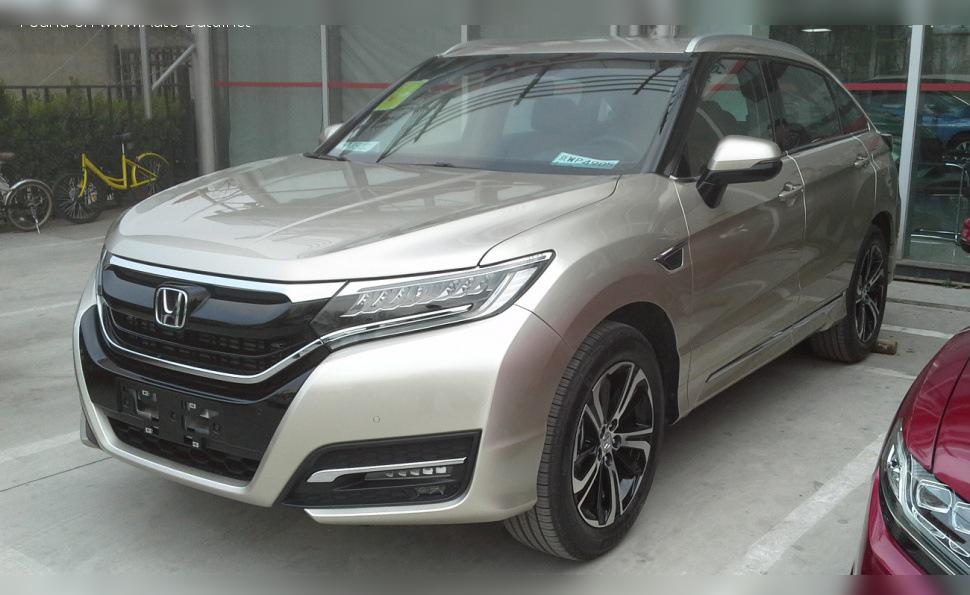
Honda K20C3 (2.0 Turbo) – Experiences, Problems, Fuel Consumption and Used Car Buying Guide
The engine designated as K20C3 represents the very top of the range in Honda’s large SUV models intended for specific markets (primarily Asian, but some examples can also be found globally). It is a power unit that shares DNA with the legendary Civic Type R engine, but is “tamed” for comfort, hauling a heavy body and linear power delivery. With 272 horsepower, this is not an ordinary 2.0-liter engine – it is a serious machine that replaces the former V6 units.
Key points in short (TL;DR)
- Power and Torque: Extremely potent engine (272 hp), does not “feel” the weight of large SUVs.
- Timing drive: Uses a chain which is reliable but requires regular oil changes.
- Main issue: Possible oil dilution with fuel during frequent short trips in cold conditions.
- Fuel consumption: Not a low-consumption engine. In heavy vehicles (Avancier/UR-V) city driving can be expensive.
- Transmission: Paired with a conventional 9-speed automatic (not a CVT), which is a big plus for durability and driving feel.
- Recommendation: An excellent choice for those who want Type R performance in a family tank body, provided that maintenance is not skimped on.
Contents
- Technical Specifications
- Reliability and Maintenance
- Specific Parts and Costs
- Fuel Consumption and Performance
- Additional Options and Modifications
- Transmission and Drivetrain
- Buying Used and Conclusion
Technical Specifications
| Feature | Data |
|---|---|
| Engine code | K20C3 |
| Displacement | 1996 cc (2.0 L) |
| Power | 200 kW (272 hp) |
| Torque | 370 Nm |
| Injection type | Direct injection (GDI) |
| Induction | Turbocharger + Intercooler |
| Configuration | Inline 4-cylinder (I4) |
Reliability and Maintenance
Does this engine have a timing belt or chain?
The K20C3 engine uses a timing chain to synchronize the crankshaft and camshafts. Honda chains have proven to be very durable and generally do not require replacement before 200,000 or 250,000 km, provided that the oil is changed regularly. There is no need for a “major service” in the sense of belt replacement; instead, chain stretch is checked if there is rattling during a cold start.
What are the most common failures on this engine?
Although very reliable, the K20C3 is not immune to modern-technology issues:
- Oil dilution: Just like its smaller 1.5T sibling, the 2.0T engine can suffer from fuel entering the oil sump, especially if driven on short trips in winter where the engine does not reach operating temperature. This degrades the oil’s properties.
- Carbon buildup: Due to direct injection, the valves are not “washed” by fuel. Over time, carbon deposits build up on the intake valves, which can lead to rough running and power loss. Cleaning (walnut shell blasting) is recommended at higher mileage.
- Intercooler leaks: On some models, oiliness has been noticed around the intercooler hoses, indicating loose clamps or minor damage.
At what mileage should servicing be done?
Minor service (oil and filters) should be done at no more than 10,000 km or once a year. Although the manufacturer may specify longer intervals, given the turbocharger and the risk of oil dilution, more frequent changes are key to the longevity of this engine. The “major service” (chain) is done only when needed, usually when symptoms (rattling) appear.
Oil: Quantity and grade
This engine takes approximately 5.0 to 5.4 liters of engine oil (always check with the dipstick). The recommended grade is usually 0W-20 for fuel economy and faster lubrication at cold start. However, for warmer climates or more aggressive driving, many owners and mechanics recommend switching to 5W-30 for a better oil film and protection at high temperatures.
Oil consumption
Modern Honda turbo engines can consume a small amount of oil, especially if driven at high rpm. Consumption of 0.2 to 0.5 liters per 10,000 km is considered completely normal and acceptable. If it exceeds 1 liter per service interval, the turbocharger and piston rings should be checked.
Spark plugs
Only iridium spark plugs are used (e.g. NGK or Denso). The factory replacement interval is often 100,000 km, but due to fuel quality and turbo pressure, it is advisable to replace them every 60,000 to 80,000 km to protect the ignition coils and catalytic converter.
Specific Parts (Costs)
Does the engine have a dual-mass flywheel?
Since the K20C3 in Avancier and UR-V models is paired exclusively with an automatic transmission (ZF 9-speed), it does not have a dual-mass flywheel in the classic sense as with manual gearboxes. Instead, it uses a torque converter and a flex-plate. This is great news for owners because torque converters rarely fail and are not a wear item like a dual-mass flywheel.
Fuel injection system and injectors
The system is high-pressure direct injection. The injectors are sophisticated and expensive (cost depends on market: very expensive). They are not prone to frequent failures, but are sensitive to poor fuel quality. Symptoms of issues include hesitation under acceleration or a check-engine light related to fuel mixture.
Turbocharger
The engine uses a single Mitsubishi (MHI) TD04-based turbocharger with an electronic wastegate. It is very responsive. With regular oil changes, its lifespan exceeds 250,000 km. Failures are rare, and if they occur, they are usually the result of shutting off a very hot engine immediately after hard driving (oil cokes in the turbo bearings).
GPF/DPF and EGR
Models after 2018/2020 (facelift), due to strict emission standards (such as China 6 or Euro 6d), are equipped with a GPF filter (Gasoline Particulate Filter) – the petrol equivalent of a DPF. It can clog if used exclusively for city driving. An EGR valve is present and can get dirty from soot, but it can often be cleaned before replacement is necessary.
AdBlue
This is a petrol engine, so it does not have an AdBlue system.
Fuel Consumption and Performance
Real-world city fuel consumption
Do not be fooled by the 2.0-liter displacement. These are heavy vehicles (over 1.8 tons) with all-wheel drive (AWD). In pure city traffic, real-world consumption ranges from 11 to 14 liters per 100 km. In winter and on short trips it can go up to 15 l/100 km.
Is the engine “lazy”?
Absolutely not. With 272 hp and 370 Nm available from low revs (around 2200 rpm), this engine moves the Avancier/UR-V body with ease. Acceleration is convincing and overtaking is safe. The feeling is similar to driving the old 3.5 V6 engines, only with more mid-range torque “punch”.
Behavior on the highway
This is the natural habitat of these vehicles. Thanks to the 9-speed gearbox, at 130 km/h the engine spins at a low 1900–2100 rpm (depending on gradient). This results in a quiet cabin and more reasonable fuel consumption (around 8–9 l/100 km on the open road).
Additional Options and Modifications
LPG (autogas) conversion
Due to direct injection, LPG conversion is complex and expensive (cost depends on market: high investment). It requires a special system (Direct Liquid Injection or a system that uses a mixture of petrol and LPG to cool the injectors). Given the complexity and potential risks to the petrol injectors, conversion only pays off if you drive more than 30–40,000 km per year.
Chiptuning (Stage 1)
The K20C series engines are extremely tuning-friendly. A Stage 1 remap can safely raise power to about 300–310 hp and torque to over 420–440 Nm. The engine has a forged bottom end (crankshaft, connecting rods) that can withstand high loads, so Stage 1 is quite safe if the engine is regularly maintained.
Transmission
Which transmission is used?
With the K20C3 engine (370 Turbo designation) in Avancier and UR-V models, there is exclusively a 9-speed automatic transmission (ZF 9HP). It is important to note that lower-powered models (1.5T) use a CVT, while this more powerful 2.0T uses a conventional automatic, which is a big advantage for driving enthusiasts.
Most common automatic transmission issues
The ZF 9HP transmission was criticized in its early production years for indecisive shifting (gear hunting) and harsher operation at low speeds. However, software updates and facelift models (2020+) have resolved most of these issues. Mechanical failures are rare if the oil is changed regularly.
Transmission maintenance
The oil in the automatic transmission should be changed every 60,000 to 80,000 km. It uses specific ZF oil which is not cheap (cost depends on market), but replacement is essential because repairing this gearbox costs thousands of euros.
Buying Used and Conclusion
When buying a used Honda with the K20C3 engine, pay attention to:
- Chain noise: Listen to the engine at first start (cold start). Any rattling or metallic noise in the first 3–5 seconds is a red flag.
- Oil smell: Pull out the dipstick and smell it. If there is a strong smell of petrol, this indicates an oil dilution problem.
- Transmission service history: Check whether the oil in the ZF gearbox has been changed if the vehicle has more than 80,000 km.
- Diagnostics: Checking fuel trim parameters (long-term fuel trim) can reveal dirty injectors or deposits on the valves.
Conclusion: The K20C3 is a fantastic engineering achievement. It offers sports car performance in a large SUV body. It is more reliable than many European competitors of similar power. If you can accept somewhat higher fuel consumption in the city and strictly adhere to regular maintenance, this engine will serve you for hundreds of thousands of kilometers without needing to be opened.
Was this content useful to you?
Your opinion helps us to improve the quality of the content.