L15ZF Engine
- Engine
- 1498 cm3
- Aspiration
- Naturally aspirated engine
- Fuel
- Petrol (Gasoline)
- Fuel injection system
- Multi-port manifold injection
- Power
- 121 hp @ 6600 rpm
- Torque
- 145 Nm @ 4300 rpm
- Cylinders
- 4
- Valves
- 16, 4 per cylinder
- Cylinders position
- Inline
- Valvetrain
- DOHC, i-VTEC with VTC
- Systems
- Start & Stop System
# Vehicles powered by this engine
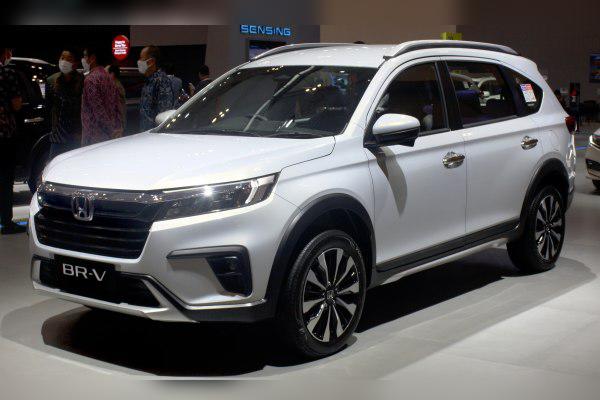

Honda 1.5 i-VTEC (L15ZF): Experiences, problems, fuel consumption and used-car buying guide
Key points (TL;DR)
- Reliability: Extremely high. This is a classic Japanese naturally aspirated engine that, with regular maintenance, easily covers very high mileage.
- Performance: The engine loves high revs. With only 145 Nm of torque, it can feel “lazy” in heavier bodies (BR-V, Elevate) on uphill sections.
- Transmission: The CVT is comfortable in the city, but noisy under hard acceleration. The manual gearbox is precise and durable.
- Maintenance: No expensive failures like a turbocharger or dual-mass flywheel (on most versions). The timing is chain-driven.
- Fuel consumption: Very economical in normal driving, but consumption rises sharply if you push it on the motorway due to the poor aerodynamics of SUV models.
- Recommendation: Ideal for drivers who want peace of mind, low running costs and are not looking for sporty performance.
Contents
- Introduction and Models
- Technical Specifications
- Reliability and Maintenance
- Specific Parts and Costs
- Fuel Consumption and Performance
- Additional Options (LPG and Tuning)
- Transmission (CVT and Manual)
- Buying Used and Conclusion
Introduction: L15ZF – The last stand of classic mechanics?
The engine with the code L15ZF is an evolution of Honda’s famous L-series. Unlike its turbocharged relatives (used in the Civic and CR-V), this engine has remained faithful to the naturally aspirated concept (no turbo). It is a 1.5-litre DOHC (dual overhead cam) i-VTEC unit. Its main role is to power models aimed at developing markets and family buyers, such as the Honda BR-V (seven-seat MPV/SUV) and Honda Elevate (compact SUV). For the driver, this engine means a return to simplicity, but with modern friction-reduction technologies for better emissions and efficiency.
Technical Specifications
| Specification | Data |
|---|---|
| Engine displacement | 1498 cc (1.5 L) |
| Power | 89 kW / 121 hp (at 6600 rpm) |
| Torque | 145 Nm (at 4300 rpm) |
| Engine code | L15ZF (L-series) |
| Injection type | Direct injection or PGM-FI (depending on market) |
| Induction | Naturally aspirated |
| Number of cylinders/valves | 4 cylinders / 16 valves (DOHC i-VTEC) |
Reliability and Maintenance
Does this engine have a timing belt or chain?
The L15ZF engine uses a timing chain. Honda chains are generally very reliable and are designed to last as long as the engine itself. There is no scheduled replacement like with a belt, unless you start hearing a rattling noise, which is rare before 200,000 km with regular oil changes.
What are the most common failures on this engine?
This is one of the most reliable engines in its class, but it is not completely trouble-free:
- VTC actuator (variable camshaft): You may hear a brief “grinding” noise on cold start. This is a known issue on Honda K and L series engines. Although it sounds bad, it often does not cause immediate damage, but it does require actuator replacement.
- Carbon buildup on valves: As this is a modern engine (often with direct injection in newer variants), carbon can build up on the intake valves over time, slightly reducing performance.
- Sensors: Occasional problems with the MAF sensor or lambda sensors due to poor fuel quality.
At what mileage is the major service due?
Since the engine has a chain, the classic “major service” (timing belt replacement) does not exist. However, the auxiliary/serpentine belt service (the belt that drives the alternator and A/C) with tensioners is usually done at around 100,000 - 120,000 km or based on condition. Valve clearance inspection is recommended every 40,000 - 60,000 km because Honda still uses mechanical valve adjustment on many engines, which is crucial for smooth running.
How many litres of oil does this engine take and which grade is recommended?
The engine takes approximately 3.7 to 4.2 litres of oil (depending on whether you change the filter as well; always buy 5 litres). The recommended grade is strictly 0W-20. Honda insists on this “thin” oil because of the tight internal tolerances and proper operation of the i-VTEC system. Using thicker oil (e.g. 10W-40) can cause problems with variable valve timing and increase fuel consumption.
Does it consume oil between services and what amount is considered normal?
L15ZF engines are generally not known for high oil consumption. However, due to the 0W-20 grade, with frequent high-rev driving (which this engine likes) or long motorway trips, there may be minimal consumption (up to 0.5 L per 10,000 km). Anything over 1 L per 10,000 km requires checking the PCV valve or piston rings.
At what mileage should the spark plugs be replaced?
Iridium spark plugs (NGK or Denso) are used. The replacement interval is long, usually 100,000 km. Do not experiment with regular copper plugs, as access is more difficult and the electronics are calibrated for iridium.
Specific Parts (Costs)
Does the engine have a dual-mass flywheel?
Versions with a CVT transmission do not have a dual-mass flywheel (they use a torque converter). Versions with a manual gearbox (6-speed) in models like the BR-V and Elevate usually use a solid flywheel because the 145 Nm of torque is relatively low and does not create large vibrations that would require a dual-mass flywheel. This significantly reduces clutch replacement costs.
What type of fuel injection does it have and are the injectors problematic?
In its newer iterations, the L15ZF uses direct injection (Earth Dreams Technology), although there are market-specific versions with port injection. The injectors are generally reliable, but very sensitive to fuel quality. Symptoms of bad injectors are rough idle and hesitation under acceleration. Preventive injector cleaning with additives is recommended.
Does this engine have a turbocharger (or two)?
No. This is a naturally aspirated engine. There is no turbocharger, no intercooler, no high-pressure hoses that can burst. This is a huge plus for long-term reliability and lower maintenance costs.
Does this model have a DPF filter or EGR valve?
Being a petrol engine, it has no DPF. However, modern models (from around 2018/2019 onwards) for the European market may have a GPF (Gasoline Particulate Filter), which serves a similar purpose. Fortunately, petrol engines reach higher exhaust temperatures, so GPFs clog far less often than diesel DPFs. An EGR valve is present and tends to clog with soot at higher mileage, which manifests as a “Check Engine” light and rougher running.
Does this engine use AdBlue?
No, AdBlue is used exclusively on diesel engines. This is a pure petrol engine and does not require any additional exhaust treatment fluids.
Fuel Consumption and Performance
What is the real-world fuel consumption in city driving?
In models such as the Honda Elevate or BR-V, which are boxy and heavier than the Civic, real-world city consumption is between 7.5 and 9.5 litres per 100 km. The CVT helps keep consumption lower in stop-and-go traffic, while the manual gearbox depends entirely on how heavy your right foot is.
Is this engine “lazy” for the weight of the cars it’s fitted to?
Yes and no. In the city, the engine feels lively thanks to good throttle response. However, 145 Nm of torque is on the low side for an SUV/MPV when fully loaded with passengers and luggage. Maximum torque is only available at a high 4300 rpm. This means that on uphill sections you will have to “wring out” the engine and shift down (or the CVT will hold high revs), which creates noise. For relaxed driving it is perfectly adequate; for uphill overtakes – it requires patience.
How does the engine behave on the motorway and at what revs does it cruise at 130 km/h?
At 130 km/h, the engine spins at around 3000 to 3500 rpm (depending on the gearbox). Sound insulation in the BR-V and Elevate is not at premium level, so engine noise becomes noticeable. Motorway fuel consumption rises sharply above 120 km/h due to the poor aerodynamics of these vehicles and the fact that the engine has to fight air resistance without turbo assistance.
Additional Options and Modifications
Is this engine suitable for LPG conversion?
If your version has direct injection, installation is expensive (liquid-phase system or a system that also uses some petrol to cool the injectors) and costs over 800–1000 EUR (depending on the market). If you are lucky enough to have a version with port injection (rarer on newer models), installation is straightforward. Note: Honda engines require precise LPG calibration and regular valve clearance checks, otherwise the valves can recede into the seats.
How much can this engine be safely tuned with a “Stage 1” remap?
It’s not worth it. Remapping a naturally aspirated petrol engine brings negligible gains (at most 5–8 hp and 10 Nm), which you will not feel in everyday driving. You’re better off investing in quality tyres and regular servicing.
Transmission
Which manual and automatic transmissions are paired with this engine?
- Manual: 6-speed gearbox. Honda manual gearboxes are legendary for their precision (that “click-clack” feel).
- Automatic: CVT (Continuously Variable Transmission) from Honda’s “Earth Dreams” series. Simulates 7 ratios in sport mode.
What are the most common transmission issues?
- Manual: Almost indestructible. Failures are rare, usually limited to oil leaks at the driveshaft seal.
- CVT: Sensitive to oil quality. If the oil is not changed regularly, the internal belt can start slipping or the solenoids can fail. Symptoms include jerking when setting off or delayed response. There is also the well-known “rubber band effect” where revs flare up but the car does not accelerate immediately – this is a characteristic of CVTs, not necessarily a fault.
At what mileage should the transmission be serviced and the oil changed?
- Manual: Recommended every 60,000 - 80,000 km. Use only Honda MTF (Manual Transmission Fluid).
- CVT: Mandatory replacement every 40,000 km or 2 years. This is critical for CVT longevity. Use only Honda HCF-2 fluid. Universal oils can permanently damage the transmission.
Buying Used and Conclusion
Before buying a used model with the L15ZF engine, pay attention to the following:
- Cold start: Listen to the engine at the first start in the morning. If you hear a metallic rattle lasting 1–2 seconds, the VTC actuator needs replacing.
- Transmission service history: If you are buying an automatic (CVT), insist on proof that the transmission oil has been changed. If it has not been changed for 100,000 km, skip that car.
- Idle: The engine should idle smoothly. Vibrations may indicate dirty injectors or the need for valve adjustment.
Conclusion:
The L15ZF (1.5 i-VTEC, 121 hp) engine is a “safe bet”. It is not a racer, it will not pin you to the seat, and it will be noisy on the motorway. But it offers something that is rare today: simplicity. There is no turbo to fail, no expensive dual-mass flywheel, and the electronics are reliable. It is ideal for drivers who see a car as a dependable way to get from point A to point B with minimal maintenance costs. For city and suburban driving in models like the Elevate and BR-V, it is a spot-on choice.
Was this content useful to you?
Your opinion helps us to improve the quality of the content.