L15Z1 Engine
- Engine
- 1497 cm3
- Aspiration
- Naturally aspirated engine
- Fuel
- Petrol (Gasoline)
- Fuel injection system
- Multi-port manifold injection
- Power
- 120 hp @ 6600 rpm
- Torque
- 145 Nm @ 4600 rpm
- Cylinders
- 4
- Valves
- 16, 4 per cylinder
- Cylinders position
- Inline
- Valvetrain
- SOHC, i-VTEC
- Oil capacity
- 3.6 l
- Coolant
- 3.9 l
- Systems
- Start & Stop System
# Vehicles powered by this engine
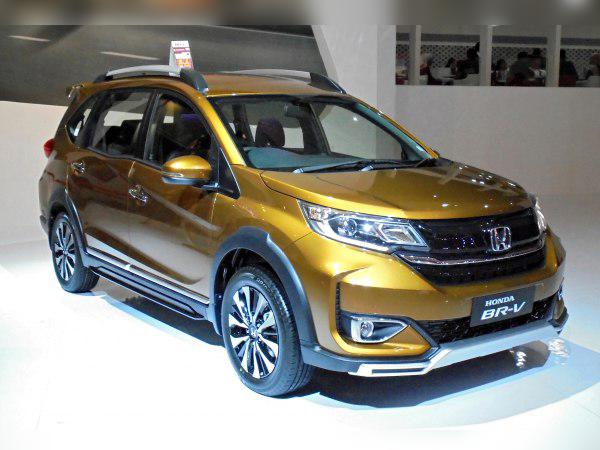
Honda 1.5 i-VTEC (L15Z1): Experiences, issues, fuel consumption and maintenance
As someone who has spent decades under the hood and behind the keyboard analyzing Japanese engineering philosophy, every encounter with Honda’s L-series engines feels like a “back to basics” moment. The model we’re talking about today, L15Z1, is the heart of many family cars and is especially familiar to owners of the Honda BR-V (first generation, facelift). This is not a racing machine, but a workhorse designed to survive decades with minimal attention.
However, although the Honda badge (H) often guarantees peace of mind, this engine is not immune to specific weaknesses, especially when paired with a CVT gearbox and a heavier body. Below is a detailed analysis of what to expect if you choose this power unit.
Key points (TL;DR)
- Reliability: Extremely high. This is a classic naturally aspirated engine without complicated turbo systems.
- Main drawback: Lack of torque at low revs (only 145 Nm), which requires “wringing out” the engine when overtaking.
- Gearbox: The CVT is very sensitive to regular oil changes. If neglected, repairs are expensive.
- Maintenance: Chain-driven, no dual-mass flywheel, no turbocharger. Maintenance falls into the category: Affordable.
- Fuel consumption: Moderate in the city, but rises on the highway due to short gearing or the CVT running at high revs.
- LPG (Autogas): Suitable due to port (indirect) injection, but requires more frequent valve clearance checks.
- Recommendation: Ideal for drivers who value longevity over performance.
Contents
- Technical specifications
- Reliability and maintenance
- Specific parts and costs
- Fuel consumption and performance
- Additional options (LPG and tuning)
- Gearbox (manual and CVT)
- Used car tips and conclusion
Technical specifications
| Parameter | Value |
|---|---|
| Engine code | L15Z1 |
| Displacement | 1497 cc (1.5 liters) |
| Power | 88 kW (120 hp) at 6600 rpm |
| Torque | 145 Nm at 4600 rpm |
| Injection type | PGM-FI (multi-point port injection) |
| Aspiration | Naturally aspirated |
| Configuration | SOHC i-VTEC (single overhead cam), 16 valves |
Reliability and maintenance
Does this engine have a timing belt or a chain?
The L15Z1 engine uses a timing chain. Honda chains in this generation of engines are very reliable and designed to last as long as the engine itself. There is no need for preventive replacement at a fixed mileage as with belts. Replacement is done only if you hear rattling (metallic noise on cold start) or if diagnostics show chain stretch, which rarely happens before 200,000–250,000 km with regular oil changes.
What are the most common issues with this engine?
Although it’s “bulletproof”, there are a few minor things that can annoy owners:
- Deposits on the throttle body: Symptoms are fluctuating idle speed or stalling when coming to a stop. Cleaning solves the problem.
- VTEC solenoid gasket: The VTEC solenoid gasket can start leaking oil. It’s a cheap part, but if ignored, the engine will be covered in oil.
- Valve clearance: Since this is an SOHC engine with rocker arms, manual valve adjustment needs to be checked periodically (usually every 40,000 to 100,000 km, depending on use). If you hear “ticking” from the cylinder head, it’s time for an adjustment.
- EGR valve: On cars driven exclusively in the city, EGR passages can clog with soot, which triggers the “Check Engine” light and reduces power.
At what mileage is the “major service” done?
Since the engine has a chain, the classic “major service” (timing belt replacement) does not exist. Instead, you service the auxiliary (serpentine) belt that drives the alternator and A/C, usually at around 100,000 to 120,000 km or based on its condition (cracks). At that time, tensioners and the water pump are replaced if there are signs of leakage or play.
How many liters of oil does this engine take and which viscosity is recommended?
The sump holds between 3.5 and 3.8 liters of oil (depending on whether you change the filter). Honda strictly recommends thin, synthetic oils for efficiency and proper VTEC operation.
- Recommendation: 0W-20 (ideal for newer engines and colder climates).
- Alternative: 5W-30 (perfectly acceptable and often used in warmer regions or on higher-mileage engines).
Does it consume oil between services?
L15Z1 engines are generally “dry” and do not consume oil in significant amounts. Consumption up to 0.5 liters per 10,000 km is considered normal, especially with aggressive highway driving (high revs). If it uses more than 1 liter, that points to stuck piston rings (a consequence of poor maintenance) or a problem with the PCV valve.
At what mileage are the spark plugs replaced?
This engine uses 4 spark plugs. If you use iridium spark plugs (factory recommendation, e.g. NGK or Denso), the replacement interval is 100,000 km. If you use standard nickel plugs, they are replaced at 40,000 km. Don’t skimp here – iridium plugs protect the ignition coils (which are expensive).
Specific parts (costs)
Does the engine have a dual-mass flywheel?
No. Whether it’s paired with a manual or a CVT, this engine does not use a dual-mass flywheel. Models with a manual gearbox have a classic solid flywheel, which drastically reduces clutch replacement costs. This is a major financial advantage.
What kind of injection system does it have and are the injectors problematic?
The system is PGM-FI multi-point (port injection into the intake manifold). This is “old school” in the best sense of the word. The injectors are robust, tolerant of slightly poorer fuel quality and very rarely fail. They are not as expensive as piezo injectors on diesels or injectors on direct injection (GDI) engines.
Does this engine have a turbocharger?
No. This is a naturally aspirated engine. No turbo, no intercooler, no oil leaks from the turbo or boost hose failures. That means less power at low revs, but also one less expensive part to worry about.
Does this model have a DPF filter or an EGR valve?
No DPF (because it’s a petrol engine). Newer models for the EU market (after 2018/19) may have a GPF (Gasoline Particulate Filter), but since the L15Z1 uses port injection, it produces very few soot particles, so the GPF (if fitted) practically never clogs like on GDI engines. It does have an EGR valve, which can get dirty but is easy to clean.
Does this engine use AdBlue?
No. AdBlue is used exclusively on diesel engines. This petrol engine does not require any such additives.
Fuel consumption and performance
What is the real-world fuel consumption in city driving?
Considering that this 1.5L engine is installed in the Honda BR-V, which is a mini-SUV/MPV (often with 7 seats) and has poorer aerodynamics:
- City: Expect between 8.5 and 10 liters/100 km. In heavy traffic with a CVT and A/C on, it can go up to 11 L.
- Highway / country roads: It can drop to around 6.0–6.5 liters/100 km at speeds up to 90 km/h.
Is this engine “lazy” for the weight of the car?
Yes, somewhat. With 145 Nm of torque available only at a high 4600 rpm, the engine struggles to move a fully loaded BR-V (7 passengers + luggage). For normal city driving it’s perfectly adequate (“lively” off the line thanks to gearing), but hills and overtaking require full throttle and high revs (over 4000 rpm), which results in noise. Don’t expect to be “pinned to the seat”.
How does the engine behave on the highway and at what revs does it cruise at 130 km/h?
On the highway the engine is noisy. Due to the lack of power and the nature of the CVT (or short ratios of the manual gearbox), at 130 km/h the engine spins at about 3000 to 3500 rpm (depending on gradient). Sound insulation in models like the BR-V is not at premium level, so engine noise is clearly heard in the cabin. Overtaking at 130 km/h requires patience.
Additional options and modifications
Is this engine suitable for LPG (autogas) conversion?
Yes, but with caution. The injection system is simple and works well with LPG kits. However, Honda engines are known for “soft” valve seats. If you install LPG:
- Be sure to install a valve saver system (additive) or an LPG system that injects petrol at high revs.
- You must check valve clearance more frequently – every 20,000 to 30,000 km. If you neglect this, the valves will recess into the seats and you’ll face an expensive cylinder head repair.
How much can this engine be safely “chipped” (Stage 1)?
As with any naturally aspirated petrol engine, remapping is basically a waste of money. You might gain 3 to 5 hp, which you won’t feel in real driving. A better investment is proper maintenance or installing a throttle response controller if pedal lag bothers you, but you won’t significantly increase power without physical modifications (which are not cost-effective).
Gearbox
Which gearboxes are fitted and what are the common failures?
With the L15Z1 you usually get two options:
1. Manual gearbox (6-speed):
- Reliability: Excellent. Precise, short shifter throw (a Honda trademark).
- Maintenance: Gearbox oil (MTF) should be replaced every 60,000 km.
- Cost: Clutch replacement is cheap (varies by market, but standard kits are affordable).
2. CVT (Continuously Variable Transmission) – Earth Dreams:
- Reliability: Good, but requires discipline. It’s not as problematic as older CVTs, but it has its limits.
- Failure symptoms: Whining noise, jerking when taking off, slipping (revs rise but the car doesn’t accelerate), metallic noises.
- Maintenance (CRUCIAL): CVT fluid must be changed every 40,000 km or 2 years. Use only genuine Honda HCF-2 fluid. Universal CVT oils can permanently damage the gearbox.
- Repair: Very expensive (depending on the market, a rebuild often exceeds the value of a used engine).
Buying used and conclusion
When buying a used Honda with this engine, pay attention to the following:
- Cold start: Listen for a brief “rrr” (rattle) in the first 2 seconds. This may indicate a VTC actuator issue (common on Honda K and L series) or a stretched chain (less common).
- Idle: The engine should run smoothly. If idle speed fluctuates, the throttle body is dirty or the valves are out of adjustment.
- CVT test: Shift into D and release the brake – the car should start moving immediately without jerks. Under acceleration there should be no excessive whining.
- Service history: If it’s a CVT, ask for proof of gearbox oil changes. If the oil hasn’t been changed for 100,000 km, walk away from that car.
Conclusion:
The L15Z1 engine is an excellent choice for drivers looking for reliability and low running costs. It’s not for enthusiasts chasing performance, nor for those who constantly drive fully loaded up steep mountain roads. However, as a family hauler in the city and on open roads, with proper (and inexpensive) maintenance, this engine will likely outlive the car’s body itself.
Was this content useful to you?
Your opinion helps us to improve the quality of the content.