LFA1 Engine
- Engine
- 1993 cm3
- Aspiration
- Naturally aspirated engine
- Fuel
- Petrol (Gasoline)
- Fuel injection system
- Multi-port manifold injection
- Power
- 146 hp @ 6200 rpm
- Torque
- 175 Nm @ 4000 rpm
- Cylinders
- 4
- Valves
- 16, 4 per cylinder
- Cylinders position
- Inline
- Valvetrain
- DOHC, i-VTEC
- Oil capacity
- 4.1 l
- Coolant
- 5.53 l
- Systems
- Start & Stop System
# Vehicles powered by this engine

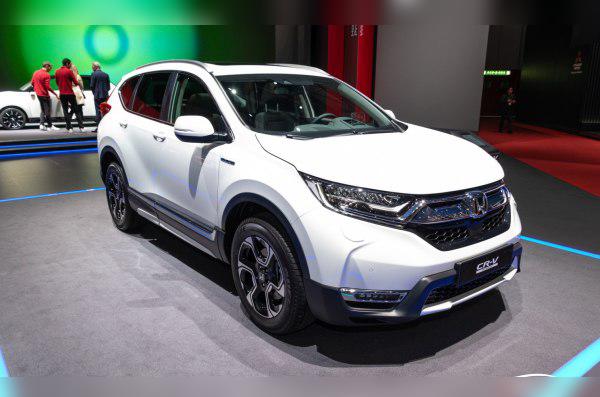
Honda LFA1 2.0 i-MMD Hybrid: Experiences, Issues, Fuel Consumption and Maintenance
When hybrid drive is mentioned, most drivers immediately think of Toyota. However, Honda’s answer with the LFA1 2.0 engine as part of the i-MMD (Intelligent Multi-Mode Drive) system is an engineering masterpiece that works in a completely different way. This is not a conventional engine that “pulls” the car all the time; this is primarily an electric powerplant under the hood.
Installed in popular SUVs such as the fifth-generation Honda CR-V and Honda Breeze, this naturally aspirated 2.0-liter engine runs on the Atkinson cycle and is built to last. But like any machine, it has its specifics you should know before buying.
Key points in short (TL;DR)
- Reliability: Extremely high. The engine is lightly stressed because it often works only as a generator.
- Transmission: No conventional gearbox (neither manual nor standard belt CVT). It uses an e-CVT with direct gear drive – virtually indestructible with regular oil changes.
- Turbo and DPF: No turbocharger (one less worry), but newer models have a GPF (gasoline particulate filter).
- Fuel consumption: Very low for such a big car in the city (around 5–6L), but higher on the highway (7–8.5L).
- Maintenance: Timing chain instead of belt. No expensive clutch kits and dual-mass flywheels in the usual sense.
- Recommendation: Ideal for those who want diesel-like torque without typical diesel problems (EGR, DPF, injectors, turbo).
Contents
- Technical Specifications
- Reliability and Maintenance
- Specific Parts and Costs
- Fuel Consumption and Performance
- Transmission (e-CVT)
- Additional Options and Modifications
- Buying Used and Conclusion
Technical Specifications
| Feature | Data |
|---|---|
| Engine code | LFA1 (L-Series Hybrid) |
| Displacement | 1993 cc (2.0 Liters) |
| Petrol engine power | 107 kW (145–146 hp) @ 6200 rpm |
| Total system power (Hybrid) | 158 kW (215 hp) / 135 kW (184 hp) *Depends on market and rating method |
| Torque (Petrol) | 175 Nm @ 4000 rpm |
| Torque (Electric) | 315 Nm (Available instantly) |
| Injection type | Multi-Point Injection (PGM-FI) |
| Induction | Naturally Aspirated |
| Camshaft drive | Chain |
Reliability and Maintenance
The LFA1 engine is a textbook example of Honda’s philosophy: “complex engineering for simple use”. Since it operates on the Atkinson cycle, this engine sacrifices a bit of raw power for maximum thermal efficiency. Its biggest advantage is that in about 80% of city driving it doesn’t drive the wheels at all, but only spins a generator that charges the battery. This means the engine runs in an optimal rpm range, without sudden loads, which drastically extends the life of pistons and rings.
Timing system: The engine uses a chain to drive the camshafts. Honda timing chains on 2.0 engines have proven to be very durable and usually don’t need replacement before 200,000 or even 300,000 km, provided the oil is changed regularly. There is no classic “major service” with belt replacement at a fixed interval; instead, the condition of the chain is checked by sound (rattling at cold start).
Oil and service intervals: The specified grade is 0W-20. This thin oil is crucial because the hybrid engine frequently starts and stops, so lubrication must be instantaneous. The engine takes about 3.7 to 4.0 liters of oil. It’s recommended to change the oil every 10,000 km or once a year. Avoid “long life” 30,000 km intervals, especially because petrol engines in hybrids can suffer from moisture condensation in the oil if driven only on short trips.
Oil consumption: The LFA1 is not known as an “oil burner”. Consumption of up to 0.5 liters per 10,000 km can be considered normal, especially if the car often does highway runs at higher speeds. If it uses more than that, first check the PCV valve, which is a cheap fix.
Spark plugs and coils: Since this is a petrol engine, spark plugs are consumable items. It uses more expensive iridium spark plugs that are replaced at long intervals, usually around 100,000 to 120,000 km. Symptoms of worn plugs include rough engine operation while charging the battery at idle.
Most common issues: In reality, the engine has no major systemic flaws. Problems more often occur around it:
- 12V battery: The small auxiliary battery often fails if the car sits for more than a week, because the hybrid system draws from it.
- Noise at high revs: This is not a fault but a characteristic. When you floor the throttle, the engine revs high to generate electricity, which sounds like a slipping clutch (“engine drone”), but this is normal operation of the i-MMD system.
Specific Parts (Costs)
This is where this engine really shines compared to modern diesels.
Turbocharger: There isn’t one. That’s one very expensive component less to worry about. No issues with variable geometry, actuators or oil leaks in the turbo.
Dual-mass flywheel: This engine does not have a conventional dual-mass flywheel that often fails on diesels. There is a damper between the engine and generator, but it is exposed to much lower torsional stress because there is no traditional gearbox to “kick back” during shifting. Failures are extremely rare.
Fuel injection system: It uses proven multi-point (indirect) injection. This is great news because it means the intake valves are not prone to carbon buildup, which is a common problem with direct-injection engines. Injectors are long-lasting and not as sensitive as on diesels.
Emissions (DPF/GPF/EGR):
- EGR valve: It exists and can get dirty, but it’s easy to clean.
- GPF (Gasoline Particulate Filter): Models for the European market (from 2018 onwards) mostly have a GPF (the petrol equivalent of a DPF on diesels) to meet Euro 6d-TEMP standards. However, petrol exhaust gases are hotter, so the GPF regenerates passively much more easily and quickly than a diesel DPF. Clogging is rare unless the car is driven literally 2 km a day only.
- AdBlue: None. This is a petrol engine.
Fuel Consumption and Performance
Is the engine “sluggish”? On paper, 146 hp for a 1.6–1.7 ton SUV doesn’t sound like much. But in practice, you’re driving on electric power! The electric motor delivers 315 Nm of torque instantly (from 0 rpm). Starts from traffic lights are brisk, and in-gear acceleration in the city is excellent. The feel is similar to driving a strong diesel, but without turbo lag. It’s not a sports car, but it’s far from sluggish.
Real-world fuel consumption:
- City: This is its natural habitat. Consumption ranges between 5.0 and 6.5 l/100km. The heavier the traffic (“stop-and-go”), the more efficient the hybrid becomes thanks to regenerative braking.
- Country roads: Around 5.5–6.0 l/100km.
- Highway (130 km/h): This is where physics takes its toll. At speeds above 80 km/h, the system connects the petrol engine directly to the wheels (because it’s then more efficient than driving on electricity). Due to the tall silhouette of the CR-V, consumption rises to 7.5 to 9.0 l/100km, depending on wind and load.
Highway cruising: At 130 km/h the engine operates in direct drive mode (similar to 6th gear). There is no conventional rev counter, but it’s estimated to spin at about 2500–3000 rpm. If you hit an uphill section, the system will automatically disengage direct drive, raise engine revs to generate electricity, and the electric motor will pull the car up the hill.
Additional Options and Modifications
LPG (Autogas): Is it possible? Technically yes (because it’s MPI injection), but the clear recommendation is NO.
1. The trunk is already shallower due to the batteries, so there’s no good place for a tank.
2. The engine starts and stops hundreds of times during a drive. LPG systems struggle to keep up with that switching tempo, which can lead to mapping issues, valve overheating and “Check Engine” lights. The savings are minimal compared to the risk.
Chiptuning (Stage 1): Pointless. This is a naturally aspirated engine optimized for efficiency. You’d gain maybe 3–5 hp, which is imperceptible. Power is dictated by the battery and electric motor, not just the petrol engine. The hybrid ECU software is too complex to “play” with.
Transmission: e-CVT
This is where drivers often get confused. The “e-CVT” label is misleading. This is not a belt-and-pulley CVT that often fails with other manufacturers (e.g. Nissan). Honda uses a system with a fixed gear ratio.
How does it work? In most situations, there is no physical connection between the engine and the wheels. The engine spins a generator, the generator supplies electricity to the electric motor, and the electric motor drives the wheels. Only at higher speeds does a clutch (lock-up clutch) connect the engine directly to the differential. It’s a brilliantly simple solution with a minimal number of rubbing moving parts.
Transmission maintenance: Although robust, it does require oil changes. Honda uses specific oil (often ATF DW-1 or dedicated hybrid transmission fluid – check the owner’s manual). It’s recommended to change the transmission oil every 40,000 to 60,000 km. The cost is relatively low (about 3–4 liters of oil), and it’s crucial for cooling the electric motors housed inside the transmission casing.
Transmission failures: Mechanical failures are extremely rare. There is no clutch kit replacement as with manuals. The biggest “issue” is actually driver confusion over the engine sound not being synchronized with vehicle speed.
Buying Used and Conclusion
When buying a used Honda hybrid with the LFA1 engine, pay attention to:
- Service history: Has the engine and transmission oil been changed regularly?
- Condition of the 12V battery: If the car has been sitting on a lot for a long time, it’s probably dead.
- Test drive: The car should switch between electric and petrol power seamlessly. Any jerk or thump indicates an issue with engine mounts or (less commonly) the transmission.
- Noises at cold start: When the petrol engine starts (usually after a few minutes or immediately if the heater is on), there should be no metallic chain rattling.
Conclusion: The LFA1 2.0 i-MMD engine is one of the most reliable powertrains on today’s market. It is intended for families and for those who do most of their mileage in city and suburban driving, where it offers scooter-like fuel consumption in an SUV body. If you’re a speed enthusiast or spend 90% of your time on the German autobahn at 160 km/h, a diesel is still a better (though more expensive to maintain) option. For everyone else – this is a bullseye.
Was this content useful to you?
Your opinion helps us to improve the quality of the content.