LFC1 Engine
- Engine
- 1993 cm3
- Aspiration
- Naturally aspirated engine
- Fuel
- Petrol (Gasoline)
- Fuel injection system
- Direct injection
- Power
- 143 hp @ 6000 rpm
- Torque
- 186 Nm @ 4500 rpm
- Cylinders
- 4
- Valves
- 16, 4 per cylinder
- Cylinders position
- Inline
- Valvetrain
- DOHC, i-VTEC
- Oil capacity
- 4.2 l
- Systems
- Start & Stop System, Particulate filter
# Vehicles powered by this engine
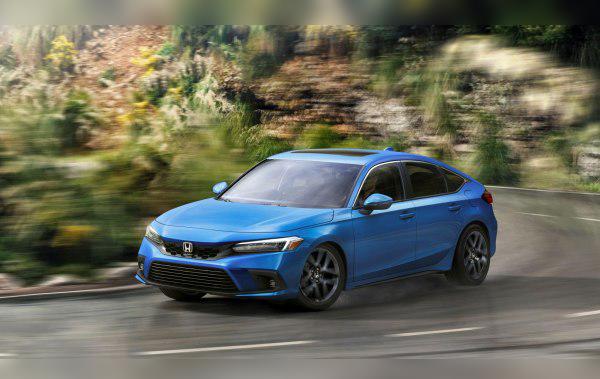
Honda 2.0 LFC1 (Civic e:HEV): Experiences, fuel consumption and analysis of the hybrid heart
Key points (TL;DR)
- Not a regular petrol engine: This is an Atkinson-cycle engine primarily designed to work as a generator for the hybrid system.
- Timing chain reliability: It uses a timing chain that is extremely durable and does not require frequent replacement.
- Direct injection: The DI system ensures top efficiency but requires high-quality fuel due to sensitive high-pressure injectors.
- No conventional gearbox: There are no belts, clutches (in the classic sense) or torque converters – the e-CVT is essentially a system of electric motors.
- Fuel consumption: It excels in the city (often below 5 l/100 km), while on the highway the engine directly drives the wheels for better efficiency.
- GPF filter: Like modern diesels, it has a particulate filter (GPF) that may require regeneration if the car is driven only on short trips in winter.
Contents
- Introduction and application
- Technical specifications
- Reliability and maintenance
- Specific parts and costs
- Fuel consumption and performance
- Additional options and modifications
- Transmission (e-CVT)
- Buying used and conclusion
Introduction and application
The engine with the code LFC1 represents the pinnacle of Honda’s engineering philosophy when it comes to efficiency. It is a two-liter naturally aspirated four-cylinder engine installed in the 11th generation Honda Civic (e:HEV). Unlike previous Civic generations, here the engine is not the “main star” in terms of performance, but a part of the sophisticated i-MMD hybrid system.
Its primary role is to drive a generator that charges the battery or directly powers the electric motor. Only at higher speeds (on open roads) does a special clutch connect it directly to the wheels. Because of this, this engine operates in specific modes (Atkinson cycle) that maximize thermal efficiency (over 41%), which is a fantastic result in the world of petrol engines.
Technical specifications
| Characteristic | Value |
|---|---|
| Engine code | LFC1 |
| Displacement | 1993 cc (2.0 L) |
| Power (petrol engine only) | 105 kW (143 hp) @ 6000 rpm |
| Torque (petrol engine only) | 186 Nm @ 4500 rpm |
| Total system power (e:HEV) | 135 kW (184 hp) |
| Total torque (electric motor) | 315 Nm |
| Aspiration | Naturally aspirated |
| Injection system | Direct injection (GDI) |
| Number of cylinders / valves | 4 / 16 (DOHC i-VTEC) |
Reliability and maintenance
Does this engine have a timing belt or a chain?
The LFC1 engine uses a timing chain. Honda chains are traditionally reliable and with this 2.0 unit there have been no recorded issues with stretching or breaking at low mileage. With regular oil changes, the chain is designed to last as long as the engine itself, often over 300,000 km without intervention.
What are the most common failures on this engine?
Since this is a relatively new engine in the 11th gen Civic, the list of “teething problems” is short, but you should pay attention to:
- GPF sensors: Occasional faults on the particulate filter pressure sensors.
- Noise on cold start: This is not a failure, but a characteristic of high-pressure direct injection (up to 350 bar). The sound resembles a slight “ticking” until the engine warms up.
- Oil dilution with fuel: Due to frequent starts and stops (hybrid mode) and direct injection, in extremely cold conditions and short trips a small amount of petrol can enter the sump. This has been addressed with software updates, but it requires regular checking of the oil level.
At what mileage is the major service due?
Since the engine has a chain, there is no classic “major service” (timing belt replacement). However, at around 100,000 to 120,000 km it is recommended to thoroughly inspect the auxiliary belt (which drives the water pump and other accessories), the chain tensioner, and check valve clearances if you hear a characteristic ticking.
How many liters of oil does this engine take and which grade is recommended?
The engine takes approximately 4.2 to 4.5 liters of oil (including the filter). The manufacturer strictly recommends 0W-20 oil with API SP / ILSAC GF-6 specification. These “thin” oils are crucial for hybrids because the engine must instantly lubricate components during the many cold starts that occur while driving.
Does it consume oil between services?
Newer generation Honda L-series engines are manufactured with very tight tolerances. Oil consumption is negligible. If you notice that more than 0.5 liters are missing over 10,000 km, that is not normal and may indicate an issue with piston rings or a leak. Normally, the level should remain stable from one oil change to the next.
At what mileage should the spark plugs be replaced?
High-quality iridium spark plugs are used. The recommended replacement interval is usually at 100,000 to 120,000 km. However, due to frequent start/stop cycles in hybrid operation, I recommend checking their condition as early as 80,000 km. These plugs are more expensive than standard ones (price depends on the market).
Specific parts (costs)
Does the engine have a dual-mass flywheel?
This system does not have a conventional dual-mass flywheel like diesel engines with manual gearboxes, which are prone to failure. Instead, there is a flywheel with a torsional vibration damper that connects the engine to the generator. This part is extremely robust because it does not suffer from shock loads caused by gear changes (since there are no gears) and rarely fails.
What kind of injection system does it have and are the injectors problematic?
The engine uses multi-point direct injection (GDI). The injectors operate at very high pressure for better fuel atomization. Although they are reliable, they are sensitive to poor fuel quality. Symptoms of dirty injectors include uneven idle and increased fuel consumption. The price of a single injector can be high (very expensive, depends on the market).
Does this engine have a turbocharger?
No. This is a naturally aspirated engine. The absence of a turbo, intercooler and associated piping significantly reduces long-term maintenance costs and eliminates potential expensive turbocharger failures.
Does this model have a DPF filter or an EGR valve?
Yes, it has a GPF (Gasoline Particulate Filter) – the petrol equivalent of a DPF. It also has an EGR valve. The GPF can clog if the car is driven exclusively in the city in “cold” operating modes, but petrol engines warm up faster than diesels, so passive regeneration happens more easily. A symptom is a warning light on the dashboard asking you to take the car out on an open road.
Does this engine use AdBlue?
No, AdBlue is used exclusively in diesel engines. This engine meets strict emission standards without additives, relying on efficient combustion and catalytic converters.
Fuel consumption and performance
What is the real-world fuel consumption in city driving?
This is where the Civic e:HEV shines. Thanks to a powerful electric motor and battery, you will often drive on electric power in the city. Real-world consumption ranges between 4.0 and 5.5 l/100 km, depending on traffic and how heavy your right foot is. This is on par with, or better than, small diesels.
Is this engine “sluggish” for the weight of the body?
Absolutely not. Although the petrol engine alone has 143 hp and a modest 186 Nm, you are actually driving on the electric motor, which has 315 Nm available instantly (from 0 rpm). Throttle response is immediate, similar to fully electric vehicles. The feeling of acceleration up to 60–80 km/h is impressive and not sluggish at all.
How does the engine behave on the highway and at what rpm does it cruise at 130 km/h?
On the highway (at speeds above approx. 80–100 km/h), the system engages the clutch and the petrol engine directly drives the wheels (because at that point it is more efficient than energy conversion). Due to the fixed gear ratio (no gears), at 130 km/h the engine runs at optimal rpm. There is no traditional rev counter, but noise is minimal. Overtaking is easy because the electric motor “jumps in” to add power (hybrid assist). Fuel consumption at 130 km/h is around 6.0–6.5 l/100 km.
Additional options and modifications
Is this engine suitable for LPG conversion?
Technically, it is possible to install a liquid direct-injection LPG system, but it is economically unviable and risky. First, the engine operates in specific cycles and often shuts off. Second, the injection system is complex. Third, you lose the warranty on the hybrid system, which costs thousands of euros. It is not recommended.
How much can this engine be safely tuned (Stage 1)?
Chip tuning (remap) for this engine does not make sense. First, it is a naturally aspirated engine where gains are minimal (maybe 3–5 hp). Second, power at the wheels is dictated by the hybrid system software and the limits of the electric motor/battery. Any “tinkering” with the software can disrupt the delicate balance between the petrol engine and the electric motor and lead to inverter failure.
Transmission (e-CVT)
Which manual and automatic gearboxes are available?
With this engine in the Civic e:HEV there is no manual gearbox option. The only option is the e-CVT. It is important to understand: this is not a classic CVT with a belt and cones (variator). It is actually an electric drive with a single gear ratio and a lock-up clutch for direct drive at higher speeds.
What are the most common e-CVT failures?
This system is mechanically simpler than a conventional automatic or DSG gearbox because it has fewer moving parts that wear out. Failures are extremely rare. The biggest enemy is overheating due to lack of maintenance (old oil) or electronic failure (inverter), which is also rare with Honda.
Does this model have a dual-mass flywheel and how much does clutch replacement cost?
As mentioned, it does not have a conventional dual-mass flywheel. It has a “wet” clutch that connects the petrol engine to the wheels at higher speeds. This clutch is designed to last the lifetime of the vehicle because it is used only at steady speeds and does not suffer from the friction of moving off from a standstill (since the car moves off on electric power).
At what mileage should the transmission be serviced and the oil changed?
Honda recommends changing the transmission fluid (Honda’s special fluid, usually HCF-2 or the e:HEV equivalent) every 40,000 to 60,000 km (check the exact interval in the service booklet for your market). This is crucial for cooling the electric motor windings inside the transmission housing. The cost of replacement is not high (not expensive) and it protects the system from failures that can cost thousands of euros.
Buying used and conclusion
Before buying a Honda Civic with the LFC1 engine, pay attention to the following:
- Service history: Was the oil changed on time and was 0W-20 grade used?
- Hybrid battery: Although they are long-lasting, have the battery “health” checked at an authorized service center.
- Jerks when switching: The transition from electric to petrol power should be almost imperceptible. Any strong jolt or metallic noise indicates a problem with engine mounts or the damper.
- Condition of the cooling system: The hybrid system has its own cooling circuits, check fluid levels.
Conclusion: The Honda Civic e:HEV with the 2.0 LFC1 engine is currently one of the best powertrains in its class. It offers the reliability of a naturally aspirated engine, diesel-like torque and the fuel consumption of a small city car. It is ideal for drivers who cover mixed routes (city/highway). If you change the oil regularly and do not ignore transmission services, this engine will serve you for hundreds of thousands of kilometers.
Was this content useful to you?
Your opinion helps us to improve the quality of the content.