K20Z2 Engine
- Engine
- 1998 cm3
- Aspiration
- Naturally aspirated engine
- Fuel
- Petrol (Gasoline)
- Fuel injection system
- Multi-port manifold injection
- Power
- 155 hp @ 6200 rpm
- Torque
- 188 Nm @ 4200 rpm
- Cylinders
- 4
- Valves
- 16, 4 per cylinder
- Cylinders position
- Inline
- Valvetrain
- DOHC, i-VTEC
- Oil capacity
- 4.2 l
- Coolant
- 6.5 l
# Vehicles powered by this engine
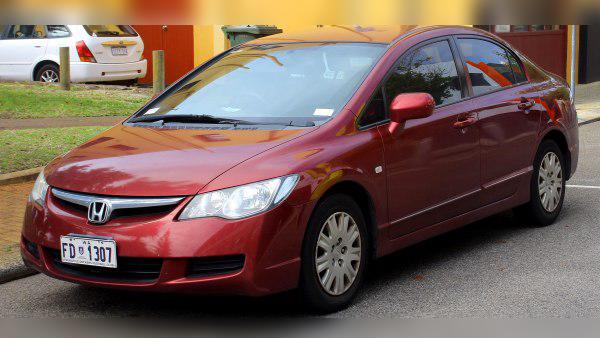
Honda 2.0 i-VTEC (K20Z2) – Experiences, problems, fuel consumption and used car buying tips
Key points (TL;DR)
- Timing chain: The engine uses a very reliable timing chain, but it requires high-quality oil.
- Old-school naturally aspirated: No turbocharger, no DPF, no complex high-pressure injection systems.
- Oil consumption: VTEC engines tend to "drink" oil if driven at high RPM – regularly checking the dipstick is mandatory.
- Valve adjustment: There are no hydraulic lifters; the valves must be adjusted mechanically (recommended every 40,000 km).
- VTC actuator: A characteristic metallic noise (rattling) on cold start is a common symptom of a problem with the camshaft actuator.
- Ideal for LPG: With mandatory valve protection and more frequent valve clearance adjustment, it handles LPG very well.
- Conclusion: One of the most reliable petrol engines in its class, but it needs an owner who regularly opens the hood.
Contents
Introduction: The last samurai of the naturally aspirated era
The K20Z2 engine belongs to Honda’s legendary K-series. Unlike its more aggressive relatives from the Type-R models (which rev over 8,000 rpm), the K20Z2 is a “civilized” 2.0-liter version, optimized for everyday driving, comfort and longevity. It was primarily installed in the Honda Civic VIII Sedan (the popular “spaceship” sedan), but also in Accord and CR-V models in certain markets with minor variations.
This is an engine for drivers who want power when they press the throttle, but don’t want the complications of modern turbo engines. Its simplicity is its biggest asset, but that doesn’t mean it’s immune to owner neglect.
Technical specifications
| Parameter | Data |
|---|---|
| Displacement | 1998 cc (2.0 L) |
| Power | 114 kW (155 hp) at 6000 rpm |
| Torque | 188 Nm at 4500 rpm |
| Engine code | K20Z2 |
| Injection type | MPI (Multi-Point Injection) – Indirect |
| Aspiration | Naturally aspirated |
| Valve train | DOHC i-VTEC, chain-driven |
Reliability and maintenance
Timing system: Chain or belt?
The K20Z2 engine uses a timing chain. Honda chains are extremely high-quality and are designed to last the entire service life of the engine, often over 300,000 km without replacement. However, the chain can stretch if the oil is not changed regularly or if the oil level is constantly low. Symptoms of a stretched chain are a lit “Check Engine” light (camshaft/crankshaft correlation error) and rattling while running.
Most common failures and symptoms
Although it is “bulletproof”, the engine has a few specific weak points:
- VTC actuator (Variable Timing Control): This is the most well-known problem of the K-series. It manifests as a short but loud metallic rattle or “grinding” noise lasting 1–2 seconds immediately after a cold start. The gear loses oil pressure while the engine is off. Although it sounds scary, it rarely leads to catastrophic failure, but it should be replaced.
- Oil leaks: The VTEC solenoid gasket and crankshaft oil seal tend to harden and leak with age.
- Crankshaft position sensor: It can fail, which leads to stalling or the engine not starting.
Major and minor service
Since it has a chain, a classic “major service” (timing belt replacement) does not exist in that form. However, at around 100,000–120,000 km you should check the auxiliary (serpentine) belt that drives the alternator and A/C, and replace the coolant. Spark plugs should be replaced at 100,000–120,000 km (Iridium only; NGK or Denso are the factory recommendation).
Oil: Consumption and quantity
The sump holds about 4.2 to 4.5 liters of oil (with filter). The recommended viscosity is 5W-30 or 0W-20 (depending on climate), but for higher-mileage engines in European conditions, 5W-30 or 5W-40 (quality full synthetic) is the safest choice.
Does it burn oil? Yes. That’s a characteristic of VTEC engines. If you drive aggressively and often rev high (over 4500 rpm), consumption of 0.5 to 1 liter per 5,000 km can be considered acceptable. If driven gently, consumption is minimal. Key warning: These engines do not tolerate low oil level! That kills the chain and camshafts. Check the dipstick at least once every two weeks.
Specific parts (costs)
Maintaining this engine falls into the category: Regular servicing is not expensive, but specific Honda parts can be. (Prices depend on the market.)
Flywheel and clutch
Good news: Most Civic Sedan versions with the K20Z2 engine and manual gearbox use a conventional solid flywheel or a very robust dual-mass flywheel that rarely fails (unlike diesels). The clutch kit is relatively affordable. This is a huge advantage compared to the diesel variants (2.2 i-CTDi). Still, check by VIN, because some facelifted versions for Western markets may have variations.
Fuel injection system and injectors
The engine uses conventional MPI (Multi-Point) injection. The injectors are extremely durable and not problematic. They are not as sensitive to fuel quality as direct injection engines (GDI/FSI). Injector cleaning is done preventively at high mileage, but failures are rare.
Turbo, DPF, EGR, AdBlue
This is heaven for simplicity lovers:
Turbo: NONE.
DPF filter: NONE.
AdBlue: NONE.
EGR valve: It exists, but on petrol engines it rarely clogs to the point of causing problems like on diesels.
Fuel consumption and performance
Is the engine “lazy”?
With 155 hp and 188 Nm, this engine is not lazy, but it requires a different driving style. As a naturally aspirated petrol engine, it really “wakes up” above 3,500 rpm. At low revs it is smooth and quiet, but don’t expect the “kick in the back” you get from a turbo diesel. For overtaking you need to drop one or two gears. In the Civic Sedan, which is not very heavy, performance is more than adequate for dynamic driving (0–100 km/h in about 9 seconds).
Real-world fuel consumption
- City driving: Expect between 10 and 12 l/100 km. In heavy traffic and winter, it can go up to 13 l. This is not a fuel-efficient city car.
- Country roads: This is where it shines. At 80–90 km/h, consumption drops to around 6–6.5 l/100 km.
- Motorway: At 130 km/h (in 6th gear with the manual), the engine spins at about 3,200–3,400 rpm. Consumption is around 7.5–8.5 l/100 km.
Additional options and modifications
Is it suitable for LPG?
YES, but with caution. The engine has indirect injection, which makes installation easier, but Honda cylinder heads have relatively “soft” valve seats.
Mandatory:
1. Installation of a valve lubrication system (“valve saver” drip or an electronic split-fuel system).
2. Checking valve clearances more often than on petrol only (e.g. every 20,000–30,000 km).
If this is followed, the engine can cover hundreds of thousands of kilometers on LPG.
Remapping (Stage 1)
Since the engine is naturally aspirated, remapping is not worth it. Gains are negligible (max 5–8 hp), and you’ll just spend money. It’s better to invest in quality tyres and fresh oil. The only real “tuning” for this engine is regular maintenance so it can deliver all of its factory-rated 155 horses.
Gearbox
Manual gearbox (6-speed)
Honda’s manual gearboxes are among the best in the world. The throws are short, precise and provide mechanical satisfaction (that “click-clack” feel).
Failures: Very rare. Sometimes the 2nd or 3rd gear synchro can grind if the car has been driven hard.
Maintenance: Honda recommends original MTF-3 oil. Change it every 60,000 km or earlier. Do not experiment with universal oils.
Automatic gearbox (5-speed)
A conventional automatic with a torque converter. It’s not the fastest in the world (it “eats” a bit of engine power), but it is extremely reliable and smooth.
Maintenance: Fluid changes are critical! Do them every 40,000–60,000 km. Use Honda ATF-Z1 or the newer DW-1 fluid only.
Buying used and conclusion
When buying a Honda with the K20Z2 engine, pay attention to the following:
- Cold start: Insist that the engine is completely cold. Listen for rattling (VTC actuator) in the first 2 seconds.
- Oil level: Pull out the dipstick. If the oil is at minimum or below, it’s a sign that the owner doesn’t care about the basic rule of VTEC engines.
- Steering rack: On the Civic VIII this is a common issue (clunking over bumps). Although not directly related to the engine, it is expensive to repair (very expensive).
- Idle quality: It should be smooth. An unstable idle can indicate that the valves need adjustment.
Conclusion:
The Honda Civic 2.0 i-VTEC (K20Z2) is a hidden gem. It offers performance close to sporty models with the reliability of a family car. It is intended for drivers who appreciate engineering, love the sound of a petrol engine at high revs and are willing to check the oil regularly. If you want a “fill up and drive” car without opening the hood for years, buy a Yaris. If you want a driver’s car that will serve you for 500,000 km with proper care – this is the engine for you.
Was this content useful to you?
Your opinion helps us to improve the quality of the content.