B18C4 Engine
- Engine
- 1797 cm3
- Aspiration
- Naturally aspirated engine
- Fuel
- Petrol (Gasoline)
- Fuel injection system
- Multi-port manifold injection
- Power
- 169 hp @ 7600 rpm
- Torque
- 166 Nm @ 6300 rpm
- Cylinders
- 4
- Valves
- 16, 4 per cylinder
- Cylinders position
- Inline
- Valvetrain
- DOHC
- Oil capacity
- 4 l
# Vehicles powered by this engine
Honda B18C4 (1.8 VTi) – Experiences, problems, fuel consumption and buying tips
Key points in short (TL;DR)
- Legendary reliability: As a member of Honda’s “B-series” engines, this is one of the most durable four‑cylinders ever made, provided it always has enough oil.
- VTEC character: The engine has “two faces” – calm and economical up to 4,500 rpm, then aggressive all the way to the redline (over 8,000 rpm).
- Gearbox with LSD: The B18C4 comes from factory with the S9B gearbox which has a LSD (limited slip differential), significantly improving cornering grip.
- Oil consumption: Under aggressive driving in VTEC mode, oil consumption is to be expected.
- No expensive failures: No dual‑mass flywheel, no turbo, no DPF, no high‑pressure injectors.
- Specific intake: Uses an intake manifold with variable geometry (IAB), which chokes the engine’s potential but improves low‑rpm torque.
Contents
- Introduction and applications
- Technical specifications
- Reliability and maintenance
- Specific parts (costs)
- Fuel consumption and performance
- Additional options and modifications (LPG & tuning)
- Gearbox and drivetrain
- Buying used and conclusion
Introduction and applications
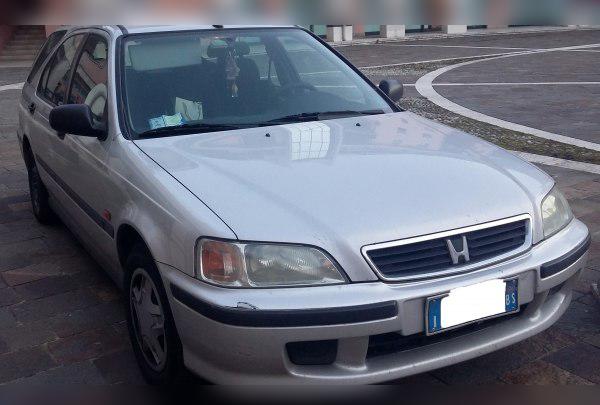
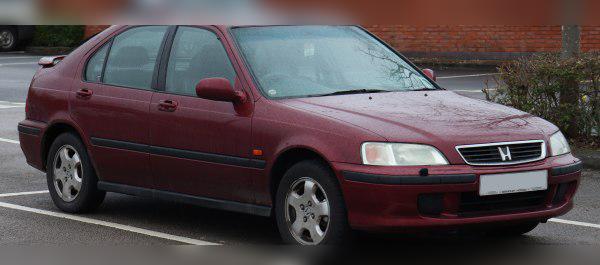
The Honda B18C4 is a 1.8‑liter DOHC VTEC engine that holds a special place in the hearts of Japanese car enthusiasts. Although it’s not as aggressive as the B18C6 (from the Integra Type R), this unit offers a perfect balance between everyday usability and sporty performance. It was primarily installed in models produced in the United Kingdom (“UK Civic”), specifically in the Civic 1.8 VTi (MB6 and MC2 wagon chassis).
This engine is important because it represents a “ticket” into the world of serious Honda performance at a relatively affordable price. It’s known for its mechanical robustness and its ability to withstand high revs for years, provided it is properly maintained.
Technical specifications
| Displacement | 1797 cc |
| Power | 124 kW (169 hp) @ 7600 rpm |
| Torque | 166 Nm @ 6300 rpm |
| Engine code | B18C4 |
| Configuration | Inline 4‑cylinder, DOHC VTEC, 16 valves |
| Fuel injection | PGM‑FI (multipoint) |
| Aspiration | Naturally aspirated |
| Compression ratio | 10.0:1 |
Reliability and maintenance
Does this engine have a timing belt or a chain?
The B18C4 uses a timing belt. This is Honda’s classic 90s design. It is very important to respect the replacement intervals because a snapped belt will cause piston‑to‑valve contact (interference engine), which means catastrophic engine damage.
What are the most common issues with this engine?
Although the engine itself is mechanically “indestructible”, the peripherals can cause problems:
1. Distributor: This is the Achilles’ heel of B‑series engines. The bearing in the distributor can seize or the ignition module (igniter) can fail, which leads to stalling or a no‑start condition.
2. Oil leaks: Most commonly from the VTEC solenoid gasket, camshaft seal (end plug) or the valve cover gasket.
3. Main relay: A known issue with “cold solder joints”. The symptom is that the car cranks but won’t start when the cabin is hot (e.g. in summer), and starts normally once it cools down.
4. IAB valve: The intake manifold has butterflies that open at certain rpm. They can get dirty and stick, which affects performance.
At what mileage should the major service be done?
The recommended interval for a major service (timing belt, tensioner and water pump replacement) is every 80,000 to 100,000 km or every 5 years, whichever comes first. Do not risk using cheap parts; use quality kits (e.g. Gates, Continental, INA) because this engine revs high.
How many liters of oil does this engine take and which grade is recommended?
The sump holds about 4.0 to 4.5 liters of oil with the filter. The recommended grade is 5W‑40 or 10W‑40 (quality synthetic or semi‑synthetic). Due to age and clearances, many owners switch to a good 10W‑40 oil (e.g. Motul 6100) for more stable oil pressure and reduced consumption.
Does it consume oil between services?
Yes. VTEC engines are designed to consume a small amount of oil when in VTEC mode (high rpm). Consumption of 0.5 to 1 liter per 3,000–5,000 km can be considered acceptable if the car is often driven in the red zone. If it uses a liter every 500–1000 km under normal driving, that points to stuck oil control rings or worn valve stem seals (a common issue on older examples).
At what mileage should the spark plugs be replaced?
If you use standard copper plugs (NGK BKR6E‑11), they should be replaced every 20,000 to 30,000 km – they are cheap and work best for this engine’s performance. Iridium plugs can last up to 80,000 km, but many enthusiasts prefer more frequent replacement of regular plugs.
Specific parts (costs)
Does the engine have a dual‑mass flywheel?
No. The B18C4 uses a classic solid flywheel. This is great news for your wallet because there are no expensive replacements like on modern diesels. The clutch is relatively cheap.
What kind of injection system does it have and are the injectors problematic?
The system is the old, proven PGM‑FI (multipoint injection) into the intake manifold. The injectors are extremely reliable and rarely cause problems. If an issue does appear, ultrasonic cleaning usually solves it. There are no expensive high‑pressure pumps.
Does this engine have a turbocharger?
No, this is a pure naturally aspirated engine. It makes power from high revs and efficient airflow (VTEC system). Because of that, its service life is very long, as it doesn’t suffer from the thermal stress a turbo creates.
Does this model have a DPF filter or an EGR valve?
It has no DPF filter (that’s for diesels). As for EGR, most B18C4 engines don’t have the typical problematic EGR valve found on modern cars. They rely on the PCV system for crankcase ventilation. The PCV valve should be checked and replaced (it’s cheap) because if it clogs, the engine can start “pushing” oil out through the seals.
Does this engine use AdBlue?
No. The engine was designed in the 90s, long before Euro 6 standards that require AdBlue.
Fuel consumption and performance
What is the real‑world fuel consumption in city driving?
Expect around 10 to 12 liters per 100 km in the city. If you have a “heavy right foot” and often engage VTEC, consumption can easily go up to 14 liters. This is not an engine for saving fuel in traffic jams.
Is this engine “lazy” for the weight of the body?
The UK‑built Civic (VTi) is heavier than older Civics (“EG/EK hatch”), but with 169 hp the engine is not lazy. However, you need to understand how to drive it. Up to 4,000 rpm it behaves like an ordinary 1.6 – perfectly adequate for keeping up with traffic. The real power wakes up only above 5,500 rpm. If you want sudden overtaking, you must drop one or two gears. That’s the nature of small‑displacement naturally aspirated engines.
What is the engine like on the motorway and at what rpm does it cruise at 130 km/h?
The gearbox is short‑geared for better acceleration. At 130 km/h in 5th gear, the engine spins at about 4,000 rpm (or even a bit more). This means noticeable engine noise in the cabin and motorway consumption rarely below 7.5–8.5 liters. It’s not an ideal quiet “cruiser”, but it has enough power for overtaking at those speeds without downshifting.
Additional options and modifications
Is this engine suitable for LPG (autogas) conversion?
Yes, it is possible to install LPG. However, Honda engines have sensitive valve seats. If you plan to run on gas, it is essential to install a quality sequential system, check valve clearances regularly (every 20,000 km instead of 40,000 km) and, if possible, fit a valve lubrication system (“valve saver”). It is also not recommended to drive at high rpm (VTEC zone) on gas.
How far can this engine be safely “chipped” (Stage 1)?
Classic “chip tuning” on a naturally aspirated petrol engine doesn’t bring much (maybe 3–5 hp). However, the B18C4 is specific because it is factory “choked” by the intake manifold and ECU map.
The proper route for a power increase (Stage 1+) includes:
- Replacing the intake manifold (using a B16A2 manifold or a “Skunk2‑type” manifold).
- A better exhaust system (4‑2‑1 header).
- ECU remapping (requires conversion to an OBD1 ECU, e.g. P28).
With these mods you can relatively easily reach 180–185 hp, with a much better throttle response.
Gearbox
Which gearboxes are fitted to this engine?
The B18C4 comes standard with a manual gearbox designated S9B. This is a 5‑speed gearbox.
What are the most common gearbox issues?
Honda gearboxes are precise and durable. The most common problem on aggressively driven cars are the synchronizers (especially the 3rd gear synchro, which can grind during fast shifts at high rpm). Apart from that, the gearbox is very robust.
Specific feature: Limited slip differential (LSD)
A major advantage of the S9B gearbox is the factory‑fitted LSD (Limited Slip Differential) of the Torsen type. This dramatically improves traction in corners and on slippery surfaces, making the Civic VTi one of the best‑handling cars in its class. This is rare and a big plus of this package.
At what mileage should the gearbox be serviced?
Honda recommends changing the gearbox oil (MTF – Manual Transmission Fluid) every 40,000 to 60,000 km. Always use genuine Honda MTF‑3 oil, as other oils can damage the synchros and worsen shift feel. The gearbox takes about 2.2 liters (during a change).
Buying used and conclusion
What should be checked before buying?
1. Exhaust smoke: Have someone drive behind you while you accelerate hard to the redline. Blue smoke when shifting or lifting off the throttle indicates bad valve stem seals or rings. Black smoke means a rich mixture.
2. VTEC engagement: The engine should clearly change its sound and pull harder somewhere around 4,500–5,800 rpm (depending on the condition of the IAB system). If acceleration is linear without a “kick”, VTEC is not working (often due to low oil level or a sensor issue).
3. Gearbox: Shift into third gear at high rpm – it should not grind.
4. Bodywork: The biggest enemy of Civics with this engine (MB6) is rust. Check the rear arches, sills and boot floor. The engine often outlives the body.
Conclusion: Who is it for?
The Honda B18C4 is an engine for enthusiasts who know what they are buying. It is not for those looking for low fuel consumption and silence. It is aimed at drivers who enjoy the sound of a high‑revving engine, want reliable mechanics and appreciate rare factory equipment such as a limited slip differential. Maintenance (apart from fuel) is not expensive (depends on the market), and the smile it puts on your face when the needle passes 6,000 rpm is priceless.
Was this content useful to you?
Your opinion helps us to improve the quality of the content.