D15Z3 Engine
- Engine
- 1493 cm3
- Aspiration
- Naturally aspirated engine
- Fuel
- Petrol (Gasoline)
- Fuel injection system
- Multi-port manifold injection
- Power
- 90 hp @ 5500 rpm
- Torque
- 131 Nm @ 4500 rpm
- Cylinders
- 4
- Valves
- 16, 4 per cylinder
- Cylinders position
- Inline
- Valvetrain
- SOHC
- Oil capacity
- 3.3 l
- Coolant
- 3.8 l
# Vehicles powered by this engine
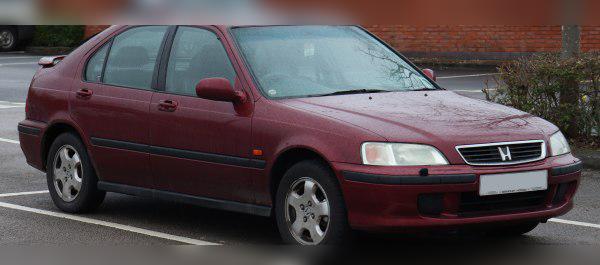
Honda D15Z3 1.5i VTEC-E (90 HP): Experiences, problems, fuel consumption and used car buying guide
Key points (TL;DR)
- VTEC-E technology: This is not the sporty VTEC, but the "Economy" version designed for extreme fuel savings (Lean Burn).
- Fuel consumption: One of the most economical petrol engines from the 1990s, often using less fuel than many modern engines.
- Maintenance: Simple mechanics, but it requires regular valve adjustment and quality oil.
- Specific issue: The LAF sensor (wideband lambda sensor) is expensive and specific to this engine.
- Corrosion: The engine is durable, but the body of the Civic it’s installed in often rusts away before the engine wears out.
- Recommendation: Ideal for drivers who want reliability and low fuel consumption and are not interested in racing.
Contents
Introduction: What is the D15Z3 and why is it special?
The engine designated D15Z3 belongs to Honda’s famous D-series and represents the peak of mid‑90s engineering focused on efficiency. It was primarily installed in the Honda Civic VI Fastback (MA9), a model that shared its platform with the Rover 400 and was produced in the United Kingdom.
What sets this engine apart is the VTEC-E system. Unlike sporty VTEC engines that scream at high revs, here the system works the other way around – at low revs (below approx. 2500 rpm) the engine effectively runs on 12 valves, creating swirl in the mixture and allowing it to run on a very lean mixture (Lean Burn). Only at higher revs do all the valves open and the engine “breathes” at full 16‑valve capacity. The result is exceptional fuel economy.
Technical specifications
| Specification | Data |
|---|---|
| Engine code | D15Z3 |
| Displacement | 1493 cc (1.5 L) |
| Power | 66 kW (90 HP) @ 5800 rpm |
| Torque | 131 Nm @ 4500 rpm |
| Number of cylinders / valves | 4 / 16 (SOHC VTEC-E) |
| Aspiration | Naturally aspirated |
| Injection type | PGM-FI (multi-point) |
| Camshaft drive | Timing belt |
Reliability and maintenance
Timing belt or chain?
The Honda D15Z3 engine uses a timing belt to drive the camshaft. This was a classic design for that era. It’s very important to note that this is an “interference” engine – if the belt snaps, the pistons will hit the valves and cause serious damage. The replacement interval is usually 100,000 km or 5 years, whichever comes first. When doing the major service, the tensioner and water pump should always be replaced as well.
Most common failures and symptoms
Although the mechanical side is “bulletproof”, time takes its toll. Here’s what most often causes problems:
- Distributor: The Achilles’ heel of Hondas from this period. Symptoms include hard starting, jerking while driving or the engine stalling. The bearing in the distributor or the ignition module (igniter) often fails.
- Main relay: If the car cranks but won’t start when the cabin is hot (in summer), and then starts normally as soon as it cools down, the problem is usually cracked solder joints in the main fuel pump relay. A cheap fix (re-soldering).
- EGR valve: Due to the VTEC-E system and exhaust gas recirculation for fuel savings, the intake ports and EGR valve can get clogged with soot. This leads to rough running and loss of performance.
- Cracked exhaust manifold: The exhaust manifold can crack, which sounds like a “blowing” noise while the engine is cold.
Oil consumption and servicing
The sump holds approximately 3.3 to 3.5 liters of oil (with filter). The recommended grade is 10W-40 or 5W-40 (semi-synthetic or synthetic).
Does it burn oil? Yes, high‑mileage D‑series engines (over 200,000 km) are prone to oil consumption. The usual culprits are valve stem seals or piston rings. Consumption of up to 0.5 liters per 1,000 km is often tolerated on older examples, but if you see blue smoke from the exhaust when you press the throttle or on engine braking, it’s time for a refresh (a light overhaul). Minor service is done every 10,000 km.
Spark plugs and valves
Spark plugs should be replaced every 20,000 to 30,000 km if you use standard (copper) NGK or Denso plugs, which are also the factory recommendation. The gap is important (usually 1.1 mm). Also, this engine does not have hydraulic lifters and requires manual valve adjustment every 40,000 km. If you hear a “ticking” noise under the bonnet, the valves are probably out of adjustment.
Specific parts (costs)
Flywheel and clutch
Good news – the D15Z3 uses a classic solid flywheel. There is no expensive dual‑mass flywheel. A clutch kit (pressure plate, disc, release bearing) is relatively affordable (price: not expensive, depends on the market) and is usually replaced only when it starts slipping or the pedal becomes very heavy.
Fuel injection system and LAF sensor
The injectors are standard PGM-FI units and rarely cause issues. However, there is one part that is specific and very expensive: the lambda sensor (LAF sensor). The D15Z3 uses a five‑wire wideband sensor (Linear Air Fuel) to precisely control the lean mixture. Cheap aftermarket Chinese sensors usually don’t work properly. If your “Check Engine” light is on because of this, be prepared for a higher expense (very expensive for a car of this age) or start looking for a used original sensor.
Turbo, DPF, AdBlue?
This engine has no turbocharger, no DPF filter, no complex EGR cooler and of course no AdBlue system. It’s a simple naturally aspirated petrol engine, which significantly reduces potential maintenance costs compared to modern diesels.
Fuel consumption and performance
Real-world fuel consumption
This is the strongest selling point of the D15Z3. Thanks to the Lean Burn mode (the “ECONO” light on the dash comes on when it’s active):
- City driving: 7.0 - 8.5 l/100 km (excellent for a 1990s petrol engine).
- Open road (rural / B-roads): It’s possible to get down to an unreal 5.0 - 5.5 l/100 km if you drive gently.
- Combined: Expect around 6.5 - 7.0 l/100 km.
Is the engine “lazy”?
By today’s standards – it is a bit sluggish. With 90 HP and 131 Nm in the Civic Fastback body (which isn’t very heavy, around 1100 kg), the car is adequate for normal driving, but overtaking requires dropping a gear and revving it high. Up to 2500-3000 rpm the engine is tuned for economy and feels sleepy. It only starts to feel lively above 3500-4000 rpm.
Driving on the motorway
The gearbox has very long ratios for the sake of economy. At 130 km/h in 5th gear, the engine spins at relatively low revs for a small petrol (around 3000-3200 rpm, depending on the exact gearbox code). This means noise is acceptable and fuel consumption on the motorway remains reasonable.
Additional options and modifications
LPG conversion
Is it possible? Yes, but with caution. Because of the specific lean‑burn operation, the LPG system must be high‑quality (sequential) and the map must be perfectly tuned. If the mixture on LPG is not ideal at the moment the engine switches into Lean Burn mode, the valves can overheat or the “Check Engine” light may come on. Many owners successfully run these engines on LPG, but you need an experienced installer/tuner.
Remapping (Stage 1)
On small naturally aspirated engines, remapping makes no real sense. The gain would be within the margin of error (1-3 HP). It’s better to invest that money in proper maintenance (plugs, leads, filters) to restore the factory power.
Gearbox
The D15Z3 was most commonly paired with a 5-speed manual gearbox (code S40 or similar). These gearboxes are very precise, with a short throw and are highly reliable.
- Failures: Rare. At high mileage, the input shaft bearing can start whining, which you hear at idle and which disappears when you press the clutch.
- Maintenance: Honda is specific – the gearbox requires Honda MTF (Manual Transmission Fluid). In its absence, Honda allowed using 10W-40 engine oil as a temporary solution back in the 1990s, but for longevity you should use MTF. Replacement is recommended every 60,000 km or 4-5 years.
- Automatic: There were versions with a 4‑speed automatic, but they are rare with this engine. They are classic torque‑converter automatics, reliable if the oil is changed regularly, but they drastically hurt performance and increase fuel consumption.
Used car buying tips and conclusion
Before buying a Civic with the D15Z3 engine, pay attention to the following:
- Cold start: Listen to the engine while it’s cold. If you hear loud knocking that quiets down as it warms up, it could be piston slap (piston to bore clearance) or poorly adjusted valves.
- ECONO light: Test the car at a constant speed (e.g. 60-80 km/h in 4th or 5th gear). The green “ECONO” light on the dash should come on. If it doesn’t, or if the “Check Engine” light is on, suspect the expensive LAF sensor.
- Smoke from the exhaust: Rev the warmed‑up engine. Blue smoke means the engine is burning oil (rings or valve stem seals).
- Rust: This is not engine‑related, but check the rear arches and sills. If the shell is rotten, a perfect engine won’t help you.
Conclusion: The Honda D15Z3 is an excellent choice for a rational driver. If you’re looking for cheap transport from point A to point B, with minimal fuel and maintenance costs, and you’re willing to live with the spartan 1990s comfort, this engine is a bull’s‑eye. It’s not fast, but with basic care it’s extremely durable.
Was this content useful to you?
Your opinion helps us to improve the quality of the content.