D15 Engine
- Engine
- 1493 cm3
- Aspiration
- Naturally aspirated engine
- Fuel
- Petrol (Gasoline)
- Fuel injection system
- Multi-port manifold injection
- Power
- 114 hp @ 6500 rpm
- Torque
- 134 Nm @ 5500 rpm
- Cylinders
- 4
- Valves
- 16, 4 per cylinder
- Cylinders position
- Inline
- Valvetrain
- OHC
- Oil capacity
- 3.3 l
# Vehicles powered by this engine
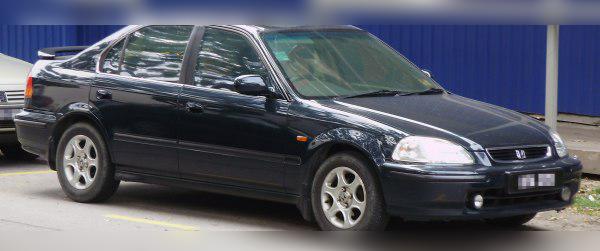
Honda Civic 1.5i VTEC-E (D15) – Experiences, problems, fuel consumption and buying tips
If you’re looking for the definition of 90s Japanese engineering that balances performance and extreme fuel economy, the Honda D15 engine with 114 hp is a textbook example. Most commonly found in the sixth generation Honda Civic (popular “English” or “Japanese” hatchback/sedan version), this unit carries the VTEC-E (Economy) designation. Its secret lies in its ability to run on a lean fuel mixture, delivering diesel-like consumption with petrol refinement. However, age takes its toll, so buying such a used car requires some technical background.
Key points (TL;DR)
- Exceptional fuel economy: Thanks to the VTEC-E system, highway consumption can rival diesels.
- Reliability: Honda’s D-series engines are mechanically almost indestructible with regular oil changes.
- Distributor issues: The ignition system is a weak point (ignition module, cap, rotor).
- Oil consumption: On high-mileage examples, valve stem seals and piston rings can wear out.
- Long gear ratios: The gearbox is designed for economy, so the engine can feel lazy until it’s revved.
- Recommendation: Ideal for drivers who cover a lot of miles and want the simplicity of a naturally aspirated petrol engine.
Contents
- Technical specifications
- Reliability and maintenance
- Specific parts and costs
- Fuel consumption and performance
- Additional options and modifications
- Gearbox
- Buying used and conclusion
Technical specifications
| Specification | Value |
|---|---|
| Engine displacement | 1493 cc (1.5 L) |
| Power | 84 kW (114 hp) at 6500 rpm |
| Torque | 134 Nm at 5500 rpm |
| Engine code | D15Z6 / D15Z8 (Most common in the EU) |
| Injection type | PGM-FI (Multi-point) |
| Aspiration | Naturally aspirated |
| Valve train | SOHC VTEC-E (single camshaft, 16 valves) |
Reliability and maintenance
Does this engine have a timing belt or chain?
The Honda D15 engine uses a timing belt. This is a classic design of Honda’s D-series. The replacement interval is usually specified at 100,000 km or 5 years (whichever comes first). Although some variants are “non-interference” (pistons don’t hit the valves if the belt snaps), with VTEC heads there is a real risk of damage, so don’t play with the service interval. The tensioner must be replaced as well, and it’s recommended to replace the water pump preventively.
What are the most common failures on this engine?
Although the mechanical part is “bulletproof”, the peripherals can cause issues:
- Distributor: This is the Achilles’ heel. The bearing inside the distributor can seize, or more often, the ignition module or coil inside the distributor fails. Symptoms include sudden engine shut-off, no-start condition, or jerking while driving.
- Main fuel pump relay: Cold solder joints on the relay can cause the car not to start when the cabin is hot (in summer).
- Cracked exhaust manifold: A crack near the oxygen sensor is common, which sounds like a “blowing” noise while the engine is cold.
Oil consumption and servicing
This engine takes a relatively small amount of oil, about 3.3 to 3.6 liters with the filter. The factory recommendation is usually 5W-40 or 10W-40 (semi-synthetic). On older engines, 10W-40 is the most common choice.
Does it burn oil? Yes, Honda’s D-series is known for using some oil at higher mileages. Consumption up to 0.5L per 1000 km is considered “within limits” by the manufacturer, but realistically, a healthy engine shouldn’t use more than 1L per 10,000 km. There are two main causes of increased consumption:
1. Valve stem seals: They harden with age, so the car smokes blue on cold start or after idling.
2. Oil control rings: They get stuck due to poor maintenance, which shows as smoke at high revs (VTEC zone).
Spark plugs and valve adjustment
Spark plugs are replaced every 20,000 to 40,000 km if they are standard copper plugs (NGK or Denso are a must; avoid Bosch). If you use iridium plugs, they can last up to 100,000 km.
Important note: This engine does not have hydraulic lifters. Valve adjustment is mechanical and must be done every 40,000 km. If neglected, the valves can burn, and the engine will lose power and increase fuel consumption.
Specific parts (costs)
Does the engine have a dual-mass flywheel?
No. The Honda Civic 1.5i uses a classic solid flywheel. This is great news for your wallet because the clutch kit only includes the pressure plate, disc and release bearing, and falls into the category of affordable parts (depending on the market).
Injection system, turbo, DPF, EGR
- Injection: Uses Honda’s reliable PGM-FI multi-point system. Injectors are extremely durable and rarely cause problems. If they do, it’s usually due to dirt, which can be solved with ultrasonic cleaning.
- Turbo: None. This is a pure naturally aspirated engine. Its lifespan is therefore longer because there is no thermal stress from a turbocharger.
- EGR valve: Yes, VTEC-E engines often have an EGR valve. It serves to reduce NOx emissions when running on a lean mixture. A common issue is clogged EGR passages in the intake manifold with soot. Symptoms include rough idle and jerking under light throttle (around 1500–2000 rpm). Cleaning is cheap but requires removing the intake manifold.
- DPF / AdBlue: None. This is an old-school petrol engine.
Fuel consumption and performance
Real-world consumption and “Econo” mode
This is the strongest selling point of the D15Z6/Z8 engines. In city driving, you can realistically expect 7.5 to 9 liters per 100 km, depending on traffic. However, on the open road this engine really shines. Thanks to the lean-burn mode (when the green ECONO light on the dash is on), the engine runs on 12 valves with a very lean mixture. In that case, consumption drops to an incredible 5–6 liters, sometimes even lower.
Is the engine “lazy”?
The sixth-generation Civic body is light (around 1050–1100 kg), so 114 hp provides perfectly adequate performance. However, the gearbox has very long gear ratios for fuel saving. This means the engine feels “sleepy” at low revs. For overtaking, you need to drop one or even two gears to get into the VTEC range (above 3000–3500 rpm) and access full power.
Motorway and cruising
It’s very comfortable on the motorway. At 130 km/h the engine spins at relatively low revs for a small petrol (around 3200–3400 rpm in 5th gear, depending on the exact gearbox code). Engine noise is not excessive, but the sound insulation of the Civic’s body in that generation is a weak point.
Additional options and modifications
LPG conversion
This engine handles LPG very well, but there is one crucial point: Valve adjustment. Since Honda’s valve seats are relatively soft and there are no hydraulic lifters, running on LPG requires checking valve clearances every 20,000 km. If you respect this, the engine will cover hundreds of thousands of kilometers on LPG without issues. A valve lubrication system (valve saver) is recommended, although not strictly necessary if valve adjustment is done regularly.
Chiptuning (Stage 1)
Don’t waste your money. Small-displacement naturally aspirated engines gain a negligible amount of power (2–3 hp) from remapping. Honda ECUs are already very well optimized from the factory. A better investment is proper maintenance of the ignition and intake systems.
Gearbox
Manual and automatic gearboxes
The standard option is a 5-speed manual gearbox (S40). As an option, a CVT automatic gearbox (Continuously Variable Transmission) was also offered.
Most common issues
- Manual (S40): Very precise and reliable. The most common failure is the input shaft bearing. The symptom is a grinding or rustling noise when the gearbox is in neutral with the clutch released. When you press the clutch, the noise disappears. Repair requires removing and opening the gearbox.
- Automatic (CVT): First-generation CVTs are sensitive. They require only genuine Honda CVT fluid and regular changes. Jerking when taking off is common (problem with the start clutch inside the gearbox). Repairs are very expensive or not cost-effective.
Gearbox maintenance
On the manual gearbox, the oil should be changed every 60,000–80,000 km. Honda MTF-3 oil is strongly recommended. If you use regular gear oil (75W-90), the gearbox can become stiff, especially in winter. Clutch replacement costs are low (no dual-mass flywheel).
Buying used and conclusion
Before buying a Honda Civic with a D15 engine, pay attention to the following:
- Green light: Check whether the green “ECONO” light comes on while driving under light throttle. This indicates that the VTEC-E system and oxygen sensor are working properly.
- Cold start: Watch the exhaust while someone starts the car. Blue smoke immediately after starting means bad valve stem seals.
- VTEC transition: The engine should pull linearly up to the redline (around 7000 rpm) without hesitation.
- Bodywork: The engine will probably outlive the body. Rear arches and sills are critical rust spots on these models.
Conclusion: The Honda D15 (114 hp) is one of the best compromises in the used car world for someone who wants cheap transportation. It’s not a true sports car, but it’s lively enough to be fun and economical enough not to strain your budget. If you find an example that isn’t rusty and doesn’t burn excessive oil – buy it. This is engineering that is no longer being made.
Was this content useful to you?
Your opinion helps us to improve the quality of the content.