K20C1 Engine
- Engine
- 1996 cm3
- Aspiration
- Turbocharger, Intercooler
- Fuel
- Petrol (Gasoline)
- Fuel injection system
- Direct injection
- Power
- 320 hp @ 6500 rpm
- Torque
- 400 Nm
- Cylinders
- 4
- Valves
- 16, 4 per cylinder
- Cylinders position
- Inline
- Valvetrain
- DOHC
- Oil capacity
- 5.4 l
- Coolant
- 4.7 l
- Systems
- Start & Stop System, Particulate filter
# Vehicles powered by this engine

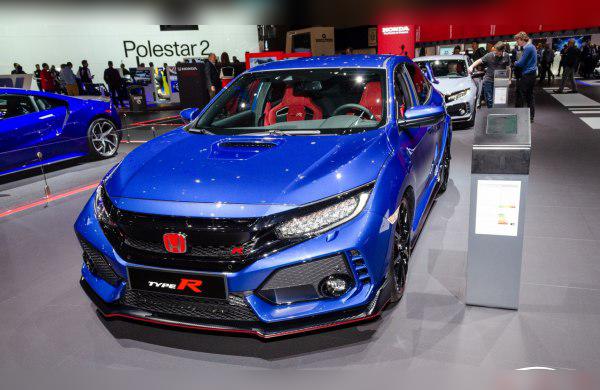
Honda 2.0 VTEC Turbo (K20C1): Experiences, problems, fuel consumption and buying used
Key points (TL;DR)
- Drivetrain and power: The K20C1 is a brutal machine with 320 hp that blurs the line between a hot hatch and higher-class sports cars.
- Reliability: Mechanically an extremely robust engine. Honda has proven that turbo doesn’t have to mean the end of reliability.
- Main downside: Overheating during extreme track driving (on early FK8 models) and the notorious gearbox “grind” when shifting from first to second gear.
- Maintenance: Requires top-quality oil and fuel. Not for those who want to save on servicing.
- Fuel consumption: Can be surprisingly low on the open road, but in the city and in spirited driving it uses significantly more.
- Recommendation: One of the best four-cylinder turbo engines on the market. Buy well-documented examples that haven’t been “abused” with cold starts and hard driving.
Contents
Introduction: Heart of a Samurai
When Honda puts a red valve cover on an engine, you know it’s not just a regular unit for getting from point A to point B. K20C1 is the beating heart of the Civic Type R (FK8). This is the engine that reconciled the irreconcilable: the traditional VTEC character (high revs) with modern turbo technology that delivers huge torque in the mid-range.
Unlike the old naturally aspirated engines that had to be “wrung out” to the redline to really move, this engine pulls hard from as low as 2,500 rpm. It is primarily installed in Type R models, making them some of the fastest front-wheel-drive cars in the world. If you’re considering this engine, you’re not looking for economy, but for pure, unfiltered driving emotion.
Technical specifications
| Specification | Data |
|---|---|
| Engine code | K20C1 |
| Displacement | 1996 cc (2.0 L) |
| Power | 235 kW (320 hp) @ 6500 rpm |
| Torque | 400 Nm @ 2500–4500 rpm |
| Configuration | Inline 4-cylinder, DOHC VTEC |
| Fuel injection system | Direct injection (GDI) |
| Forced induction | Mono-scroll turbo (MHI TD04) + intercooler |
| Camshaft drive | Chain |
Reliability and maintenance
Timing system and servicing
The good news for all owners is that the K20C1 uses a timing chain, not a belt. Honda chains are generally very reliable and designed to last the life of the engine, provided the oil is changed regularly. There is no need for a preventive “major service” replacement in the classic sense (as with belts) at fixed mileage; instead, the condition of the chain and tensioner is checked if you notice characteristic rattling on cold start. However, the auxiliary (serpentine) belt and water pump are replaced according to the service interval (usually around 100,000–120,000 km or earlier if needed).
Oil: The engine’s lifeblood
This engine is sensitive to oil quality. The sump holds approximately 5.4 liters of oil with the filter. The factory recommendation is usually 0W-20 (API SN or newer) for efficiency and fast turbo lubrication. However, many enthusiasts and owners who drive more aggressively switch to 5W-30 for better protection at high temperatures (check the owner’s manual for allowed viscosities).
Oil consumption: A healthy K20C1 should not consume a significant amount of oil. Consumption up to 0.5 liters per 10,000 km is acceptable, especially if the car is often driven in the VTEC zone. If the engine uses a liter per 1,000 km, that points to a problem with the piston rings or turbo, which is not normal but rather a consequence of poor maintenance or overheating.
Spark plugs and injectors
Since this is a high-performance turbo petrol engine, it uses iridium spark plugs (NGK or Denso). Although the factory may specify a 100,000 km interval, it’s wise to replace them at around 60,000 km, or even more often (40,000 km) if the car is tuned. Worn plugs can cause misfires under full throttle. The injectors are generally reliable, but because this is a direct-injection system, they can clog if low-quality fuel is used.
Most common issues
Although the engine itself is “bulletproof”, peripheral components can cause problems:
- Overheating (heat soak): Early FK8 models had cooling issues during aggressive track driving. The engine would cut power (limp mode) to protect itself. Facelift models (from 2020) have a larger grille opening and improved cooling to address this.
- Carbon buildup: Like any direct-injection engine, the intake valves are not washed by fuel, so carbon deposits build up over time. Symptoms include rough idle and a slight loss of power. Cleaning (so-called “walnut blasting”) may be needed at higher mileage (over 100–120k km).
Specific parts and costs
Maintaining a Honda Type R is not cheap, but it’s also not at exotic supercar levels. Still, many parts are specific to this model.
Dual-mass flywheel and clutch
Yes, the K20C1 is paired with a dual-mass flywheel. Its role is to reduce vibrations and make everyday driving more pleasant. Service life depends entirely on driving style. Aggressive launches drastically shorten its lifespan. Replacing the clutch and flywheel set is a costly job (exact cost depends on the market, but expect a serious bill).
Turbocharger
The engine uses a single Mitsubishi Heavy Industries (MHI) TD04 turbocharger with an electronic wastegate. The turbo is very reliable and rarely fails before 200,000 km, unless the engine is shut off immediately after hard driving (oil then bakes in the turbo bearings). Symptoms of failure are blue smoke from the exhaust and a high-pitched siren-like whine.
Emissions equipment (DPF/GPF, EGR, AdBlue)
This is a petrol engine, so it does not have AdBlue or a DPF in the diesel sense. However, newer models (especially for the European market from 2018 onwards, with stricter regulations) are equipped with a GPF (Gasoline Particulate Filter).
The GPF rarely clogs because exhaust gas temperatures in petrol engines are much higher than in diesels, so regeneration happens passively while driving. Problems with the GPF are extremely rare on the Type R, as these cars are usually driven at higher revs. There is an EGR valve, but it is not as failure-prone as on diesels.
Fuel consumption and performance
Is it sluggish?
Absolutely not. With 320 hp and 400 Nm available from just 2,500 rpm, this engine simply plays with the Civic’s body. Throttle response is instant (for a turbo engine), and turbo lag is minimal. 0–100 km/h takes about 5.7 seconds, which is impressive for a front-wheel-drive car with a manual gearbox.
Real-world fuel consumption
- City driving: Expect between 10 and 13 l/100 km. In heavy traffic and stop‑and‑go conditions, this is not an economical car.
- Country roads: Here the engine can surprise you. It’s possible to get down to 7–8 l/100 km with normal driving.
- Motorway: At 130 km/h in 6th gear, the engine spins at around 2,900–3,000 rpm. Consumption is then about 8.5–9 l/100 km. Sound insulation is decent, but you can clearly hear the sporty exhaust note.
Additional options and modifications
LPG conversion
In theory, it is possible to install LPG on direct-injection engines, but for the Honda Civic Type R this is a big “NO”. First, due to system complexity (you need a system that also injects petrol to cool the injectors, or liquid-phase LPG), installation cost is very high. Second, you destroy the car’s resale value and upset the car’s overall balance. If saving on fuel is a priority, this engine is not for you.
ECU remap (Stage 1)
The K20C1 is a tuner favorite. The engine has plenty of power in reserve. A safe Stage 1 remap (software only, no mechanical changes) usually raises power to around 360–370 hp and torque to 480–500 Nm. The engine can handle this increase without issues, but keep in mind that the clutch is under more stress and may start slipping earlier than on the stock map.
Gearbox: Manual perfection with flaws
This engine comes exclusively with a 6-speed manual gearbox with an LSD (limited-slip differential). There is no automatic gearbox option for the FK8 Type R.
Gearbox problems (grind)
The biggest stain on this model’s reputation is not the engine, but the gearbox. Many owners have reported grinding when quickly shifting from 1st to 2nd gear, and sometimes from 3rd to 4th. It can also happen that the gearbox “refuses” to go into gear (lockout).
Cause and solution: The issue is often with the clutch master cylinder or the synchros. Many owners solve it by changing the gearbox oil (switching to higher-quality oil such as GM Synchromesh or specific Honda MTF blends) and adjusting the clutch pedal.
Gearbox maintenance
The oil in the manual gearbox should be changed every 40,000–60,000 km, or more frequently if the car is used on track. The gearbox takes about 2.2 liters of Honda MTF-3 (or equivalent). Regular oil changes are crucial for smooth shifting and preserving the synchros.
Buying used and conclusion
Buying a used Civic Type R with this engine requires caution, not because of poor quality, but because of the way these cars tend to be driven.
What to check before buying?
- Service history: Was the oil changed on time? This is critical for the turbo and the timing chain.
- Gearbox: Be sure to try fast shifts from 1st to 2nd at high revs (with the engine fully warmed up). If it grinds, the synchro is probably damaged.
- Brakes and tyres: These are consumables that are very expensive on this model (Brembo brakes, 20-inch tyres). Check their condition so you don’t face an immediate bill of a few thousand euros after purchase.
- Body and suspension: Due to the low-profile tyres, the wheels are prone to bending. Check for steering wheel vibrations at 100–120 km/h.
Conclusion
The K20C1 engine is a gem of Japanese engineering. It delivers performance that, just 10 years ago, was reserved for supercars, while still retaining a reasonable level of practicality. It is aimed at true enthusiasts. If you can live with a slightly firmer suspension and higher city fuel consumption, this engine will put a smile on your face every time you press the throttle. Just make sure to check that gearbox before you buy!
Was this content useful to you?
Your opinion helps us to improve the quality of the content.