K20C1 Engine
- Engine
- 1996 cm3
- Aspiration
- Turbocharger, Intercooler
- Fuel
- Petrol (Gasoline)
- Fuel injection system
- Direct injection
- Power
- 306 hp @ 6500 rpm
- Torque
- 400 Nm
- Cylinders
- 4
- Valves
- 16, 4 per cylinder
- Cylinders position
- Inline
- Max engine speed
- 7000 rpm
- Valvetrain
- DOHC, VTEC
- Oil capacity
- 5.4 l
- Coolant
- 4.64 l
- Systems
- Start & Stop System
# Vehicles powered by this engine

Key points in short (TL;DR)
- Timing chain: The K20C1 engine uses a reliable timing chain that does not require regular replacement if the oil is changed on time.
- Performance and cooling: Extremely potent engine, but early models (before 2020) are prone to overheating during extreme track driving. Facelift models have improved cooling.
- The gearbox is crucial: It comes exclusively with a manual transmission. Pay attention to grinding when shifting from first to second gear (a common issue).
- Maintenance: Requires top-quality synthetic oil (0W-20 or 5W-30 for track use) and strict change intervals. This is not an engine for careless owners.
- Direct injection: Efficient, but prone to carbon buildup on intake valves at higher mileage.
- Fuel consumption: Surprisingly economical on the open road, but in the city and spirited driving expect double-digit figures.
- Conclusion: One of the best 2.0 turbo engines of today, but it demands meticulous maintenance and high-quality fuel.
Contents
Introduction: Honda K20C1 – The heart of the Type R legend
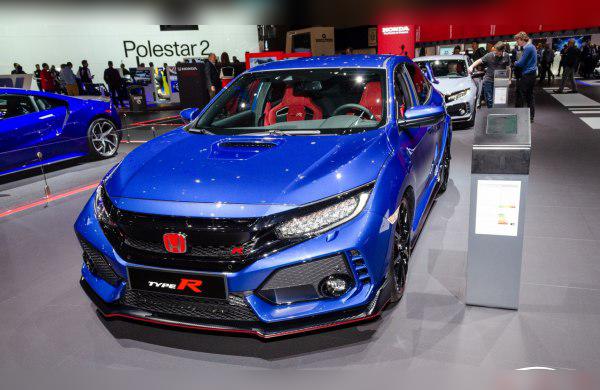
When Honda decides to build an engine with the Type R badge, the engineers make no compromises. The K20C1 engine represents a dramatic shift in the brand’s philosophy – a move from high-revving naturally aspirated engines to the turbo era. It is installed in the Honda Civic Type R (FK8) and represents an engineering masterpiece that combines VTEC technology with a low-inertia turbocharger.
This engine is important because it proves that turbo engines can have “soul” and throttle response almost like naturally aspirated units, with brutal torque that older Hondas lacked. Although we are talking here about the 306 hp version (often the specification for North America or pre-facelift in some regions), European versions are often rated at 320 hp, but the hardware base is almost identical.
Technical specifications (K20C1)
| Parameter | Value |
|---|---|
| Displacement | 1996 cc (2.0 L) |
| Power | 225 kW / 306 hp (up to 320 hp depending on market) |
| Torque | 400 Nm at 2500–4500 rpm |
| Engine code | K20C1 |
| Injection type | Direct injection |
| Charging system | Mono-scroll turbocharger (MHI TD04) with exhaust VTEC |
| Cylinder layout | Inline 4 (I4) |
Reliability, Maintenance and Failures: K20C1 Experiences
Timing system: Chain or belt?
The Honda K20C1 uses a chain to drive the camshafts. This is great news for owners because Honda’s chain on K-series engines is known for its durability. There is no fixed replacement interval; the chain is designed to last as long as the engine, provided the oil is changed regularly. If you hear rattling on cold start that does not go away after a few seconds, it is a sign that the chain tensioner has weakened or the chain has stretched, but this is rare below 200,000 km with proper maintenance.
Most common failures and issues
Although the engine is mechanically “bulletproof”, there are some peripheral weaknesses:
- Overheating (Pre-facelift models 2017–2019): Under aggressive track driving, the engine can go into limp mode due to insufficient cooling capacity. The facelift model (2020+) has a larger front grille and an optimized radiator, which solved the problem.
- Fuel pump (Recall): There was a global recall for low-pressure in-tank fuel pumps that could fail. Be sure to check whether the particular car has had this recall performed.
- Valve cover gasket leaks: Not a widespread issue, but it does happen that the engine starts to “weep” oil at this spot after a few years.
Service intervals and Oil
Minor service: Recommended every 10,000 km or once a year. For those who drive hard or go to track days, the interval should be shortened to 5,000–7,000 km.
Oil quantity and type: The engine takes about 5.4 liters of oil with the filter. Honda recommends 0W-20 (API SN) from the factory for efficiency and quick turbo lubrication. However, many enthusiasts and tuners switch to 5W-30 or even 5W-40 for better protection at high temperatures, especially in summer. Oil consumption is not as pronounced as with older VTEC engines, but it is normal for the engine to “drink” up to 0.5 liters per 5,000 km if it is driven constantly in the VTEC zone.
Spark plugs and Injectors
Since this is a high-performance petrol engine, spark plugs are crucial. Only Iridium plugs (NGK or Denso) are used. The factory interval is often 100,000 km, but real-world recommendation is replacement at 60,000 to 80,000 km to ensure optimal combustion and protect the ignition coils.
Specific Parts: Turbo, Flywheel and Emissions
Dual-mass flywheel and Injection
Yes, in the Civic Type R FK8 this engine is paired with a dual-mass flywheel. Although this is a sports car, Honda fitted a dual-mass flywheel to reduce vibration and noise in everyday driving. It is a wear item and replacement is expensive (Depends on the market: very expensive). Symptoms of failure are rattling when switching the engine off or vibrations in the clutch pedal.
The injection system is direct injection. The injectors are generally reliable, but direct injection has a drawback: fuel does not wash the intake valves. This means that over time carbon buildup forms on the valves, which can lead to rough running. Cleaning the intake valves (“walnut blasting”) may be necessary at around 100,000+ km.
Turbocharger
The engine uses a single Mitsubishi (MHI) TD04 turbocharger. It is specific in that it uses an electronically controlled wastegate for precise boost control. The turbo’s lifespan is long, often over 200,000 km, provided the engine is not shut off immediately after hard driving (it should be left to idle for a minute or two before switching off) and the oil is of good quality.
DPF, GPF and Emissions
This engine does not use AdBlue (because it is a petrol engine). However, models for the European market (especially from 2018 onwards with the introduction of WLTP standards) are equipped with a GPF filter (Gasoline Particulate Filter), which is the petrol equivalent of a DPF. The GPF rarely clogs because exhaust gas temperatures on petrol engines are higher, which makes passive regeneration easier. Problems with the EGR valve are rare.
Fuel consumption and On-road performance
Real-world consumption
Do not expect miracles from an engine with 300+ horsepower, but the K20C1 can be surprisingly civilized.
- City driving: Expect between 10 and 13 l/100 km. In heavy stop-and-go traffic, the figure easily goes to 14 liters.
- Open road: This is where the engine shines. With normal driving on country roads, consumption drops to 7–8 l/100 km.
- Highway (130 km/h): Consumption is around 8.5–9.5 l/100 km. The gearbox is relatively short for sporty driving, so at 130 km/h in 6th gear the engine spins at about 2,900–3,000 rpm, which is higher than an average diesel, but cabin noise is not excessive.
Is the engine “lazy”?
Absolutely not. With 400 Nm of torque available from just 2,500 rpm, this engine moves the Civic’s body (around 1,400 kg) with incredible ease. Turbo lag is minimal, and throttle response in “R+” mode is instant. Overtaking is almost a matter of thought, without the need for frequent downshifts.
Tuning and LPG
LPG conversion
Although it is technically possible to install an LPG system on direct-injection engines, on a car like this it is heresy and a technical risk. Installation is very expensive (1000+ EUR), the system has to use petrol as well to cool the injectors, and the risk of cylinder head overheating at high rpm is huge. Recommendation: Do not install LPG on a Type R.
Remap (Stage 1)
The K20C1 is “over-engineered”, which means it can handle much more power than the factory rating. Stage 1 (software only) safely raises power to about 350–370 hp and torque to 480–500 Nm. However, keep in mind that the higher torque drastically shortens clutch life, which is often the weakest link on tuned cars.
Gearbox: Manual joy and its issues
Which gearbox comes with the K20C1?
In the Civic Type R FK8, this engine comes exclusively with a 6-speed manual gearbox. No automatic, no DSG. The gearbox is equipped with a rev-matching system for downshifts.
Gearbox problems (Grind)
The most well-known issue on this model is the so-called “2nd gear grind” (grinding when engaging second gear) and occasional popping out of gear. The cause is often in the synchros or clutch pedal adjustment. The solution often lies in replacing the gearbox oil with a higher-quality one (e.g. Amsoil Synchromesh or original Honda MTF-3 but changed more frequently) and adjusting the linkages. Gearbox oil should be changed every 40,000–60,000 km, or more often if the car is used on track.
Clutch replacement cost
The clutch kit is a wear item. The cost of replacing the clutch kit (pressure plate, disc, release bearing) is high (Depends on the market: expensive), and if the dual-mass flywheel also needs to be replaced, the cost doubles. Be prepared for this expense around 100,000–120,000 km, or earlier if the car is remapped.
Buying tips and Conclusion
What to check before buying?
- Gearbox: Be sure to try fast shifts from first to second at high rpm. If it grinds, the synchros are worn.
- Overheating history: Check the color of the coolant and the condition of the hoses. On pre-facelift models (2017–2019), ask the owner whether the car has been driven on track.
- Wheels: The FK8 comes with 20-inch rims with very low-profile tires. Rims are often bent from potholes.
- Brakes: The Brembo brakes are excellent, but discs and pads are expensive (Very expensive). Check pad thickness and the lip on the discs.
Conclusion
The Honda K20C1 in the Civic Type R is one of the last “purebred” driver’s engines. It is not the cheapest to maintain and it requires an owner who understands mechanics (warming up, cooling down, quality oil). However, in return it offers reliability that is unusual for super-sporty cars and performance that can embarrass much more expensive vehicles. If you can afford quality fuel and tires, this is an engine that will put a smile on your face every time you press the throttle.
Was this content useful to you?
Your opinion helps us to improve the quality of the content.