L15BE Engine
- Engine
- 1498 cm3
- Aspiration
- Turbocharger, Intercooler
- Fuel
- Petrol (Gasoline)
- Fuel injection system
- Direct injection
- Power
- 190 hp @ 5600 rpm
- Torque
- 243 Nm
- Cylinders
- 4
- Valves
- 16, 4 per cylinder
- Cylinders position
- Inline
- Valvetrain
- DOHC
- Oil capacity
- 3.5 l
- Coolant
- 6.2 l
- Systems
- Start & Stop System
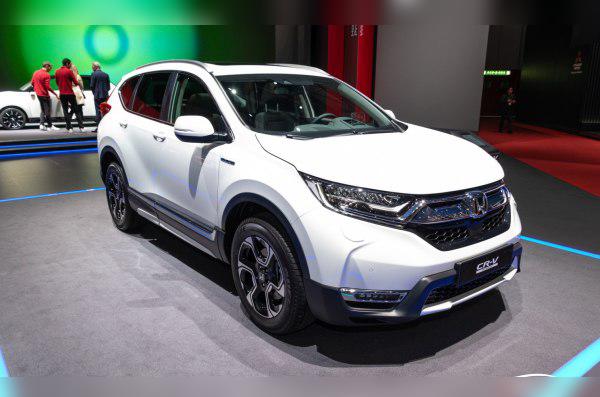
# Vehicles powered by this engine


In short (TL;DR)
- Power-to-weight ratio: With 190 hp, this engine is more than adequate for the CR-V; it’s not “lazy” and offers excellent in-gear acceleration.
- Oil issue (Oil Dilution): A known problem of fuel mixing with engine oil, especially in cold climates and on short trips. Requires more frequent oil level checks.
- Transmission: The 190 hp L15BE variant is almost exclusively paired with a CVT transmission. It’s comfortable, but requires a specific driving style and regular oil changes.
- Timing drive: Uses a timing chain, which is generally reliable and not prone to stretching at low mileage.
- Direct injection: Efficient, but prone to carbon buildup on intake valves over time.
- Recommendation: An excellent choice for family driving, provided that service intervals are cut in half compared to factory recommendations (every 10,000 km).
Contents
Introduction: L15BE – Honda’s turbo gem with flaws?
For a long time, Honda resisted the trend of downsizing and turbo engines, sticking to its legendary naturally aspirated VTEC units. However, with the arrival of the 1.5 VTEC Turbo engines (L15 family), the rules changed. The L15BE version with 190 hp (or 193 hp depending on the market) represents the top of the range for models such as the fifth- and sixth-generation Honda CR-V.
This engine replaced the old, robust 2.4-liter naturally aspirated petrol engine. The goal was clear: lower fuel consumption, lower emissions, and better torque at low revs. Although it looks perfect on paper, in practice it turned out that even Honda, a synonym for reliability, can have “teething problems” when stepping into the world of turbocharging and direct injection. In this article we analyze whether the L15BE is worthy of the Honda badge.
Technical specifications
| Parameter | Data |
|---|---|
| Engine displacement | 1498 cc (1.5 liters) |
| Power | 140 kW / 190 hp (at 5600 rpm) |
| Torque | 243 Nm (from 2000 to 5000 rpm) |
| Engine code | L15BE (Variations: L15B7, L15BY – depending on market) |
| Injection type | Direct injection (GDI / DI) |
| Charging system | Mono-scroll turbocharger with intercooler |
| Camshaft drive | Chain |
Reliability and maintenance
Timing system: Chain or belt?
The L15BE engine uses a metal timing chain to drive the valves. Honda’s chains are traditionally extremely durable and there is no fixed replacement interval. In practice, this chain easily exceeds 200,000 km, provided that the oil is changed regularly. There are no widespread reports of chain stretching at low mileage, which is a big plus compared to some European competitors.
Most common issues: The “Oil Dilution” problem
The biggest and best-known issue with this engine is fuel mixing with engine oil (Oil Dilution). This occurs primarily in colder climates and during short trips where the engine does not reach operating temperature.
Why does this happen? Due to its high efficiency, the engine warms up slowly. Direct injection sprays fuel at high pressure directly into the cylinders; if the cylinder walls are cold, the fuel condenses and runs past the piston rings into the oil pan instead of burning.
Symptoms: Oil level rising above the maximum mark on the dipstick, and a strong smell of petrol from the oil filler opening.
Solution: Honda has issued software updates (changing the injection map and A/C operation so the engine warms up faster) and extended the warranty in some markets. Owners are advised to change the oil more frequently.
Service intervals and oil
Although the manufacturer may recommend longer intervals, the realistic approach for the L15BE engine is as follows:
- Minor service: Must be done every 10,000 km or one year. Due to the turbocharger and the oil dilution issue, this interval should not be exceeded.
- Oil quantity and type: The engine takes about 3.5 to 3.7 liters of oil (with filter). Only 0W-20 oil that meets Honda specifications (API SN or newer) should be used. Thin oil is crucial for the operation of variable valve timing and turbo lubrication.
- Oil consumption: This engine rarely “consumes” oil in the classic sense (burning). On the contrary, it is more common for the oil level to rise due to fuel contamination. If the level rises, the oil is degraded and must be changed immediately.
Spark plugs
On turbo petrol engines with direct injection, spark plugs are under higher stress. The manufacturer often states 100,000 km, but real-world practice suggests replacement every 60,000 to 80,000 km. Only iridium spark plugs (NGK or Denso) should be used.
Specific parts (costs)
Dual-mass flywheel and clutch
Since the 190 hp variant (L15BE) in the Honda CR-V is paired with a CVT transmission, it does not have a classic dual-mass flywheel like those found in manual gearboxes or DSG systems. Instead, it uses a torque converter and a flexplate. This is good news because it eliminates one of the most expensive failures (replacement of the clutch kit and dual-mass flywheel), but shifts the maintenance focus to the transmission itself.
Injection system and injectors
The high-pressure direct injection system is sophisticated. Injectors are not prone to frequent failures, but when they do fail, repairs are expensive (depending on the market, often several hundred euros per injector).
Symptoms of problems: The engine may run rough, illuminate the “Check Engine” light (misfire error), or hesitate under acceleration. Also, direct injection produces a characteristic “ticking” sound at idle – this is normal and nothing to worry about.
Turbocharger
The engine uses a Mitsubishi TD03 (or similar) turbocharger with an electronic wastegate. The turbo is generally very reliable and designed to last as long as the engine, provided that quality oil is used. It is both water- and oil-cooled.
Emissions: GPF and EGR
Newer models (from 2018/2019, depending on market and Euro standard) are equipped with a GPF filter (Gasoline Particulate Filter), the petrol equivalent of a DPF.
Does it clog? Petrol burns cleaner than diesel and exhaust temperatures are higher, so the GPF regenerates passively much more easily. Problems with clogged GPFs are rare, unless the car is driven exclusively in stop-and-go traffic for years. An EGR valve is present, but it is not as problematic as on diesels.
Fuel consumption and performance
Is a 1.5 engine too small for the CR-V?
Many people are skeptical about a 1.5-liter engine in a large SUV like the CR-V. However, this fear is unfounded. With 190 hp and 243 Nm available from just 2000 rpm, this engine moves the body with ease. It is not “lazy”. The 0–100 km/h time is usually under 10 seconds, which is perfectly acceptable for a family SUV.
Real-world fuel consumption
- City driving: Expect between 9.0 and 11.0 l/100 km. In heavy traffic and winter conditions, this can easily reach 12 liters. Turbo petrol engines are sensitive to a heavy right foot.
- Country roads: Consumption can drop to around 6.5–7.5 l/100 km with moderate driving.
- Motorway (130 km/h): Consumption is around 8.0–9.0 l/100 km.
Motorway behavior
Thanks to the CVT transmission, which keeps the engine in the optimal rev range, the engine is quiet when cruising. At 130 km/h, the engine spins at a relatively low 2200 to 2500 rpm (depending on incline and wind), which contributes to acoustic comfort.
Additional options and modifications
LPG conversion
Is it possible? Yes, but it is expensive and complicated. Due to direct injection, you cannot install a standard sequential LPG system. You need a system for direct liquid gas injection or a system that uses a mixture of petrol (approx. 15–20%) and LPG to cool the petrol injectors.
Cost-effectiveness: Installation is significantly more expensive (often over 1000 EUR), so it only pays off for those who cover high annual mileage (over 20–30k km per year).
Chiptuning (Stage 1)
The L15BE has potential. With a Stage 1 remap, power can safely be increased to 210–220 hp, and torque to around 300 Nm.
Warning: Although the engine can handle it, the CVT transmission is the weak point. The CVT belt does not like sudden torque spikes. If you tune the engine, ask for a “flat torque” map that protects the transmission; otherwise, you risk belt slip in the transmission and an expensive failure.
Transmission: CVT (Continuously Variable Transmission)
Which transmissions are used?
With the 190 hp engine in the CR-V, Honda’s CVT transmission is standard. A manual gearbox is usually paired with the lower-powered 173 hp version, which does not share the same hardware as the L15BE.
CVT reliability and failures
Honda’s CVT is one of the better units on the market. It simulates gear changes when you floor the throttle, in order to avoid that unpleasant “scooter” feeling where the engine drones at constant revs while the car accelerates.
Most common issues: Overheating under heavy loads (e.g. long uphill drives with a trailer) or juddering when setting off if the oil is old.
Transmission maintenance
This is critical. CVT fluid must be changed every 40,000 to 60,000 km (or every 2–3 years), regardless of what the service booklet says for “severe conditions”. Only genuine Honda fluid (HCF-2) should be used. The cost of replacement is not low (the fluid is expensive), but it is negligible compared to a transmission overhaul.
Buying used and conclusion
What to check before buying?
- Oil level: Pull out the dipstick. If the level is significantly above the maximum and the oil smells strongly of petrol, the engine suffers from an unresolved Oil Dilution problem.
- Service history: Check whether software updates (recalls) related to climate control and injection have been carried out.
- Chain noise: On a cold start, listen for chain rattling for a few seconds. If you hear it, the tensioner or chain is due for replacement.
- Test drive: The CVT transmission must operate smoothly, without jolts when shifting from P to D or R. Under hard acceleration there should be no slipping (revs rising without a corresponding increase in speed).
Conclusion
The L15BE (1.5 Turbo, 190 hp) is a technologically advanced and capable engine that gives the Honda CR-V a liveliness that the old 2.0 and 2.4 engines lacked. It is ideal for drivers who want comfort, quiet operation, and solid performance.
However, it requires a meticulous owner. This is not an engine you simply fill with fuel and forget about under the hood. If you are willing to change the oil every 10,000 km, check the oil level in winter, and service the CVT transmission regularly, this engine will serve you for hundreds of thousands of kilometers. If you are looking for an engine that tolerates neglect, the older naturally aspirated units are a better choice.
Was this content useful to you?
Your opinion helps us to improve the quality of the content.