N16A4 Engine
- Engine
- 1597 cm3
- Aspiration
- Turbocharger, Intercooler
- Fuel
- Diesel
- Fuel injection system
- Diesel Commonrail
- Power
- 160 hp @ 4000 rpm
- Torque
- 350 Nm @ 2000 rpm
- Cylinders
- 4
- Valves
- 16, 4 per cylinder
- Cylinders position
- Inline
- Valvetrain
- i-DTEC
- Oil capacity
- 4.7 l
- Coolant
- 5.7 l
- Systems
- Particulate filter
# Vehicles powered by this engine
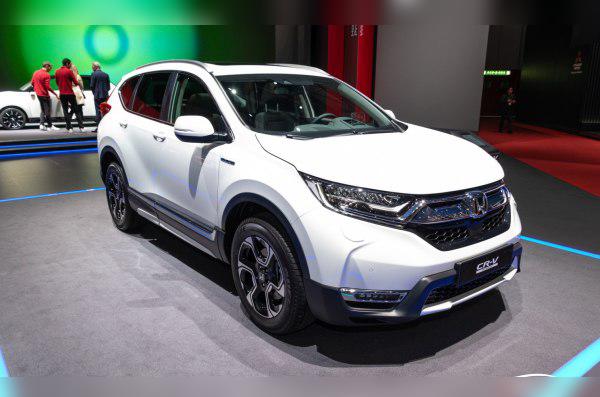

Honda 1.6 i-DTEC Bi-Turbo (N16A4) – Experiences, issues, fuel consumption and maintenance
Key points in short (TL;DR)
- Bi-Turbo technology: This engine uses two turbochargers (a smaller and a larger one), which gives it excellent throttle response and eliminates turbo lag, but increases maintenance complexity.
- Fuel consumption: Extremely economical for the SUV segment, often uses less fuel than 2.0-liter competitors.
- ZF 9-speed automatic: Paired with a modern ZF gearbox that is great for cruising, but requires strict maintenance and expensive oil.
- Emissions systems: Equipped with a DPF and AdBlue system. Sensitive to city driving and requires regular runs on open roads.
- Timing chain: Chain-driven, generally reliable, but you must pay attention to any rattling noise on cold start.
- Recommendation: An excellent choice for those who often drive longer distances; for strictly city driving it can be expensive to maintain due to the emissions systems.
Contents
- Introduction and application
- Technical specifications
- Reliability and maintenance
- Specific parts and costs
- Fuel consumption and performance
- Gearbox (manual and automatic)
- Additional options and modifications
- Buying used and conclusion
Introduction and application
The engine with the code N16A4 is Honda’s answer to the downsizing trend, successfully replacing the legendary but heavier 2.2 i-DTEC engine. This is not just a “chipped” version of the weaker 1.6 engine with 120 hp, but a seriously modified unit with two-stage turbocharging (Bi-Turbo).
This engine was specifically developed to power heavier bodies, primarily the Honda CR-V (fourth-generation facelift and fifth generation), often in combination with all-wheel drive (AWD). The engineers’ goal was to keep the torque of a large diesel (350 Nm) while drastically reducing fuel consumption and emissions. Although small in displacement, this is a very advanced and robust engine from a technical standpoint.
Technical specifications
| Parameter | Value |
|---|---|
| Engine displacement | 1597 cc |
| Power | 118 kW (160 hp) |
| Torque | 350 Nm at 2000 rpm |
| Engine code | N16A4 |
| Injection type | Common Rail (Bosch solenoid or piezo) |
| Charging system | Bi-Turbo (twin-stage turbocharging) |
| Camshaft drive | Chain |
Reliability and maintenance
Timing system: Chain or belt?
The N16A4 engine uses a timing chain to drive the camshafts. Honda did a good job here – the chain is designed to last the life of the engine, but in practice that means peace of mind up to about 250,000–300,000 km, provided the oil has been changed regularly. It is not as prone to stretching as with some German competitors, but if you hear metallic rattling on cold start that doesn’t stop after a few seconds, that’s a sign you urgently need to check the tensioner and chain.
Minor and major service
A classic “major service” (timing belt replacement) does not exist, but the condition of the auxiliary (serpentine) belt and its tensioners should be checked at around 100,000 km or every 5 years.
Minor service (oil and filter change) is recommended every 10,000–15,000 km or once a year. Although the manufacturer may allow longer intervals (20k+ km), due to the Bi-Turbo system and its sensitivity to oil quality, a shortened interval is key to longevity.
Oil: Quantity and grade
The engine takes approximately 4.7 to 5.1 liters of oil (depending on whether the filter is changed; always buy 6 liters so you have some for topping up). The recommended grade is strictly 0W-30 (or 0W-20 for newer model years where specified), with ACEA C2 or C3 specification. This is critical because of the DPF filter. Using thicker or unsuitable oil will quickly destroy the DPF and shorten the life of the turbochargers.
Oil consumption: This engine is known for not consuming oil excessively. Between two services the level should not drop below minimum. It is normal to top up to 0.5 liters per 10,000 km. If it uses more, the problem is usually in the turbos or the PCV valve (oil separator), less often in the piston rings.
Injectors
The injection system is Bosch, operating at high pressure (up to 2000 bar). The injectors have proven to be very durable. With good-quality fuel, they easily last over 200,000–250,000 km. Symptoms of bad injectors are rough idle, increased smoke under acceleration or harder starting. Reconditioning is possible, but the price of new ones is high (very expensive, depending on the market).
Most common issues
Mechanically, the engine is very reliable. The most common problems are peripheral:
1. Mass air flow sensor (MAF): Can cause loss of power.
2. Clogged DPF: On cars driven exclusively in the city.
3. AdBlue system: Heaters or urea pumps can fail, which is an expensive repair.
4. Oil leak at the crankshaft seal: Happens less often, but has been recorded at higher mileages.
Specific parts and costs
Dual-mass flywheel
Yes, versions with a manual gearbox have a dual-mass flywheel. Its lifespan directly depends on driving style, but on average it lasts around 180,000–200,000 km. With the automatic gearbox (ZF 9HP) there is no conventional dual-mass flywheel as a wear item in the same way (it uses a torque converter), which is a big advantage of the automatic in terms of clutch-related maintenance.
Turbochargers
This is a Bi-Turbo (twin-turbo) engine. It has one small high-pressure turbo for low revs (quick response) and one large low-pressure turbo for higher revs. This system is complex. Their service life is long (over 200,000 km with good oil), but if a failure occurs, repairs are very expensive because the system is interconnected and requires precise actuator adjustment. Overhauling is more difficult than with regular single turbos.
DPF, EGR and AdBlue
The engine meets Euro 6 standards.
– DPF filter: Standard equipment. If driven on open roads, regeneration is passive and unnoticeable. In city driving it requires frequent active regenerations.
– EGR valve: Prone to soot build-up. Preventive cleaning is possible.
– AdBlue: Yes, this engine in the CR-V uses AdBlue fluid. Additive consumption is low, but the system (pump, injector, tank heater) is known as a weak point of all modern diesels, including this one. Urea crystallization can clog the injector if the car is not driven for a long time.
Fuel consumption and performance
Fuel consumption
- City driving: Considering the weight of the CR-V (around 1.7 tons) and all-wheel drive, real-world consumption is between 7.5 and 9 liters/100 km (depending on traffic and gearbox).
- Open road: This is where the engine shines. Consumption drops to 5.5 to 6.5 liters/100 km.
- Motorway (130 km/h): Thanks to the 9-speed gearbox (on the automatic), the engine runs at very low revs, using about 6.5 to 7.0 liters.
Is the engine “lazy”?
Absolutely not. With 160 hp and 350 Nm, this engine actually performs better than the old 2.2 i-DTEC in many situations. The two turbos eliminate turbo lag, so the car pulls linearly from low revs. It’s not a sports engine, but for overtaking and fast motorway driving there is more than enough power in reserve, even with a fully loaded car.
Motorway driving
At 130 km/h the engine is very quiet. In the automatic version, in 9th gear, the revs are below 2000 rpm, which makes driving extremely comfortable and quieter than many competitors.
Gearbox: Manual and automatic (ZF 9HP)
Which gearboxes are fitted?
- Manual: Honda’s precise 6-speed manual gearbox.
- Automatic: ZF 9HP – 9-speed automatic gearbox with a torque converter (not a CVT, not a dual-clutch).
Gearbox issues and maintenance
Manual: Very reliable. The most common expense is a clutch kit and dual-mass flywheel. Replacement is expensive (depends on the market, but expect a serious bill). Gearbox oil should be changed every 60,000–80,000 km (Honda MTF).
Automatic (ZF 9HP): This is an excellent gearbox, but it has its quirks. Some drivers complain about indecisiveness at low speeds (it “hunts” for the right gear).
Maintenance is crucial: Although some workshops claim the oil is “lifetime”, ZF (the gearbox manufacturer) recommends changing the oil every 80,000 to 100,000 km. It uses a specific, expensive ZF oil. If it is not changed, you can get jerks when shifting and mechatronics failure, which is a repair costing thousands of euros.
Additional options and modifications
Chip tuning (Stage 1)
The engine can be chipped, but you should be careful. A Stage 1 remap usually raises power to 180–190 hp and torque to close to 400 Nm.
Risks: Since this is already a highly stressed 1.6 engine with two turbos and complex emissions systems, additional load can shorten the life of the DPF and turbos. The automatic gearbox (ZF 9HP) can handle more torque (it is rated higher), but the manual gearbox and clutches will suffer. The recommendation is not to chip this engine if you want maximum reliability.
Buying used and conclusion
What to check before buying?
- Cold start: Listen to the chain. Any rattling longer than 2–3 seconds is a red flag.
- Test drive (automatic): The gearbox must shift smoothly and almost imperceptibly. If it jerks while decelerating or “bangs” when engaging D or R, skip that car.
- Diagnostics: Check DPF saturation and injector condition (injector correction values).
- AdBlue: Check for any errors related to the urea system (they are often deleted or disabled in software before sale, which is illegal and can cause problems at inspection/MOT).
- Service history: Check whether 0W-30 oil was used. If 5W-30 or 10W-40 was used, the engine has likely suffered internal wear.
Conclusion
The Honda 1.6 i-DTEC Bi-Turbo (160 hp) is a technically brilliant engine that offers the performance of 2.0-liter diesels with the fuel consumption of small-displacement cars. It is ideal for families who cover a lot of kilometers on open roads and want reliability and comfort.
However, it is not recommended for those who only drive short distances in the city (due to DPF/AdBlue issues) or for those who want cheap maintenance “at the local mechanic”. This engine requires quality parts, specific oils and a specialist workshop. If you find a well-maintained example, it will serve you for many years.
Was this content useful to you?
Your opinion helps us to improve the quality of the content.