L15BY Engine
- Engine
- 1498 cm3
- Aspiration
- Turbocharger, Intercooler
- Fuel
- Petrol (Gasoline)
- Fuel injection system
- Direct injection
- Power
- 173 hp @ 5600 rpm
- Torque
- 220 Nm
- Cylinders
- 4
- Valves
- 16, 4 per cylinder
- Cylinders position
- Inline
- Valvetrain
- VTEC
- Oil capacity
- 3.5 l
- Coolant
- 6.2 l
# Vehicles powered by this engine
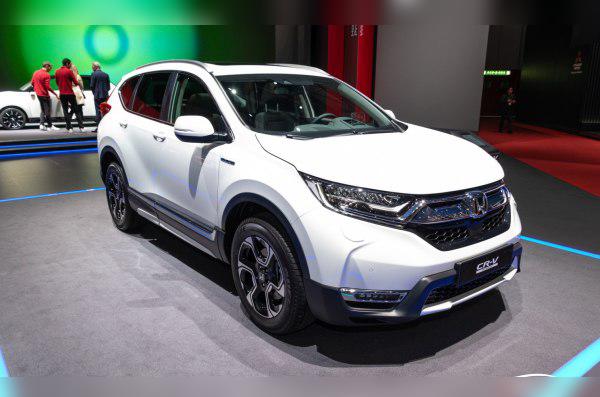
Honda L15BY 1.5 VTEC TURBO (173 HP): Experiences, Issues, Fuel Consumption and Maintenance
Key points in short (TL;DR)
- "Oil and fuel mixing" issue: The most well-known drawback of this engine (Oil Dilution), especially in cold conditions and with short trips.
- Timing drive: Uses a chain which is generally reliable, but requires high-quality oil.
- Performance: With 173 HP and 220 Nm, the engine is surprisingly lively even in a large body like the CR-V.
- Direct injection: Requires occasional intake valve cleaning due to carbon buildup.
- Fuel consumption: Moderate on the open road, but in the city it can increase significantly due to the vehicle’s weight and AWD system.
- Dual-mass flywheel: Present on versions with a manual gearbox.
- Recommendation: An excellent choice for those who drive mixed routes, but it requires strict oil changes at a maximum of 10,000 km.
Contents
- Introduction and Applications
- Technical Specifications
- Reliability and Maintenance
- Specific Components (Costs)
- Fuel Consumption and Performance
- Additional Options and Modifications
- Transmission and Drivetrain
- Buying Used and Conclusion
Introduction and Applications
The engine designated as L15BY belongs to Honda’s modern "Earth Dreams" family of power units. This is the engine that marked a turning point for Honda in Europe, as it replaced the legendary but naturally aspirated 2.0 i-VTEC engines in the fifth-generation CR-V. The goal was clear: to meet strict environmental standards while maintaining, and even improving, performance through downsizing and the addition of a turbocharger.
This 1.5-liter four-cylinder is technologically very advanced, with direct injection and variable valve timing (VTEC), but not in the way old Honda enthusiasts are used to (here VTEC operates on the exhaust side to improve turbo spool). Although small in displacement, it is installed in a massive SUV – the Honda CR-V, which puts a serious task in front of it.
Technical Specifications
| Characteristic | Data |
|---|---|
| Engine code | L15BY (Variants L15B7/L15BE depending on market) |
| Displacement | 1498 cc (1.5 L) |
| Power | 127 kW (173 HP) at 5600 rpm |
| Torque | 220 Nm at 1900–5000 rpm |
| Fuel type | Petrol (Unleaded) |
| Injection system | Direct injection (GDI) |
| Induction | Turbocharger (mono-scroll with electronic wastegate) + intercooler |
| Number of cylinders/valves | 4 / 16 (DOHC) |
Reliability and Maintenance
Timing system: Chain or belt?
The L15BY engine uses a timing chain (silent chain) for valve timing. Honda chains are traditionally reliable and designed to last the entire service life of the engine, provided that the oil is changed regularly. There is no scheduled replacement interval; it is replaced only if you hear a characteristic rattling noise on cold start or if it stretches, which rarely happens before 200,000 km with proper maintenance.
Most common issues: "Oil Dilution" problem
The biggest controversy related to this engine is the mixing of petrol with engine oil (Oil Dilution). Due to highly efficient cooling and direct injection, the engine warms up slowly in cold climates. Fuel injected at high pressure condenses on the cold cylinder walls and drains into the oil pan.
Symptoms: The oil level on the dipstick rises above the maximum mark and the oil strongly smells of petrol. This degrades the oil’s properties and can lead to faster wear of bearings and the camshaft. Honda has issued software updates (ECU update) that help the engine warm up faster, but owners who drive short distances in winter must be cautious.
Service intervals and oil
Although the manufacturer may recommend longer intervals (variable intervals up to 20,000 km), for this engine it is imperative to change the oil every 10,000 km or once a year, precisely because of the fuel dilution issue.
Oil capacity: The engine takes approximately 3.5 to 3.7 liters (with filter).
Viscosity grade: Only 0W-20 with API SN specification or newer. This thin oil is crucial for the turbocharger’s operation and the engine’s tight tolerances.
Oil consumption
This engine generally does not consume oil in the classic sense (burning). On the contrary, an increase in oil level is a more common problem. However, with aggressive highway driving, consumption of up to 0.5 liters per 5,000 km can be considered acceptable.
Spark plugs and injectors
Since this is a turbocharged petrol engine with direct injection, the spark plugs are under heavy stress. Iridium spark plugs (NGK or Denso) are used.
Replacement interval: Factory recommendation is around 100,000 km, but in practice it is best to replace them at 60,000 - 80,000 km to preserve the coils and ensure optimal combustion.
The injectors are piezo-electric and generally durable, but sensitive to poor fuel quality.
Specific Components (Costs)
Dual-mass flywheel
Yes. The 173 HP version most often comes with a 6-speed manual gearbox that uses a dual-mass flywheel (DMF). Its role is to dampen the vibrations of the four-cylinder engine and protect the gearbox from sudden torque spikes from the turbo. Replacement is expensive (depends on the market, but expect a serious expense).
Injection system and turbo
The engine uses a GDI (Gasoline Direct Injection) system. The injectors are not particularly failure-prone, but direct injection has a side effect: carbon buildup on the intake valves. Since fuel does not "wash" the valves (because it is injected directly into the cylinder), airflow gradually decreases over time. It is recommended to perform walnut blasting or chemical intake cleaning every 100,000+ km.
The turbocharger is a Mitsubishi unit (TD03 series), water- and oil-cooled. It is very reliable and rarely fails before the engine itself, provided that the cool-down procedure after hard driving is respected and oil is changed regularly.
Emissions: GPF, EGR, AdBlue
Models produced for the European market (especially from 2018/2019 onwards) are equipped with a GPF filter (Gasoline Particulate Filter). Unlike diesel DPFs, GPFs regenerate much more easily and quickly due to the higher exhaust gas temperatures of petrol engines and rarely cause problems.
AdBlue: This engine DOES NOT have an AdBlue system. AdBlue is used exclusively on diesel engines (SCR catalysts) to reduce NOx emissions. Here it is not needed.
Fuel Consumption and Performance
City driving and real-world consumption
The Honda CR-V is a heavy car with relatively poor aerodynamics (SUV). Although the engine is small (1.5L), the turbo has to work hard to move the mass.
City driving: Expect real-world consumption between 9 and 11 liters/100 km. In heavy traffic and winter conditions, this easily goes up to 12 liters.
Is the engine "lazy"?
No, the engine is not lazy. With 173 HP and 220 Nm available from just 1900 rpm, the CR-V 1.5T feels more agile than the old 2.0 naturally aspirated engine. In-gear acceleration is good thanks to the turbo, but you can feel the engine running out of breath at very high revs (above 5500 rpm), as it is tuned for the mid-range.
Highway driving
On the highway the car is stable and quiet. At a speed of 130 km/h in sixth gear, the engine spins at about 2800 - 3000 rpm. Highway fuel consumption is around 7.5 to 8.5 liters/100 km, depending on wind and load.
Additional Options and Modifications
LPG conversion
This engine is not an ideal candidate for LPG conversion. Due to direct injection, a sophisticated system is required (e.g. Prins Direct LiquiMax or systems that inject a certain percentage of petrol to cool the injectors). Such setups are very expensive (often over 1000 EUR, depending on the market) and the payback period is very long. Also, the cylinder head is sensitive to the high combustion temperatures of gas.
Remapping (Stage 1)
The L15BY engine has potential, but caution is advised.
Stage 1: It can safely be taken to about 190-200 HP and 260-280 Nm.
However, on CR-V models the limiting factor is often the clutch (on manuals) or the CVT gearbox (on automatics). Also, due to the oil dilution issue, additional cylinder pressure can worsen the problem. The recommendation is to leave this family SUV on stock settings.
Transmission and Drivetrain
Manual gearbox (6-speed)
The 173 HP version most commonly comes with a 6-speed manual gearbox. This is one of the best gearboxes in its class – precise, with short throws (a "click-click" feel).
Failures: Very rare. Sometimes it can be harder to engage first gear when cold, but this is usually resolved by changing the oil.
Service: Gearbox oil (Honda MTF-3) should be replaced every 60,000 - 80,000 km.
Automatic gearbox (CVT)
Note: The 173 HP version is rarely paired with a CVT in Europe (usually the CVT comes with the more powerful 193 HP version), but if you come across such a model:
Honda’s CVT is solid, but it has the characteristic "rubber band" effect (the engine holds revs while the car accelerates).
CVT maintenance: It is crucial to change the HCF-2 fluid every 40,000 km or 2 years. Neglecting this leads to belt slip and gearbox failure, and repairs are very expensive.
Buying Used and Conclusion
Before buying a used Honda CR-V with the 1.5 Turbo engine, make sure to do the following:
- Check the oil level: Pull out the dipstick. If the level is well above the maximum and the oil smells of fuel, the engine is suffering from a serious oil dilution problem.
- Cold start: Listen to the engine at the first start. Chain rattling in the first 2–3 seconds may indicate a problem with the tensioner or a stretched chain.
- Service history: Ask for proof of regular servicing (at least once a year). If the oil was changed every 30,000 km ("Long Life" regime), avoid that car.
Conclusion: The Honda L15BY in the CR-V is a technological gem that offers an excellent compromise between power and efficiency, but it is not as "indestructible" as the old naturally aspirated engines. It requires a conscientious owner who will check the oil level and change it regularly. If you are ready for meticulous maintenance, you will get one of the most spacious and practical SUVs on the market with excellent driving characteristics.
Was this content useful to you?
Your opinion helps us to improve the quality of the content.