L13B Engine
- Engine
- 1317 cm3
- Aspiration
- Naturally aspirated engine
- Fuel
- Petrol (Gasoline)
- Fuel injection system
- Multi-port manifold injection
- Power
- 100 hp @ 6000 rpm
- Torque
- 119 Nm @ 5000 rpm
- Cylinders
- 4
- Valves
- 16, 4 per cylinder
- Cylinders position
- Inline
- Valvetrain
- DOHC, i-VTEC
- Oil capacity
- 3.3 l
- Coolant
- 3.35 l
# Vehicles powered by this engine
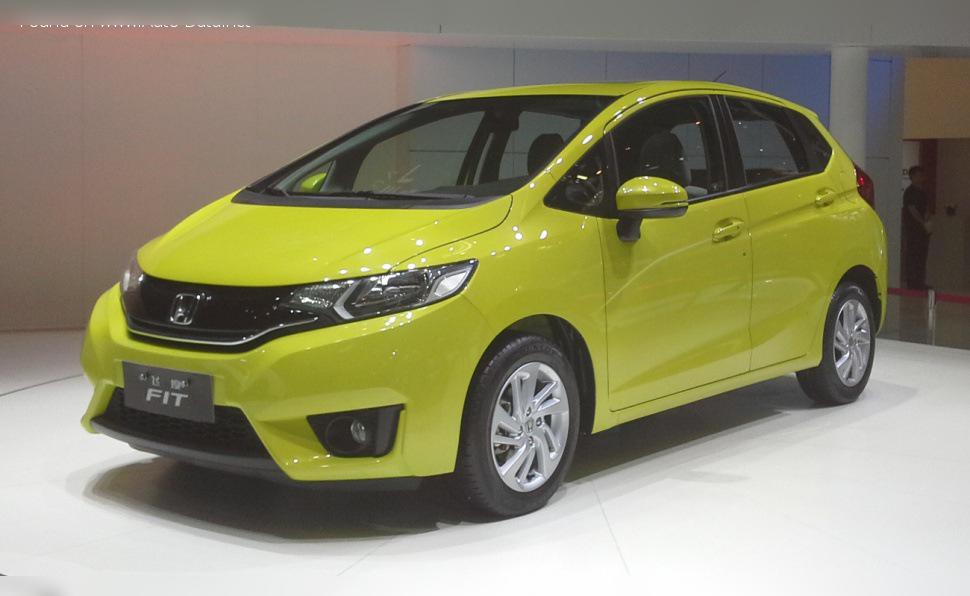
Honda L13B (1.3 i-VTEC) – Experiences, problems, fuel consumption and used car buying guide
Key points (TL;DR)
- Exceptional reliability: The L13B belongs to the "Earth Dreams" series and is considered one of the most reliable small petrol engines on the market.
- Low fuel consumption: Thanks to its Atkinson cycle operation, fuel consumption in city driving is very close to that of diesels.
- Lack of torque: With only 119 Nm, the engine needs high revs for overtaking and can feel "sluggish" on inclines.
- CVT transmission sensitivity: The automatic (CVT) gearboxes are great for city driving but require strictly regular oil changes, otherwise an expensive failure may follow.
- Timing chain drive: The engine uses a timing chain that does not require regular replacement, which reduces maintenance costs.
- Expensive specific parts: Although it rarely breaks down, genuine Honda parts (sensors, ignition coils) can be more expensive than those of European competitors.
- Recommendation: An ideal engine for city driving and calm drivers, not for those looking for sporty performance.
Contents
Introduction
The L13B engine is Honda’s answer to the need for a compact, efficient unit that meets strict emission standards without using a turbocharger. It is a 1.3-litre naturally aspirated petrol engine (often labelled as 1.33 or 1.3 i-VTEC) that is primarily installed in the third generation of the Honda Fit (Jazz). This engine is part of Honda’s "Earth Dreams Technology" philosophy, which combines variable valve timing (i-VTEC) and Atkinson cycle operation under low loads in order to maximise efficiency.
Technical specifications
| Parameter | Value |
|---|---|
| Displacement | 1317 cc (1.3 L) |
| Configuration | Inline, 4 cylinders, DOHC |
| Power | 73 kW / 100 hp @ 6000 rpm |
| Torque | 119 Nm @ 5000 rpm |
| Engine code | L13B (L13B1, L13B2 – depending on market) |
| Injection type | PGM-FI (multi-point indirect injection) |
| Aspiration | Naturally aspirated |
| Camshaft drive | Chain |
Reliability and maintenance
Timing system: chain or belt?
The Honda L13B engine uses a timing chain (Maintenance-Free Silent Chain). This is great news for owners because the chain on this engine has no fixed replacement interval and is designed to last as long as the engine itself. There are no frequent reports of chain stretching before 200,000 km, provided that the oil has been changed regularly. If you hear a metallic rattling sound on cold start, that is the first sign that the chain or tensioner needs to be checked, but this is rare at low mileage.
Most common failures and symptoms
Although the engine is extremely reliable, there are some specific weak points:
- VTC actuator (variable cam gear): As with larger Honda engines, the VTC actuator can "stick" for a few seconds during a cold start. This happens due to a drop in oil pressure in the actuator. It is not a catastrophic failure, but it is annoying and requires replacement of the part.
- Carbon buildup: Although this model most often uses indirect injection, the EGR system and recirculation of oil vapours can, over time, contaminate the intake manifold and valves, which leads to rough idling.
- Ignition coils: Honda engines are sensitive to bad spark plugs. If spark plugs are not replaced on time, the coils are put under stress and can burn out. Symptoms include jerking while driving and the "Check Engine" light coming on.
Service intervals and oil
A minor service is recommended every 10,000 to 15,000 km (or once a year). A major service (in the classic sense of timing belt replacement) does not exist; instead, the auxiliary (serpentine) belt that drives the alternator and A/C is inspected, and fluids are replaced.
Oil: This engine takes approximately 3.3 to 3.5 litres of oil (with filter). Honda strictly recommends 0W-20 grade due to tight tolerances and "Earth Dreams" technology. 5W-30 can also be used, but 0W-20 is optimal for fuel consumption and cold starts.
Oil consumption
A healthy L13B engine should not consume a noticeable amount of oil between services. Consumption of up to 0.5 litres per 10,000 km can be tolerated if the car is driven aggressively on the motorway. If the engine consumes more (e.g. 1 litre every few thousand km), this indicates stuck piston rings (a consequence of poor maintenance or stop-and-go city driving with bad oil).
Spark plugs
The engine uses iridium spark plugs (e.g. NGK or Denso). The factory replacement interval is often stated as 100,000 km or 120,000 km. However, due to fuel quality and city driving, it is recommended to check them at 60,000 km and replace them no later than 80,000–90,000 km in order to protect the ignition coils.
Specific parts (costs)
Dual-mass flywheel and clutch
In versions with a manual gearbox, this engine does not have a dual-mass flywheel (it uses a solid flywheel), which significantly reduces maintenance costs. Automatic models (CVT) do not have a conventional flywheel or clutch in the sense of a manual gearbox; instead, they use a torque converter.
Fuel injection system
Unlike the more powerful L15B engine, which often uses direct injection (GDI), the 1.3 L13B in most versions for the Honda Fit/Jazz uses PGM-FI (multi-point) indirect injection.
Are the injectors problematic? No. Indirect injectors are far more resistant to fuel impurities, cheaper to replace and do not require expensive cleaning like GDI injectors.
Turbocharger
This engine does not have a turbocharger. It is a classic naturally aspirated engine. Its service life is longer because there is no thermal stress from a turbo, no intercooler and no expensive hoses that can burst.
EGR, DPF and AdBlue
- EGR valve: It is present. It can get clogged with soot (especially in city driving); symptoms are loss of power and the "Check Engine" light. Cleaning is possible and not very expensive.
- DPF filter: None (this is a petrol engine).
- GPF (Gasoline Particulate Filter): Early models (2014–2017) generally do not have it. Models after 2018 (Euro 6d-TEMP standards) may have a GPF, but on petrol engines it rarely clogs because exhaust gas temperatures are higher.
- AdBlue: None.
Fuel consumption and performance
Real-world fuel consumption
This is the strongest selling point of the L13B engine.
- City driving: Expect between 6.0 and 7.0 l/100 km. In heavy traffic it can go up to 7.5, but with careful driving it can drop to 5.5 l/100 km.
- Open road: At speeds of 80–90 km/h, consumption drops to an impressive 4.5–5.0 l/100 km.
- Combined: A realistic average is around 5.8 l/100 km.
Is the engine "sluggish"?
Yes, you could say it is sluggish by today’s turbo engine standards. With only 119 Nm of torque available as high as 5000 rpm, this engine needs to be revved hard to pull strongly.
In the city it feels lively thanks to good throttle response, but as soon as the car is loaded with passengers or hits an incline, the lack of power becomes obvious. The Honda Fit/Jazz is not a heavy car (around 1050–1100 kg), but the 100 hp really "wake up" only above 4000 rpm.
Behaviour on the motorway
On the motorway the engine is usable, but noisy.
At 130 km/h:
- With the 6-speed manual gearbox, the engine spins at about 3500–3800 rpm, which creates noticeable noise in the cabin.
- The CVT keeps revs lower while cruising, but every time you press the accelerator for overtaking, the engine will "flare up" to over 5000 rpm (rubber-band effect), which can be tiring.
Additional options and modifications
LPG conversion
Yes, this engine is suitable for LPG. Since most L13B variants use indirect injection, installation is standard (sequential system) and not very expensive.
Caution: Honda engines have valves that are sensitive to high temperatures. It is essential to install a valve lubrication system (Flashlube) or to set up the software so that it adds petrol at high revs in order to protect the valves. Valve adjustment is mechanical and must be checked more often if you run on LPG (every 30–40,000 km).
Chiptuning (Stage 1)
Not recommended / Not worth it. On a small-displacement naturally aspirated petrol engine, remapping yields a negligible power increase (maybe 3–5 hp) that you will not feel in real driving. It is better to invest that money in quality tyres and regular servicing.
Transmission: manual vs CVT
Options
- Manual (6-speed): Precise, with short throws, typically Honda. Very reliable.
- CVT (Continuously Variable Transmission): Stepless automatic gearbox. Also available with 4WD (often on the Japanese market, less common in Europe).
Failures and maintenance
Manual gearbox: Almost indestructible. Gearbox oil should be changed every 60,000–80,000 km (Honda MTF-3 is used). Clutch kit replacement is an average expense and not particularly costly (depends on the market).
CVT gearbox (critical!): Honda’s CVT in this generation is better than the older ones, but it has strict rules.
Failures: The most common problem is shuddering when taking off (judder) or chain slip inside the gearbox if the oil is not changed. A broken CVT belt usually means replacing the entire gearbox (very expensive).
Servicing: The oil in the CVT (only Honda HCF-2 fluid) must be changed every 40,000 km at most or every 2 years. Ignoring this is a sure path to failure. The change is relatively simple (drain and refill), but the fluid is specific.
4WD system: On 4WD models, the oil in the rear differential (DPS-F fluid) also needs to be changed, usually at the same interval as the gearbox oil.
Buying used and conclusion
What to check before buying?
- Cold start: Insist that the engine be completely cold. Listen for a "krrr" sound in the first 2–3 seconds (VTC actuator or chain).
- CVT service history: If you are buying an automatic, ask for proof of gearbox oil changes. If the car has 100,000 km and the gearbox oil has never been changed – avoid that car.
- Idle: When the engine is warm, the revs must be absolutely stable. Fluctuations indicate dirty valves or a problem with vacuum/EGR.
- Rust: Check the underbody and wheel arches. Honda improved corrosion protection on the third-generation Fit, but it is still worth being cautious.
Conclusion
Honda’s L13B engine is one of the most rational choices in the small city car segment. If you are looking for a car that will serve you for years with minimal breakdowns, and you do not mind the lack of sporty performance and the need to rev the engine, this is a bull’s-eye.
Ideal configuration: Manual gearbox for those who want lower maintenance costs and better control on the open road, or CVT strictly for city traffic, provided that the service history is well documented.
Was this content useful to you?
Your opinion helps us to improve the quality of the content.