L13A Engine
- Engine
- 1339 cm3
- Aspiration
- Naturally aspirated engine
- Fuel
- Petrol (Gasoline)
- Fuel injection system
- Multi-port manifold injection
- Power
- 86 hp @ 5700 rpm
- Torque
- 119 Nm @ 2800 rpm
- Cylinders
- 4
- Valves
- 8, 2 per cylinder
- Cylinders position
- Inline
- Valvetrain
- OHC
- Oil capacity
- 3.6 l
- Coolant
- 3.8 l
# Vehicles powered by this engine
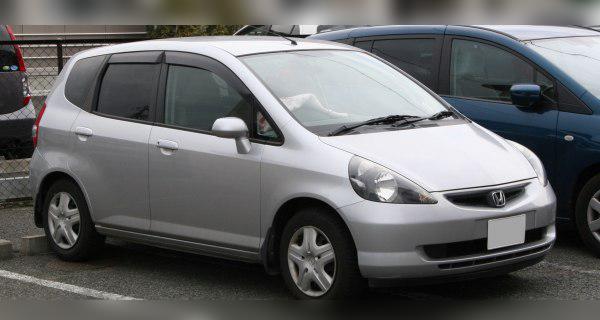
Honda L13A (1.3 i-DSI) 86 HP: Experiences, fuel consumption, problems and maintenance
The engine that made the first generation Honda Jazz (Fit) famous is not a typical engineering solution. Although on paper it looks like a small naturally aspirated petrol engine, the L13A (also known as the 1.3 i-DSI) hides a specific twin-spark technology with two spark plugs per cylinder, which allowed it to achieve remarkable fuel economy before hybrids became standard. Is this really the “indestructible” engine people talk about, or does it have its quirks? Read the detailed analysis.
Key points in short (TL;DR)
- Timing drive: Uses a chain instead of a belt, which is extremely durable and rarely needs replacement.
- Specific feature: Has 8 spark plugs (two per cylinder) – this often confuses inexperienced mechanics and makes the small service more expensive.
- Most common issue: Clogged EGR valve causing jerking at low revs.
- Fuel consumption: Extremely low for a petrol engine of that age; in the city it easily stays below 7 l/100 km.
- Gearboxes: The manual is excellent, while the CVT automatic requires specific oil and regular changes to avoid vibrations.
- Power: Sufficient for city driving, but on the motorway it lacks “breath” and a sixth gear.
- Recommendation: An ideal engine for urban driving and for drivers looking for minimal maintenance costs.
Contents
- Reliability and Maintenance
- Specific Parts and Costs
- Fuel Consumption and Performance
- Additional Options and Modifications (LPG/Tuning)
- Gearbox (Manual vs CVT)
- Buying Used and Conclusion
Introduction
The Honda L13A engine belongs to the L-series of engines and debuted in the early 2000s, primarily in the Honda Fit (in Europe Honda Jazz). Its key designation is i-DSI (Intelligent Dual & Sequential Ignition). Honda’s goal here was maximum fuel combustion in the chamber by igniting the mixture at two different moments. The result is an engine that is elastic at low revs and sips fuel, even though it doesn’t use complicated systems like direct injection or turbocharging.
Technical specifications
| Parameter | Value |
|---|---|
| Displacement | 1339 cc (1.3 or 1.4 badge on the boot, depending on market) |
| Power | 63 kW (86 HP) at 5700 rpm |
| Torque | 119 Nm at 2800 rpm |
| Engine code | L13A1 (most common in Europe) |
| Fuel type | Petrol (Gasoline) |
| Number of valves | 8 (SOHC - single overhead camshaft) |
| Injection system | MPI (Multi-Point Injection) |
| Aspiration | Naturally aspirated |
Reliability and Maintenance
Chain or belt?
The L13A engine uses a timing chain. This is great news for owners because Honda’s chain on this engine is designed to last as long as the engine itself. There are no known cases of stretching or snapping at low mileage, provided the oil has been changed regularly. A classic “major service” (timing belt replacement) does not exist; instead, only the condition of the chain and tensioner is checked at high mileage (over 200,000 km).
Most common failures
Although the engine is extremely reliable, time takes its toll. Here’s what most often fails:
- EGR valve: This is the “Achilles’ heel” of the L13A. Due to soot build-up, the valve can stick, which leads to unpleasant jerking (hesitation) of the engine when accelerating between 1500 and 2000 rpm. Cleaning often solves the problem, but sometimes replacement is necessary.
- Coil packs (ignition coils): Since the engine has 8 spark plugs, it also has 8 coils. The rear coils often fail because they are harder to access and mechanics tend to neglect them. Symptoms are rough running and loss of power.
- Contact oxidation: On older models, moisture can cause issues with sensor connectors.
Service intervals and oil
The recommended oil change interval is 10,000 km to 15,000 km, or once a year (10,000 km is preferable for city driving).
Oil capacity: The engine takes about 3.6 to 3.8 litres of oil (with filter).
Viscosity: Honda recommends thin oils for better fuel economy. The best choices are 0W-20 or 5W-30. You can also use 5W-40 if the engine has high mileage, but 5W-30 is the golden middle ground.
Oil consumption
The L13A is not known for oil consumption. If the piston rings and valve stem seals are in good condition, you shouldn’t need to top up oil between services. Consumption up to 0.5 litres per 10,000 km is considered acceptable for older engines, but anything above that points to wear or leaks.
Spark plugs – a key specific feature!
Pay close attention here. The engine has 8 spark plugs (4 at the front, 4 at the rear). It’s common for unscrupulous sellers or unskilled mechanics to replace only the front 4 plugs because they are easy to access, while the rear 4 remain old for years. This can destroy the rear coils.
Replacement interval: Standard nickel plugs are replaced every 40,000 km. Iridium plugs can last up to 100,000 km, but on this engine standard plugs are more often used due to cost (you buy 8 of them). The price of the set is reasonable, but labour can be more expensive because of the access to the rear bank.
Specific Parts (Costs)
Dual-mass flywheel and clutch
Good news: This engine does not have a dual-mass flywheel. It uses a conventional solid flywheel. The clutch kit is relatively cheap and straightforward to replace, which makes maintenance very affordable.
Injection system, turbo, DPF
- Injection: Uses a reliable MPI (Multi-Point Injection) system. Injectors are robust and rarely cause problems. There is no fuel sensitivity like with direct injection.
- Turbo: The engine is naturally aspirated, it does not have a turbocharger. That means fewer parts that can fail (no turbo rebuilds, intercooler issues, etc.).
- Emissions (DPF/AdBlue): Being a petrol engine, it has no DPF filter or AdBlue fluid. It does have a catalytic converter, which can be damaged if the car is driven with faulty coils (unburnt fuel entering the exhaust).
Fuel Consumption and Performance
Real-world fuel consumption
This is the strongest selling point of the L13A.
City driving: Expect between 6.5 and 7.5 l/100 km, which is excellent. With careful driving it can be even lower.
Open road: Consumption drops to around 5.0 - 5.5 l/100 km at speeds up to 90 km/h.
Is the engine “sluggish”?
With 86 HP and 119 Nm, this engine is no racer. However, thanks to the i-DSI technology, maximum torque is available at a low 2800 rpm. This means that in the city it is very nippy and lively up to 60 km/h. The feeling of “sluggishness” appears only when the car is fully loaded with passengers and luggage, especially on inclines.
Behaviour on the motorway
This is where its limits show. The gearbox is short-geared. At 130 km/h, the engine spins at a high 3500–4000 rpm (depending on the gearbox). This creates cabin noise and increases fuel consumption. Overtaking on the motorway requires planning and dropping to a lower gear (often even third). It’s not an ideal long-distance cruiser, but it can do the job.
Additional Options and Modifications
LPG conversion
Yes, the engine is suitable for LPG, but with great caution. Honda engines have mechanical valve clearance adjustment (no hydraulic lifters).
Obligation: If you run it on LPG, you must check and adjust the valves every 20,000 to 30,000 km. If you neglect this, the valves will “burn out”, leading to an expensive cylinder head repair. If you are prepared for this maintenance, running costs are extremely low.
Chiptuning (Stage 1)
It makes no real sense. On a small naturally aspirated engine, remapping might give you 2–3 HP, which is imperceptible in real driving. You’re better off investing in quality tyres and a fresh service.
Gearbox
Manual gearbox (5-speed)
A typical Honda gearbox – precise, with a short throw (a “click-clack” feel). It is very reliable.
Possible issue: Input shaft bearings can become noisy (a whine that disappears when you press the clutch).
Oil: Honda MTF-3 is recommended, with changes every 60,000–80,000 km.
Automatic gearbox (CVT)
This engine is often paired with a CVT (Continuously Variable Transmission). It provides perfectly smooth, jerk-free driving, but has a reputation for problems if not maintained properly.
Main issue (“judder”): Vibrations or strong shuddering when moving off from a standstill. This is usually caused by old oil or a worn start clutch.
Maintenance: This gearbox requires ONLY Honda CVT-F (CVT Fluid). Never use regular ATF! The oil must be changed at a maximum of 40,000 km (many recommend even more often, at 30,000 km). The cost of an oil change is not negligible (depends on the market), but it is far cheaper than a gearbox rebuild.
Buying Used and Conclusion
What to check before buying?
- Cold start: Listen for any chain rattle (rare, but possible on neglected examples).
- Jerking: Test the car at low revs (around 1500–1800 rpm) in a higher gear. If it jerks, the EGR valve or rear coils are likely at fault.
- CVT test: If it’s an automatic, stop on an incline, release the brake and gently press the accelerator. The car should move off smoothly. Any banging or vibration is a red flag.
- Spark plug service history: Ask the owner when all 8 spark plugs were last replaced. Their answer will tell you how well they know and maintain their car.
Conclusion:
The Honda L13A is a gem of Japanese engineering for urban use. If you’re looking for a car that “doesn’t break down”, uses very little fuel and offers incredible interior space (thanks to the packaging in the Jazz/Fit models), this is the right choice. Maintenance is cheap, provided you don’t forget about the specific 8-spark-plug setup and the regular CVT oil changes if you choose the automatic. It’s not built for racing, but it’s a blessing for your wallet.
Was this content useful to you?
Your opinion helps us to improve the quality of the content.