L15D Engine
- Engine
- 1496 cm3
- Aspiration
- Naturally aspirated engine
- Fuel
- Petrol (Gasoline)
- Fuel injection system
- Direct injection
- Power
- 118 hp @ 6600 rpm
- Torque
- 142 Nm @ 4300 rpm
- Cylinders
- 4
- Valves
- 16, 4 per cylinder
- Cylinders position
- Inline
- Valvetrain
- DOHC, i-VTEC
- Systems
- Start & Stop System
# Vehicles powered by this engine
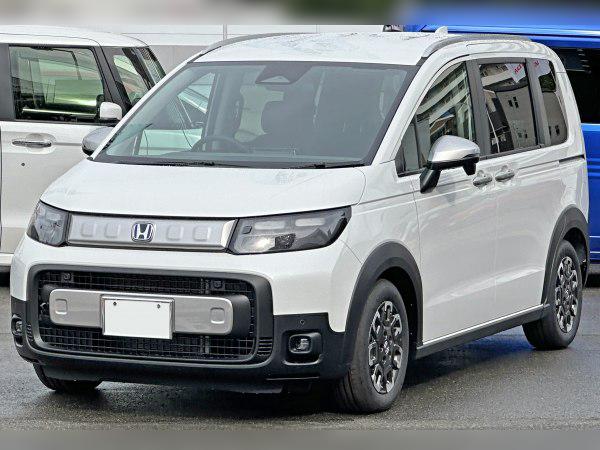
Honda L15D (1.5 i-VTEC) – Experiences, Issues, Fuel Consumption and Maintenance
The engine with the code L15D is an evolution of Honda’s famous L-series powerplants. It is installed in the latest (third) generation of the Honda Freed, a compact MPV that is extremely popular in Asian markets, but thanks to grey imports is increasingly seen on roads around the world, including Europe (Cyprus, the UK, Ireland) and Russia. It is a classic naturally aspirated petrol engine that relies on simplicity and efficiency rather than turbochargers.
As a technical editor, I look at this engine through the lens of a “workhorse”. It is not built to pin you to the seat, but to carry your family from point A to point B with minimal maintenance costs. Still, like every modern engine, it has its specifics you need to know before buying.
Key points in short (TL;DR)
- Timing drive: Uses a chain, which reduces regular maintenance costs but requires high-quality oil.
- Performance: With 142 Nm, the engine can feel “sluggish” in the heavy Freed body, especially on uphill sections.
- Transmission: Almost exclusively paired with a CVT gearbox. Regular CVT fluid changes are critical for longevity.
- Fuel consumption: Very economical in the city, but consumption rises exponentially on the highway at speeds above 120 km/h.
- Main drawback: Characteristic rattling noise from the VTC actuator at cold start on some units.
- Recommendation: Ideal for city and suburban driving; for frequent long highway trips under full load, it will feel underpowered.
Contents
- Technical Specifications
- Reliability and Maintenance
- Specific Components (Costs)
- Fuel Consumption and Performance
- Additional Options and Modifications
- Transmission and Drivetrain
- Buying Used and Conclusion
Technical Specifications
| Parameter | Data |
|---|---|
| Engine name | L15D |
| Displacement | 1496 cc (1.5 L) |
| Power | 87 kW (118 hp) |
| Torque | 142 Nm at 4300 rpm |
| Aspiration | Naturally aspirated |
| Injection system | Direct injection |
| Configuration | Inline 4-cylinder, 16-valve (DOHC i-VTEC) |
Reliability and Maintenance
Does this engine have a timing belt or a chain?
The Honda L15D engine uses a timing chain for valve timing. Honda chains are generally very reliable and are designed to last as long as the engine itself, provided the oil is changed regularly. There is no need for preventive replacement as with a belt (a “major service” in the classic sense does not exist at a fixed mileage for the chain); instead, the chain is replaced only if it stretches and starts to rattle, which rarely happens before 200,000 km with proper maintenance.
What are the most common failures on this engine?
Although very reliable, here’s what can go wrong:
- VTC actuator (cam phaser): A known weak point of the L-series. The symptom is a short, loud “grinding” noise (like metal on metal) that lasts 1–2 seconds immediately after starting a cold engine. It is not a catastrophic failure, but it is annoying and should be addressed.
- Carbon buildup: Since modern versions of this engine use direct injection, the intake valves are not “washed” by fuel. Over time, carbon deposits can build up and cause rough idle and power loss. Intake cleaning by walnut shell blasting may be necessary at higher mileages.
- EGR passages: They can clog with soot, which triggers the “Check Engine” light and causes jerking under light throttle.
At what mileage is the major service done?
Because the engine has a chain, the classic “major service” (replacement of belt, tensioners, water pump) is not done at a fixed interval (e.g. 100,000 km). However, the serpentine belt that drives the alternator and A/C should be inspected at every minor service and is usually replaced between 100,000 and 120,000 km, together with the tensioner. The water pump is replaced as needed (if it leaks or develops play).
How many liters of oil does this engine take and which grade is recommended?
The engine holds approximately 3.4 to 3.8 liters of oil (with filter), depending on how much old oil is drained. Honda strictly recommends 0W-20 oil. This thin oil is crucial for proper operation of the VTEC system, chain tensioner and for minimal fuel consumption. I do not recommend experimenting with thicker oils (such as 10W-40), as this can lead to timing chain issues.
Does it consume oil between services?
Modern Honda engines are “tight”. Oil consumption of up to 0.5 liters per 10,000 km can be considered acceptable, but most owners do not need to top up between services. If the engine consumes more than 1 liter per service interval, this may indicate a problem with the oil control rings (a condition that appears if oil changes are neglected) or an issue with the PCV valve.
At what mileage are the spark plugs replaced?
This engine uses iridium spark plugs (NGK or Denso). Their replacement interval is long, usually at around 100,000 km. Do not use ordinary copper plugs because access to the plugs on some body variants (such as the Freed) is difficult due to the engine’s position under the windshield cowl, so it is better to install a quality part and forget about it.
Specific Components (Costs)
Does the engine have a dual-mass flywheel?
In combination with the CVT gearbox (standard in the Honda Freed), this engine does not have a dual-mass flywheel. Instead, it uses a torque converter or a flywheel with dampers integrated into the transmission itself, which is far more durable and is not a wear item like on manual diesels.
What type of injection system does it have and are the injectors problematic?
The L15D in its modern iterations uses direct injection (GDI/DI). The injectors operate at high pressure. They are generally reliable but sensitive to poor fuel quality. Injector failure manifests as misfires or increased fuel consumption. Replacing injectors on a direct injection system is more expensive than on older MPFI systems (costs vary by market, but expect them to be pricier).
Does this engine have a turbocharger?
No. The L15D is a naturally aspirated engine. There is no turbocharger, no intercooler, no complex high-pressure piping. This is a huge advantage for long-term reliability and lower maintenance costs, although you pay the price in the form of lower torque.
Does this model have a DPF filter or an EGR valve?
Since it is a petrol engine, it has no DPF (Diesel Particulate Filter). However, newer versions (from around 2018 onwards) likely have a GPF (Gasoline Particulate Filter) to meet strict emissions standards. GPFs rarely clog because petrol burns cleaner and at higher temperatures. An EGR valve is present and, as mentioned, its passages can clog at higher mileage, but cleaning is a routine procedure.
Does this engine use AdBlue?
No, AdBlue systems are used exclusively on diesel engines. This engine does not require any additional fluids other than fuel, oil and coolant.
Fuel Consumption and Performance
What is the real-world fuel consumption in city driving?
In the Honda Freed, which is boxy and not particularly aerodynamic, real-world city consumption is between 7.5 and 9.0 liters per 100 km. The CVT gearbox helps here by keeping the engine in its optimal operating range. In winter and on very short trips, consumption can go up to 10 liters.
Is this engine “lazy” for the weight of the body?
Honestly – yes, somewhat. With 142 Nm of torque available only at a relatively high 4300 rpm, this engine has to be revved to pull the heavy MPV body, especially when the car is fully loaded. In city driving, thanks to throttle response, it feels lively enough. However, overtaking on country roads requires planning and full throttle, during which the engine becomes noisy.
How does the engine perform on the highway?
On the highway the engine performs adequately, but it is not in its natural element. At 130 km/h, due to the characteristics of the CVT and the lack of torque, the engine will spin at around 3000–3500 rpm (depending on road gradient and wind). This creates noticeable cabin noise. Fuel consumption on the highway rises sharply with speed because of the Freed’s aerodynamic drag, so expect around 7.5–8.5 l/100 km at 130 km/h.
Additional Options and Modifications
Is this engine suitable for LPG conversion?
Since the engine uses direct injection, LPG conversion is complex and expensive. A special system is required (“direct liquid” or a system that mixes petrol and LPG to cool the petrol injectors). Installation costs significantly more than on conventional engines, and the payback is questionable unless you drive very high annual mileage (over 30,000 km per year). If you find an older variant with port injection, LPG is an excellent option, but for the L15D in the new Freed – be cautious.
How much can this engine be safely tuned (Stage 1)?
Naturally aspirated engines are not worth remapping. A Stage 1 tune might give you 3 to 5 horsepower and an almost imperceptible increase in torque. Any tuner promising +15 hp on this engine with software alone is misleading you. You’re better off investing in quality tyres and regular maintenance.
Transmission
Which transmissions are fitted?
With the third-generation Honda Freed and the L15D engine, the standard transmission is a CVT (Continuously Variable Transmission). Manual gearboxes in this class of vehicles (JDM MPVs) have become extremely rare or non-existent.
Most common transmission issues and maintenance
Honda CVT gearboxes are better than average (e.g. compared to Nissan’s), but they are not indestructible.
- Symptoms of problems: Slipping when taking off, jerking when decelerating, whining noise from the gearbox.
- Maintenance: The CVT fluid (HCF-2) must be changed every 40,000 km to a maximum of 60,000 km. This is critical! Old fluid loses its friction properties, which leads to slipping of the metal belt and destruction of the transmission.
- Cost: Changing the transmission fluid is inexpensive compared to repairing or replacing the gearbox.
Buying Used and Conclusion
When looking at a used Honda Freed with this engine, pay attention to:
- Cold start: Insist that the engine be completely cold when you arrive. Listen for a “krrrrr” sound in the first 2 seconds (VTC actuator).
- Transmission service history: If there is no evidence that the CVT fluid has been changed and the car has over 100,000 km – that is a major risk.
- Idle: The engine should idle smoothly. Vibrations may indicate a dirty intake or worn engine mounts.
Conclusion: The Honda L15D is a textbook example of a reliable Japanese engine. It is not exciting, it does not boast huge power figures, but it will serve you faithfully for years with minimal unexpected costs. It is ideal for calm drivers and families who value practicality and space over speed. Just change the oil regularly (both in the engine and in the transmission) and don’t push it hard when cold.
Was this content useful to you?
Your opinion helps us to improve the quality of the content.