L15B Engine
- Engine
- 1496 cm3
- Aspiration
- Naturally aspirated engine
- Fuel
- Petrol (Gasoline)
- Fuel injection system
- Direct injection
- Power
- 129 hp @ 6600 rpm
- Torque
- 153 Nm @ 4600 rpm
- Cylinders
- 4
- Valves
- 16, 4 per cylinder
- Cylinders position
- Inline
- Valvetrain
- DOHC, VVT
- Oil capacity
- 3.3 l
- Coolant
- 3.78 l
- Systems
- Start & Stop System
# Vehicles powered by this engine
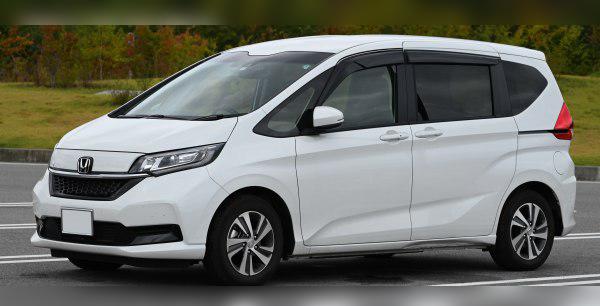

Honda L15B 1.5 i-VTEC (129 HP) – Experiences, problems, fuel consumption and maintenance
1. The most important in short (TL;DR)
- Timing: Uses a timing chain, which is a big plus for longevity and lower maintenance costs.
- Technology: This is a direct injection engine (Earth Dreams), which means better efficiency, but also a risk of carbon buildup on the intake valves.
- Transmission: In Freed and Shuttle models it comes almost exclusively with a CVT transmission that requires regular replacement of a specific fluid.
- LPG (Autogas): Not an ideal candidate for a cheap LPG conversion due to direct injection. Installation is expensive and complex.
- Performance: Lacks low-end torque (naturally aspirated), so it needs high revs for overtaking.
- Reliability: Generally a very reliable engine if service intervals are respected, typical for Honda.
Contents
- Introduction and models
- Technical specifications
- Reliability and maintenance
- Specific parts and costs
- Fuel consumption and performance
- Additional options (LPG and tuning)
- Transmission
- Buying used and conclusion
Introduction and models
The L15B engine (specifically the direct injection variants that produce around 129–132 HP) is Honda’s answer to the need for an efficient, naturally aspirated petrol engine in the era of downsizing. Unlike older Honda engines that used multipoint injection, this unit belongs to the Earth Dreams Technology series.
This engine is the heart of popular MPV models such as the Honda Freed II and Honda Shuttle. These cars are designed to carry a family and luggage with minimal fuel consumption, and the L15B is there to provide a balance between power and economy. Although it is often found on the Asian market, many of these cars come to Europe as “grey imports” (e.g. the United Kingdom, Cyprus, Russia), so knowing this engine is crucial for future owners.
Technical specifications
| Characteristic | Data |
|---|---|
| Engine displacement | 1496 cc (1.5 litres) |
| Power | 96 kW (129 HP) at 6600 rpm |
| Torque | 153–155 Nm at 4600 rpm |
| Engine code | L15B (variants L15B1, L15B2, L15B3 depending on market) |
| Injection type | Direct injection (GDI / Direct Injection) |
| Induction | Naturally aspirated – No turbo |
| Valve train | DOHC i-VTEC, 16 valves |
Reliability and maintenance
Timing belt or chain?
The Honda L15B uses a timing chain. This is excellent news for owners because the chain on these engines does not require regular replacement like a belt. It is designed to last the life of the engine, provided that the oil is changed regularly. Problems with chain stretch are rare and usually appear only at very high mileage (over 250,000 km) or due to poor maintenance.
Most common failures
Although very reliable, the L15B with direct injection has a few specific weak points:
- Carbon buildup on intake valves: Since fuel does not “wash” the intake valves (because it is injected directly into the cylinder), carbon builds up over time. This can lead to rough idle and a slight loss of power. It is solved by mechanical cleaning (walnut shell blasting) every 100,000–150,000 km.
- Clogged injectors: The high-pressure system is sensitive to poor fuel quality. Symptoms include “stuttering” under acceleration or a check engine light.
- Oil dilution with fuel: Although this is a bigger problem with turbo versions (L15B7), it can also occur on naturally aspirated versions if the car is driven exclusively on short trips in winter. Fuel runs down the cylinder walls into the sump. Check the oil level – if it rises and smells of petrol, change it more frequently.
Major and minor service
Minor service (oil and filter change) is recommended every 10,000 km up to a maximum of 15,000 km or once a year. Given the direct injection system and VTEC system, fresh oil is crucial.
A traditional major service (timing belt replacement) does not exist. However, valve clearance should be checked (mechanical adjustment), usually around 100,000 km or if you hear “ticking”. The auxiliary belt (for alternator/AC) should also be checked regularly.
Oil: quantity and grade
The engine takes approximately 3.3 to 3.7 litres of oil (depending on whether the filter is changed; always buy 4 litres).
Recommended grade: Honda strictly recommends 0W-20. This thin oil is necessary for proper operation of the VTEC system and the narrow oil passages, as well as for low fuel consumption. In warmer climates 5W-30 is allowed, but 0W-20 is the factory standard.
Oil consumption
L15B engines are precisely manufactured and as a rule do not consume oil between services in noticeable amounts. Consumption up to 0.5 litres per 10,000 km is acceptable, but anything above that indicates a problem (often stuck piston rings due to infrequent oil changes) or a leak.
Spark plugs
This engine uses iridium spark plugs (NGK or Denso). Replacement interval is long, usually around 100,000 km to 120,000 km. Do not experiment with cheap copper plugs because access is sometimes more difficult and the ignition system is calibrated for iridium.
Specific parts (costs)
Dual-mass flywheel
Models with a CVT automatic transmission (which is 99% of Freed and Shuttle models) do not have a dual-mass flywheel. They use a torque converter or a start clutch inside the transmission, which eliminates the expensive dual-mass flywheel replacement typical for diesels and manual gearboxes.
Injection system
The system is direct injection (DI). Injectors operate at high pressure. They are more expensive than regular injectors and more sensitive. They are not chronically problematic, but they do require good quality fuel. Replacing a set of injectors can be expensive (depends on the market).
Turbo, DPF, EGR, AdBlue
- Turbo: The 129 HP L15B variant does not have a turbocharger. That’s one less thing to worry about.
- DPF: None (this is a petrol engine).
- GPF (Gasoline Particulate Filter): Newer models (from 2018/2019) intended for stricter markets may have a GPF filter. It rarely clogs because petrol burns cleaner than diesel, but it does require occasional highway driving.
- EGR: It has an EGR valve. It can get dirty from soot, causing rough running. Cleaning is possible and not expensive.
- AdBlue: None.
Fuel consumption and performance
Real-world fuel consumption
Thanks to the efficient CVT transmission and Earth Dreams technology, fuel consumption is very competitive:
- City driving: Expect between 7.5 and 8.5 l/100 km. In heavy traffic it can go up to 9 l, but the start/stop system helps here.
- Highway / open road: It can go down to about 5.5 to 6.5 l/100 km with moderate driving.
Is the engine “lazy”?
With 153 Nm of torque, this engine is no sports car, especially in bodies such as the Honda Freed or Shuttle which may be loaded with family and luggage. In the city, throttle response is instant and the car feels lively (thanks to the CVT keeping the engine in the ideal range). However, on climbs or under full load, the engine has to rev high to pull, which creates noise and a sense of strain. For the average driver it is completely adequate; enthusiasts will find it underpowered.
Behaviour on the motorway
At 130 km/h, the CVT keeps revs relatively low (usually around 2500–3000 rpm) when maintaining speed, which is good for fuel consumption. However, any throttle input for overtaking makes the transmission “throw” the engine into high revs (4000+), resulting in cabin noise (the “vacuum cleaner effect”). Sound insulation in the Freed/Shuttle models is average, so this can be tiring on long journeys.
Additional options and modifications
LPG conversion
Caution! Since this is a direct injection engine, a regular sequential LPG system cannot be installed. A specific direct injection LPG system must be installed, which also uses a small amount of petrol while running on gas (to cool the petrol injectors), or an expensive liquid LPG injection system.
The installation cost is high (often twice as expensive as a regular system), so cost-effectiveness is questionable unless you drive very high mileage (over 30,000 km per year). Also, the risk of petrol injector failure increases if the system is not perfectly tuned.
Chiptuning (Stage 1)
Since this is a naturally aspirated engine (no turbo), chip tuning makes no real sense. The gain would be negligible (3 to 5 HP), which you will not feel in everyday driving. It is better to invest the money in quality tyres and regular maintenance.
Transmission
Types of transmission
With Freed and Shuttle models equipped with this engine, you almost exclusively get a CVT (Continuously Variable Transmission). There are front-wheel drive and 4WD (Real Time 4WD) versions, but both use a CVT.
Most common CVT problems and maintenance
Honda CVT transmissions are generally more reliable than Nissan’s (Jatco), but they have their own rules:
- Regular service: Transmission fluid must be changed every 40,000 km to 60,000 km (or every 2–3 years). This is critical!
- Fluid type: Use only Honda HCF-2 fluid. Using the wrong fluid can destroy the transmission in just a few thousand kilometres.
- Failure symptoms: Jerking when setting off, slipping (revs rise but the car does not accelerate), whining noise from the transmission. If this happens, the repair is usually a replacement of the entire transmission or an expensive overhaul.
Buying used and conclusion
Before buying a Honda with the L15B engine, pay attention to the following:
- Transmission service history: Has the CVT fluid been changed? If there is no proof, that is a major risk.
- Chain noise: On cold start, listen for chain rattling in the first few seconds. If it lasts longer, the tensioner or chain needs replacement.
- Idle: Does the engine idle smoothly? Rough idle may indicate dirty intake valves (carbon buildup) or injector problems.
- 4WD system check (if equipped): On a lift, check whether the rear differential is leaking oil (a common issue on Honda 4WD systems if not maintained).
Conclusion:
The L15B (129 HP) engine is an excellent choice for a rational driver. It offers typical Honda reliability packed into modern low-consumption technology. It is ideal for family use in the city and suburbs. It is not for racers or for those who plan ultra-cheap LPG motoring. If you find a car with a proper service history (especially for the transmission), it will serve you for years with minimal unexpected repair costs.
Was this content useful to you?
Your opinion helps us to improve the quality of the content.