L15BY Engine
- Engine
- 1498 cm3
- Aspiration
- Turbocharger, Intercooler
- Fuel
- Petrol (Gasoline)
- Fuel injection system
- Direct injection
- Power
- 182 hp @ 5500 rpm
- Torque
- 240 Nm @ 1900 rpm
- Cylinders
- 4
- Valves
- 16, 4 per cylinder
- Cylinders position
- Inline
- Oil capacity
- 3.5 l
- Coolant
- 5.75 l
# Vehicles powered by this engine
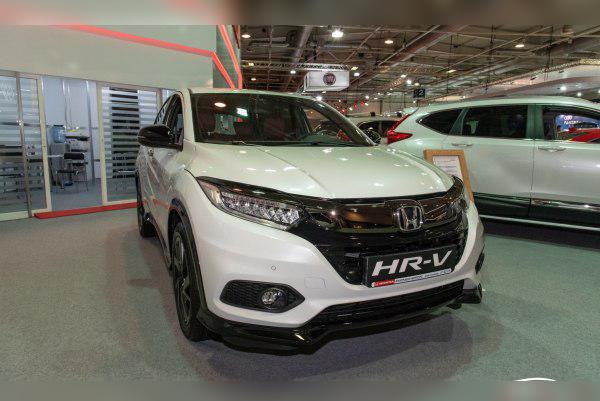
Honda 1.5 VTEC Turbo (L15BY) – Experiences, problems, fuel consumption and buying used
For decades, Honda built its reputation on high-revving naturally aspirated engines. However, the arrival of the L15BY 1.5 VTEC Turbo engine marked a new era. Specifically in the Honda HR-V Sport model, this power unit brings serious performance to the compact crossover segment. Although it carries the legendary “VTEC” badge, this engine behaves differently from old Hondas – it has massive torque at low revs, but also requires specific maintenance that differs from the “fill up and drive” philosophy of the 90s.
Key points (TL;DR)
- Performance: With 182 hp, this is one of the liveliest engines in its class. The HR-V with this engine is a real “sleeper” at the traffic lights.
- “Oil dilution” issue: A known phenomenon with 1.5 Turbo engines where fuel gets into the oil sump, especially during short city drives in winter.
- Timing chain: The engine uses a chain, which is generally reliable, but requires regular oil changes.
- Transmissions: Comes with an excellent 6-speed manual gearbox or a CVT automatic (which is more sensitive to maintenance).
- Direct injection: Efficient, but prone to carbon buildup on intake valves.
- Recommendation: An excellent choice for those who want a blend of practicality and sporty performance, provided it is not driven exclusively on very short 2 km trips.
Contents
- Technical Specifications
- Reliability and Maintenance
- Specific Parts and Costs
- Fuel Consumption and Performance
- Additional Options and Modifications
- Transmission
- Buying Used and Conclusion
Technical Specifications
| Specification | Data |
|---|---|
| Engine code | L15BY (Variant of the L15B7 family) |
| Displacement | 1498 cc (1.5 litres) |
| Power | 134 kW (182 hp) at 5500 rpm |
| Torque | 240 Nm (manual) / 220 Nm (CVT) |
| Injection type | Direct injection |
| Induction | Turbocharger (mono-scroll) + intercooler |
| Camshaft drive | Timing chain |
Reliability and Maintenance
The Honda L15BY is an engineering gem, but it is not immune to modern-era issues. Unlike the old naturally aspirated engines, this one requires a meticulous owner.
Timing system (Belt or Chain?)
This engine uses a timing chain. Honda chains are traditionally reliable and designed to last as long as the engine. There is no scheduled replacement interval like with a belt; it is replaced only if needed (if you hear rattling or if it stretches). With regular oil changes, the chain can easily exceed 200,000 km.
Most common issues and “Oil Dilution”
The most well-known problem with this engine is oil dilution with fuel. This occurs primarily in cold climates and during short trips where the engine does not reach operating temperature.
- Cause: Fuel is injected directly into the cylinder at high pressure. While the engine is cold, part of the fuel condenses on the cylinder walls and runs past the piston rings into the oil sump, mixing with the oil.
- Symptoms: The oil level on the dipstick rises (goes above the maximum) and the oil smells strongly of petrol.
- Solution: Honda has released ECU software updates that help the engine warm up faster. It is crucial to avoid frequent 2–3 km trips without occasionally taking the car out on an open road.
Minor and major service
A minor service (oil and filter change) is recommended every 10,000 km or once a year, even though the manufacturer may specify a longer interval (e.g. 15–20 thousand). Due to the turbocharger and the oil dilution issue, the shortened interval is mandatory for long engine life.
A classic major service (timing belt replacement) does not exist because the engine uses a chain. However, at around 100,000–120,000 km you should check the valve clearances (mechanical adjustment, not hydraulic on all versions) and replace the auxiliary (serpentine) belt along with its pulleys.
Oil and spark plugs
Oil capacity: The engine takes approximately 3.5 to 3.7 litres of oil with the filter. Always check the exact level on the dipstick.
Viscosity: Honda strictly recommends 0W-20 oil that meets specific Honda standards. This thin oil is crucial for the operation of the turbocharger and the VTEC system.
Oil consumption: Due to the aforementioned fuel issue, it is more common for the oil level to rise than to drop. If the engine consumes more than 0.5 L per 10,000 km, this may indicate a problem with the turbo or piston rings, although that is rare with this model.
Spark plugs: It uses expensive iridium spark plugs (NGK or Denso). The replacement interval is usually around 100,000 km, but enthusiasts change them at 60,000–80,000 km to ensure optimal combustion and protect the ignition coils.
Specific Parts (Costs)
Fuel injection system and injectors
The engine uses direct injection. The injectors are precise and expensive. They are not as failure-prone as diesel injectors, but they are sensitive to poor fuel quality. A common issue with all direct-injection engines is carbon buildup on intake valves (because fuel does not wash them). This can lead to rough idle after higher mileage (150k+ km). Cleaning (walnut blasting) is the solution and is moderately priced (depends on the market).
Turbocharger
The engine has a single turbocharger (Mitsubishi TD03 or similar) with an electronic wastegate. The turbo is generally very durable if you follow cool-down procedures after spirited driving and change the oil regularly. Failures are rare before 200,000 km.
GPF/OPF filter and EGR
Since the HR-V Sport (2018+ facelift) was built for the European market under strict Euro 6d-TEMP standards, this engine is equipped with a GPF (Gasoline Particulate Filter) – the petrol equivalent of a DPF. Unlike diesels, a GPF regenerates much more easily and quickly in passive mode (due to higher exhaust gas temperatures in petrol engines) and rarely clogs, unless the car is literally never driven outside the city.
AdBlue: This engine does NOT use AdBlue. That system is reserved exclusively for diesel engines.
Fuel Consumption and Performance
Is the engine “lazy”?
Absolutely not. With 182 hp and 240 Nm (with the manual gearbox), the Honda HR-V Sport really moves. The 0–100 km/h sprint is under 8 seconds (around 7.8 s), which is a fantastic result for the compact crossover class. The engine pulls linearly from about 1700 rpm and loves to rev.
Real-world fuel consumption
- City driving: Expect between 7.5 and 9.5 l/100 km. In heavy traffic and with a heavy right foot, it can go up to 10 litres, but for 182 hp that is acceptable.
- Country roads: Here the engine shines with consumption of 5.5 to 6.5 l/100 km.
- Motorway (130 km/h): Consumption is around 6.8 to 7.5 l/100 km.
At 130 km/h in sixth gear (manual), the engine spins at about 2800–3000 rpm, while the CVT keeps the revs lower, around 2400–2500 rpm (at a constant speed), which contributes to cabin quietness.
Additional Options and Modifications
LPG conversion
Since the engine has direct injection, installing LPG is complex and expensive (very expensive). It requires a special system that either injects liquid gas directly through the petrol injectors or uses a petrol–gas mixture (e.g. 80% gas, 20% petrol) to cool the injectors. It only pays off if you cover very high annual mileage.
Remapping (Stage 1)
This engine has great potential. A Stage 1 remap can safely raise power to about 200–210 hp and torque to nearly 300 Nm. Warning: If you have the CVT transmission, be very careful with torque increases, as the CVT belt can slip. With the manual gearbox, the clutch may wear out faster.
Transmission
With the L15BY engine in the HR-V Sport model, there are two options:
1. Manual gearbox (6-speed)
This is a real gem. Short throws, precise (a “click-clack” feel) and perfectly matched to the engine. Dual-mass flywheel: Yes, the version with the manual gearbox and this power output (182 hp) usually uses a dual-mass flywheel to smooth out vibrations and torque shocks. A clutch kit with flywheel is expensive (depends on the market), but with normal driving it lasts a long time.
2. CVT automatic transmission
Honda’s CVT is one of the better ones on the market. In “Sport” mode it simulates gear changes (7 virtual gears) to avoid the “scooter” effect. Torque limitation: Honda has electronically limited torque to 220 Nm on the CVT version (compared to 240 Nm on the manual) to protect the transmission.
Transmission maintenance and failures
- Manual: Oil change every 60,000–80,000 km (Honda MTF-3). Failures are rare, apart from normal clutch wear.
- CVT: Requires strict oil changes (HCF-2 fluid) every 40,000 km (or every second engine service). If the oil is not changed, the CVT will start to shudder, slip and eventually fail, which is very expensive to repair.
Buying Used and Conclusion
What to check before buying?
- Oil dipstick: Pull out the dipstick and smell the oil. A strong petrol smell is a sign of dilution issues. Check whether the oil level is too high.
- CVT service history: If you are buying an automatic, proof of transmission oil changes is crucial. Without that – walk away.
- Chain noise: On a cold start, listen for rattling from the engine during the first few seconds.
- Test drive: Accelerate hard. Does the car hesitate or stumble? This may indicate problems with spark plugs or valve deposits.
Conclusion:
The Honda HR-V Sport with the 1.5 VTEC Turbo engine is a fantastic car that combines the practicality of the “Magic Seats” system with the performance of a small sports car. The L15BY engine is powerful and technologically advanced. It is intended for drivers who enjoy driving and are willing to pay for quality maintenance (frequent oil changes). If you are looking for a car just to go “from point A to point B” with minimal investment and short city trips, the regular 1.5 naturally aspirated engine (in lower-spec HR-V versions) is probably a safer, albeit more boring, option.
Was this content useful to you?
Your opinion helps us to improve the quality of the content.