L15B4 Engine
- Engine
- 1498 cm3
- Aspiration
- Naturally aspirated engine
- Fuel
- Petrol (Gasoline)
- Fuel injection system
- Direct injection
- Power
- 130 hp @ 6600 rpm
- Torque
- 155 Nm @ 4600 rpm
- Cylinders
- 4
- Valves
- 16, 4 per cylinder
- Cylinders position
- Inline
- Valvetrain
- DOHC
- Oil capacity
- 3.6 l
- Coolant
- 3.42 l
# Vehicles powered by this engine
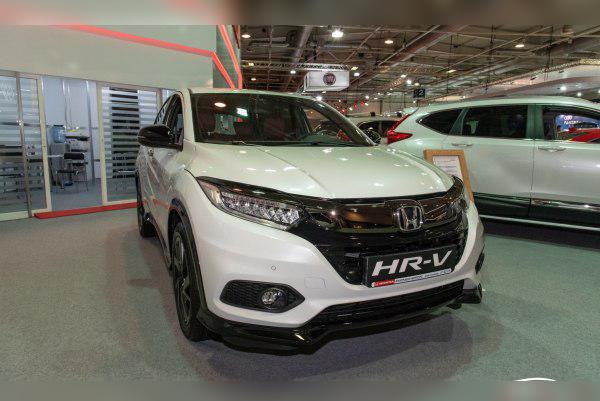
Honda 1.5 i-VTEC (L15B4) – Experiences, problems, fuel consumption and used car buying tips
Key points (TL;DR)
- Timing chain: Uses a chain that is very reliable and rarely needs replacement before high mileage.
- Naturally aspirated engine: No turbocharger, which means fewer potential expensive failures, but it needs higher revs for power.
- Direct injection: Although efficient, it can lead to carbon buildup on intake valves over time.
- CVT gearbox: Requires strict maintenance (oil change every 40,000 km) or it becomes a source of costly issues.
- Fuel consumption: Moderate for the SUV class, but can rise in city driving if the engine is driven hard.
- Recommendation: Ideal for drivers who value reliability over explosive performance.
Contents
Introduction: The heart of the Honda HR-V
The engine with the code L15B4 belongs to Honda’s modern "Earth Dreams" engine family. This is not that old 1.5 engine from the nineties; it is a technologically advanced naturally aspirated engine with direct fuel injection. It is primarily installed in the Honda HR-V II (facelift from 2018). Unlike its turbo siblings (L15B7 used in the Civic and CR-V), this engine relies on a classic naturally aspirated setup, aiming for longevity and linear power delivery. Although 130 hp looks decent on paper, in practice this engine requires a specific driving style to get the most out of it.
Technical specifications
| Engine displacement | 1498 cc (1.5 L) |
| Power | 96 kW (130 hp) at 6600 rpm |
| Torque | 155 Nm at 4600 rpm |
| Engine code | L15B4 |
| Injection system | Direct injection (GDI / DI) |
| Induction type | Naturally aspirated – no turbo |
| Number of cylinders / valves | 4 cylinders / 16 valves (DOHC i-VTEC) |
Reliability and maintenance
Does this engine have a timing belt or a chain?
The L15B4 engine uses a timing chain. Honda chains are traditionally very durable and are designed to last as long as the engine itself, provided the oil is changed regularly. There is no scheduled replacement interval; it is only replaced if symptoms of stretching appear (rattling on cold start), which is rare before 200,000 km.
What are the most common failures on this engine?
Although very reliable, the "Earth Dreams" technology comes with a few specifics:
- Carbon buildup on intake valves: Due to direct injection, fuel does not "wash" the intake valves. Over time, carbon deposits build up and can restrict airflow, causing rough running. Cleaning (walnut shell blasting) may be needed at higher mileage.
- Oil dilution with fuel: Although this was a bigger issue with the 1.5 Turbo engines, the naturally aspirated L15B4 can also suffer from it if driven exclusively on short trips in winter. Fuel passes past the rings into the sump, raising the oil level and you can smell gasoline on the dipstick.
- VTC actuator: Occasionally you may hear a short, sharp "grinding" noise on cold start, which points to an issue with the variable camshaft sprocket (VTC).
At what mileage is the major service done?
Since the engine has a chain, the classic "major service" (replacement of belt, tensioners, water pump) is not done preventively at 60–80k km as with other brands. Instead, every 100,000–120,000 km you should check the auxiliary (serpentine) belt, its tensioners, the water pump and the condition of the coolant. Replacement is done as needed.
How many liters of oil does it take and which grade is recommended?
The engine takes approximately 3.3 to 3.7 liters of engine oil (with filter). Honda strictly recommends low-viscosity oils for efficiency and proper chain lubrication. The best choice is 0W-20. In warmer climates or for high-mileage engines, 5W-30 can be used, but 0W-20 is the factory standard.
Does it consume oil and what is normal?
In general, the L15B4 does not consume oil in significant amounts. Consumption of up to 0.5 liters per 10,000 km can be considered acceptable for a used engine. If the level is rising, that is a sign of oil dilution with fuel (see above). If it drops drastically, check the PCV valve.
At what mileage are the spark plugs replaced?
Iridium spark plugs are used (NGK or Denso). The replacement interval is long, usually at 100,000 to 120,000 km. Do not experiment with cheap copper plugs; this engine requires quality parts.
Specific parts (costs)
Does the engine have a dual-mass flywheel?
If you have the version with a manual gearbox, this engine usually uses a conventional solid flywheel, which significantly reduces maintenance costs. Versions with a CVT gearbox do not have a flywheel in the usual sense, but use a torque converter.
What kind of injection system does it have and are the injectors problematic?
As mentioned, it uses high-pressure direct injection. Injectors are more expensive than those on older (MPI) engines, but they have proven to be durable. Symptoms of a faulty injector are engine misfire and a check engine light, but this is not common.
Does the engine have a turbocharger?
No. This is a naturally aspirated engine. The absence of a turbo, intercooler and associated piping makes it cheaper to maintain in the long run, as you have one less expensive component to worry about.
DPF, EGR and GPF filters?
Since the HR-V II facelift (2018+) had to meet Euro 6d-TEMP standards, this petrol engine is equipped with a GPF filter (Gasoline Particulate Filter – the petrol equivalent of a DPF). However, the GPF regenerates much more easily and quickly in passive mode (exhaust temperatures on petrol engines are higher) and rarely clogs in practice, except with extreme city-only driving. It also has an EGR valve that can get dirty, but it can often be cleaned.
Does it use AdBlue?
No, AdBlue is used only on diesel engines. This petrol engine does not require any exhaust gas additives.
Fuel consumption and performance
Real-world city fuel consumption
Although the engine is modern, the HR-V is not a light car and its aerodynamics are worse (crossover). In heavy city traffic you can expect consumption between 7.5 and 9.0 l/100 km. With the CVT gearbox, in "Econ" mode and with a light right foot, it is possible to get down to around 7 liters, but in winter consumption easily goes towards the upper end of the range.
Is the engine "sluggish" for this body?
The answer is: It depends on what you expect. With 155 Nm of torque available only at a high 4600 rpm, the engine feels sluggish at low revs. For overtaking or climbing hills, you have to rev it over 4000 rpm; then it becomes lively and vocal. Drivers used to turbo diesels will find it weak, while fans of old Hondas will enjoy the sound.
The engine on the motorway and revs at 130 km/h
On the motorway it is stable, but noisy. At 130 km/h:
- Manual gearbox (6-speed): The engine runs at about 3200–3400 rpm.
- CVT gearbox: Due to the variable ratio, revs can be lower (around 2500–2800 rpm) when cruising on flat roads, but will jump as soon as you hit an incline.
Fuel consumption on the motorway is around 6.5 to 7.5 l/100 km.
Additional options and modifications
LPG conversion
This is an engine with direct injection. LPG installation is possible, but requires a special system ("Direct Injection Kit"). Such systems are significantly more expensive (often over 800–1000 EUR, depending on the market) and use a small amount of petrol while running on LPG to cool the injectors (usually 10–15% petrol, 85–90% LPG). Cost-effectiveness is questionable unless you drive more than 20–30,000 km per year.
Chip tuning (Stage 1)
On naturally aspirated engines, remapping is mostly a waste of money. You might gain 3 to 5 hp and a slightly better throttle response, but no noticeable difference in performance. The factory has already optimized the map for the best balance between fuel consumption and power.
Gearbox
Which gearboxes are available?
- Manual: 6-speed gearbox. Precise, with short throws, a real pleasure to use (typical for Honda).
- CVT (Continuously Variable Transmission): Automatic gearbox without fixed gears, but with 7 simulated gear steps in software to reduce the "scooter" effect.
Most common issues and gearbox maintenance
Manual gearbox: Very reliable. Oil change is recommended every 60,000–80,000 km (MTF-3 oil). Clutch kit replacement cost is moderate (not as expensive as on diesels with a dual-mass flywheel).
CVT gearbox – WARNING: The CVT is the Achilles’ heel if not maintained. The oil in the CVT gearbox (Honda HCF-2) must be changed every 40,000 km or 2 years! If this is neglected, the gearbox starts whining, slipping, and eventually the belt inside the gearbox fails, which is a very expensive repair (often more expensive than a used engine). If properly maintained, the CVT is very comfortable for city driving.
Buying used and conclusion
When buying a Honda HR-V with this engine, pay attention to the following:
- Cold start: Listen for metallic rattling (chain or VTC actuator) in the first 2–3 seconds after starting.
- CVT service history: If you are buying an automatic, without proof of gearbox oil changes every 40k km – skip the car or be prepared to take a risk.
- Exhaust: A black, sooty tailpipe may indicate a rich mixture or oil consumption, although a bit of soot is normal for direct injection engines.
Final conclusion
The L15B4 engine is an excellent choice for drivers who want practicality, low routine maintenance costs and reliability. It is not for racers or for those who want to be "pinned to the seat" when they press the throttle at 1500 rpm. It is ideal for family use, city driving and moderate trips. The manual gearbox is the safe option for longevity, while the CVT is great for comfort but requires a meticulous owner.
Was this content useful to you?
Your opinion helps us to improve the quality of the content.